
Contemporary Calgary: A Truly Public Art Gallery?
I wonder how many Calgarians know Contemporary Calgary is a six year old public art gallery in the old Planetarium building at the west end of downtown?
It opened in January 2020, and I immediately had doubts about how “public friendly” it would be given its ambiguous name. I also knew it was going to a very contemporary public art gallery, (big emphasis on “contemporary”) as you are unlikely to see a traditional oil painting or anything that looks like a traditional two-dimensional or three-dimensional piece of visual art.
Indeed, most of the exhibitions and installations are design to make to think, more than look. And most of the information panels are written in a manner which is more confusing than helpful. But more on that later.
Free First Thursdays
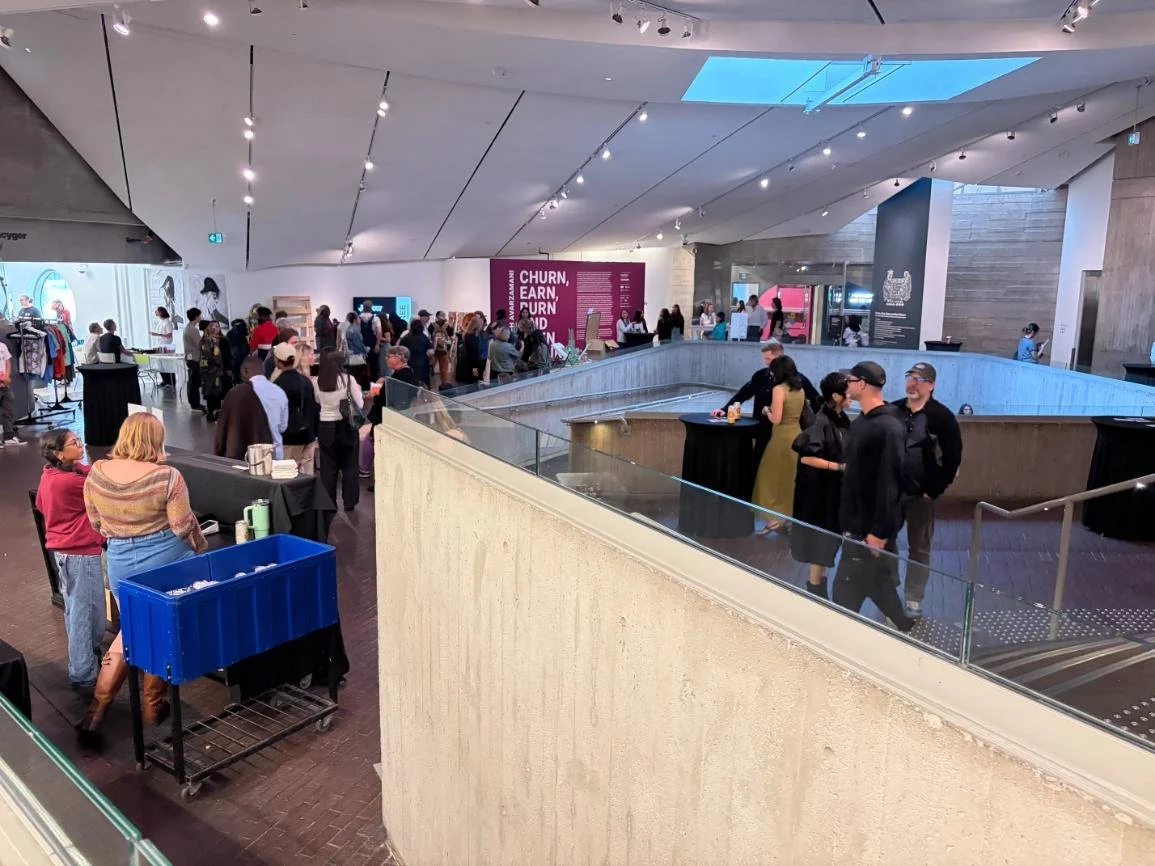
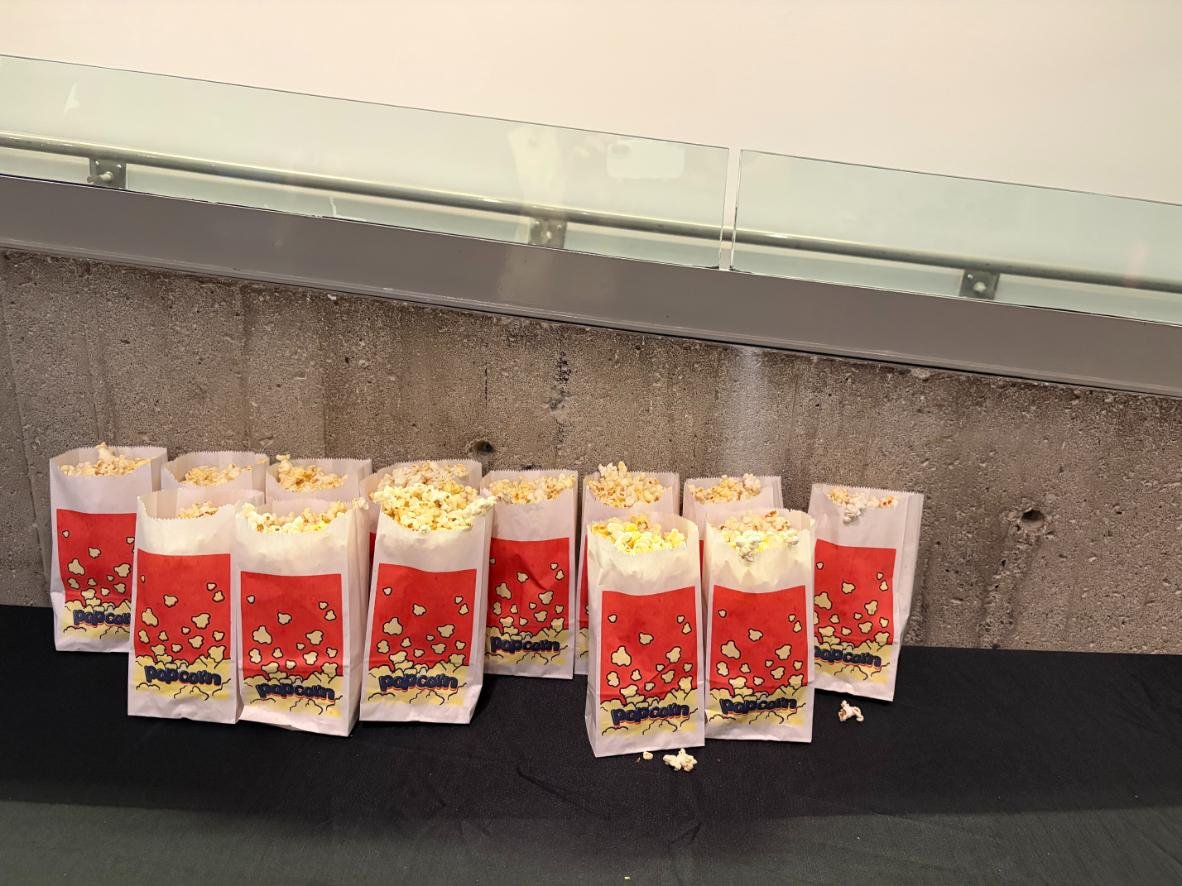
“Come for the popcorn, stay for the art” should be the motto of its monthly FREE First Thursday event. This is a big gesture to being public-friendly gallery.
Yes, the gallery is free for everyone the first Thursday of every month from 5 to 9 pm. I love this initiative as it allows anyone to visit and explore the exhibitions. And yes, there really is free popcorn.
Another public-friendly initiative is the everyday admission price – 24 years and under is by donation and 25 years and over is $12 for a single admission or $24 for an annual membership. You can’t beat that price.
Attending the August First Thursday, I was pleasantly surprised at the number of people in attendance. Given it was a nice summer evening, I thought people would be enjoying the outdoors. I was wrong.
Hundreds, maybe a 1,000+ people were milling about enjoying the art - and the popcorn. The crowd was very much skewed to young adults – we may well have been the oldest people there! That’s very healthy!
The First Impression
Upon arriving in the gallery space, we were a bit disoriented as it wasn’t clear where to go and strangely there isn’t any art in the lobby or hallway leading to the galleries - seemed like a lot of wasted wall space.
Or perhaps the rough concrete walls were left that way as homage to the brutalist architecture (learn more later) of this heritage building.
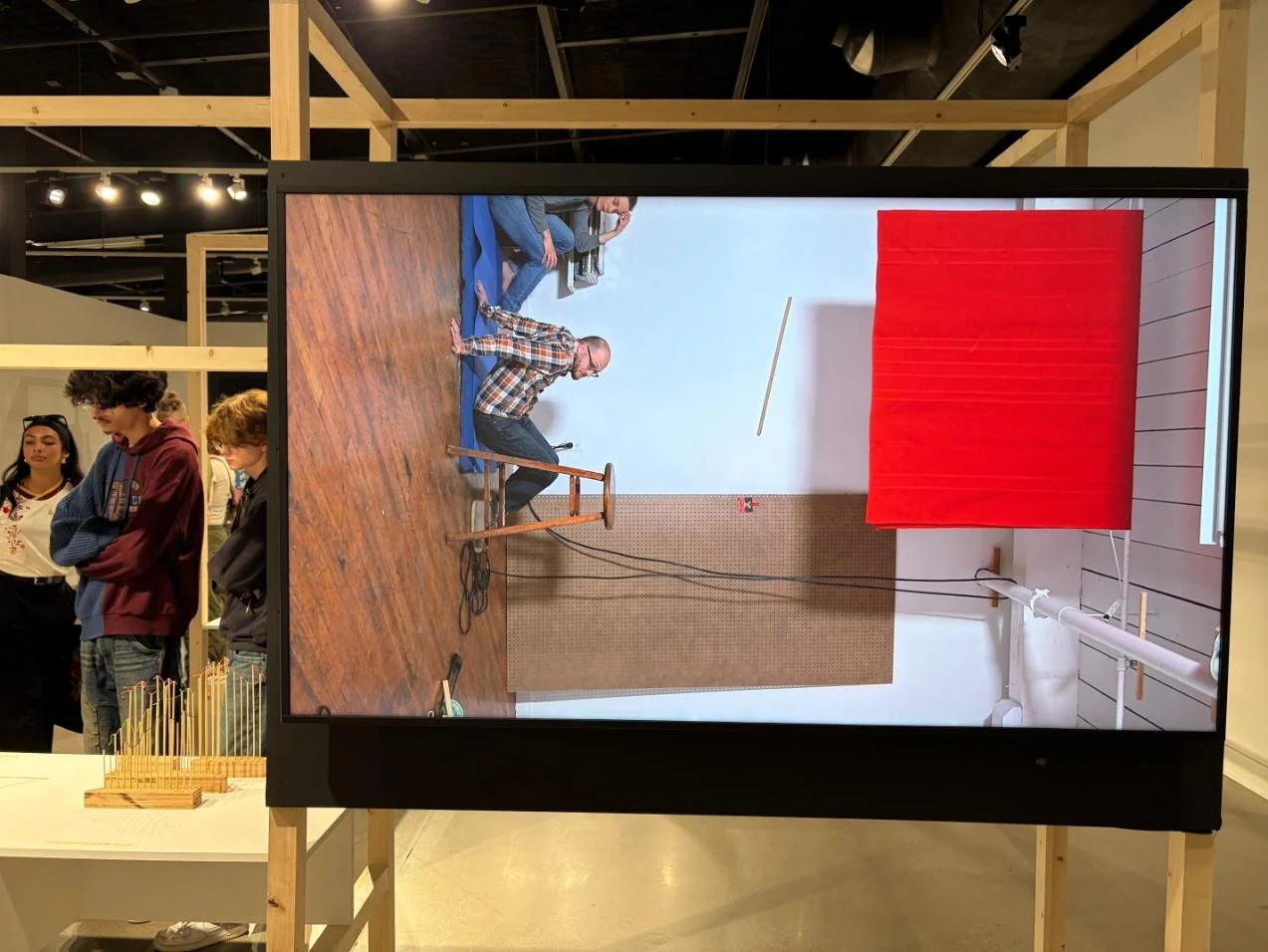
When we finally g0t to the first gallery, I wasn’t sure what to make of it, and the information panel wasn’t much help, just curatorial “jibber jabber” in my opinion (see photo).
Yes, I am “old school” with my expectation to have something visual that I can look at that engages me to try and make sense of it; something that can visually speak for itself.
I am not looking for realism but something that attracts me visually first, cerebrally later. There were videos, posters, and what looked like drawing/prints, but it didn’t speak to me, so I quickly moved on. Not a good start.
Immersive Experience
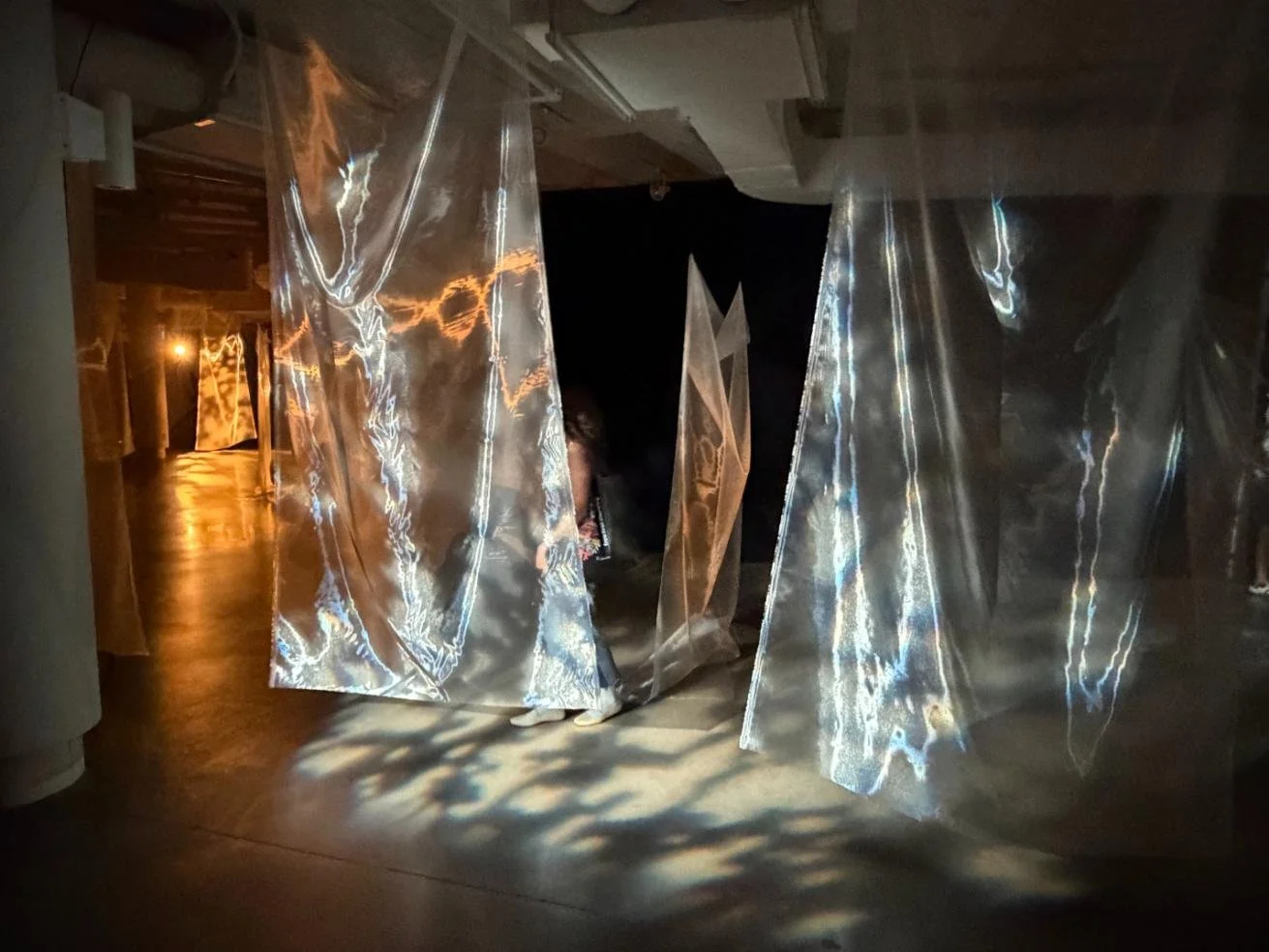
The next exhibition or should I say installation was amazing. Simple but effective. You entered a dark room with harsh lights shining through white mesh to create an eerie, dreamy and sensual space. A sound track enhanced the immersive experience. This I liked!
What I also enjoyed was the hands-on activity at the back of the room, where people were playing and collaborating with the various objects available to them. Not sure what the activity had to do with the installation, but never-the -ess, people were engaged.
Monopoly Fun
The third exhibition we saw was titled “Ghazaleh Avarzamani: Churn, Earn, Burn and then Return.” Inspired by the classic board game Monopoly, it incorporated a huge collection of vintage metal Monopoly game pieces lined up along the wall, which was painted monopoly card colours, as well as monopoly coloured banners (shaped like big monopoly cards) hanging next to them with images on one side and words on the other. On the floor were randomly placed wooden structures resembling hotels and houses.
The captions on the banners seemed like they had extracted from some financial document, annual report or prospectus. Though difficult to make sense of, they created an intriguing challenge. My guess is these are political and social statements about “how money (real estate) makes the world go round.” And yes, the installation was in a circle.
Perhaps the strangest part of the installation was a 10-foot tall Monopoly horse and rider made of butter (yes real butter) - hence the “churn” part of the title. Maybe a play on the term “where I make my bread and butter?” Unfortunately, it had to be wrapped in opaque plastic as mold was growing on the horse and of course mold and art is always a bad combination.
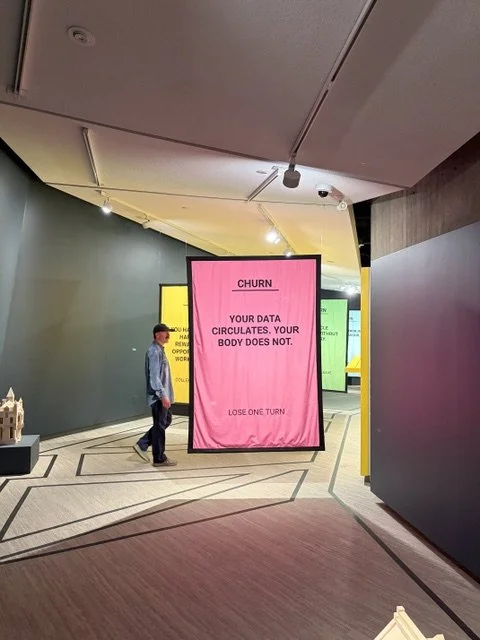
So, I get the “Churn” and “Earn” in the title, but I missed the “Burn” and “Return” references. Perhaps I need to go back.
Note: I got gently chastised by a gallery attendant for touching the one of the “game men.” I thought we were supposed to play. The long line of men was just too inviting not to pick them up and rearrange them. I found out there were glued down. But I really should have known that was not the case as the tiny objects were lined up perfectly.
Back story: Monopoly pieces (tokens) originated in 1935 when Parker Brothers first produced the game. At first, players just used household items like buttons or coins as markers. Later came the iconic metal tokens - top hat, thimble, car, battleship, boot, and Scottie dog. The classic pewter token featuring a jockey atop a galloping horse was introduced in the ‘50s and officially retired from the standard game in 2008.
Teen Art Exhibition
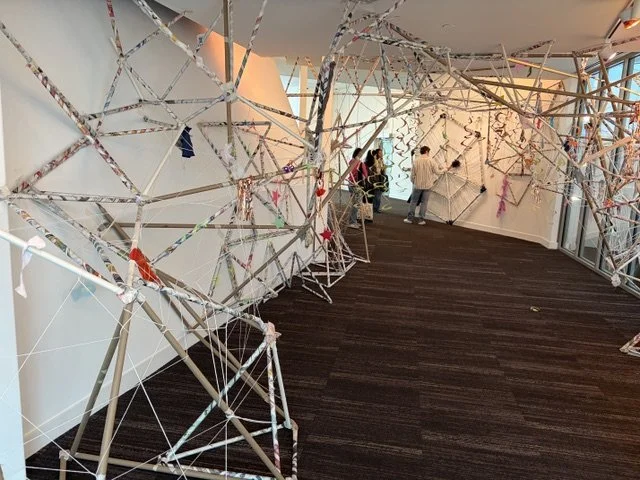
Then heading up some stairs, we discovered a fun teen exhibition, which is part of the gallery’s summer programming. It was a playful installation that looked a bit like a spider web hanging from the ceiling and walls. I was pleased to learn the gallery has art classes for teens. While pre-teens seem to have an innate love of the visual arts, it can be difficult to engage teens in the visual arts as their attention turns to music and more popular art forms.
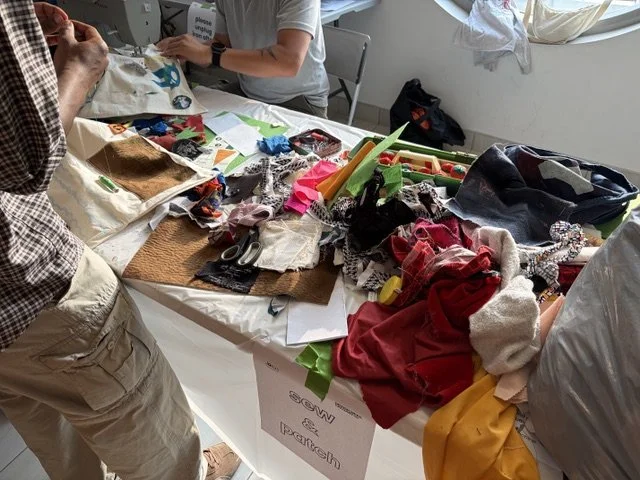
Heading back down, we found another hands-on activity area where people were making custom t-shirts and tote bags; one guy was even sewing something on his bag. There was fabric swatches and other art materials everywhere creating a hands-on nstallation atmosphere. It looked like everyone was having fun being creative.
The Building’s History
Contemporary Calgary is in what was the originally Calgary’s Centennial Planetarium building that was later converted to the city’s science centre and now is a contemporary art gallery. The brutalist building was designed by arguably Calgary’s best known architect Jack Long and was our 1967 Centennial project. As a brutalist building, the façade is raw, exposed concrete with angled walls with a dome creating what was a futuristic sculpture-like shape at the time. The conversion into a contemporary gallery involved many compromises.
It is interesting to note the building predates the undulating, fragmented, sculptural designs made famous by architect Frank Gehry later in the 20th century.
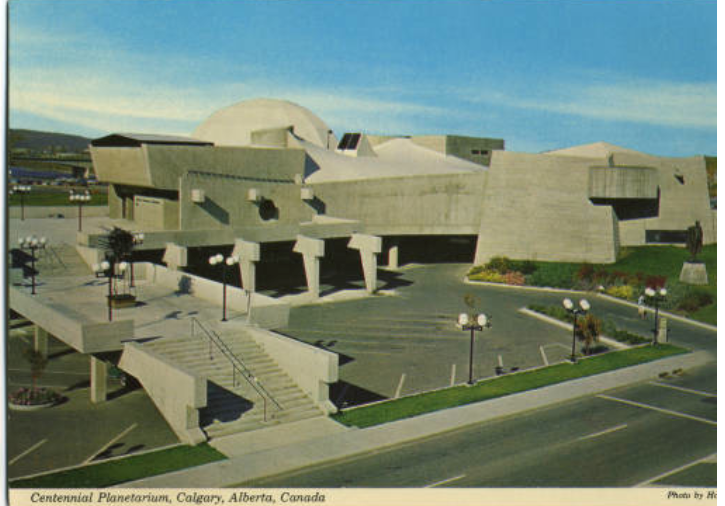
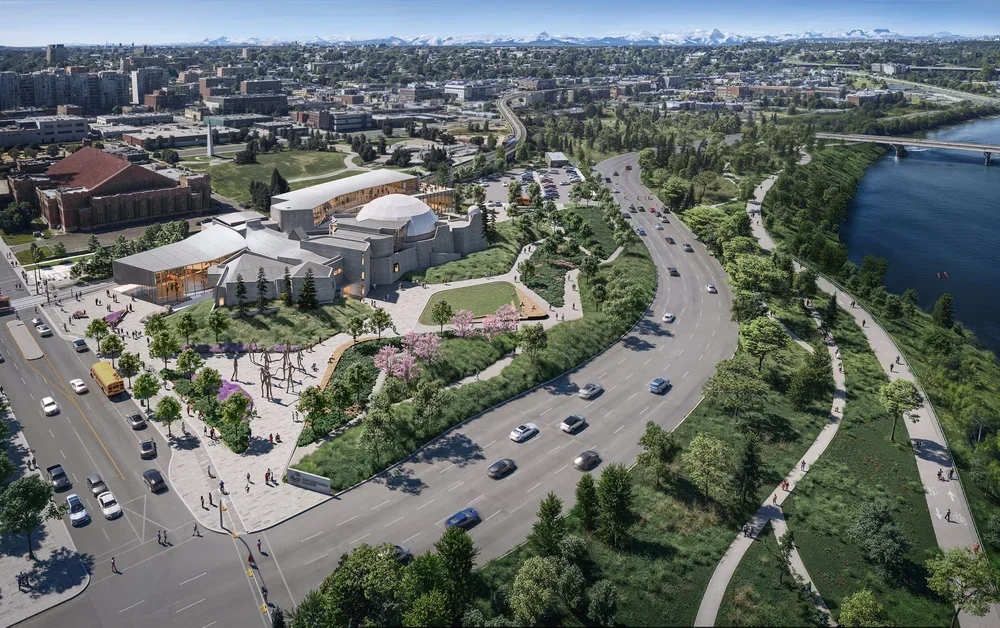
Currently there are plans for a $160 million expansion that will add new and better exhibition spaces and create an outdoor sculpture garden on the north side of the building.
The anchor for the garden will be the iconic “Brotherhood of Mankind” sculpture exhibited at Expo ’67 in Montreal and later donated to the City of Calgary. The sculpture currently resides in a green space at the other end of downtown that is ripe for redevelopment.
Muttart Memories
I spend about 90 minutes wandering the galleries, viewing the art, people watching, taking photos and of course eating popcorn. While the first impression wasn’t great, the exhibitions, programs and space itself grew on me. The fact several hands-on activities were integrated into the gallery experience was great to see.
It brought back memories of the Muttart Art Gallery when a new exhibition opened ever month (ironically on Thursday evenings), and hundreds of people would be packed into the tiny three gallery space.
The hands-on activities reminded me of the School Tour program that incorporated an activity as part of the tour and the First Sunday Family Day art-making activities.
Last Word
While the name “Contemporary Calgary” is not public-friendly, the gallery’s programming is. It offers a diversity of exhibitions and programs that appeal to people of all ages and backgrounds. I look forward to seeing the next phase in the evolution of the building, as well as how its programming progresses with the new spaces.
