
Is Calgary a “walled city?”
As I walk, cycle and drive around Calgary it seems more and more like I live in a “walled city.” Perhaps it is because I live near Crowchild Trail which has “noise barriers” pretty much from one end to the other, designed to protect the residents from traffic noise. FYI: I live just 9 houses from the “Crowchild Wall.”
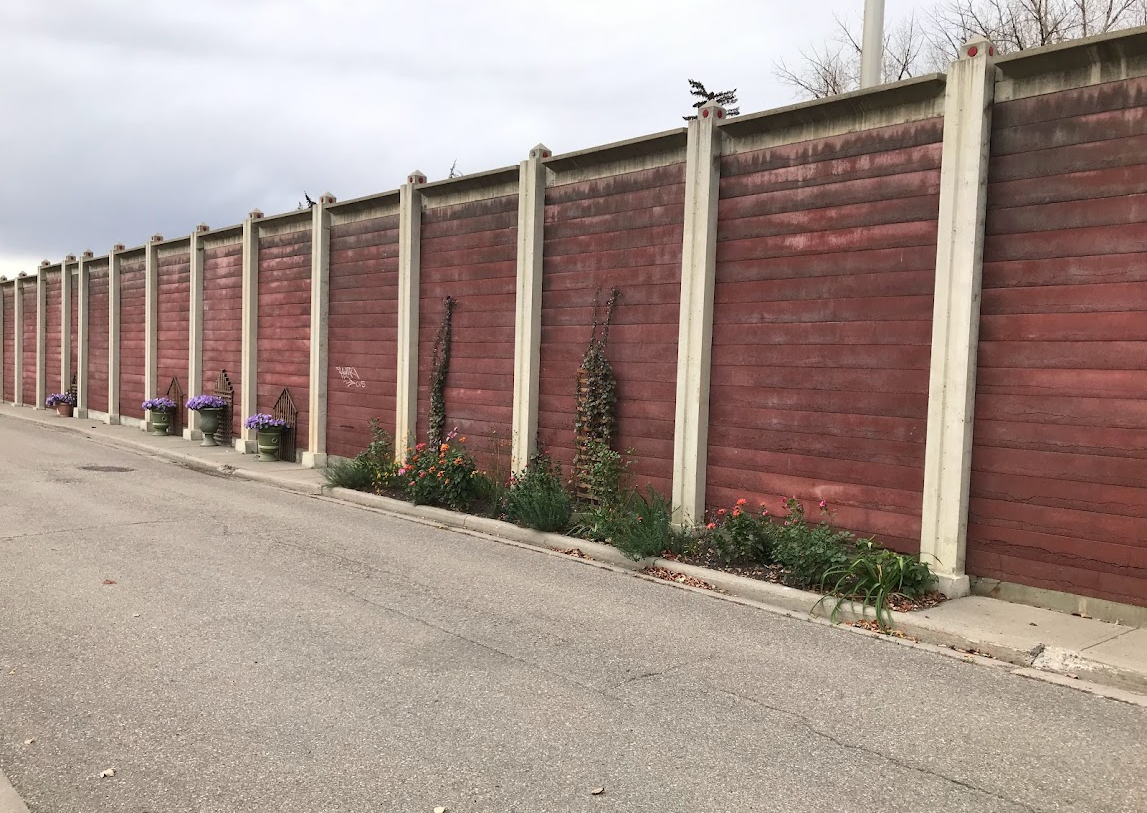
Red Wall along Crowchild Trail in Briar Hill and West Hillhurst
Calgary’s early walls were called “screening fences” and can be found in late ‘70s subdivisions. They are around 6 feet high and are usually made of wood or stucco. The purpose of these fences was to create privacy for the residences from public pathways and parks, not about noise. There are currently about 200km of screening fences in Calgary with 75% on private property. Some are of these fences are gradually being replaces by noise barrier walls by the City of Calgary along major (think noisy) roads.
Fun Fact: In some cases, the old “sound fences” have become canvases for community murals. In 2018, 40 homeowners in the community of North Hills got together and painted their bland fence into a colourful mural with a Calgary history theme.
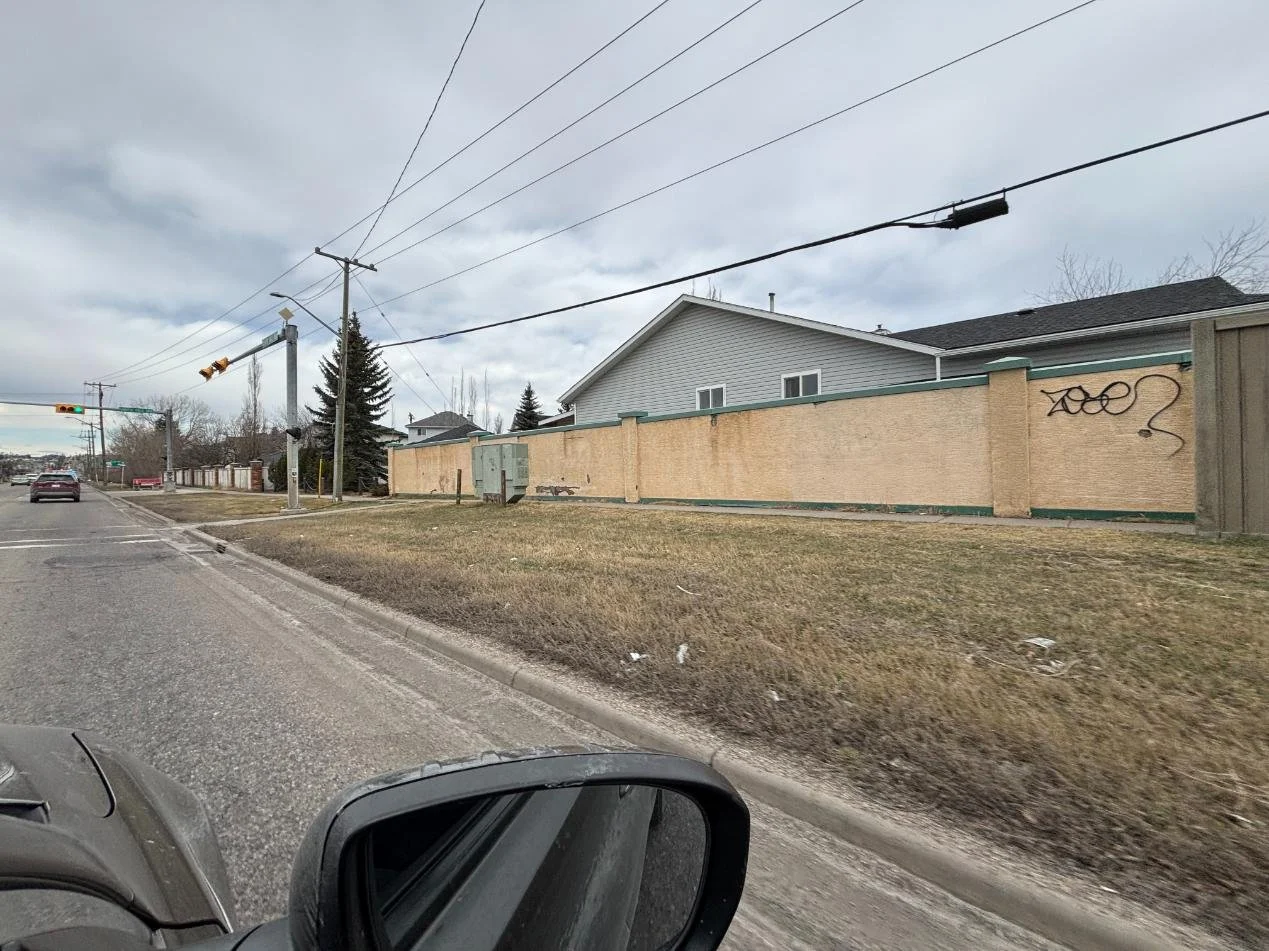
Older sound fence
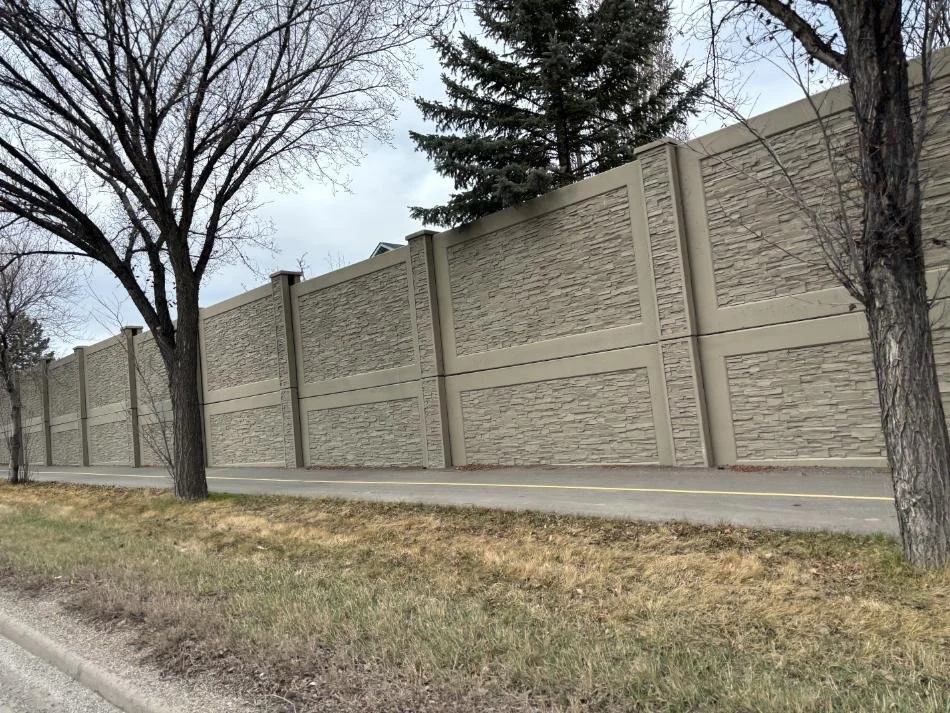
Modern sound wall
Noice Barrier Program
If you go onto the City of Calgary’s website, you can find an entire page on the Noise Barrier Program which explains the criteria for who is eligible for a “noise barrier” and how to apply. There is even a list of locations that have already been evaluated.
New noise barriers are typically constructed in one of three ways:
· By the developer, where deemed necessary at the time that development occurs.
· By The City, when a roadway adjacent to an existing residential community is upgraded and the need for noise mitigated is deemed necessary; or
· By qualifying for a new barrier under the Noise Barrier Program, when budget is allocated by Council.
Fun Facts
· The City does a detailed inspection of noise barriers to see if they are in acceptable condition every two years. Noise barriers identified as being in poor condition are inspected annually.
· The estimated budget is $6.12 million for the 2023-2026 noise barrier replacement
· Under normal conditions, road noise can typically be heard up to 1000 feet (about 300 meters) from the source.
· There is a list of the 11 priority locations for the 2023 to 2026 budget.
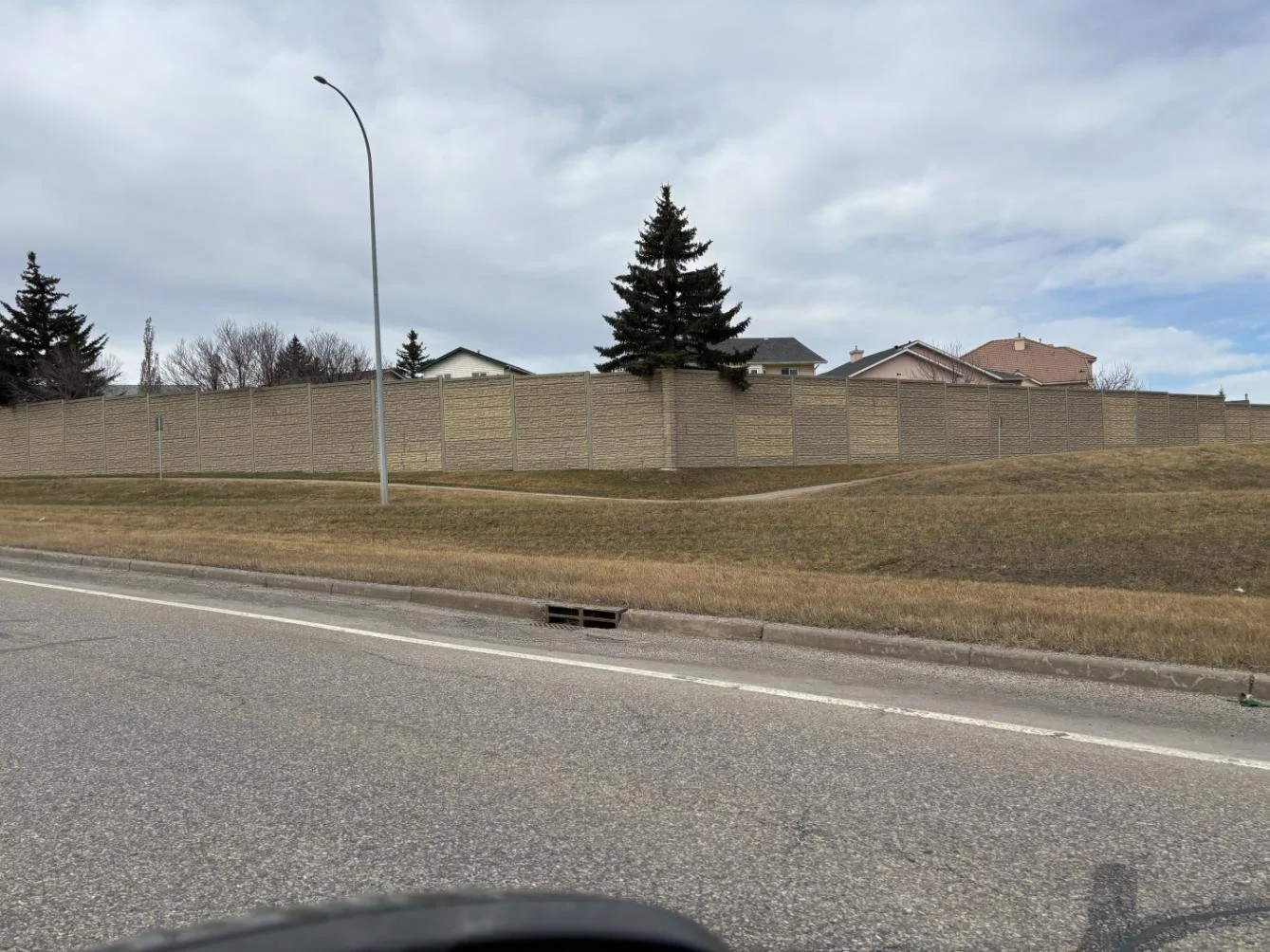
More Digging
Turn out Calgary has something called a “Surface Transportation Noise Policy” that is designed to help mitigate the impact of unwanted sound from nearby road and railways and protect residents’ quality of life. I won’t bore you with all the details but suffice to say the city has a sophisticated method of measuring the sound levels near major roads.
FYI: When a developer constructs a residential development adjacent to an applicable transportation corridor, and if the expected sound levels exceed the City's noise limit, the developer is responsible for providing sound mitigation at their expense. The choice of attenuation measure is left to the developer, subject to City approval.
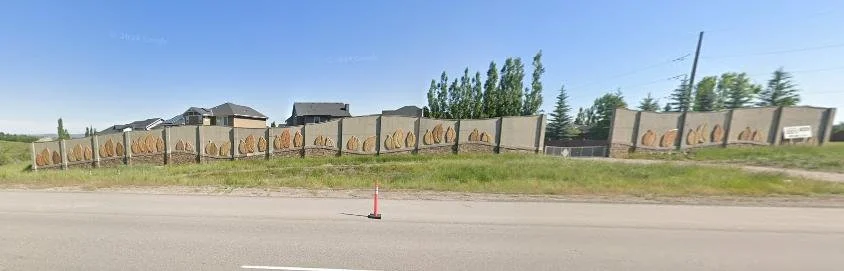
Upgraded Sound Wall Design
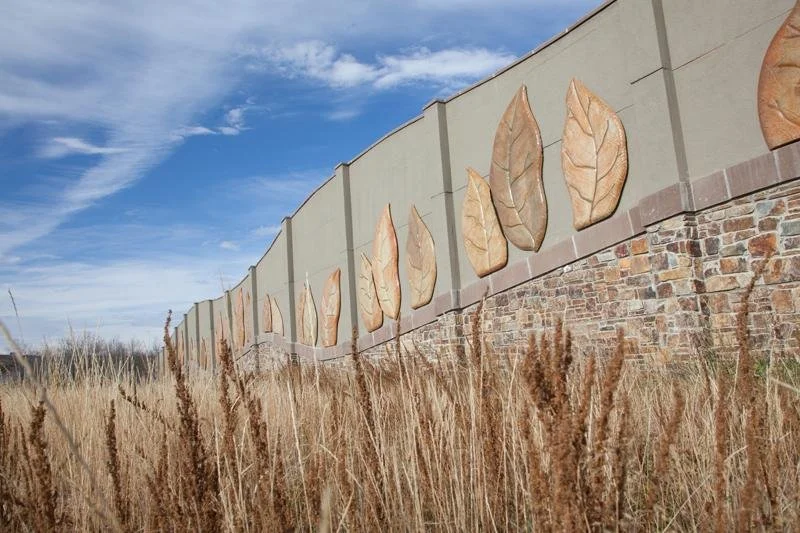
Sound Wall Evolution
Today Calgary has about 95 km of “noise barriers” or “sound walls.” All new “noise barriers” are built to City guidelines with the specification becoming increasingly sophisticated to absorb more sound and last longer. In addition, the walls are being designed with more attention paid to their aesthetic value (some are made to look like rock, others like wood) rather than just being blank concrete walls.
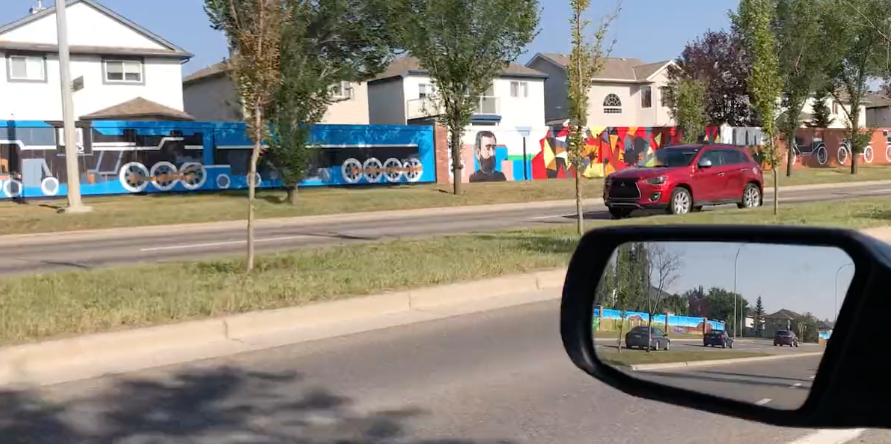
Northern Hills community mural is almost a kilometre long.
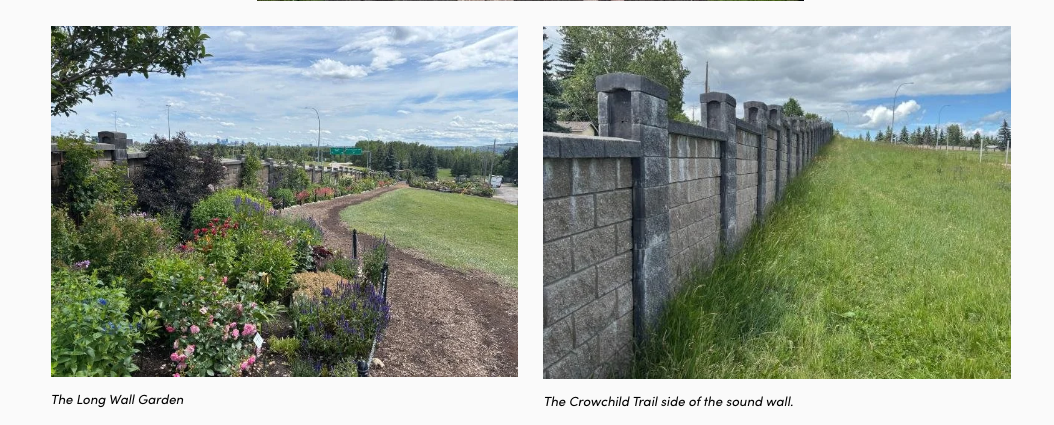
In Silver Springs volunteers have created an amazing flower garden on their side of the wall.
Last Word
The most decorative wall I’ve encountered is along the TransCanada highway on the west side of the city in the community of Valley Ridge with their mega leaves. I am surprised we haven’t seen more of this.
