
Playground Fun: Past, Present, Future!
The City recently dropped a bombshell: Over 80% of our 1,172 playgrounds are at risk of closing by 2036. Apparently, our slides and swings are hitting their "retirement age" all at once! Without a $190 million funding boost over the next decade hundreds of aging city-funded playgrounds risk closure by 2036. Yes, another crisis in the making.
Note: Be sure to read to the end, to find out where is one of Caglary’s most off-the-beaten-path playgrounds is located.
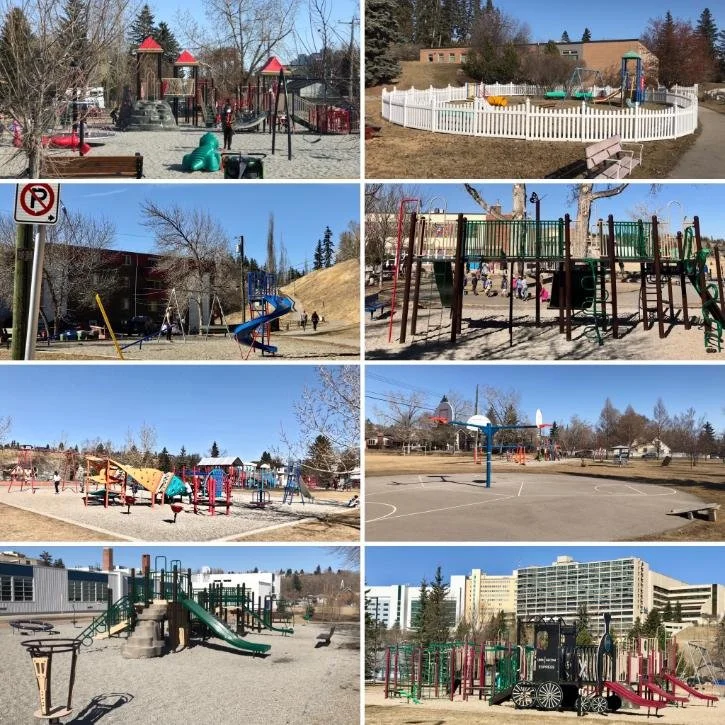
Just a few samples of playgrounds in Calgary’s inner city.
Was this a scare tactic?
This got my wife and me reminiscing about growing up in Winnipeg and Hamilton, respectively, back in the mid-20th century. Neither of us could remember going to a public playground as kids. I had vague memories of neighbor’s backyard setups—a rickety metal swing or a questionable teeter-totter—but she didn't even have those!
Fast forward to today and it seems every school, every park and every community and recreation centre has a playground and not just any playground. Today’s playgrounds are designed not only for safety but with themes – dinosaurs, trains, helicopters etc. Many are specially designed to be accessible for all children. And the cost of these playgrounds can easily be $500,000+.
This led me to wonder about the evolution of playgrounds. What and where was the first public playground? When did the backyard playground become popular? Was it something that happening across North America? World-wide?
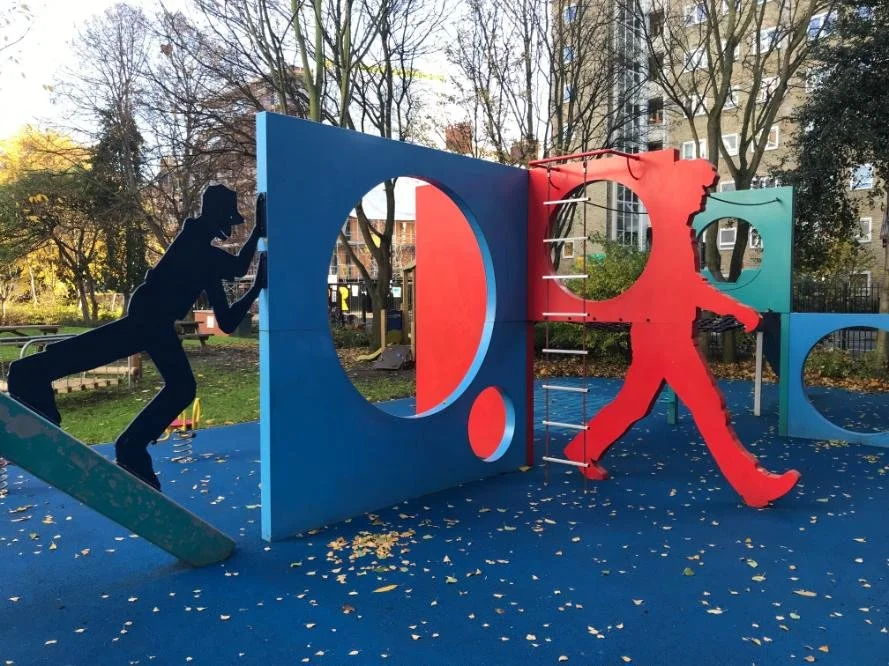
This London UK playground was like public art.
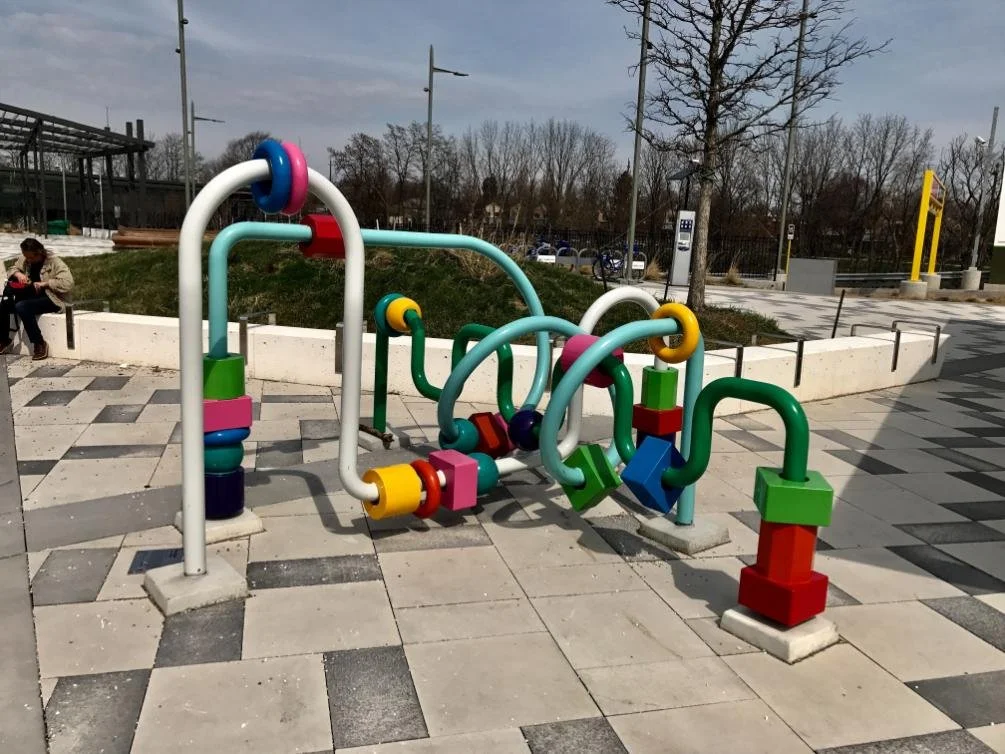
In Hamilton, this public artwork looks like it would a great addition to a playground.
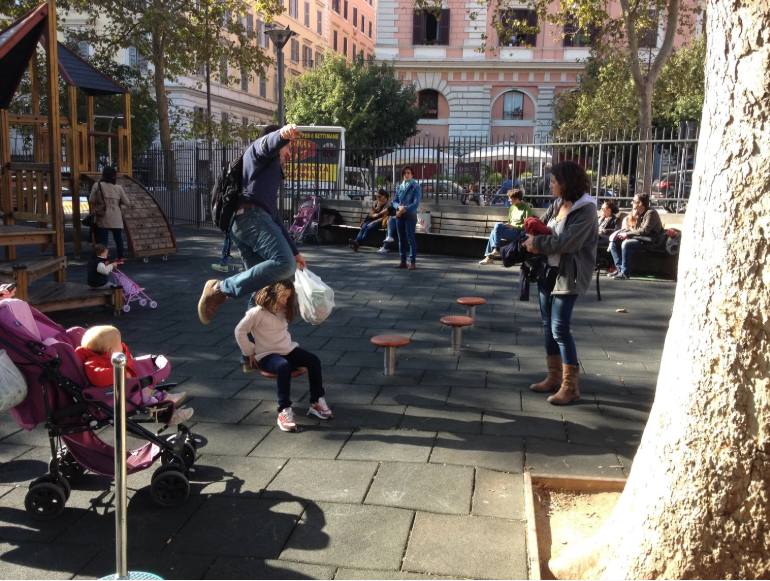
One of my most memorable playground experiences was having a takeaway lunch in local playground in Rome watching this Dad show off for his kids. Playgrounds make great lunch spots often with fun people watching. Link: Rome: Surprise Playground Lunch
Playground History
The first known playground came into existence in 1859 in Manchester, England, in Salford’s Peel Park. This park was the brainchild of Friedrich Engels, a philanthropist and mill owner who envisioned a leisure space for mill workers and their families. The park’s design was traditional, with walkways and paths, and a dedicated area for children’s play.
Playgrounds became more popular in the 1880s and were often called “sand gardens,” as they were basically giant sandboxes - piles of sand dumped in empty lots. It may not sound that great, but they were places where children could safely and freely play and they were a big hit. Imagine today’s kids being told their ‘playground’ is just a pile of sand in a vacant lot. The Yelp reviews would be brutal.
FYI: I had a sand box in my backyard, and I spent hours playing in the sand with my toys.
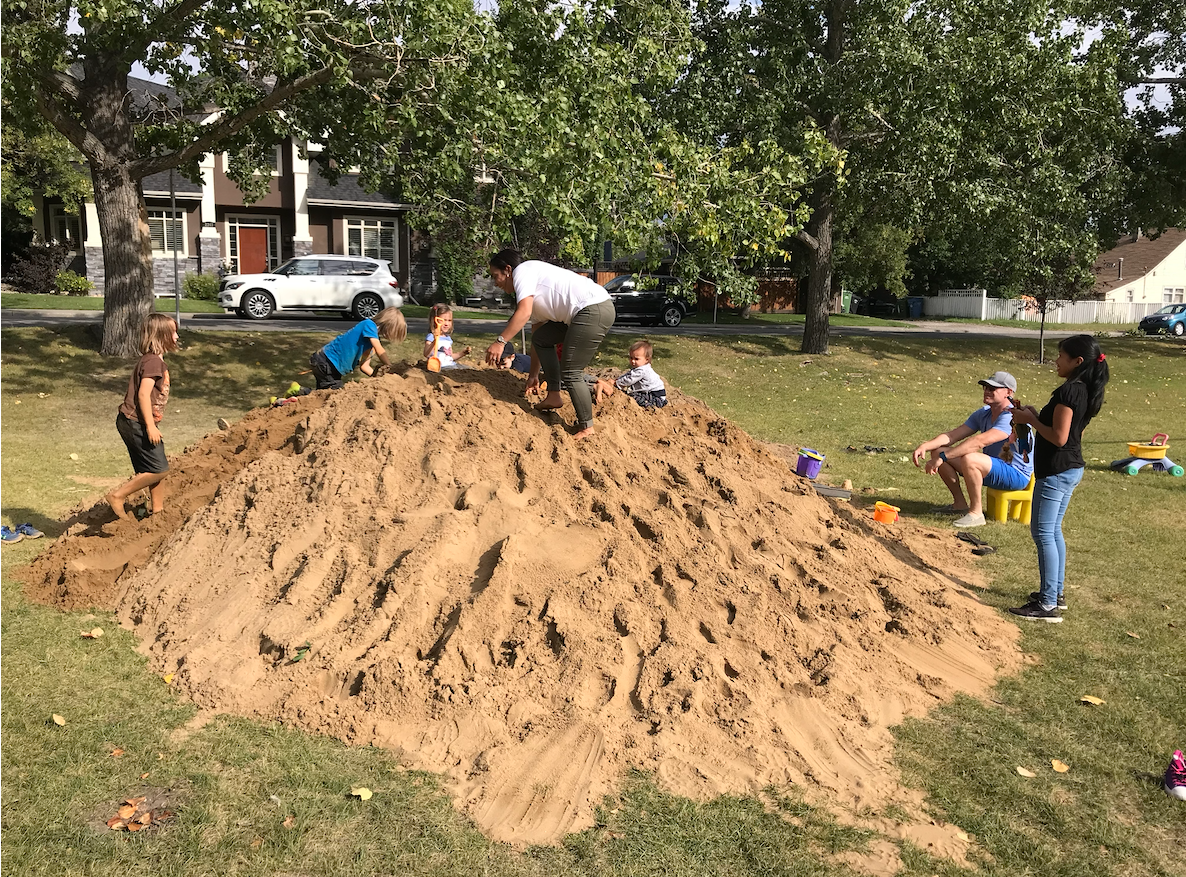
This pile of sand was dumped on the playing field at Grand Trunk Garden a few years ago. It was then spread over the field to smother the weeds. For a few days it was a giant sand box that the kids loved.
Prior to 1900s there were few public playgrounds in Canada, as Canada and most of North America was rural and with children having lots of chores and farming life not being conducive to public playgrounds.
Model Playgrounds (1900s-1920s)
Playground equipment such as swings, jungle gyms, and spinning contraptions such as the merry-go-round would become staples of playgrounds early in the 21st century. These apparatuses were built with galvanized steel pipes characterized by striking horizontal and vertical elements. However, the materials were deemed as unsafe by modern standards, and steel would later be replaced with plastics.
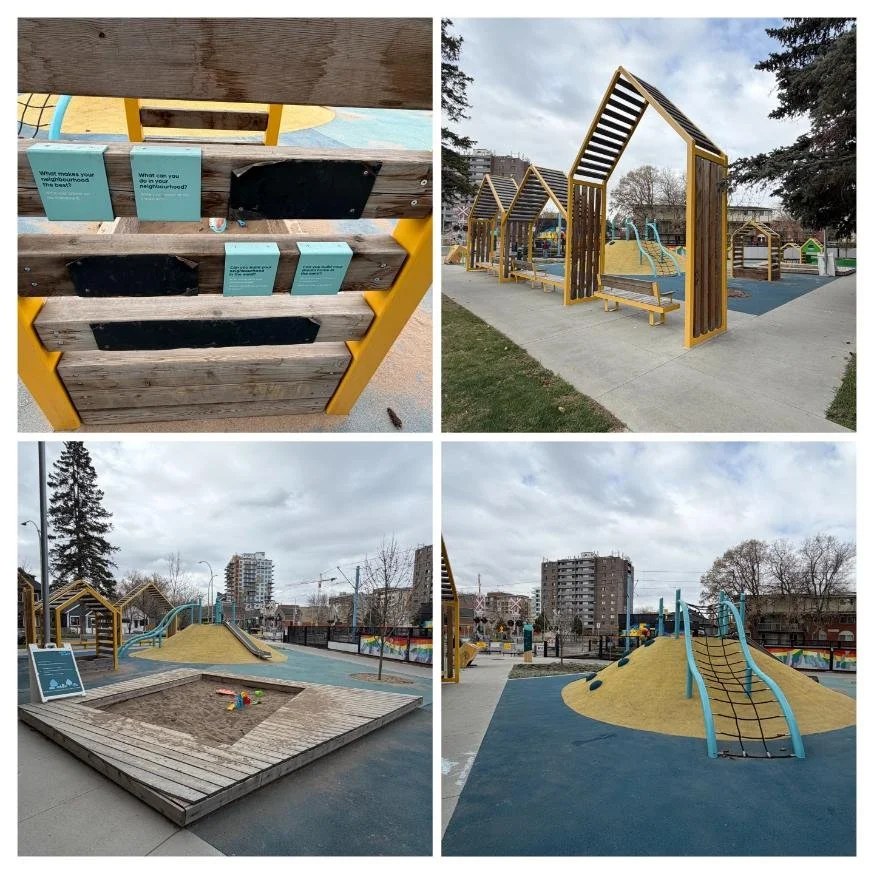
The parks of the future are more imaginative than ever with a mix of the past and present features.
Adventure and Junk Playgrounds (1940s-1950s)
By the middle of the century, adventure playgrounds with more naturalistic designs and natural features and objects became more popular. Caves, landscapes, and structures made of found or natural objects counted as an adventure playground. Junk playgrounds, utilizing recycled materials into playgrounds, the most commons being the tire swing also became more popular.
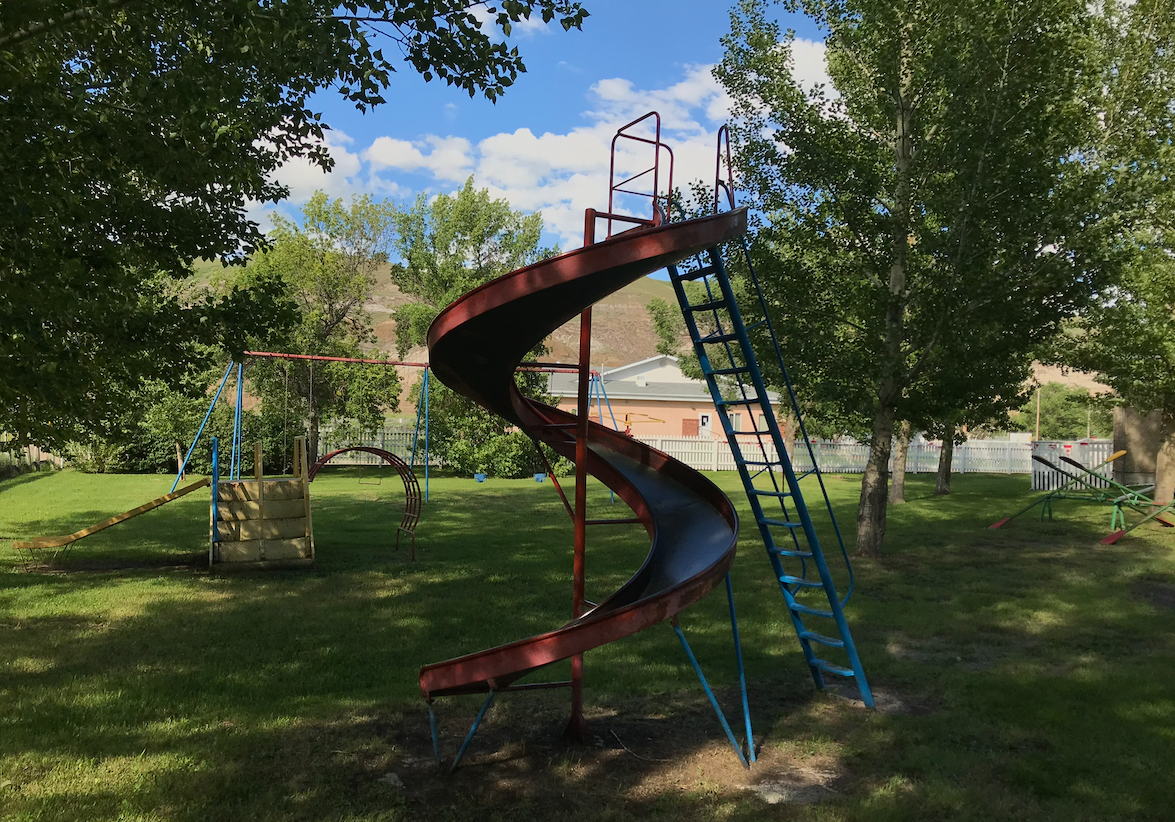
Old school playgrounds were metal, primary colours and consisted of swing, slide and teeter-totter.
Novelty Playgrounds (1950s-1970s)
During this period, playgrounds were more creative and imaginative, featuring equipment shaped like rocket ships, trains, animals, and avant-garde structures. These were often colorful and much more attractive to the eye, while exercising the imagination of young children.
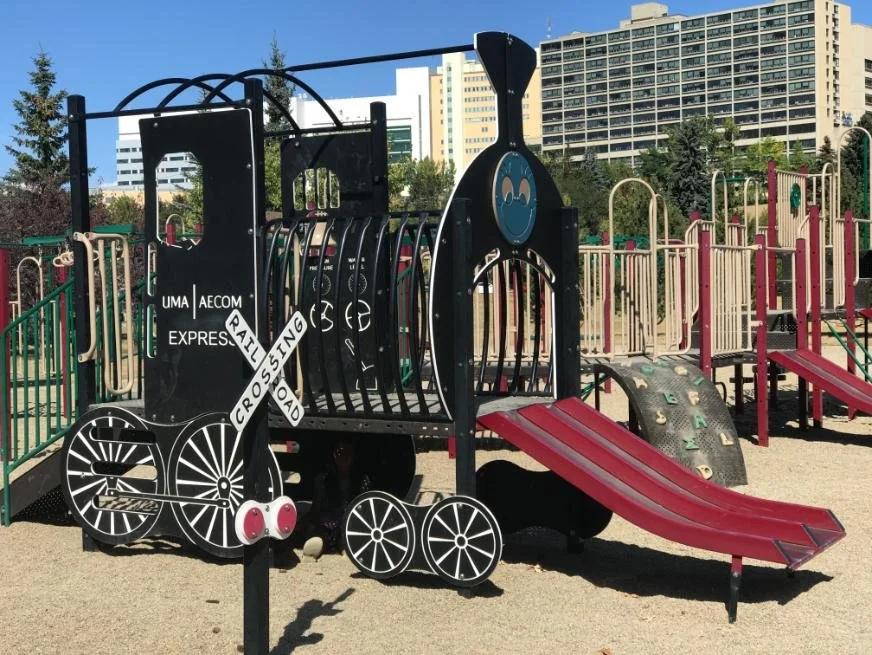
This train theme playground is in Parkdale, nearby is helicopter playground with a helicopter climbing apparatus.
Standardized Playgrounds (1970s-1980s)
By this time, public concern for safety on the playground was rising. In response, playgrounds started to become more streamlined with rounded edges and hard plastic equipment rather than steel. In exchange for developing safer playgrounds, many of them became uniform in appearance in comparison to the imaginative designs of novelty playgrounds.
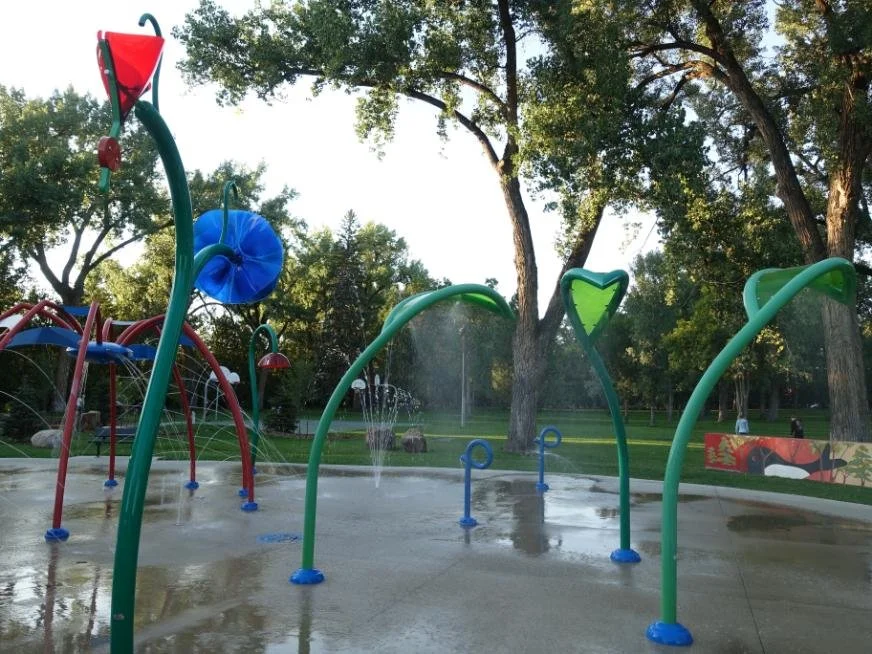
Splash parks are popping up in cities and towns across Canada. 75 years ago these would have been wading pools.
Modern Playgrounds (1900s-Present)
Splash Parks gained popularity starting in the early 1990s as a safer, lower-cost, and more accessible alternative to traditional wading pools. They became popular because they allowed for water play without drowning risks, required no lifeguards, and acted to turn older, underutilized parks into engaging, modern play spaces.
Pump tracks began gaining significant popularity in the early 2000s within the mountain biking community, but truly exploded into mainstream, public recreational use in the 2010s with the widespread adoption of paved asphalt surfaces as part of increase popularity of urban cycling.
Today’s playgrounds are like colouful art installations with elaborate climbing walls, multiple types of swings, slides, merry-go-rounds, hanging and twirling apparatus, as well as picnic tables and shade apparatus. But they are expensive and often don’t last more than 15 years.
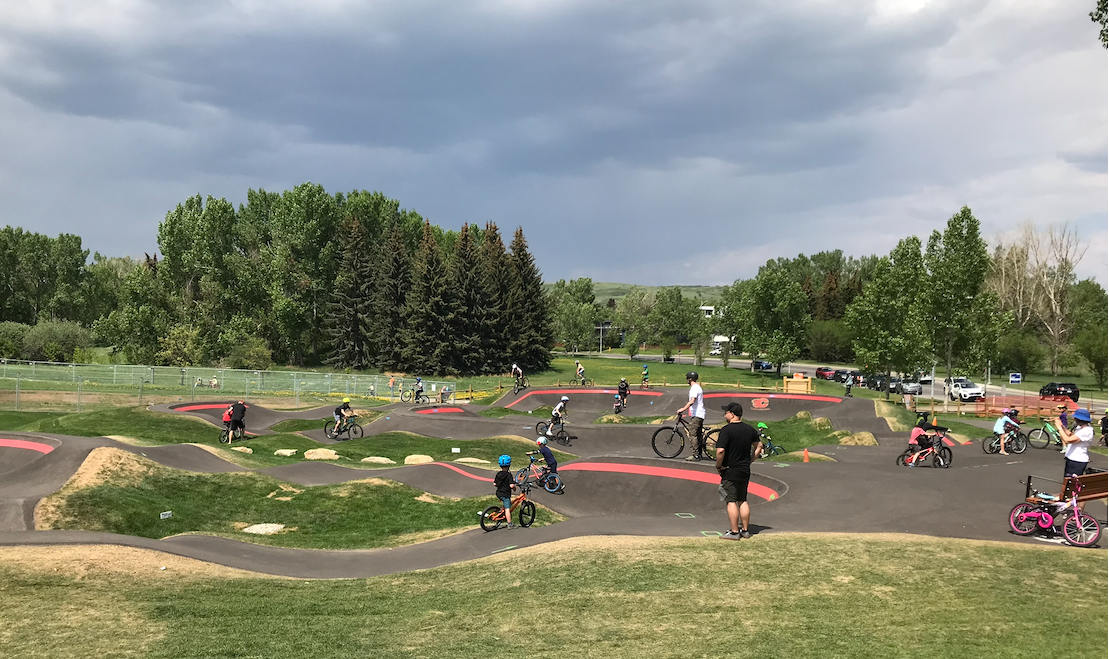
Pump tracks like this one in Calgary’s Canmore Park are very popular these days.
Last Word
We are very fortunate in West Hillhurst to have 7 playgrounds within a 10-minute walking distance from our house. Everything from a Helicopter playground to a secret playground accessible only from a back lane. We particularly love Grant Trunk Park playground in the park across the street that has given us 1,000s of hours of enjoyment over the past 30+ years.
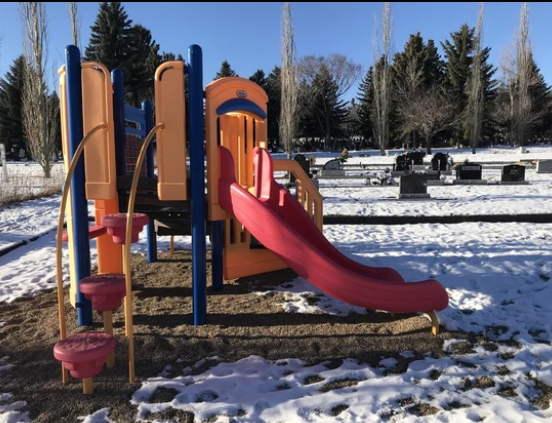
Calgary even has a playground in a cemetery. Queen’s Park Cemetery to be exact.
