
Some of the most lasting travel memories form when the planned route dissolves and the streets themselves begin to lead. In cities built for wandering rather than rushing, a wrong turn often reveals more than any marked itinerary. Ljubljana, Slovenia’s compact capital, rewards exactly this kind of openness. Its Old Town unfolds along the Ljubljanica River in a network of bridges, pastel façades, and narrow lanes that invite unhurried exploration.
Crossing into the Heart of the Old Town
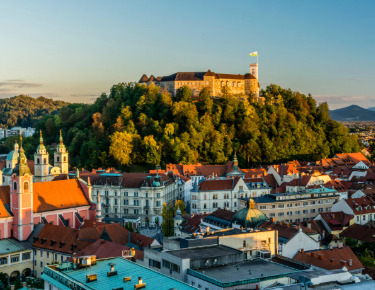
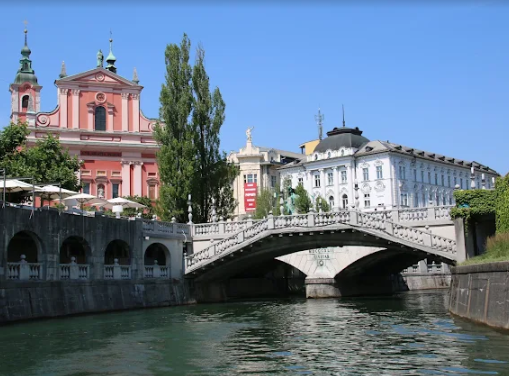
The natural starting point sits at Prešeren Square, a lively open space watched over by the pink Franciscan Church and a statue of the national poet. From here the Triple Bridge, designed by architect Jože Plečnik, carries walkers across the river into the medieval core. Three parallel spans create a gentle funnel that slows the pace at once. Looking back reveals the square framed by water and trees; looking forward opens a sequence of cobbled lanes that rise gently toward the castle hill.
Just beyond the bridge lies the Central Market, where colonnades curve along the riverbank. Fresh produce, flowers, and local specialties fill the stalls on most mornings. Continuing a short distance brings the Dragon Bridge into view, its four copper dragons standing guard. These landmarks form a logical loop, yet the real discoveries appear when side streets pull attention away from the main path.
FYI: While modern leisure options, including the rising interest in crypto betting, reflect a similar appetite for light-hearted excitement and unexpected turns, yet the real draw remains the simple pleasure of moving through historic streets without a fixed destination.
Wandering the Parallel Lanes
Three streets run roughly parallel to the river and form the backbone of the historic centre: Mestni trg (Town Square), Stari trg (Old Square), and Gornji trg (Upper Square). They feel like one continuous rising lane, yet each segment carries its own character. Mestni trg holds the Town Hall and the ornate Robba Fountain. Stari trg lines up with cafés, small boutiques, and wine bars that spill onto the pavement. Gornji trg grows quieter, its pastel townhouses and fewer crowds offering a calmer stretch.
Narrow passages branch off these main routes. Alleys such as Ključavničarska or the short connectors around Ribji trg lead back to the water within a minute, so orientation remains easy even when the path feels maze-like. Laundry lines, carved stone portals, and unexpected courtyards appear at regular intervals. The absence of heavy traffic turns every corner into a potential pause point. Street musicians occasionally set up near the bridges, adding sound to the visual texture without overwhelming the quiet.
Following the River and Climbing Higher
After exploring the squares, a riverside walk provides a different perspective. The Ljubljanica reflects the coloured houses and the castle perched above. Cafés line both banks, and the path stays mostly level. Crossing Cobbler’s Bridge returns walkers to the Old Town side and frames one of the city’s most photographed views.
From the upper end of Gornji trg a footpath climbs the wooded hill to Ljubljana Castle. The walk takes about twenty minutes and rewards effort with expanding vistas over red rooftops, the river, and, on clear days, the distant Alps. Those who prefer a gentler option can use the funicular. Once at the top, the ramparts and courtyard offer space to rest while the layout of the streets below becomes clear. The castle itself contains exhibitions and a tower viewpoint, yet many visitors find the simple act of looking down on the lanes they just walked the most satisfying part.
Practical Details That Support Discovery
The entire Old Town remains largely pedestrian. Comfortable shoes matter because some surfaces are uneven and a few climbs are steeper than they first appear. Early morning or late afternoon brings softer light and fewer people, making the alleys feel more intimate. The market operates most days, while many cafés stay open into the evening when the atmosphere shifts toward relaxed conversation along the water.
Visitors who enjoy structured ideas before setting out can consult resources such as the official overview of the historic centre or articles that celebrate the value of getting deliberately lost, including Lonely Planet’s piece on places where wandering is the point and National Geographic’s guidance on purposeful exploration. These sources underline a simple truth: the best moments often arrive when maps stay folded and curiosity takes over.
Ljubljana’s scale helps. Distances remain short, so a few hours of open-ended walking still leave time for a riverside meal or a quiet bench. The city does not demand constant decision-making. Instead it offers a continuous invitation to notice details—the way light hits a tiled roof, the sound of footsteps on stone, the sudden appearance of a small square framed by trees. In that sense the streets themselves become the attraction, and serendipity turns into the most reliable guide.
