
High-season vs. shoulder-season: Choosing the right time for a private Mykonos escape
Mykonos has a reputation that precedes it: white cube houses, blue domes, and beach clubs that never seem to close. That reputation is mostly built in two months of the year.
Visit in July or August and you get the postcard version, plus every crowd that comes with it. Visit in May, June, September or October and the island quietly changes character.
This same instinct, wanting to see a place before everyone else arrives at once, is something Everyday Tourist explores often, whether it is an overlooked corner close to home or a quieter side of a famous destination abroad.
The real question is not whether Mykonos is worth visiting. It is when you will enjoy it the most.
What High Season Actually Feels Like
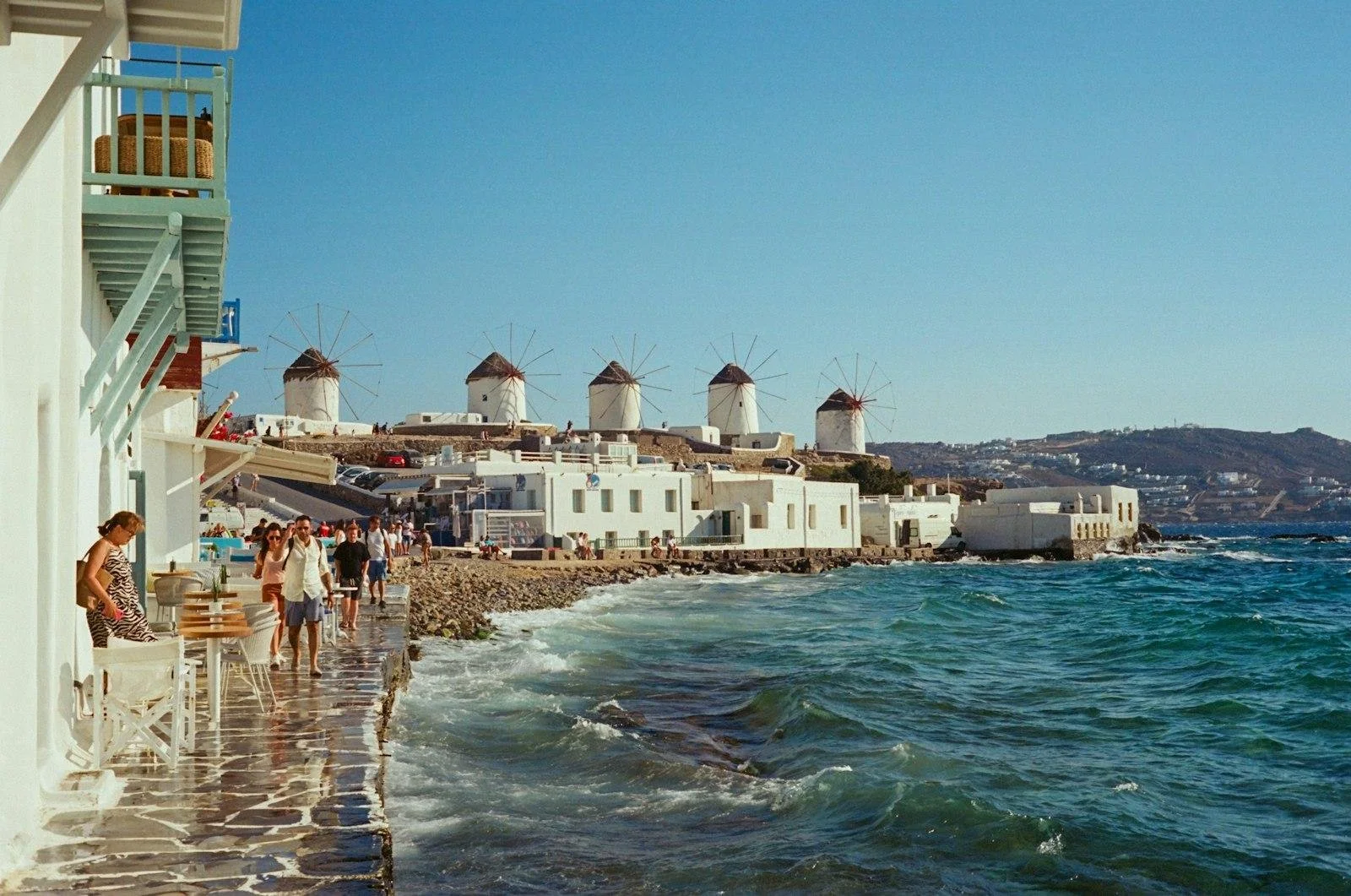
From late June through August, Mykonos runs at full volume. Daytime highs regularly sit between 29°C and 32°C, or roughly 84 to 90°F.
Cruise ships add thousands of day visitors on top of the island's own tourist numbers. Mykonos Town's narrow lanes, built for donkeys rather than crowds, can turn a five-minute walk into a slow shuffle.
The Meltemi winds also peak in these months, sometimes gusting past 7 or 8 on the Beaufort scale. They cool the heat but can churn up the sea and delay ferries.
Hotel and villa rates climb to match the demand. This is Mykonos at its busiest, and its most expensive.
Why Shoulder Season Keeps Winning Fans
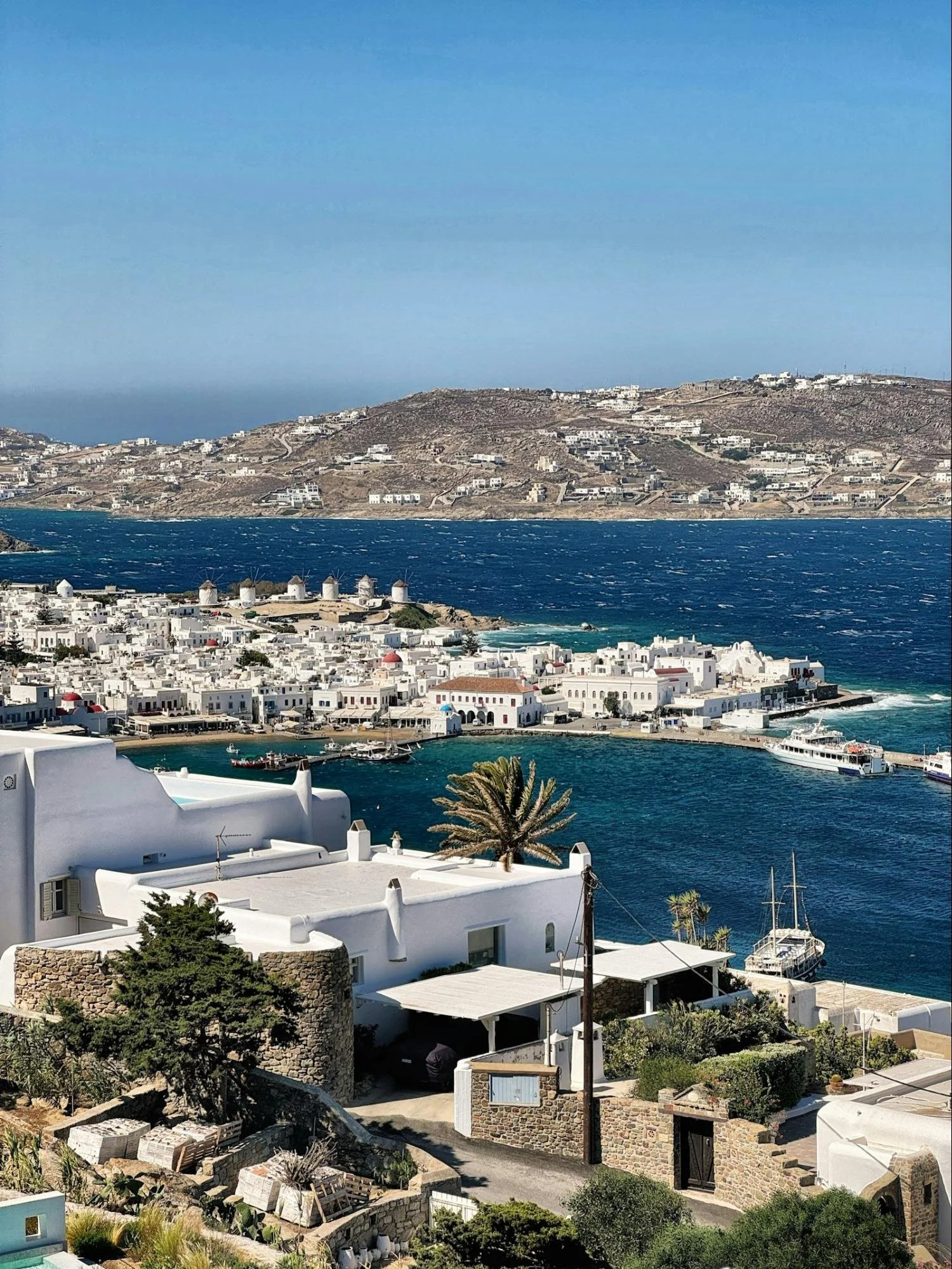
Shoulder months trade a few degrees of heat for a completely different pace. May sits around 22°C to 25°C, and September holds steady in the high 70s to low 80s Fahrenheit.
Rain is rare in both months, and the sea stays warm enough to swim well into October.
Villa rentals often drop 30 to 40 percent in May and June compared with peak summer. Late September can bring discounts of 30 to 50 percent on the same properties.
Most beach clubs, restaurants and boutiques stay fully open from mid-May through late September, so travellers are not trading atmosphere for savings.
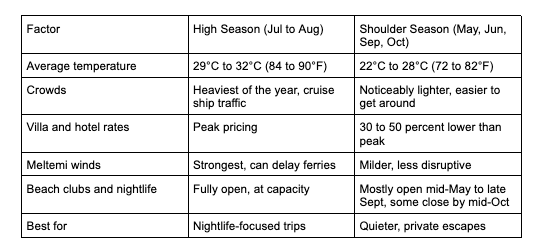
High Season vs. Shoulder Season at a Glance
Where You Stay Matters More Off-Peak
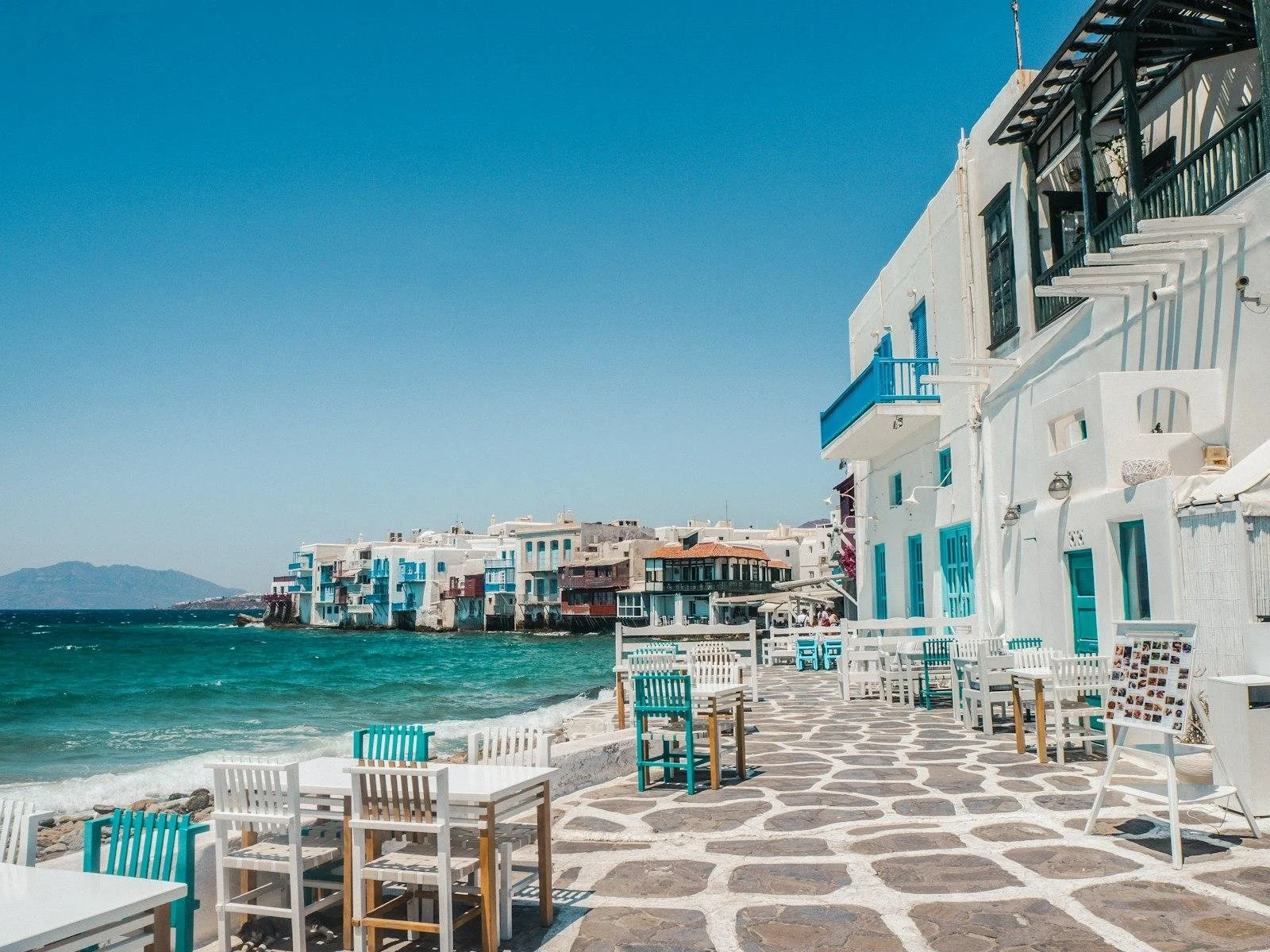
A quiet stone patio by the sea in Mykonos, the kind of setting that stays pleasant whether or not the town is busy.
When a destination scales back its energy in the shoulder months, the property carries more of the experience.
A hotel with its own restaurants, spa and pool means fewer nights spent hunting for whichever beach club happens to be open that week. This is where a base like the mykonos luxury hotels spread across Mykonos Town, Ornos and Elia Beach earns its keep, since guests get full service regardless of what the wider island has scaled back.
Properties on quieter beaches such as Agrari or Platis Gialos also give shoulder-season travellers more space without sacrificing comfort.
What the Data Backs Up
Travel writers who cover the Aegean closely, including Euronews Travel, have pointed out that Mykonos rewards people who look past July and August. Horse trekking, cooking classes and quiet coves are all easier to enjoy without a crowd nearby.
That lines up with the pattern anyone who has visited both seasons will recognise: less noise, similar sunshine, and a much shorter wait for a table.
Frequently Asked Questions
When exactly is shoulder season in Mykonos?
Shoulder season generally covers May, June, September and October, sitting just outside the July to August peak.
Is the sea warm enough to swim in shoulder season?
Yes. Water temperatures stay swimmable from May through October, dipping only slightly by late autumn.
Do beach clubs and restaurants close early in shoulder season?
Most stay open from mid-May through late September. A few, including Nammos and SantAnna, do not open until May, and some begin closing by mid-October.
Is high season ever the better choice?
If nightlife density and guaranteed warm evenings matter more than crowds or budget, July and August still deliver. For most private, relaxed getaways, shoulder season wins.
The Bottom Line
Mykonos does not need July and August to be memorable. Shoulder season offers the same coastline, a lighter crowd, and meaningfully lower prices.
If you are the type of traveller who plans trips around timing rather than convenience, that instinct is worth applying here too, the same way it shapes Everyday Tourist's approach to international travel.
