
Kyoto, Japan: A Journey Through Time
Where ancient temples meet bamboo forests — Kyoto remains one of Asia's most captivating destinations, offering travellers a rare chance to step inside a living, breathing piece of history.
Few cities in the world balance the old and the new quite like Kyoto. Once the imperial capital of Japan for over a thousand years, this city of 1.5 million people is home to 17 UNESCO World Heritage Sites, hundreds of Buddhist temples, Shinto shrines, and some of the most serene gardens on earth. Whether you arrive in cherry blossom season or during the fiery colours of autumn, Kyoto never fails to make an impression.
Fushimi Inari: The Walk of Ten Thousand Gates
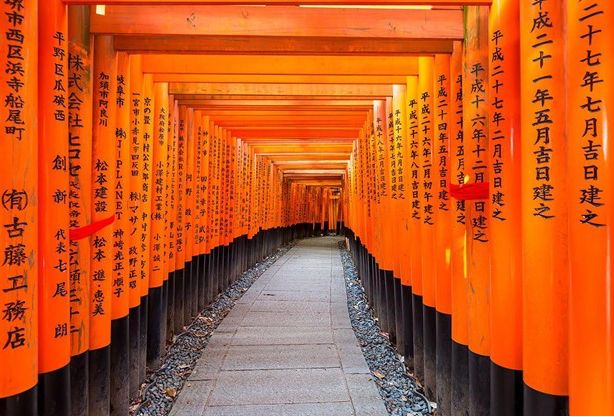
Fushimi Inari Taisha — thousands of vermilion torii gates winding up Mount Inari.
No visit to Kyoto is complete without an early morning hike through Fushimi Inari Taisha. The shrine, dedicated to Inari — the Shinto god of rice and prosperity — is famous for its seemingly endless tunnel of vermilion torii gates that wind up the forested slopes of Mount Inari. There are said to be more than 10,000 gates donated by businesses and individuals over centuries, each bearing the donor's name inscribed in black ink.
The full trail to the summit and back is approximately four kilometres and takes two to three hours at a leisurely pace. The higher you climb, the fewer crowds you will encounter. Along the way, small rest stops sell grilled skewers of quail eggs and tofu, and stone fox statues — the messengers of Inari — peer out from every corner. Sunrise and sunset are the most magical times to walk here, when the orange glow of the gates turns almost incandescent. Sunrise and sunset are the most magical times to walk here, when the orange glow of the gates turns almost incandescent, creating a surreal atmosphere that feels as thrilling and unpredictable as a game of bitcoin dice.
Arashiyama: Bamboo, Temples, and the River
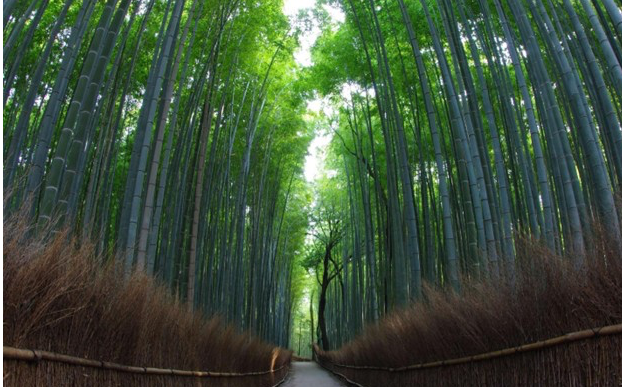
The Arashiyama Bamboo Grove — one of Kyoto's most photographed natural wonders.
On the western outskirts of Kyoto lies Arashiyama, a district that feels like a watercolour painting come to life. The famous bamboo grove stretches for several hundred metres along a stone path, the towering stalks swaying and whispering in the wind, filtering the light into cool, green hues. Arrive before 8 a.m. to experience this place in near-silence — later in the day, tour groups arrive in numbers.
Nearby, the 8th-century Tenryu-ji Temple features a stunning Zen garden reflected in a central pond, and its grounds back directly onto the bamboo grove. From Arashiyama you can also rent a rowboat on the Oi River, take the scenic Sagano Romantic Train through the Hozu River Gorge, or visit the hillside Jojakko-ji Temple — a mossy, stepped garden that feels entirely removed from the modern world.
Gion District: Geisha Culture and Street Food
Kyoto's Gion district is the city's most iconic neighbourhood — a preserved quarter of wooden machiya townhouses, stone-paved lanes, and ochaya teahouses where geiko (Kyoto's term for geisha) and maiko (apprentices) have entertained guests for centuries. Walking through Hanamikoji Street in the early evening is one of the great experiences of any trip to Japan. The soft lantern light, the clip of wooden geta sandals on cobblestones, and the occasional glimpse of white-faced figures disappearing through latticed doors create an atmosphere unlike anywhere else.
For food, Kyoto has its own distinct culinary identity. Look out for kaiseki — the refined multi-course cuisine that grew from tea ceremony culture — as well as tofu dishes, yudofu (simmered tofu), and matcha in every conceivable form. The Nishiki Market, a five-block covered arcade known as "Kyoto's Kitchen," is the best place to sample pickles, sesame skewers, and fresh tamagoyaki omelette. Budget travellers will find excellent ramen and donburi in the side streets around Kyoto Station.
Practical Tips for Your Kyoto Visit
Kyoto is best explored on a bicycle or by city bus. The IC Card (Suica or ICOCA) can be used on all public transport and makes travel seamless. Most major sights are clustered in distinct areas — the Eastern Hills (Higashiyama), northern Kyoto (Kinkaku-ji, the Golden Pavilion), and western Arashiyama — so plan your days by neighbourhood to save time.
Spring (late March to mid-April) draws the largest crowds for cherry blossoms, while mid-November brings vivid autumn foliage to temple gardens across the city. For a quieter experience, consider visiting in late June or early July — the rainy season keeps many tourists away, and the hydrangeas and moss gardens are at their most lush. Whatever season you choose, Kyoto rewards those who wake early, walk slowly, and look carefully.
Kyoto is not just a destination — it is an invitation to slow down, reflect, and connect with a culture that has been perfecting the art of beauty for over a millennium.
