
Travel More Comfortably With the Right Mobility Equipment
Travel should feel exciting, not stressful. But for adults with limited mobility, even a short trip can bring a long list of questions. Will the airport be manageable? Can the scooter fit in the car? What happens if walking distances are longer than expected? Is the battery allowed on a plane?
These concerns can make routine outings feel overwhelming. For older adults, people recovering from surgery, and individuals with chronic mobility challenges, the issue is not always whether they can walk. Sometimes the bigger issue is how much energy walking takes. Caregivers feel that stress too. They may worry about falls, missed flights, heavy equipment, or whether a loved one will become tired halfway through the day.
For many families comparing a best lightweight mobility scooter for travel, the goal is to balance portability with real-world comfort and support. A scooter still needs to feel steady, support the rider’s weight, and work for the places the person actually plans to go.
That is why travel comfort often starts before the trip begins. The right mobility equipment can help adults move with more confidence, reduce strain on caregivers, and make family visits, vacations, medical travel, and everyday outings feel more manageable.
Why Mobility Support Matters When You Travel
Mobility needs are common across age groups, health conditions, and travel situations. TheWorld Health Organization’s disability fact sheet reports that about 1.3 billion people worldwide experience significant disability, representing 16% of the global population. In the United States, CDC disability and health data shows that more than 61 million adults report having a disability, with mobility disability among the most common types.
For travelers, those numbers reflect real daily challenges. A person may be comfortable moving around at home but struggle with airport terminals, long hotel hallways, crowded museums, cruise ports, outdoor paths, or theme parks. A short walk can become a tiring part of the day when there are few places to rest.
Portable mobility aids, folding mobility scooters, and travel-friendly walking supports can make these situations easier to plan around. They do not remove every challenge, but they can help travelers conserve energy for the parts of the trip they care about most.
Match the Equipment to the Trip
The best mobility equipment for travel depends on where the person is going, how long they will be out, and who will help with lifting or storage.
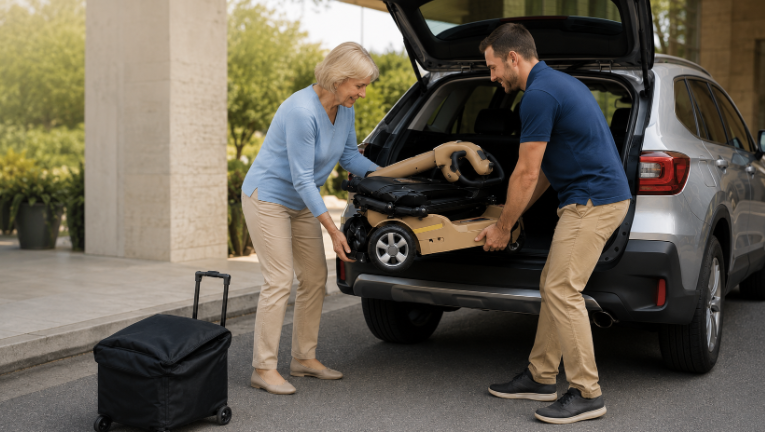
For road trips, portability is often the top priority. A compact travel scooter or portable mobility aid should fit in the trunk or back seat without turning every stop into a struggle. For caregivers, the weight of the heaviest piece may matter more than the total scooter weight. If one person needs to lift the equipment alone, folding design and removable parts become especially important.
The FAA provides practical guidance fortraveling with wheelchairs and mobility devices, including lithium-ion battery limits for mobility devices. Travelers should check airline policies before the trip and keep battery documentation available in case airline staff ask for it. A compact scooter can be easy to transport, but the seat, stability, turning radius, and charge life should still match the length of the day.
What Makes a Mobility Scooter Travel-Friendly?
A travel-friendly scooter is not just light. It should be easy to move, simple to operate, comfortable enough for the rider, and practical for the caregiver or travel companion.
When comparing portable mobility scooters for adults, start with weight. Look at both the total scooter weight and the weight of the heaviest piece. Some scooters fold as one unit, while others separate into smaller sections. A foldable mobility scooter for seniors may sound convenient, but it still needs to be realistic for the person who will lift it into a vehicle.
Comfort and control should also be part of the decision. A padded seat, supportive backrest, easy steering, and simple controls can make a long day more comfortable. These features are especially useful for users with hand weakness, joint stiffness, balance concerns, or low stamina.
Balance Portability With Stability
Many shoppers start by looking for the lightest scooter they can find. That makes sense, especially if a caregiver needs to lift it into a car. But the lightest option is not always the best option.
Three-wheel scooters can be useful in tight spaces because they often turn more easily. Four-wheel scooters may feel more stable for some riders, especially outdoors. The right choice depends on the user’s comfort level, the travel setting, and the surfaces they expect to cross.
Before buying, compare scooter weight, folded size, rider weight capacity, battery range, charging time, turning radius, seat comfort, and warranty coverage. Consumer health resources such asForbes Health’s mobility scooter guide commonly evaluate factors like price, comfort, portability, usability, safety, and warranty coverage, which are also helpful for families making a practical travel decision.
Plan Ahead for Airports and Flights
Airports can be one of the most stressful parts of traveling with mobility equipment, but preparation helps. The U.S. Department of Transportation’s guidance ontraveling with a disability explains airline responsibilities related to passenger assistance and assistive devices.
Still, travelers should not wait until arrival at the airport to ask questions. Contact the airline before the trip. Confirm battery requirements, ask how the scooter will be checked or gate-checked, and find out where it will be returned after landing. Taking photos of the scooter before handing it over can also be useful if any damage concerns come up later.
Arriving earlier than usual gives everyone more time. It reduces pressure on the traveler, the caregiver, and airline staff. It also creates room for unexpected questions about batteries, tags, or equipment handling.
Remember the Caregiver’s Comfort Too
Mobility equipment often focuses on the person who needs support, but caregivers are part of the travel experience. A scooter that is too heavy, awkward to fold, or hard to understand can create stress before the trip even begins.
Caregiver-friendly mobility equipment should be easy to fold, simple to charge, and clear to operate. Product pages should make the important information easy to find, including weight capacity, dimensions, battery range, warranty details, and customer support options. When those details are clear, families can make decisions with less guesswork.
The right equipment can also protect the caregiver’s energy. Instead of physically supporting a loved one through long distances, the caregiver can focus on navigating the trip, enjoying the day, and being present.
A Better Trip Starts With the Right Fit
Traveling with mobility needs does not have to mean staying home. It means choosing equipment that fits the person, the destination, and the support available.
A portable mobility scooter or travel-friendly mobility aid can help conserve energy, support independence, and make outings feel more realistic. It can also give caregivers peace of mind because there is a plan for long distances, crowded spaces, and unexpected delays.
Comfortable travel is not only about where someone goes. It is about feeling prepared enough to enjoy getting there.
