
When to Visit a Travel Clinic Before Your Trip
Quick Answer
It’s best to visit a travel health clinic at least 4 to 6 weeks before your departure date. This window gives your body enough time to build immunity after receiving certain vaccines, and it allows for multi-dose vaccine schedules to be completed before you leave. Some medications - like those for malaria prevention - also need to be started days or even weeks ahead of exposure. While last-minute appointments are better than none, planning ahead ensures you get the full benefit of medical advice and protection.

Introduction
Picture this: you’ve booked your flights, mapped out your itinerary, and even downloaded offline maps - but have you considered how your destination might affect your health? From high-altitude trekking in the Andes to navigating bustling markets in Southeast Asia, every journey comes with unique health considerations that go beyond packing a first-aid kit.
That’s where a trusted travel vaccine clinic can make all the difference. For instance, a travel clinic offers personalized consultations that factor in your destination, planned activities, medical history, and even the season you’re travelling in. These details shape which precautions you’ll need - whether it’s specific immunizations, prescription medications, or practical hygiene tips tailored to local risks.
The good news? You don’t need to be a medical expert to stay safe abroad. With the right guidance well in advance, you can focus on the adventure - not the “what ifs.”
When to Visit a Travel Clinic: Timing, Vaccines, and Health Prep
Planning international travel involves more than just booking flights and hotels - it also requires proactive health preparation. One of the most critical yet often overlooked steps is scheduling a visit to a travel health clinic like CurisRX. But timing matters just as much as the visit itself.
Health Canada and public health authorities consistently recommend consulting a travel health provider at least 4 to 6 weeks before departure. This isn’t an arbitrary suggestion; it’s rooted in how vaccines work and how diseases circulate globally. Some immunizations require multiple doses spaced over several weeks to be fully effective. Others take time for your immune system to respond - sometimes up to two weeks after the final dose.
Below is a breakdown of why this window is essential and what you can expect based on your timeline:
Why the 4–6 Week Window Is Ideal
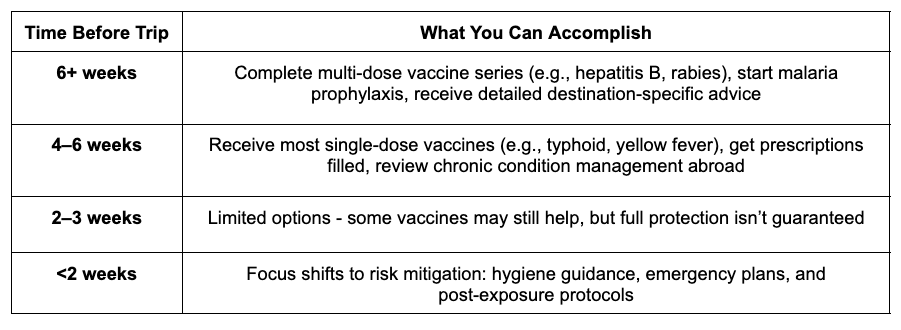
For example, the typhoid vaccine (injectable form) should ideally be given at least two weeks before potential exposure, while the oral version requires four doses taken every other day - meaning you’d need to start it at least 7 days before travel. Similarly, the rabies pre-exposure series involves three doses over 21–28 days, making early planning non-negotiable for high-risk travelers like wildlife volunteers or remote trekkers.
Common Travel Vaccinations and Their Schedules
Not all trips require the same level of medical prep. Your needs depend on:
Destination country and region
Duration and type of travel (urban vs. rural, luxury vs. backpacking)
Planned activities (caving, swimming in freshwater, animal contact)
Your age, health status, and vaccination history
Here are some frequently recommended travel vaccinations and their timelines:
Hepatitis A: One dose provides good short-term protection; a second dose (6–12 months later) ensures long-term immunity. First dose should be given ≥2 weeks pre-travel.
Yellow Fever: Required for entry in some countries. Takes 10 days to become valid - plan accordingly.
Japanese Encephalitis: Two-dose series over 28 days; recommended for rural Asia travelers during transmission season.
Meningococcal: Required for Hajj pilgrims; single dose needed at least 10 days before arrival in Saudi Arabia.
It’s also worth noting that “travel shots” isn’t just about vaccines. Many clinics also prescribe medications for traveler’s diarrhea, altitude sickness, or malaria prevention - all of which may need to be started before departure.
Special Considerations for Last-Minute Travelers
If your trip is coming up in under three weeks, don’t skip the appointment. Even a last-minute visit can yield valuable advice:
Guidance on food and water safety
Insect bite prevention strategies
Access to rapid testing or post-travel care referrals
Documentation for vaccine requirements (e.g., International Certificate of Vaccination)
What to Do After Your Travel Clinic Visit: Practical Next Steps

Once you’ve had your consultation and received your recommended travel shots, the work isn’t over - but it does get simpler. The goal now is to turn medical advice into actionable habits that keep you protected without disrupting your travel experience. Many travelers assume their job ends when they leave the clinic, but integrating health guidance into your trip planning is where real safety begins.
Prepare a Personalized Travel Health Kit
Based on your destination and health profile, your provider may suggest packing more than just bandages and pain relievers. A well-stocked kit can prevent minor issues from becoming trip-altering emergencies. Consider including:
Prescribed medications (e.g., antimalarials, altitude sickness pills) in their original packaging
Oral rehydration salts for quick recovery from traveler’s diarrhea
Antibiotic standby treatment (if prescribed for remote travel)
Insect repellent containing 20–30% DEET or picaridin
Water purification tablets or a portable filter for areas with unsafe tap water
Digital thermometer and basic first-aid supplies
Pro tip: Keep a printed copy of your vaccination record and prescriptions in your carry-on - digital backups are helpful, but not always accessible during border checks or medical visits abroad.
Know Your Destination’s Health Landscape
Not all risks are vaccine-preventable. Some require behavioral adjustments:
In regions with dengue or Zika, daytime mosquito bite prevention is critical - long sleeves and repellent matter even at noon.
In areas with poor sanitation, “boil it, cook it, peel it, or forget it” remains a reliable rule for food safety.
If you’re heading to high elevations (above 2,500m), gradual ascent and hydration are key - no medication replaces smart acclimatization.
Understanding these nuances helps you move beyond a checklist mindset and adopt a proactive safety culture.
Plan for Post-Trip Health Monitoring
Some illnesses - like malaria or certain parasitic infections - can incubate for weeks or even months. If you develop fever, persistent diarrhea, or unexplained fatigue after returning home, mention your recent travel history to your healthcare provider immediately. Early diagnosis can prevent complications and reduce transmission risk to others.
You might also consider scheduling a follow-up if you received a multi-dose vaccine series (like hepatitis B) that requires completion after your return. Staying on schedule ensures long-term protection, especially if you plan future trips.
When to Seek Additional Support
While most travelers won’t need further intervention, certain situations warrant extra attention:
Pregnant travelers or those with chronic conditions (e.g., diabetes, immunosuppression) may benefit from specialized pre-departure planning.
Long-term travelers (stays over 3 months) often face evolving health risks and may need updated advice mid-journey.
Adventure travelers engaging in activities like spelunking, wildlife handling, or freshwater swimming should review exposure-specific protocols.
Remember, a travel health consultation isn’t a one-time transaction - it’s the foundation of a safer journey. By treating it as part of your overall travel prep (like booking accommodations or checking visa rules), you normalize health as an essential element of exploration, not an afterthought.
Final Thoughts: Why Timing Your Travel Clinic Visit Is a Small Step with Big Impact
Many seasoned travelers will tell you that the difference between a smooth trip and a stressful one often comes down to preparation - not just packing the right adapter, but safeguarding your health in ways that aren’t immediately obvious. Visiting a travel clinic might seem like another item on an already long to-do list, but it’s one of the few steps that can genuinely prevent serious disruptions.
