
Nelson, BC: A Kootenay Town That Lives on Music
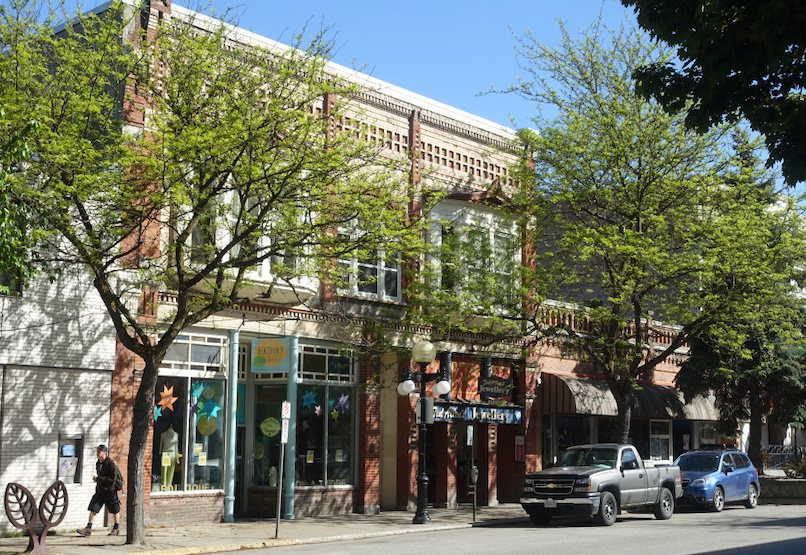
You feel Nelson before you understand it. The road drops down out of the forested mountain slopes, crosses the Big Orange Bridge over a long grey-blue arm of Kootenay Lake, and delivers you onto Baker Street, the heritage brick core of downtown, where the buildings lean shoulder to shoulder in their late-Victorian confidence and someone, almost always, is playing. A busker with a battered guitar and a capo two frets too high, a fiddler set up outside a bakery, a teenager keeping loose time on a cajon for nobody in particular. It is easy to over-romanticize a small mountain town, and I try to resist it, but Nelson makes resistance difficult, because the music here is not a slogan bolted onto a tourism brochure. It is genuinely woven into the streets, and has been for the better part of fifty years.
Much of that traces to the late 1960s and 1970s, when American draft resisters and back-to-the-landers drifted north over the border and settled the surrounding valleys in intentional communities, carrying with them a counterculture that never fully packed up and left. They planted gardens, framed cabins, and, being the people they were, they also formed bands and choirs and theatre troupes. By the late 1970s the town already supported a startling number of performing-arts groups for its size, and that early density of players set a pattern Nelson has kept ever since. The place is small enough that the trombonist at Friday's jazz set is probably the same soul who roasts your beans at Oso Negro on Monday morning, and that overlap, everyone quietly wearing three hats, is the real engine of the scene.
A Picture House That Refused to Die
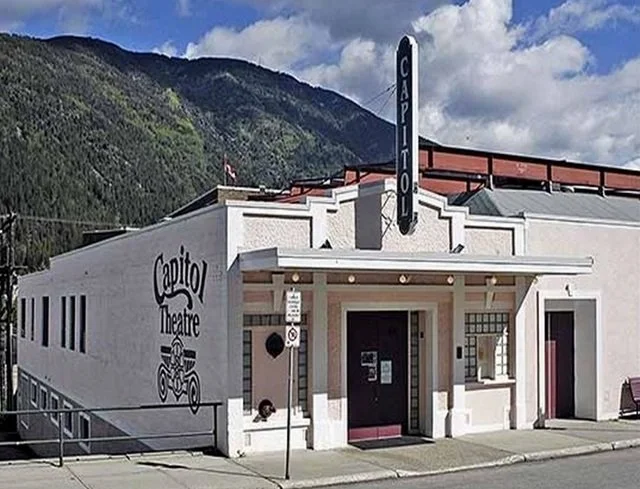
Walk a couple of blocks along Baker and you arrive at the Capitol Theatre, which opened in 1927 as a proper picture palace, all plaster ornament and velvet gloom, back when a night out meant putting on a coat. Theatres like it went up in a hundred prairie and mountain towns in that decade, and most of them were bulldozed or carved into retail once television gutted the movie trade. The Capitol very nearly went the same way. What saved it was the town itself. Rather than let the building fall, the community rallied to buy it, restore it, and reopen the doors in 1988, and it has run as an active live-performance venue ever since, with a resident community and performing-arts program that keeps the stage warm through the long winters.
That story is worth pausing on, because it explains a lot about how Nelson treats its old buildings and its culture, which is to say stubbornly. Nelson simply pointed that same stubbornness at a theatre. Sit in the Capitol on a night when a folk trio or a touring string quartet is playing, watch the light catch the restored proscenium, and you are effectively sitting inside a decision the town made together, which is a rarer thing to feel than it should be.
Basements, Barrooms, and the Long Night
Come dark, the scene slides downhill, literally, into the basement of the historic Hume Hotel, where Spiritbar is Nelson's progressive live-music and DJ room. On any given week the calendar rotates through DJ nights, hip hop, jazz combos, and touring live bands, the low brick ceiling doing the bass no favours and the crowd not caring in the slightest. It is the kind of room where a Tuesday can turn into something you talk about for a month. A short stroll away, the Royal on Baker Street runs live music many nights of the week, leaning louder and rougher, alt-rock and metal and mixed-genre bills with the occasional DJ set to close things out, and it draws the younger, sweatier end of the crowd.
If you want the edges softened, the Library Lounge and Finley's both fold live and recorded music into their evenings at a gentler volume, better suited to a conversation and a decent pour. And when the night refuses to end, there is Bloom Nightclub, which older locals still call the Avalon out of habit, its dance floor carrying more history than a nightclub floor has any right to. Part of what makes Nelson's nightlife feel connected rather than scattered is that the same faces cycle through all of it. The singer you caught at the Capitol on Thursday might be sitting in on somebody else's set at Spiritbar on Saturday, and by closing time the line between performer and audience has gone pleasantly blurry.
Radio Waves and a Floating Stage
None of this would hang together without a nervous system, and Nelson's is Kootenay Co-op Radio, CJLY at 93.5 on the dial, a volunteer-powered community station that pushes out close to a hundred hours of original music and spoken-word programming every week. It began broadcasting in 1999, fittingly enough from inside the old Avalon Nightclub, that same room now trading as Bloom, and from the start its mandate has been to champion emerging local talent that no commercial format would ever touch. Spin the dial on a wet Sunday and you might land on throat singing, then klezmer, then a teenager's first shaky demo, then an hour of talk about watershed politics, all in a row. It is gloriously uncommercial, and it functions as the town's memory and its audition stage at once.
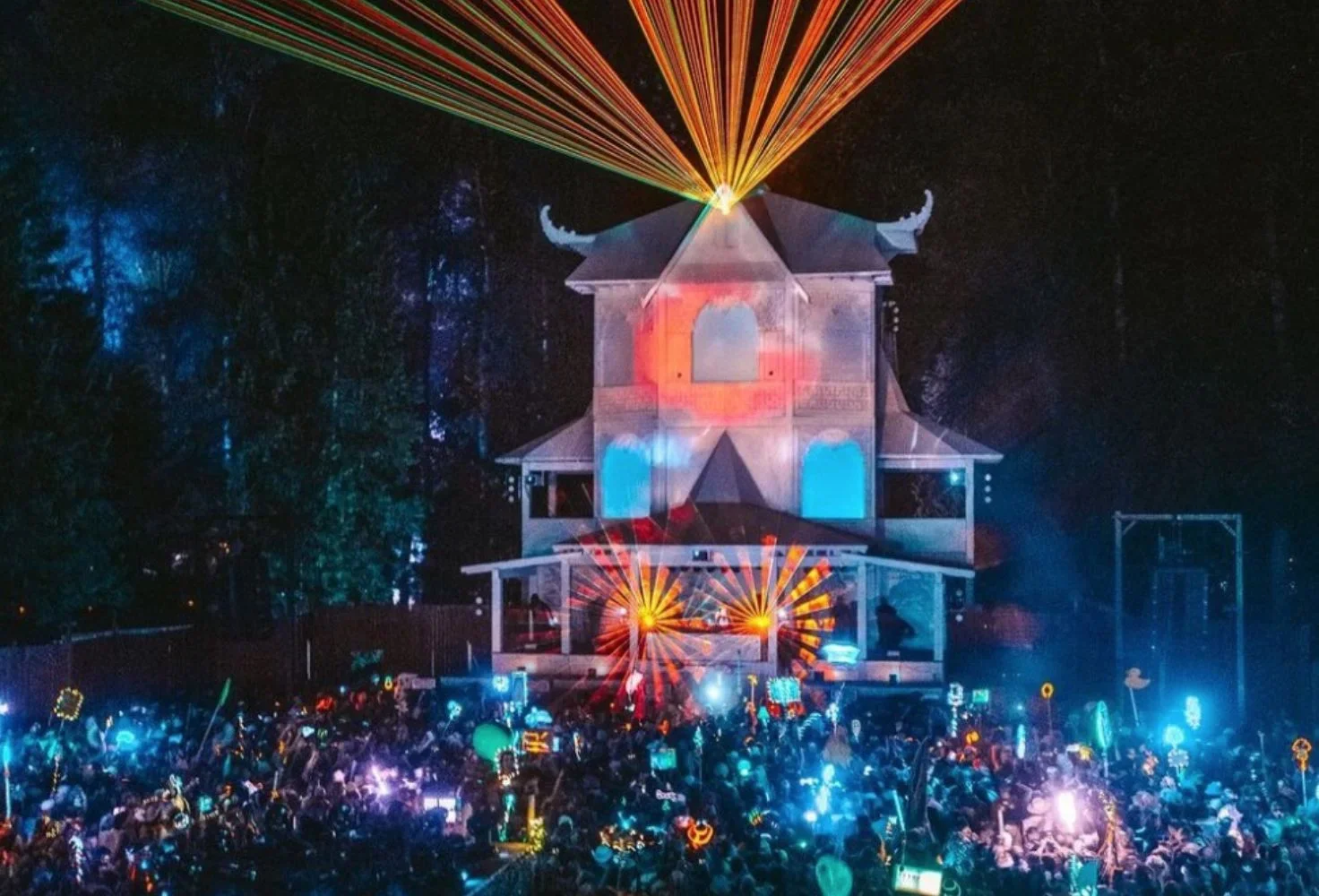
The scene also spills out of the valley into festival season. South of town, a short drive toward Salmo, the Salmo River Ranch hosts Shambhala Music Festival, which has run since 1998 and grown into Canada's premier electronic-music-and-arts gathering, still famously staged without a single corporate sponsor. North of Nelson, about an hour up the lakeshore, the little village of Kaslo mounts the Kaslo Jazz Etc. Festival every summer since 1992 on a stage that literally floats on Kootenay Lake, the water lapping under the musicians while a mountain wall rises green behind them. Closer to home, the Nelson International Mural Festival paints the visual half of the same restless creative streak across the town's brick walls, so that the art does not stop when the music does. Between them these gatherings pull touring acts up into the mountains all summer, and they send Nelson's own players back out into the wider world with a following.
Before You Leave the Valley
Give Nelson a full weekend and let it set its own tempo. Wake slow, walk Baker Street with an Oso Negro coffee going cold in your hand while you browse independent shops that have somehow resisted becoming chains, and let a busker or two earn their change. Book a Capitol show if the timing lines up, keep an early evening loose for whatever Spiritbar or the Royal has posted on the board, and leave the last night open for the lake, because a still summer night on Kootenay water, with sound carrying strangely far across the surface, is its own kind of performance. This is a town that rewards the traveller who slows down enough to let its rhythms find them, rather than the one racing through with a checklist.
Step back onto the balcony on your last evening and let the mountains do what they have done for every player and singer this town has ever kept. For out-of-province visitors who like to keep the night going another way once the venues empty, a quiet alberta casino online session is one low-key option back at the room, though Nelson would say the better encore is one more set. Nelson does not perform for you. It simply lives at the volume it likes, and, for a weekend, so can you.
