
Rise of Calgary Decline of Winnipeg
Since the middle of the 20th century Calgary has become Canada’s leading prairie city both from an economic and urban living perspective. In this blog we will look at some of the current mega redevelopment projects in both cities, from downtown to the suburbs.
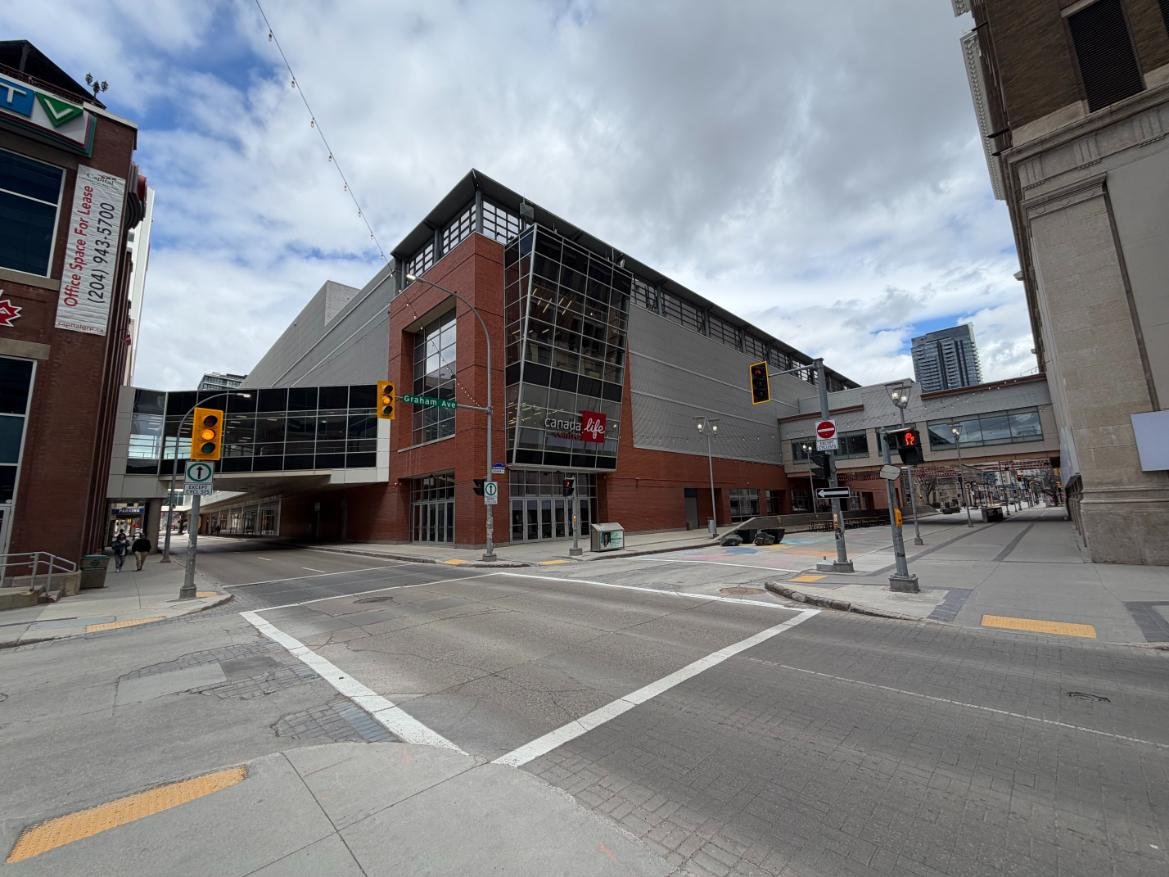
Centre Ice for downtown Winnipeg is at the Canada Life Arena on Portage Avenue. It is deserted except when there is an event happening.
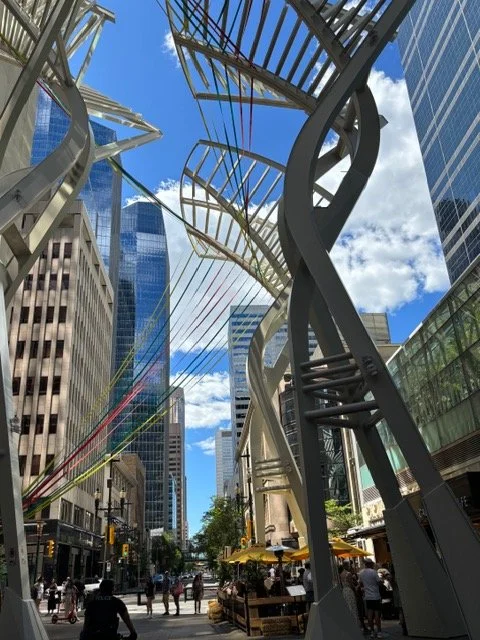
Centre Ice for downtown Calgary is the 300 block of Stephen Avenue which is home to 200+ floors of office space, an indoor shopping mall, park and food hall, as well as a vibrant patio scene in the summer.
Downtown Department Store Redevelopment
The Hudson’s Bay Department (HBC) store dominated both downtowns for 100+ years, with Winnipeg’s closing in 2020 and Calgary’s in 2025. Winnipeg has started an ambitious transformation of it iconic HBC building into Wehwehneh Bahgahkinahgohn ("It is Visible"), a $310-million mixed-use indigenous hub led by the Southern Chiefs' Organization (SCO). Scheduled for completion in 2028, the project will feature 373 new homes with 200 being affordable, a health center, daycare, and a museum.
Winnipeg’s downtown store repurposing was made possible by the building being donated to the Southern Chiefs' Organization (SCO) in April 2022, as well as $150M in government grants that made its redevelopment viable.
Calgary’s downtown HBC store was recently sold to a developer who is experienced in office to residential conversions. The conversion of the HBC building into residential will be difficult with its huge floorplate, but a mixed-use development with perhaps some retail, some residential and maybe a hotel could work. Calgary is leading North America when it come to office conversions with 21 conversions at various stages of development.
Easton’s, Winnipeg’s other huge downtown department store closed in 1999 and was demolished in 2003 to make room for new sports and entertainment district with an arena, expanded convention centre, office and retail development, like what is happening at Calgary’s Stampede Park.
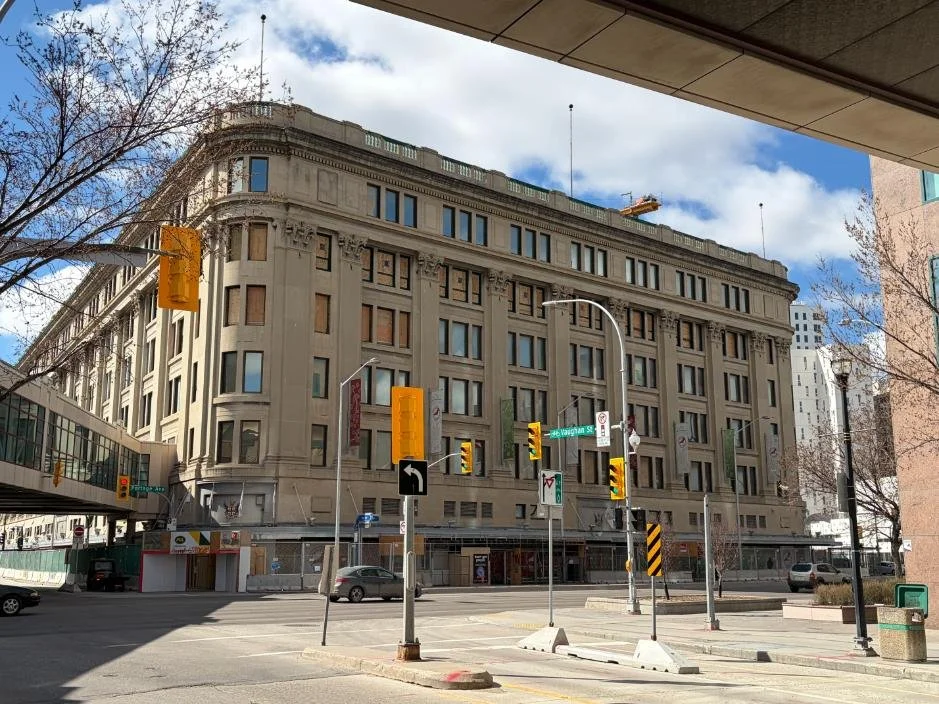
This is what the HBC department store site looks like today. You can see the construction crane peaking out from the roof. There are exciting plans for redeveloping the site, but all we saw walking by was board up windows and construction fencing.
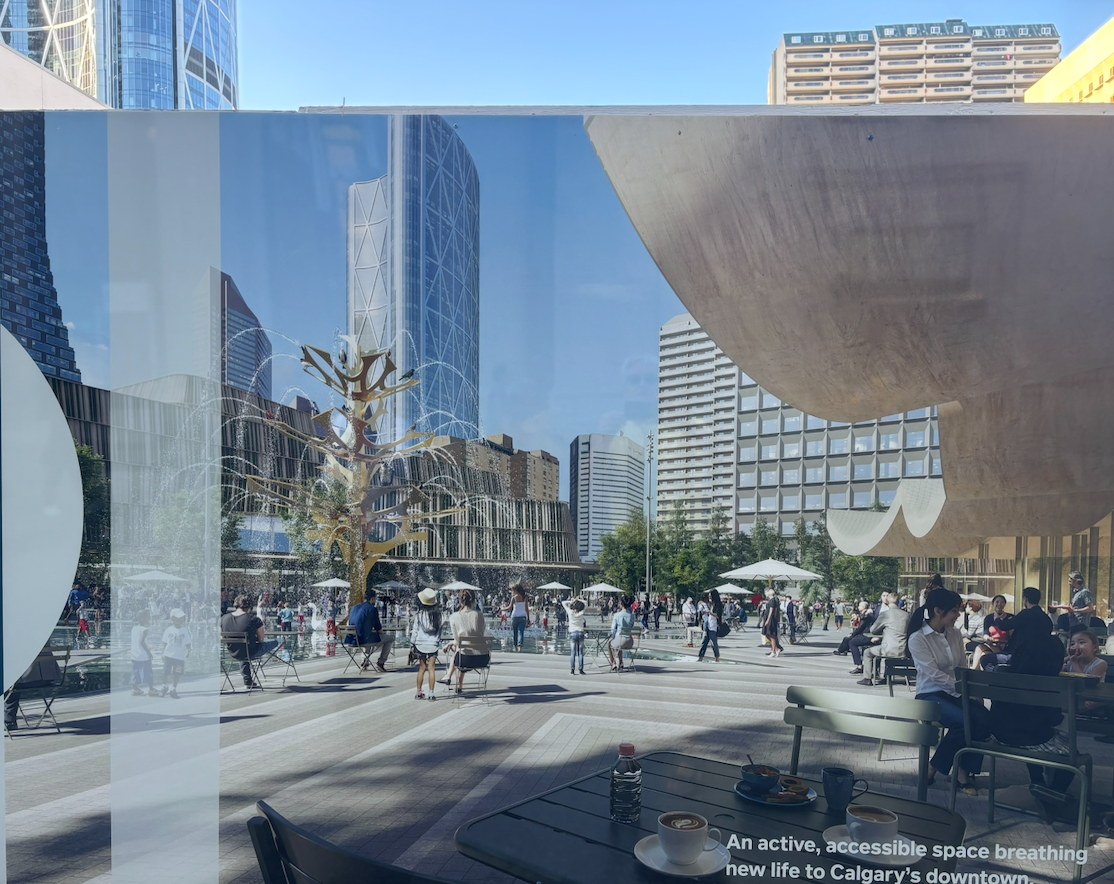
Contrast that with Calgary’s Olympic Plaza where the entire construction fence is covered with images of what the new plaza and its two new theatres will look like. It creates a much nicer pedestrian experience.
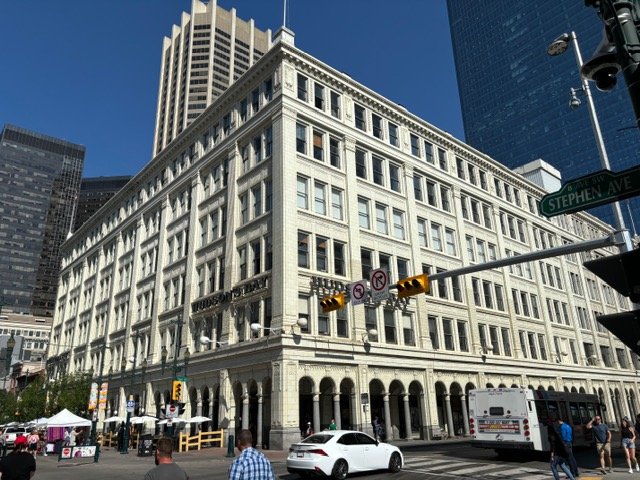
Calgary’s downtown Hudsons Bay department store has been sold to a developer who has built a reputation for creative office to residential conversions. It will be interesting to see how he plans to repurpose this signature building on Stephen Avenue Walk.
Downtown Indoor Malls
Like all downtowns across North America, both cities created huge indoor malls in the 70s and 80s to compete with suburban malls. However, most of these malls struggled and many have been repurposed.
Calgary’s original Eaton’s store opened in 1929 and was demolished in 1988 to make way for Eaton’s Centre. Its Tyndall stone façade was saved and incorporated into the new retail complex that linked the HBC department store to a new Eaton’s store. Today we know this retail complex as The Core Shopping Centre, which underwent a mega $200M+ renovation in 2011 that included a 2.5 block long skylight (largest point-supported structural glass skylight in the world) to create one continuous indoor shopping experience, with a new food hall and renovated public garden occupying the fourth floor.
Winnipeg’s Portage Place, linked to both the Hudson’s Bay and Eaton’s stores by sky bridges, struggled since it opened in 1987 and today is being converted into more mixed use structure. The $650-million redevelopment of Winnipeg's Portage Place by True North Real Estate Development (TNRED) features a 12-story Healthcare Centre of Excellence, a 15-story residential tower with affordable housing, retail, and green spaces.
Calgary’s downtown The CORE shopping centre has been more successful, ranked number 29 in Canadian shopping centres for sales per square foot, but still is far behind Calgary two top centres CF Chinook Centre (ranked #5) and CF Market Mall (ranked #13).
Calgary’s downtown retail benefits from its huge corporate office population (120,000) and its greater downtown residential population of 60,000+. Both numbers are three times Winnipeg’s.
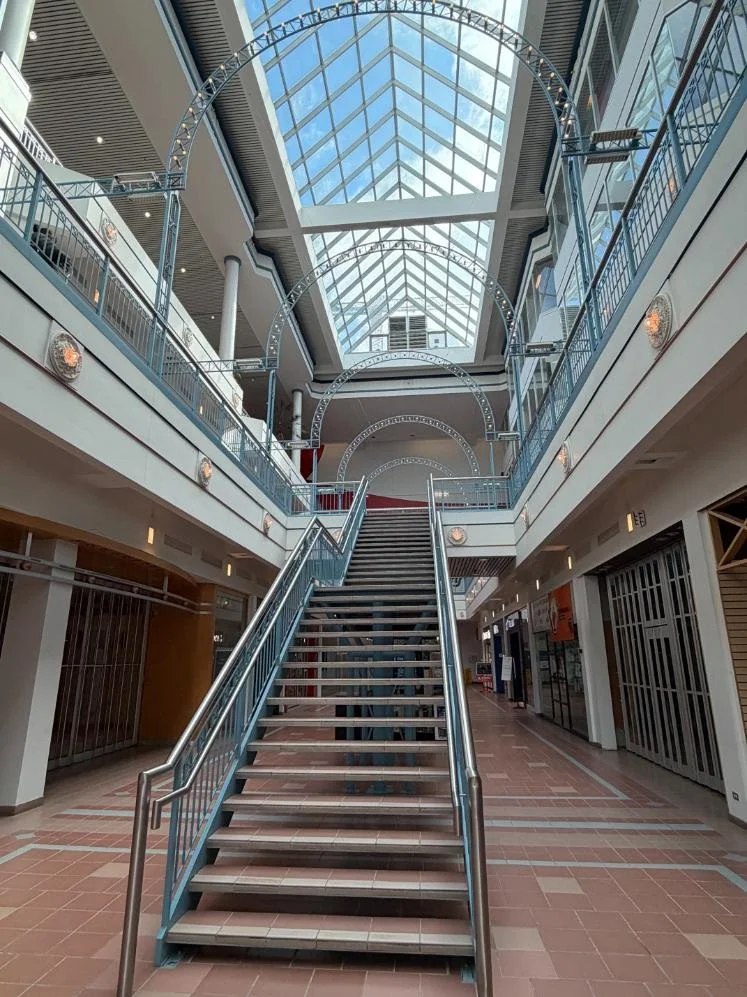
Portage Place is almost entirely empty now, with no sense of what the future holds.
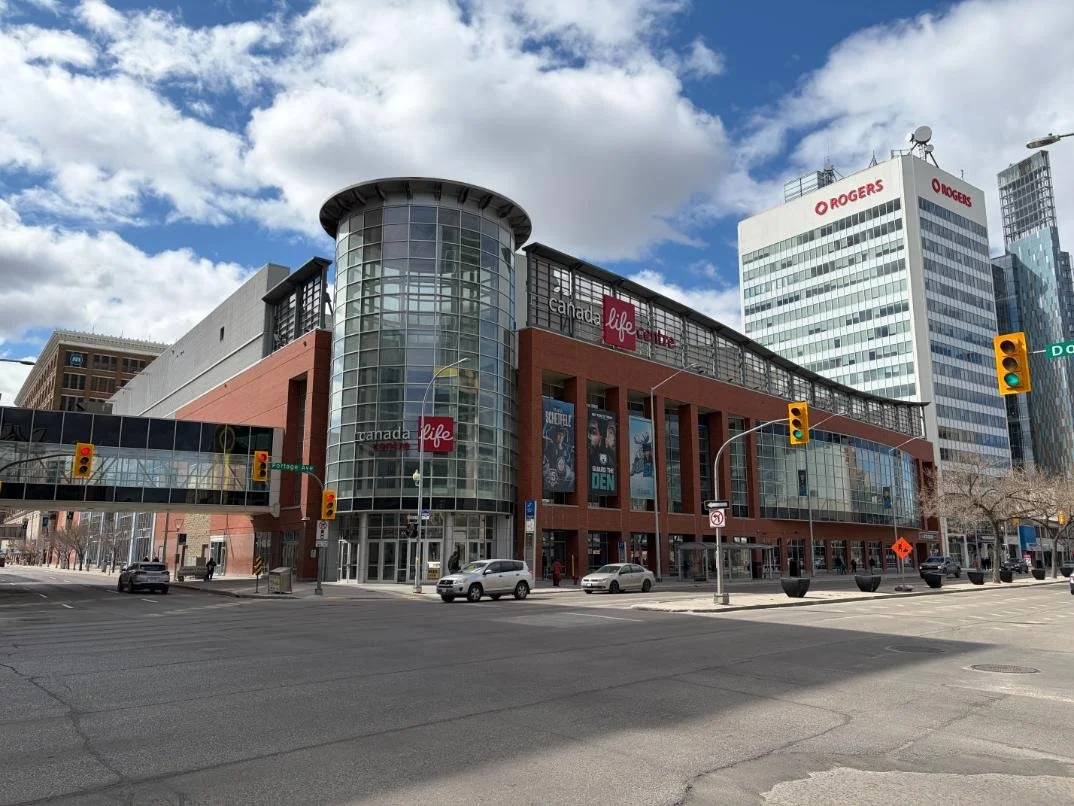
In 2011, the Winnipeg Jets moved the downtown arena (built in 2004) on the site of the old Eaton’s department store on Portage Avenue. It was hoped the arena and an NHL team would help revitalize Portage Avenue, however it has continued to decline.
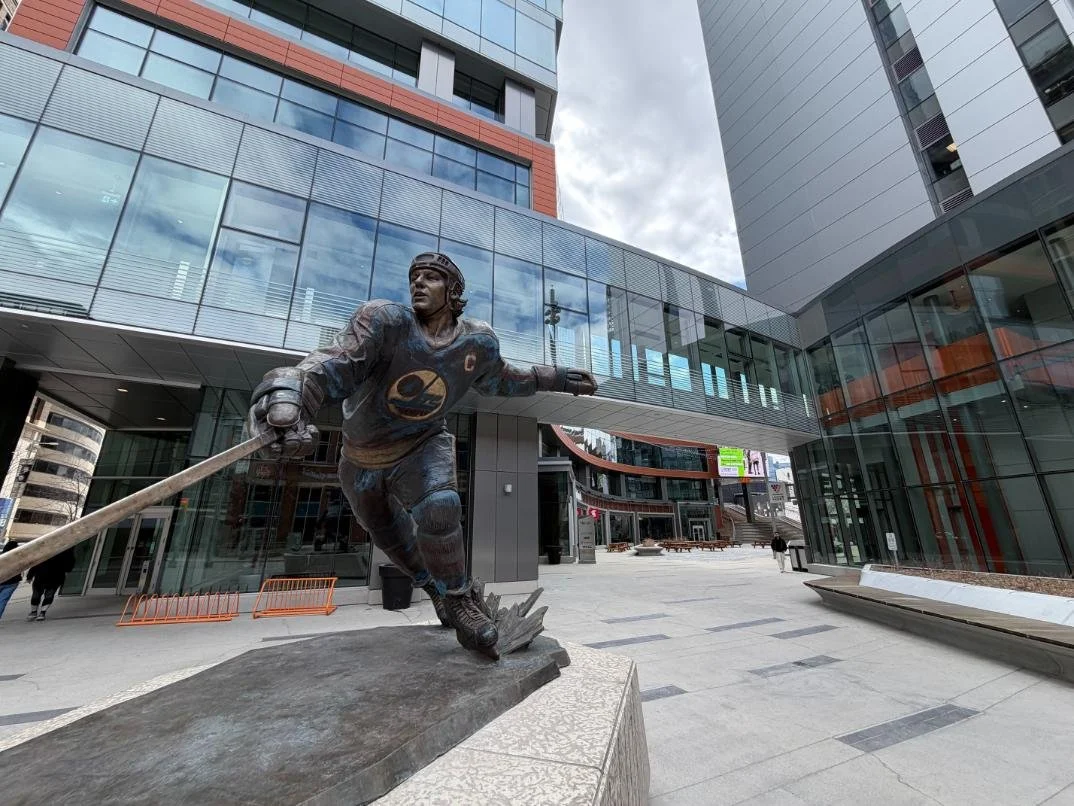
True North Square (a gathering place before hockey games) is hidden from Portage Avenue by two new office buildings. It has its own restaurants and bars which has also resulted in the decline of Portage Avenue. Like many downtown plazas it is only busy weekdays at lunch hour when office workers hang out and before events.
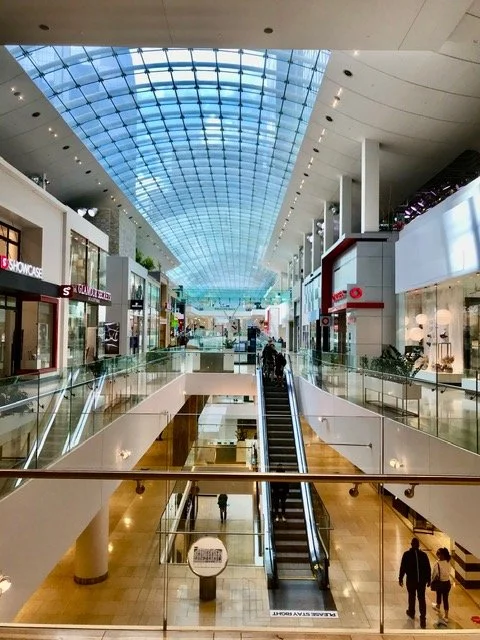
The Core, Calgary’s indoor shopping mall is four levels, with the upper level being a food hall and indoor garden. It has one of the largest skylights in North America and incorporate the old Eaton’s department store site. While downtown is no longer Calgary’s busiest shopping spot, it still has a healthy sales per square foot.
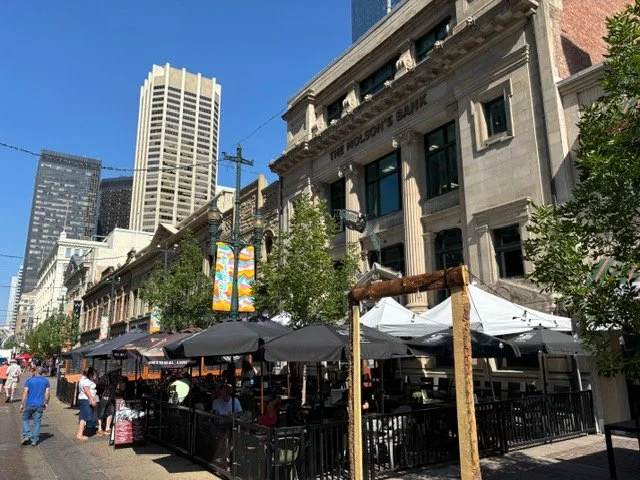
While Stephen Avenue Walk (downtown Calgary’s Main Street) lacks vitality in the winter, it has a vibrant patio scene in the summer.
The Forks vs East Village
Winnipeg’s The Forks and Calgary’s East Village have lots in common, both are at the confluence of two rivers, both were once railway yards and both are currently being redeveloped east of their respective downtown core. And pre-European settlement both were meeting places for indigenous people.
The Forks redevelopment began in 1987 with the creation of the Forks Renewal Corporation (a partnership of three levels of government), with the first project being the rehabilitation of a former stable buildings to the Forks Market, a mix of shops, restaurants, cafes and pubs. This was followed by the creation of a dock area, riverwalk, Johnston Terminal (retail, office), Children’s Museum, Esplanade Riel (pedestrian bridge) Inn at the Forks, Baseball Park and Human Rights museum
However, only recently has The Forks begun to add residential development to the site with Railside, a 10-building (four to six storeys) development.
Calgary’s East Village transformation didn’t begin until forty year later with the formation of the Calgary Municipal Land Corporation (CMLC is a fully owned subsidiary of the city) and the province’s approval of the Community Revitalization levy.
First, CMLC had to undertake a major upgrade of the Village’s infrastructure and flood mitigation, including raising the land by five feet to bring the 40-acre site above the 100 year flood level.
New developments happened quickly after that - 4th Street underpass (2011), Jack & Jean Leslie River Walk (2012), George C. King pedestrian bridge (2014), St. Patrick’s Island redevelopment (2015), National Music Center (2016) and Central Library (2018). In addition, a Hilton Hotel (320 rooms) opened in 2016 and Alt Hotel (155rooms) in 2018. All were designed to make the Village a more attractive place to live.
In 2015 the first residential towers open and today there are a dozen high-rise residential buildings, creating 1,700 new homes, with the tallest being the Arris, s 41-storey tower (part of two tower development above a retail complex at street level that includes a Real Canadian Superstore).
Currently five new residential developments (750 new homes), another hotel and another underpass to link East Village with Stampede Park are underway.
Calgary’s East Village has become an urban village, while The Forks is a recreational gathering place and tourist attraction.
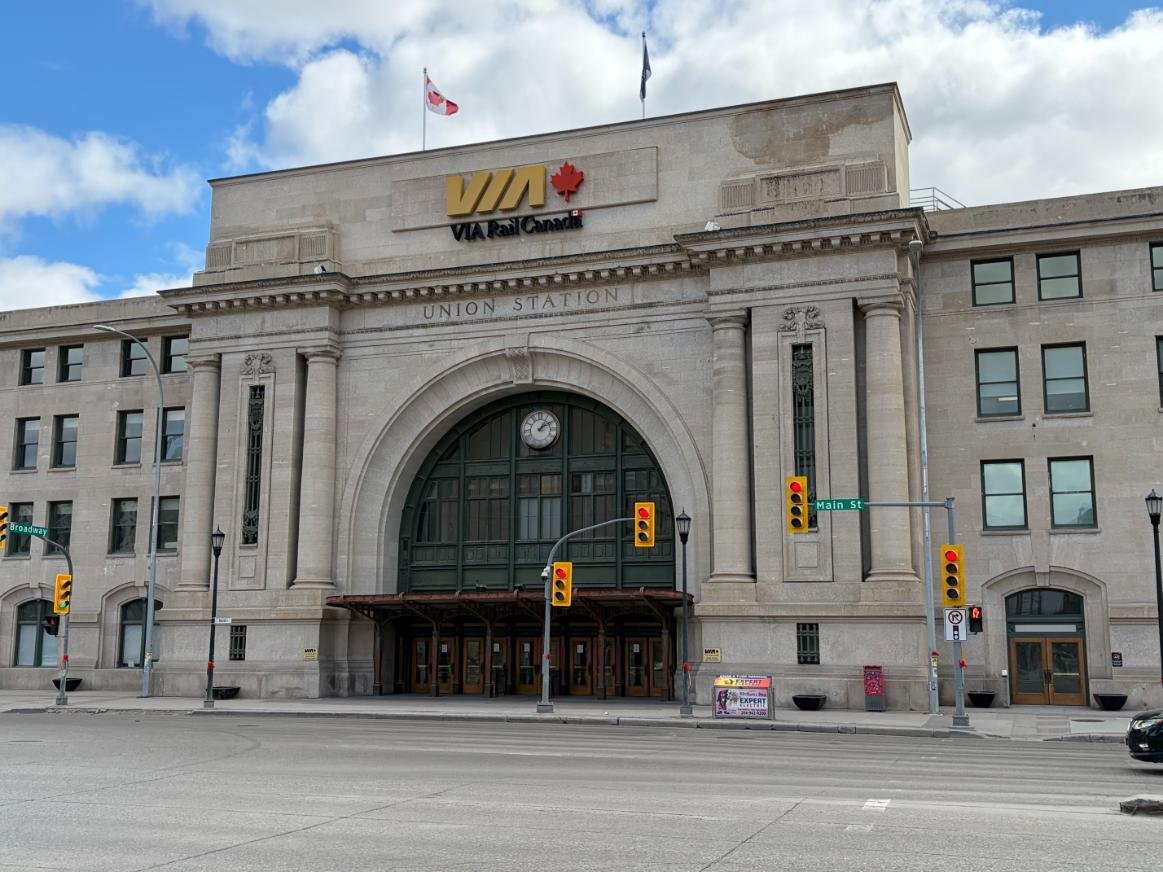
Winnipeg’s Union Station is a reminder of how the railway dominated both passenger and freight traffic early in the 20th century. Today it sits empty most of the time with only two trains per week east and west and two north to Churchill.
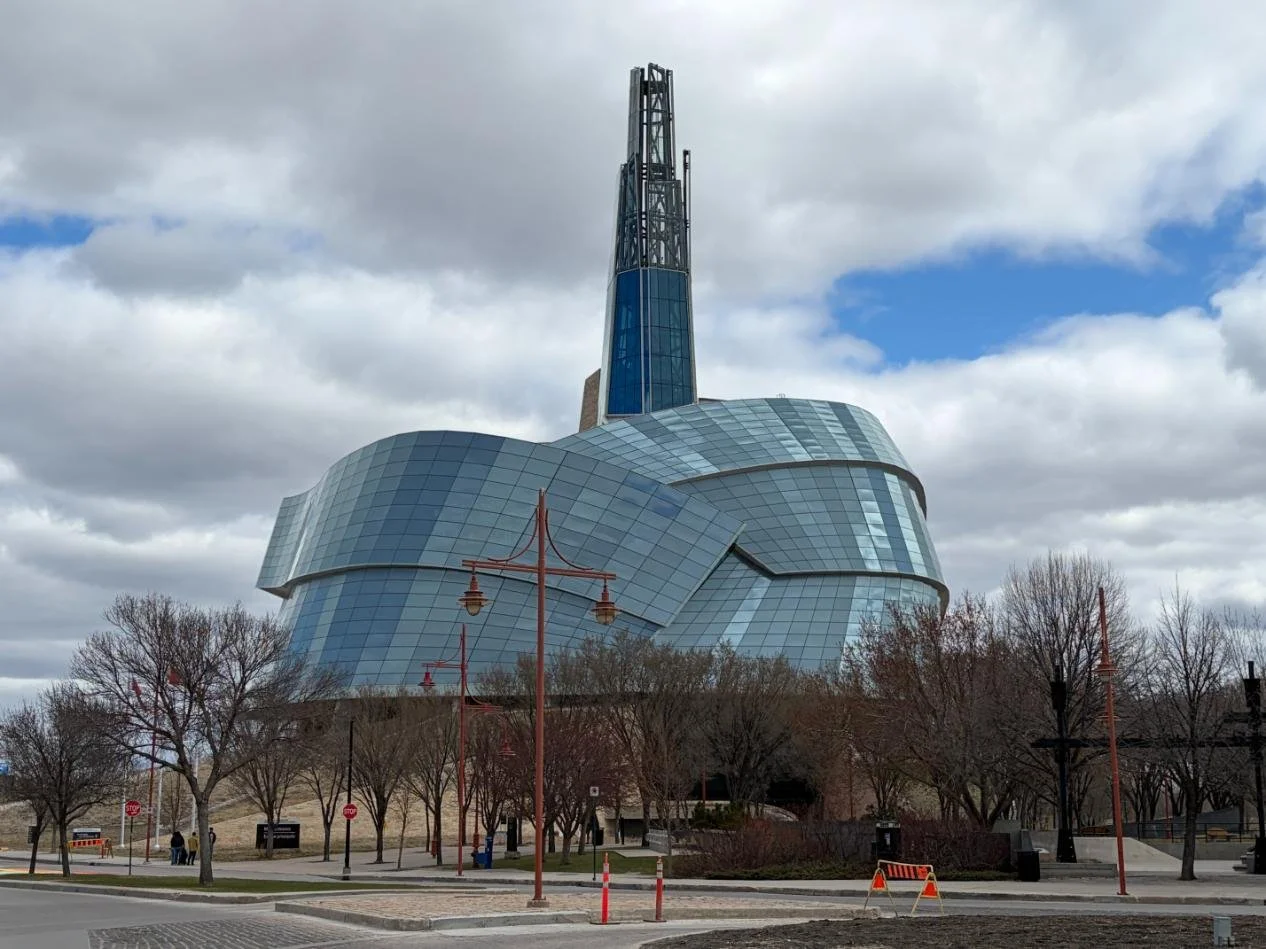
The Museum of Human Rights at The Forks is Winnipeg’s signature building. It attracted 189,044 visitors last year.
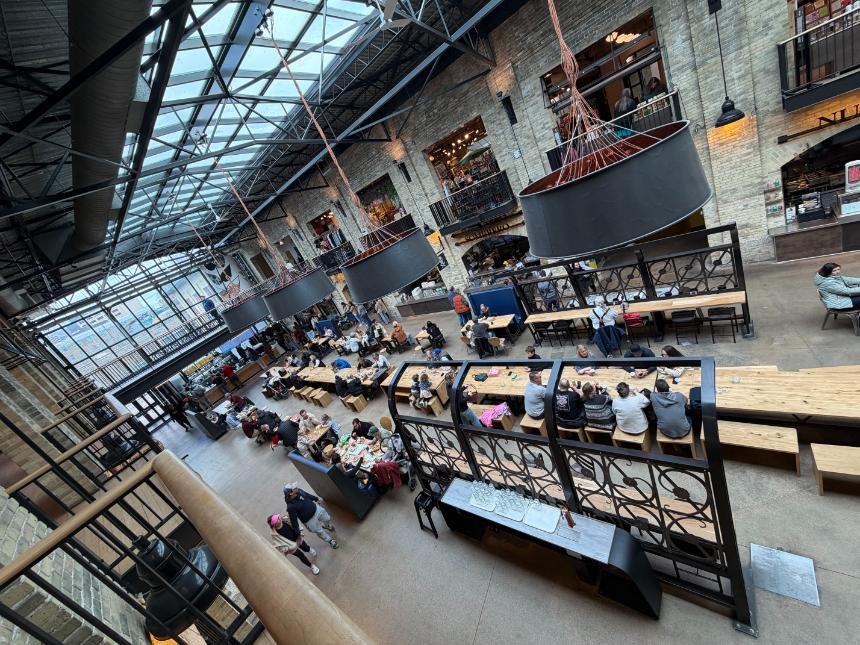
The Market at the Forks was a lively place when we visited on a Sunday afternoon.
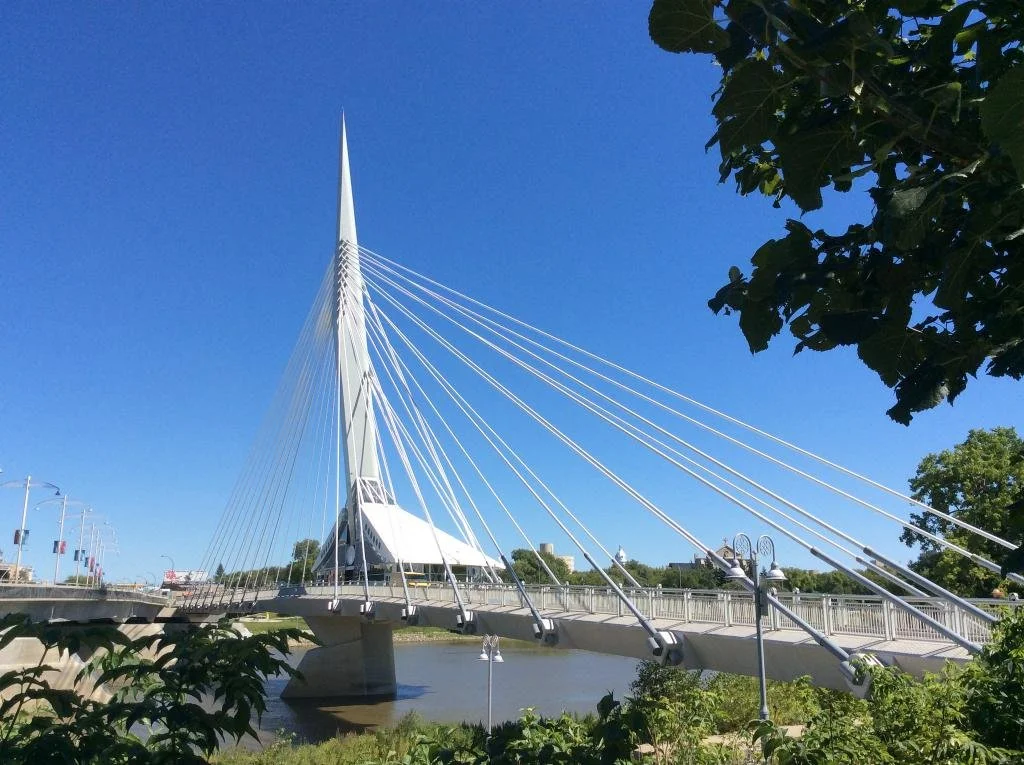
Esplanade Riel bridge connect The Forks to St. Boniface, Winnipeg’s French community across the Red River.
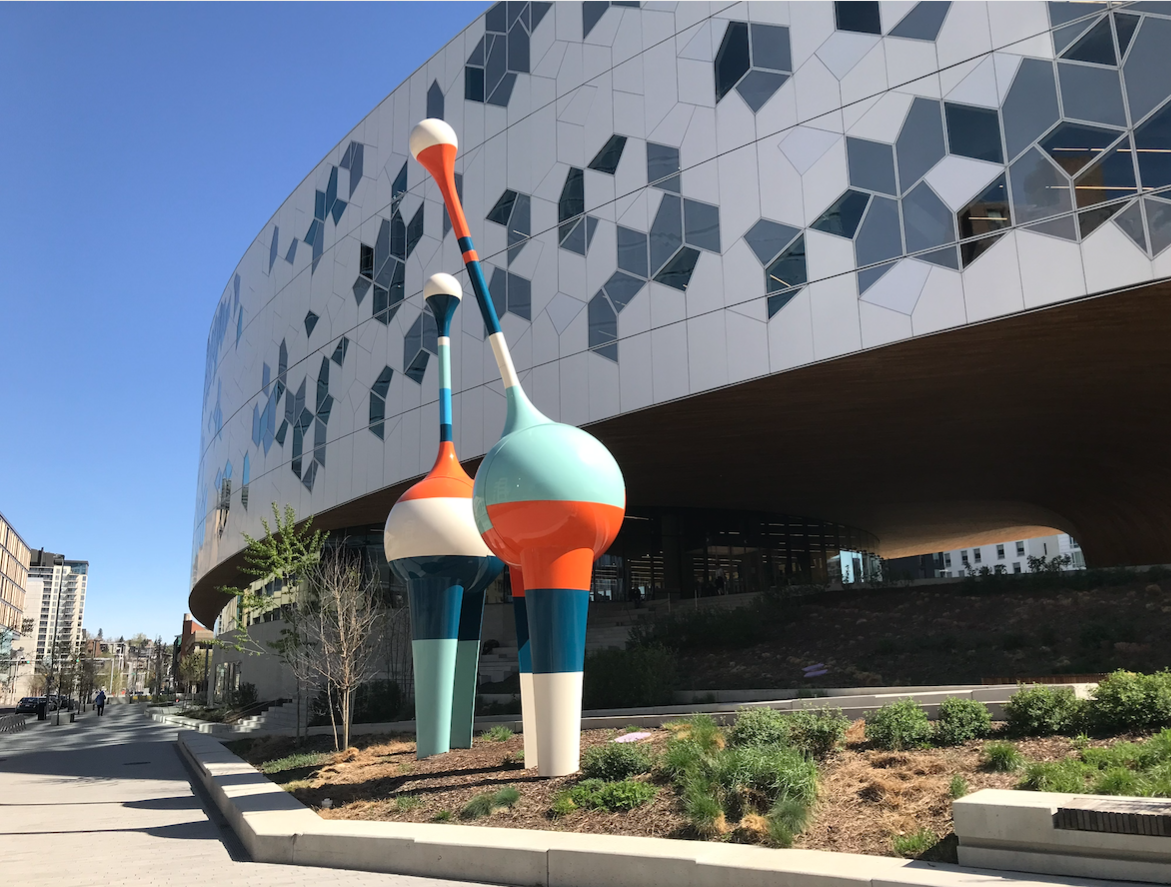
East Village is home to Calgary’s Central Library, one of several signature new buildings in the EV. East Village is also home to several signature public art works.
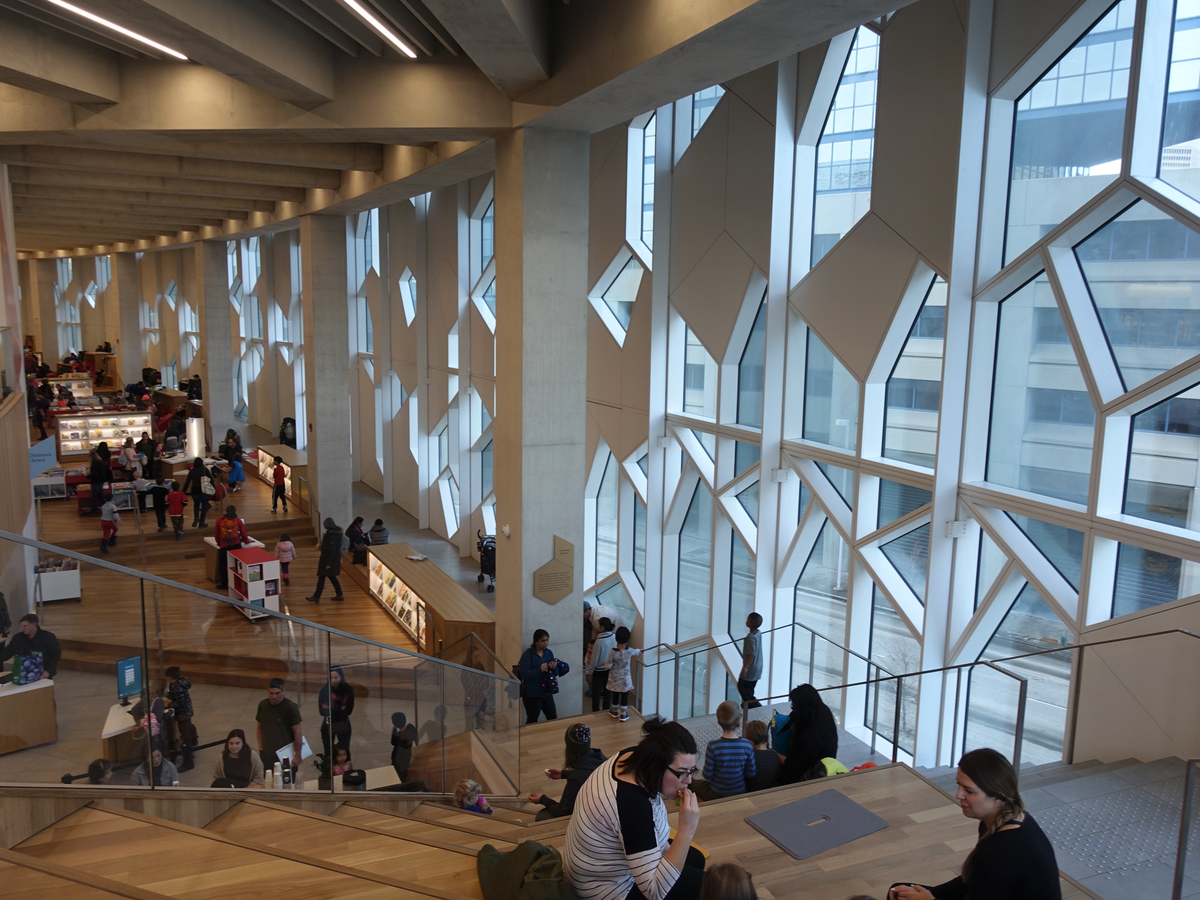
Calgary’s Central Library is more than just a library it is the community centre (gathering place) for those living in the City Centre.
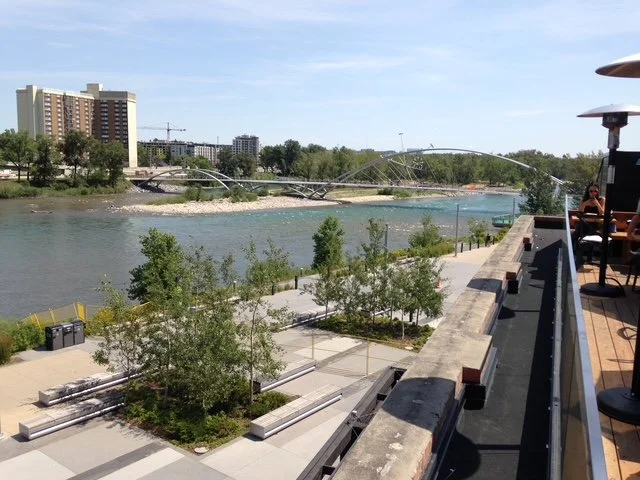
East Village’s River Walk includes the George King pedestrian bridge that links it with Bridgeland/Riverside (formerly Little Italy) on the other side of the Bow River.
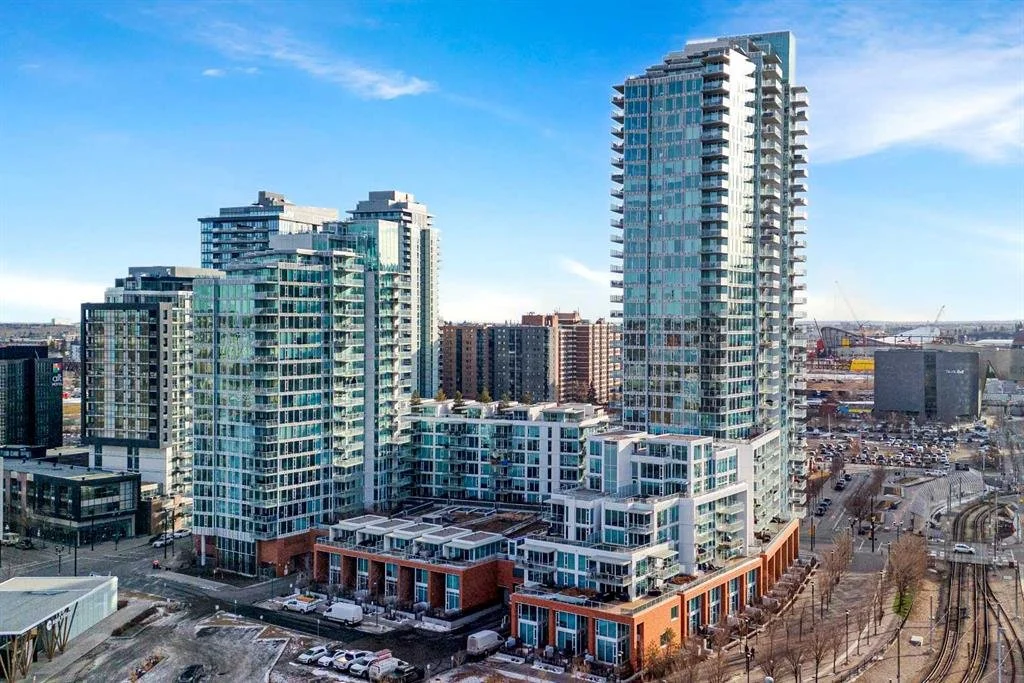
One just surface parking lots, today Calgary’s East Village is home to several major residential towers, with several more under construction.
University Villages
Both cities are currently actively redeveloping vacant university land into urban villages. In Winnipeg’s case, the redevelopment involves transforming the Southwood Golf Course into “UniverCity” a mixed-use urban village next to the University of Manitoba campus in the suburban community of St. Vital.
Phase one which is underway includes 3,500 homes in mid-to-high-rise building and 120,000 sq.ft. of commercial space to become the core of the village. The plan includes the preservation of 5,000 old-growth trees and 21 acres of parkland. It will also include the National Centre for Truth and Reconciliation opening in 2029. The entire project is expected to take 20 to 30 years and be home to about 20,000 people.
The University of Calgary began the creation of “University District” in 2011 with the establishment of the West Campus Development Corporation by the University of Calgary and City Council approval of the redevelopment plan in 2014.
The plan calls for the development of vacant lands between the university campus with the existing Alberta Children’s Hospital and south to the mega Foothills Medical Centre. It will be anchored by a traditional main street with retail at street level and residential above and a huge underground parking lot beneath. Today the main street is four blocks long and includes a major grocery store, cineplex and hotel, as well as shops, restaurants and cafes. It also has a 3-acre Central Commons Park that is actively programmed, (winter skating rink and summer splash park), as well as 40-acres of interconnected green spaces.
University district welcomed it first residents in 2019 and by the end of 2026 there will be 10+ residential buildings (including a major seniors’ aging in place faculty), with 2,000 new homes supporting 3,500 residents.
Like Winnipeg’s UniverCity, Calgary’s University District is a 25+ year project and will ultimately be home for 15,000 people.
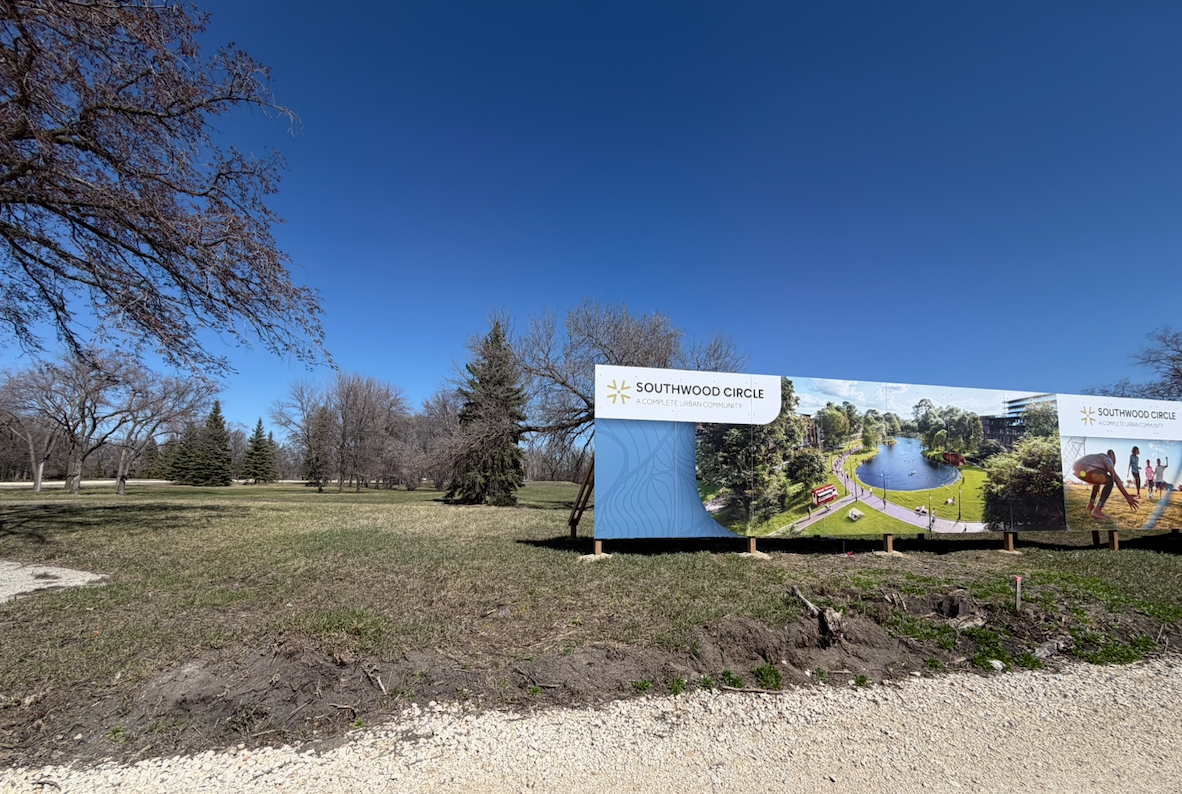
Southwood Circle today is just an open field.
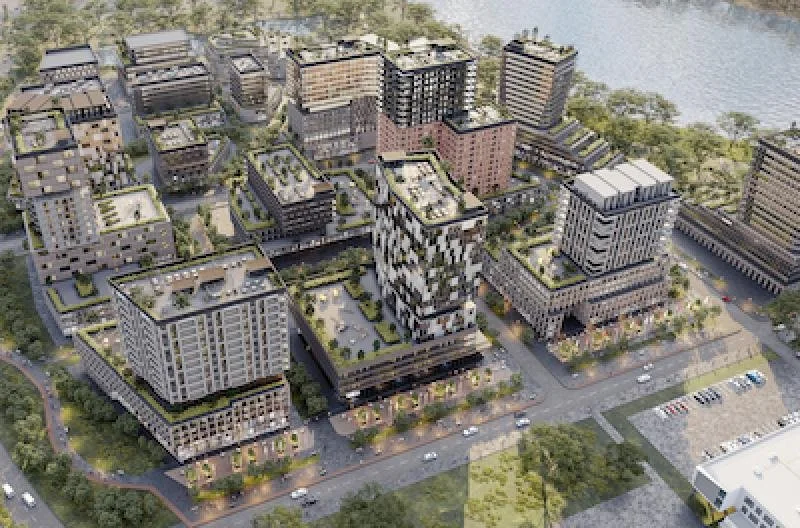
Rendering of what Southwood Circle will looking like in the future.
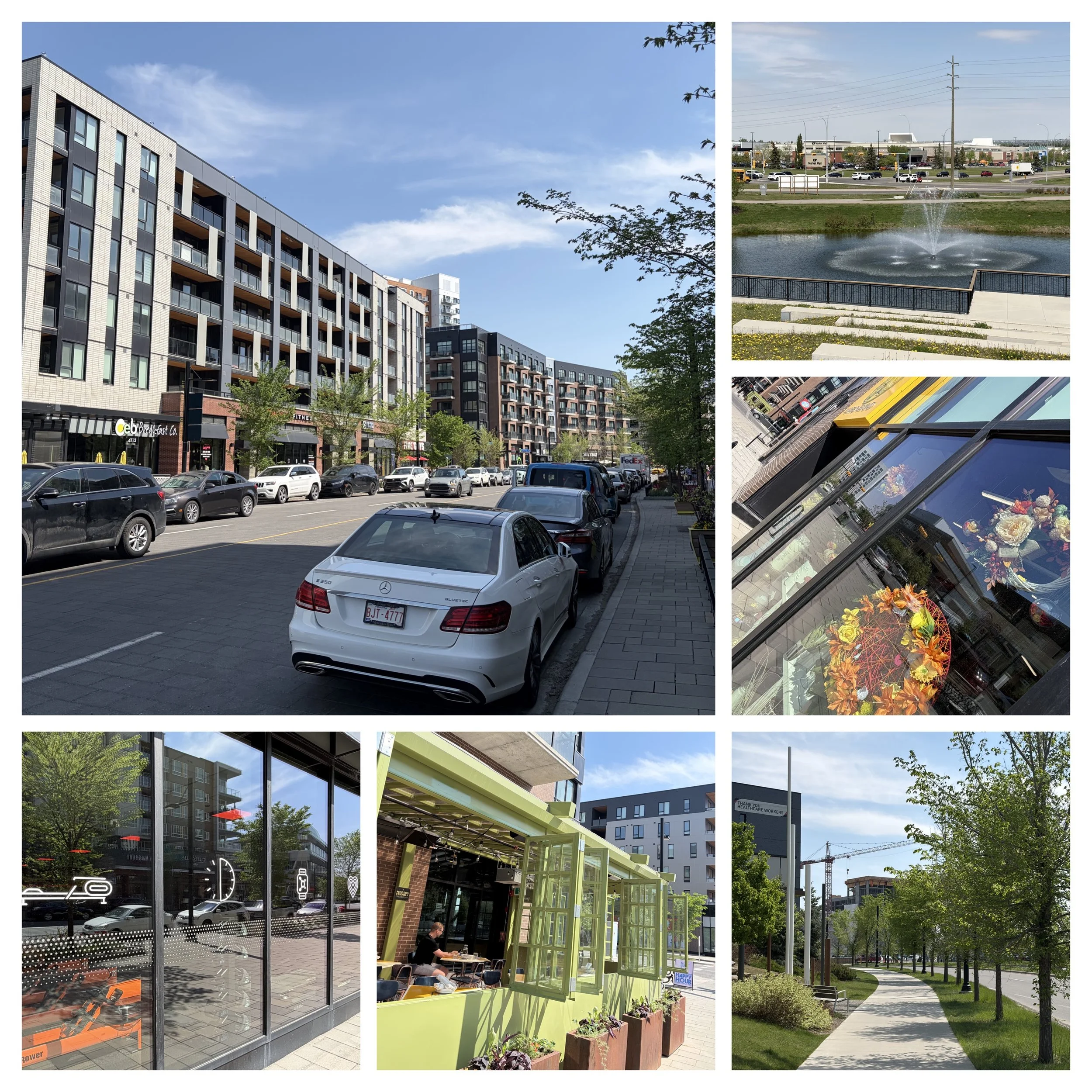
Calgary’s University District was just an open field 10 years ago, today it is a bustling urban village with a funky main street and a diversity of housing including a major seniors aging in place facility.
Last Word
Winnipeg is still the gateway to The Prairies from the east and Calgary is the gateway from west. Winnipeg thrived when the prairies were being settled from east to west and the Great Lakes and trains were the main mode of shipping route of goods.
Calgary has become the prairies’ major distribution center because shipping became more diversified (train, truck and air) and Asia, US and Mexico have become major trading partners.
The rise of Calgary and the decline of Winnipeg is most evident in their population growth. Calgary population had grown from 4,000 in 1900 to 1.6 million today, while Winnipeg’s has grown from 42,000 to around 860,000. Calgary wasn’t even in the top 10 most populated Canadian cities in 1900, today it is the fourth largest, while Winnipeg has dropped from a high of third to seventh.
Some other Fun Facts:
Calgary’s GDP is #115B vs Winnipegs $45B
Calgary Airport’s passengers/yr is 19.4M vs Winnipegs 4.3M
University of Caglary is ranked globally in the 180 to 210 spots, and 8 to 10 ranking in Canada while UofM is around 600 globally and 15 to 20 in Canada. UofC research funding is $588M vs UofM $247M last year.
Calgary’s has one of he largest performing arts centers in North America with two new ones under construction for a total of 7 spaces and 4,000+seats
Glenbow Museum/Art Gallery is the largest in Western Canada
Calgary has 1,000 km of pathways and 7,000 parks and green spaces
Calgary has the 1st and 2nd largest YMCA in the world.
