
Visiting Canada for the 2026 World Cup: What You Need to Know
The 2026 FIFA World Cup is set to be one of the biggest events in the history of the beautiful game. 48 teams of the world's best players will be heading to North America looking for national glory, with matches taking place across the USA, Canada and Mexico. So what's the key info fans need before visiting Canada for World Cup matches?
This article will look at what matches are being played and where, and how you can prepare if you have to journey between them. That includes everything from navigating around Canadian cities, to crossing borders into the US or Mexico, to what you can expect from Canadian hospitality. All so you're prepared for what might be the trip of a lifetime following the world's most popular sport around one of its most diverse continents.
Canada's Two Host Cities Are Well Equipped But Not Very Close to Each Other
The Canadian men's football team will open their tournament in Toronto Stadium against an as yet undetermined opponent on Friday 12 June. The country will go on to host a dozen further matches between Toronto and Vancouver. The final match in Canada of the tournament will be a Round of 16 game in Vancouver on July 7.
Both cities are considered world cities, with high standards of living and many international events each year. Although united by country they have very different characters. They're also 4300 kilometres away from each other. Canada has limited rail transport, meaning most visitors for the World Cup will choose to fly between the two.
You could drive - but that would be a three or four day road trip at around a 40-hour drive. And the quickest route actually takes you into the USA and out again. Although, of course, that could be part of the adventure for some.
Toronto is Canada's largest metropolitan area and financial hub, a city of some six million people sprawling out from the shores of Lake Ontario. Its BMO Field, changed to Toronto Stadium for the tournament, is a 45,000-seater built in 2007 for that year's FIFA Under 20s World Cup.
Meanwhile Vancouver is a coastal city picturesquely positioned between the North Shore Mountains and the Salish Sea. It is one of the most diverse cities in North America, but also consistently ranks as one of its highest for standard of living.
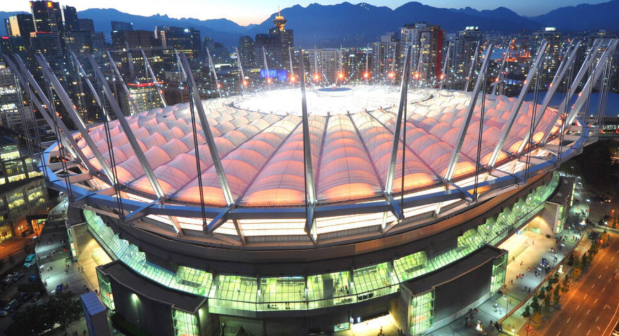
The city's charming BC Place Stadium will not be renamed for the World Cup. The architecturally impressive 54,000-seater was built in 1983 - but it has been upgraded many times over the years, and it hosted 2015 Women's World Cup Final.
Where to Visit and Stay on Your Trip
When you work out your trip budget, make sure to put some aside if you can to take advantage of Canada's excellent tourist attractions.
The huge amount of land means the two host cities have some fantastic parks and nature reserves to explore for outdoorsy types. The indoor crowd will be well served by the country's multicultural food, with Toronto especially considered a culinary city.
If you’re the kind of fan who enjoys having a small interest in the games, it’s worth knowing that sports betting is legal in Canada, including on individual World Cup matches. A lot of travelling supporters like to check their options before they arrive, so there are no surprises. Well-known bookmakers like bet365 will be offering World Cup markets and sign-up bonuses during the tournament, although the details can vary. Using a comparison site that lays everything out clearly, including bonus terms and conditions, is an easy way to see what’s available and decide whether it’s something you want to take part in.
When the tournament rolls around, travelling in the two host cities will be easy as public transport is plentiful and reliable. For this reason, staying near to the stadiums is not nearly important as you might think - unless you find somewhere so close you'll be walking to the matches.
However, in Toronto especially, staying in Downtown to be close to the stadium will be expensive and busy. Vancouver is slightly more compact with most of the city's commercial and entertainment districts, attractions and transit lines converging on Downtown.
Preparing for the Trip: Visas, Packing and Planning
Now for the boring stuff. Canada has clear but sometimes strict entry requirements as standard, but also visa-free entry agreements with many countries. Even without a visa travellers will need a passport valid for the duration of the stay, and to have completed the Electronic Travel Authorization (eTA).
The basic thing to know is, treat it like you would going to any other country for a vacation or holiday. Don't expect to walk right in off the plane just because you have World Cup tickets.
Travel between the two cities or other host countries should also be booked in advance, as should accommodation. Because, one: there probably won't be many plane tickets or hotel rooms available by the time of the tournament. And two: Canadian border security may ask you for proof of your travel plans.
Onward travel to the United States is a bit more complicated, especially given the current political climate, and the US has generally stricter rules. So be aware of that before you book tickets for matches across borders. Mexico is less restrictive, and for citizens of most countries you will simply need a valid passport and a tourist card you're given to fill out before entry.
