
Winnipeg: The Louis Riel Experience
I was reminded of the importance of Louis Riel’s place in Canadian history when visiting family in Winnipeg in May 2026. We were headed to St. Vital Park and while checking Google Maps on how best to get there I noticed there was a listing of the Riel House as an attraction along the way. We decided to leave early so we could at least drive by despite Google saying it was closed.
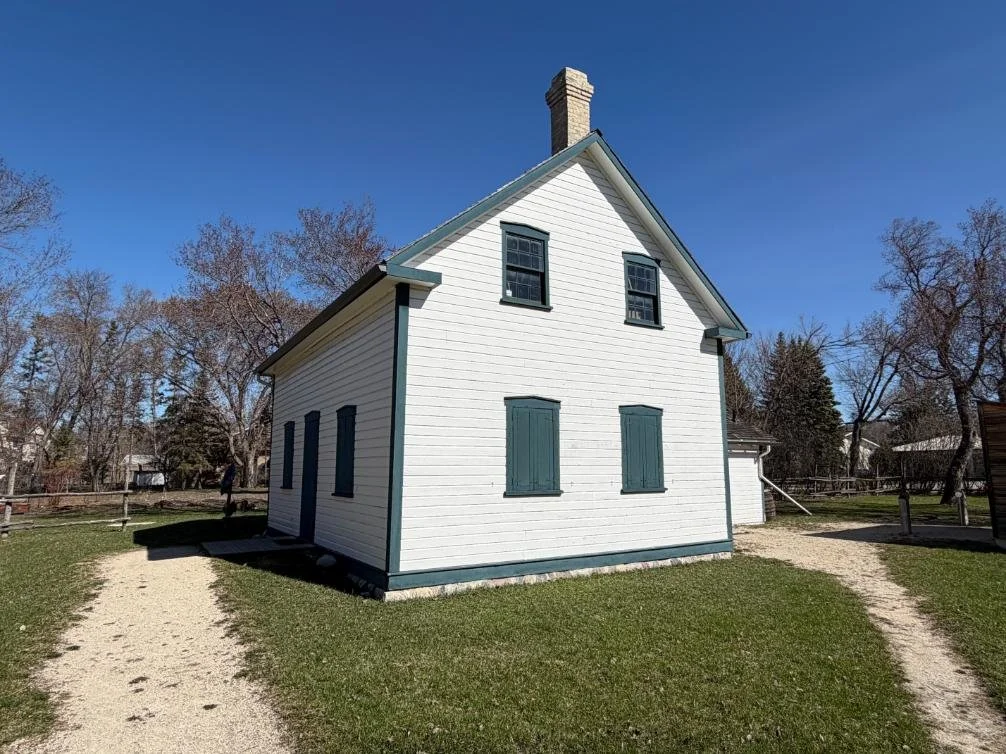
Indeed it was closed, but we saw some people in the yard and decided to park and stop and take a closer look around. Turns out several young men were spring cleaning the yard. We asked a few questions and soon we were getting the story of the House and a bit of a tour of the large yard. One of the men kindly opened the storyboards (they had been covered up for the winter) to allow me to read and photograph them.
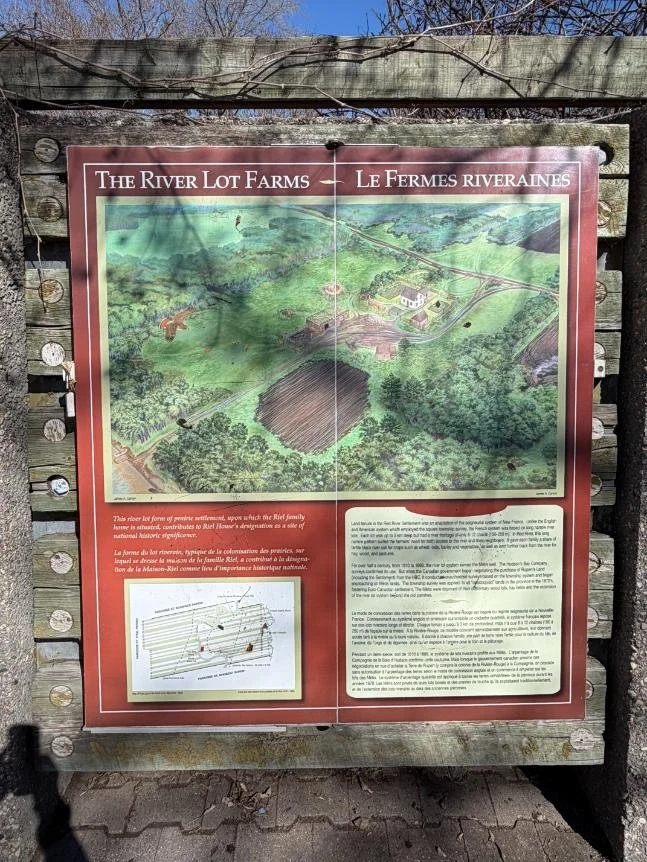
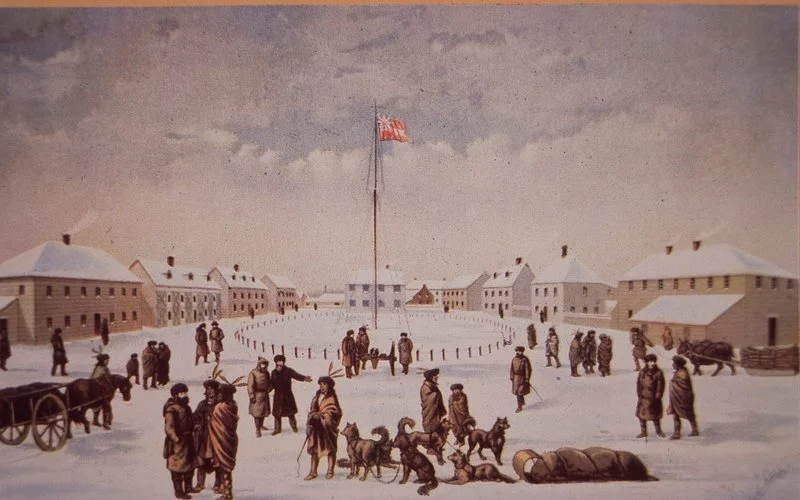
Though we didn’t get inside the house, we could envision what life was like 150 years ago, when a large yard to grow vegetables was a must and access to the river was critical to living on the prairies, given there were no trains, and only trails for the Red River carts. It was a reminder of the harsh life of Canada’s early pioneers in the mid 1800s.
Although Louis Riel is associated with the site, he actually lived in the house only briefly, during the summer of 1883, following his return from exile in the United States.
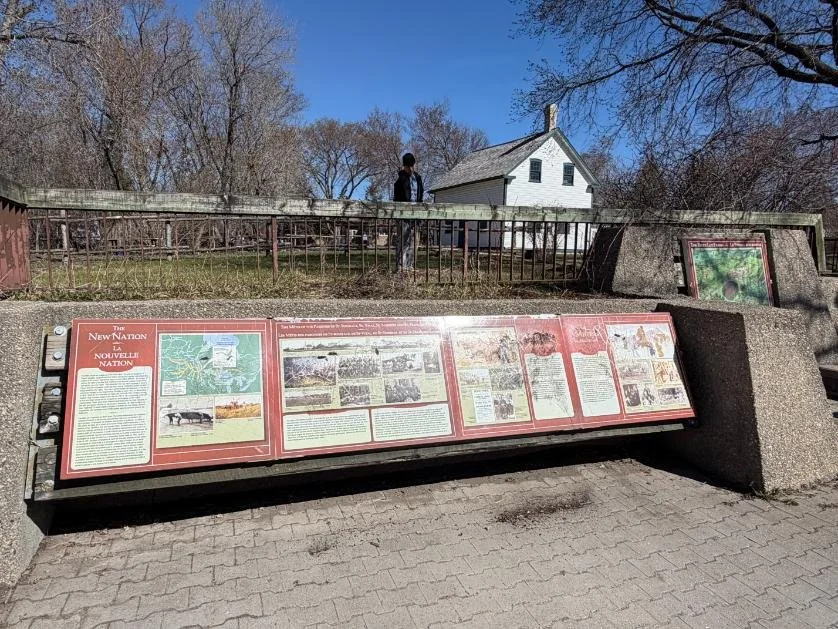
Storyboard panels.
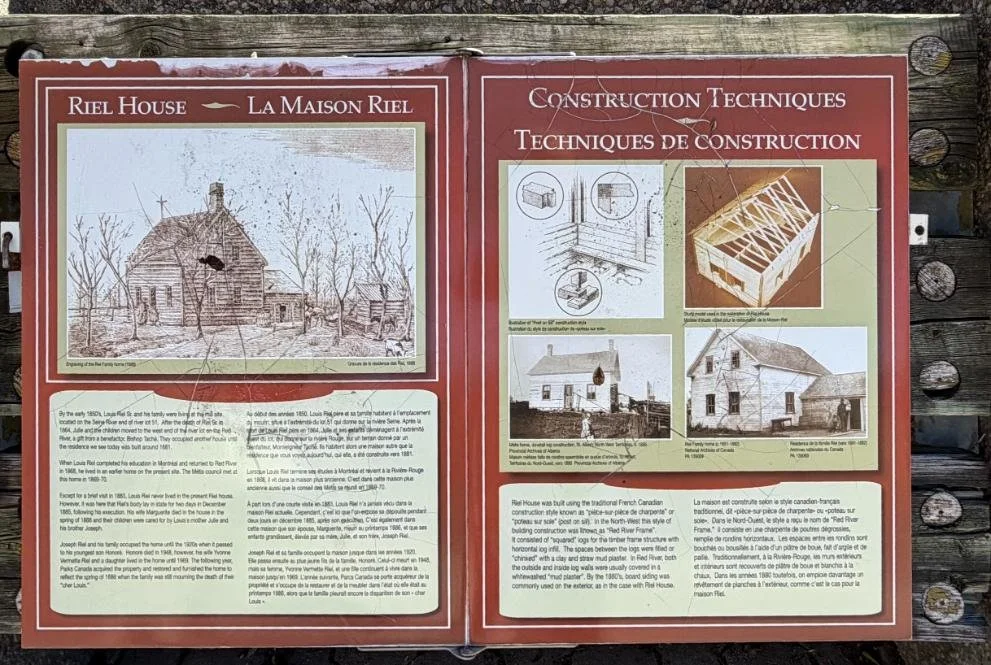
How the pioneer homes were built?
Summary of Riel’s Demands
Title to Lands: Riel demanded the federal government recognize and secure the land titles of Métis farmers who had been occupying and farming the Red River and Saskatchewan valleys for decades.
Fair Compensation: He pushed for guarantees that Métis hunting rights, river-lot land holdings, and traditional livelihoods would be protected against incoming white settlers and survey crews.
Entry into Confederation: Riel negotiated for the Red River Settlement to enter the Canadian Confederation as a recognized, full-fledged province (Manitoba) rather than a federally controlled territory.
Policial Voice: He demanded provincial control over local affairs, as well as fair representation in the federal parliament to advocate for minority interests.
Cultural Protections: Riel demanded official bilingualism (English and French) in the legislature and courts, as well as funding for denominational (Catholic and Protestant) schools.
Economic Sovereignty: In addition to Métis-specific rights, Riel advocated for local economic development, including a demand for Manitoba to extend to Lake Superior to secure a proper port for the region.
Conflict with Settlers
The North-West Rebellion (1885): As the transcontinental railway and waves of new settlers pushed west to farm the prairies, the Métis faced the threat of losing their land, livelihoods, and cultural identity. Desperate for representation, they called on Riel to negotiate with the federal government. When peaceful negotiations and petitions were ignored, the standoff escalated into a five-month armed conflict. The rebellion was eventually crushed by federal troops at the Battle of Batoche (Saskatchewan), and Riel surrendered.
Prime Minister Sir John A. Macdonald's government charged Riel with high treason to make an example of the man who had now led two major uprisings in the West. The trial was moved to Regina, where an English-speaking, Protestant jury—with very little Métis representation, found Riel guilty.
Despite the jury recommending mercy, Prime Minister Macdonald refused to grant clemency. The Canadian government viewed Riel as a dangerous rebel and an obstacle to westward expansion. For many English-speaking Canadians at the time, his leadership and the loss of Canadian soldiers in the conflict demanded the ultimate penalty. Conversely, many French Canadians saw Riel as a hero fighting for minority rights, and his death severely fractured the country along linguistic and religious lines.
Louis Riel Statues In Winnipeg
After the Riel House experience, we researched other memorials to him in Winnipeg. There are two statues in his memory and even they have a sad story associated with them.
The Louis Riel sculpture at the Manitoba Legislative building, was commissioned by the Manitoba Metis Federation (MMF) and sculpted by Miguel Joyal. It is located on the building's south grounds and faces the Assiniboine River.
Standing at 3.5 metres (11 ft) tall, the statue depicts Riel dressed in a 19th-century shirt, overcoat and moccasins. Riel is shown standing with clenched fists, his left hand holding a parchment representing the Manitoba Act.
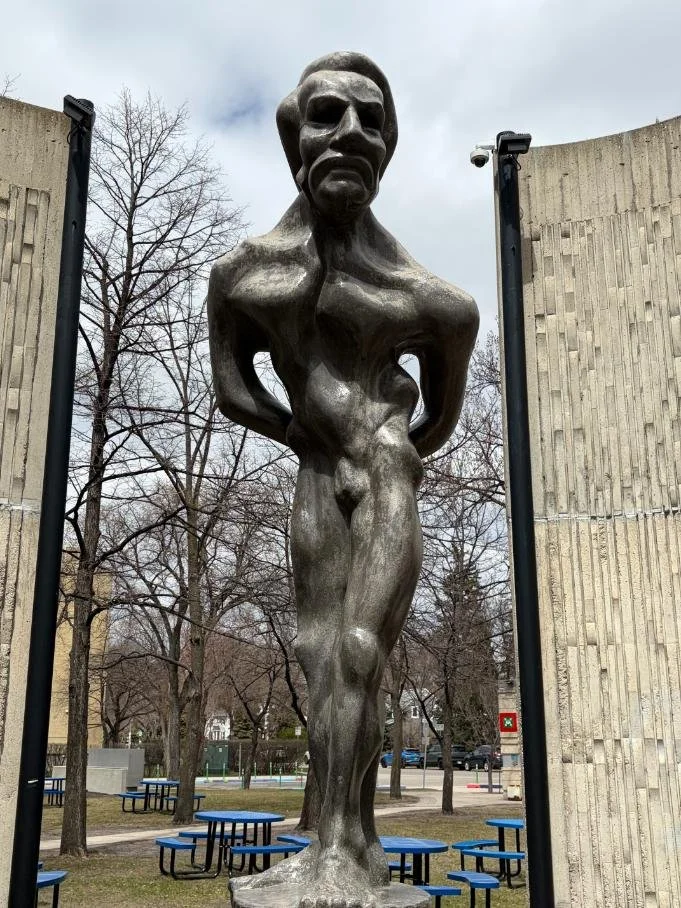
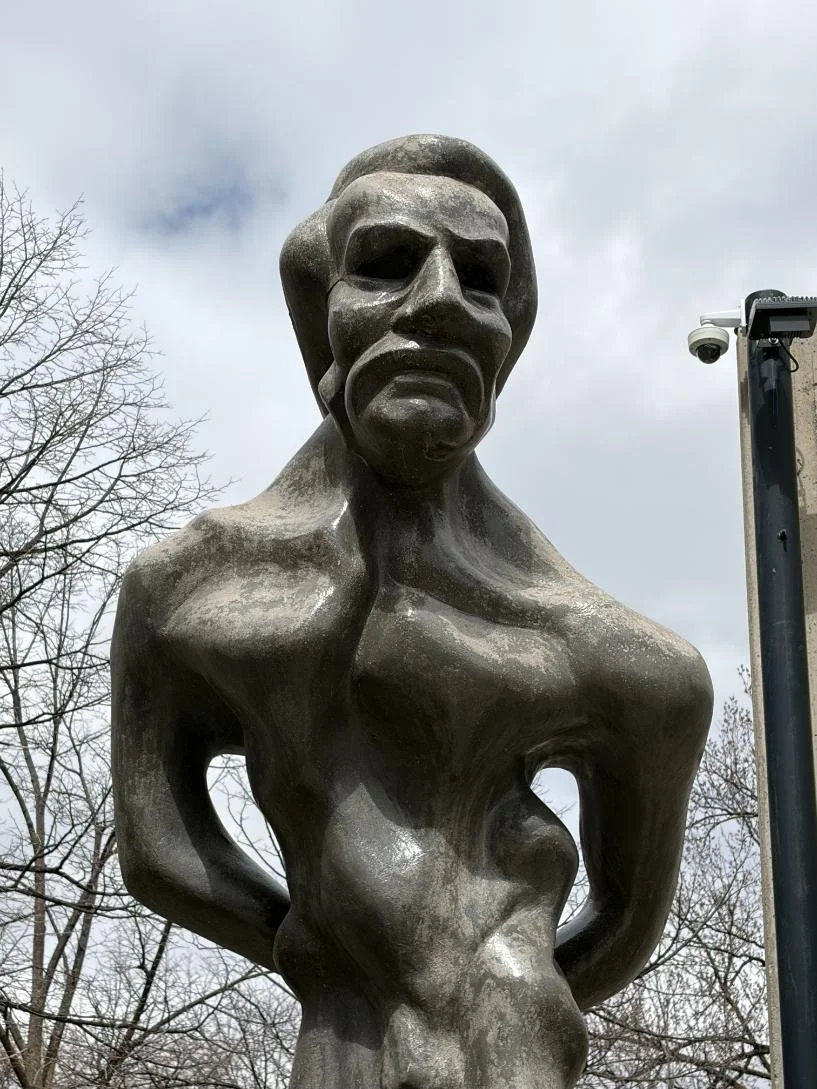
This statue replaced an existing statue of Riel at the same site unveiled in 1971, conceived by Marcien Lemay and Étienne Gaboury. It depicted Riel in the nude, with a distorted and compressed body, which not surprisingly became very controversial. By 1991, the Manitoba Metis Federation and the Manitoba Government agreed to create a second statue to replace the one by Lemay and Gaboury due to sustained criticism and repeated vandalism.
FYI: The controversial statue was relocated to the grounds of the Universite de Saint-Boniface, in Winnipeg in 1995, where it remains today.
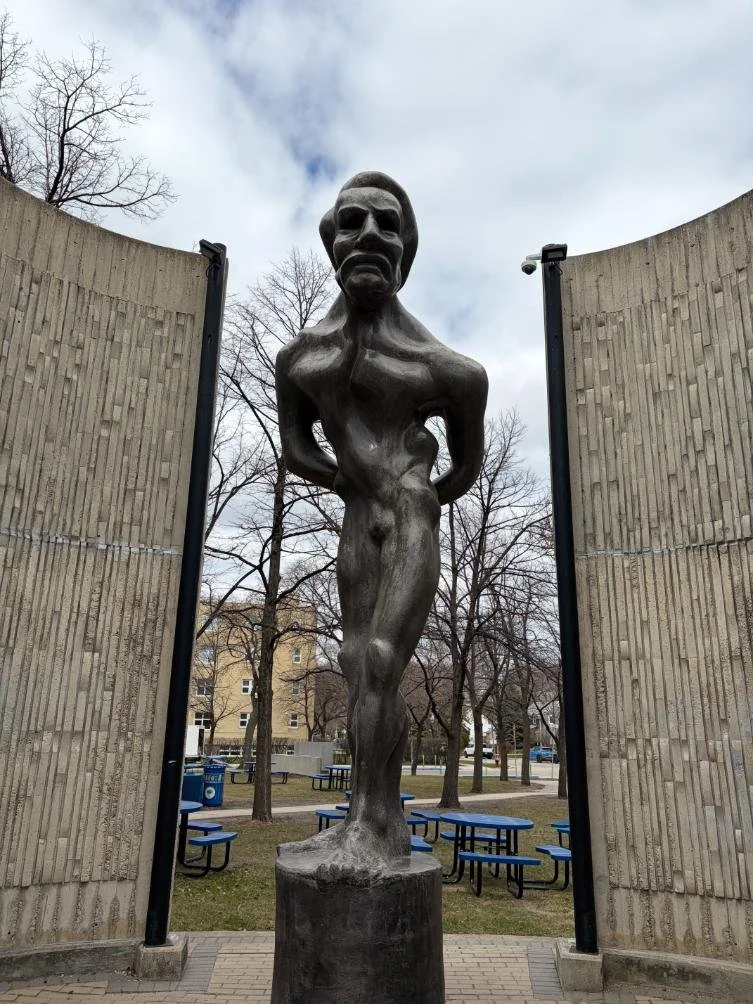
The controversial statue of Louis Riel
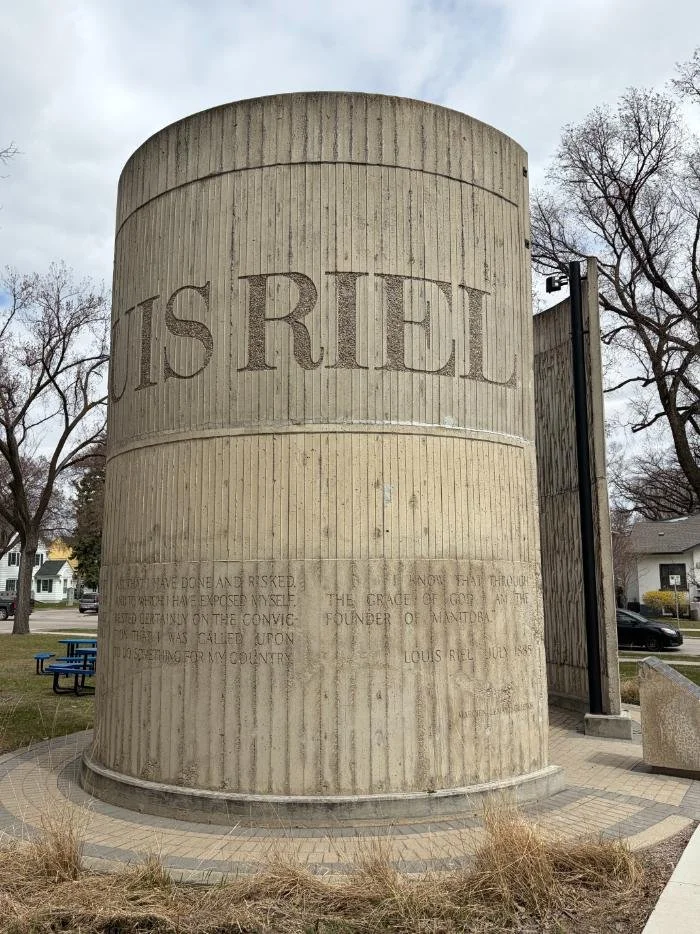
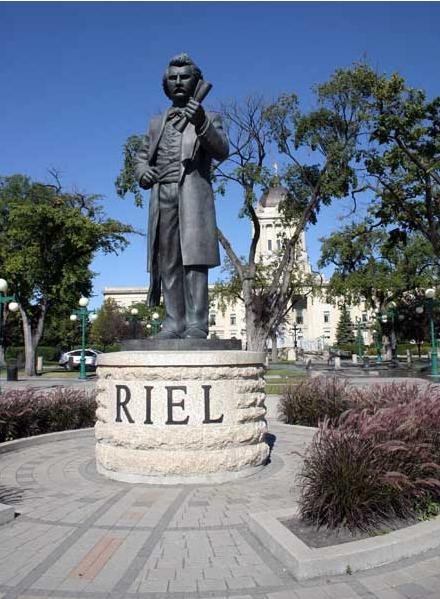
The second statue of Riel with the Legislative Building in the background.
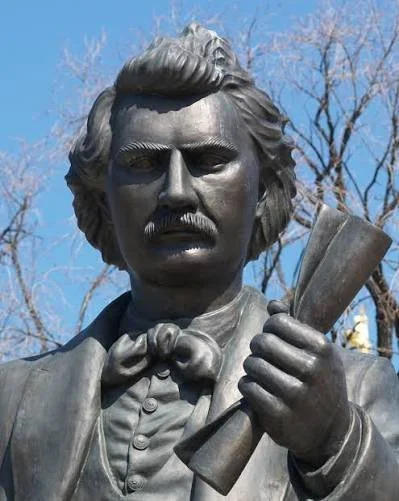
Riel holding the Manitoba Act.
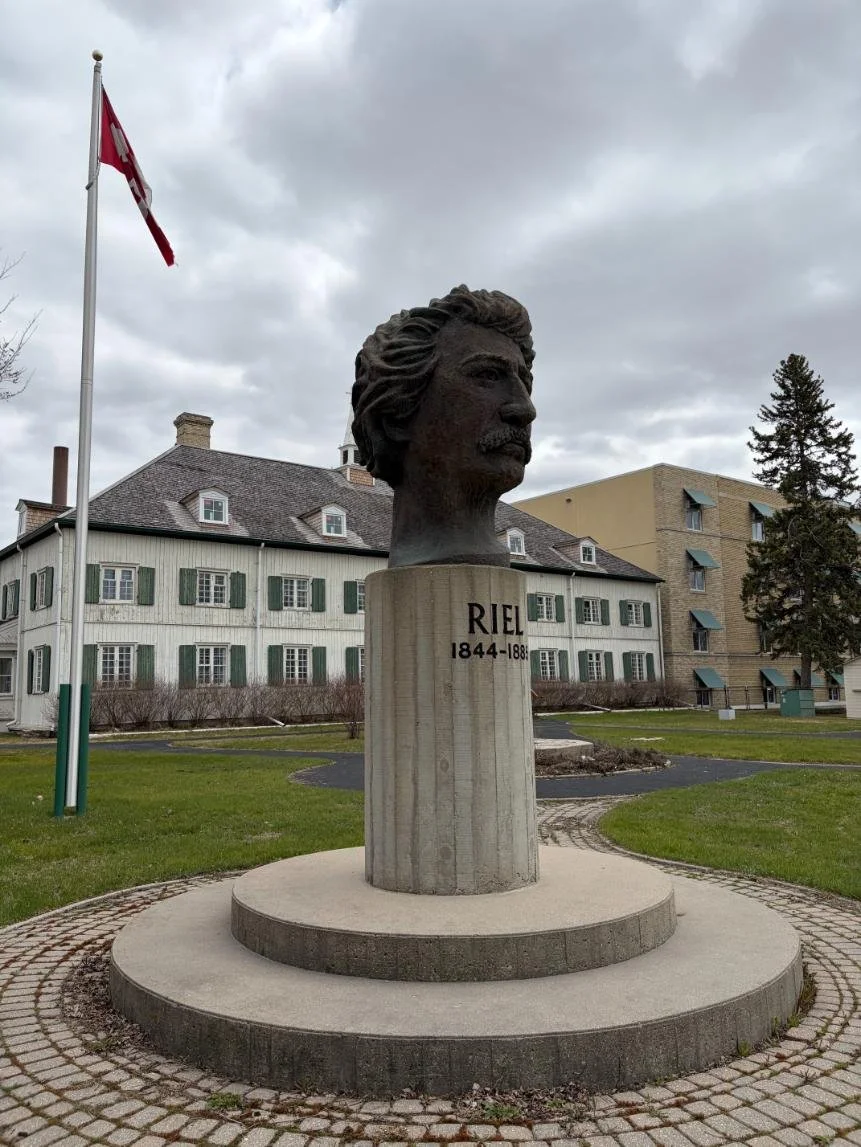
Riel statue in front of the Le Musée de Saint-Boniface Museum
Pedestrian Bridge
There is also a mega pedestrian bridge, the Esplanade Riel that links The Forks (downtown) with St. Boniface (Winnipeg’s French Quarter). As the Metis nation’s ancestry comes from the marriage of European fur traders (mostly Frenchmen) and indigenous women, it is very fitting the bridge links Winnipeg’s French community on the east side of the Red River with the European and Indigenous communities on the west side of the river.
Ironically, Etienne Gabory who helped conceive the controversial Riel Statue was also one of the architects of the bridge. The bridge is a side-spar cable stay bridge, with a tall spire (187 feet) in the middle of the bridge and river. And, Riel is buried at the Saint Boniface Cathedral Cemetery not far from where the bridge lands on the St. Bonface side of the river.
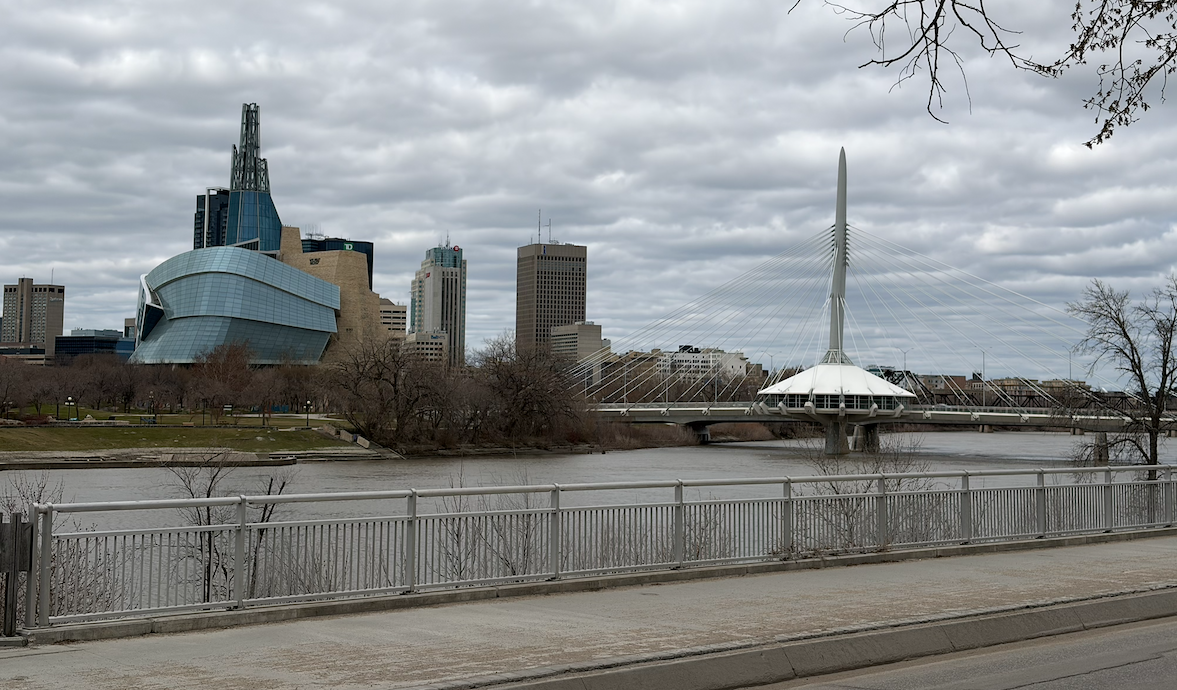
Esplanade Riel bridge on the right and Canadian Museum for Human Rights on the left.
Good Read
Strangely, when I got home, I was looking through my library for a book to read and there was “Riel: A Life of Revolution,” by Maggie Siggins a 500+page n in-depth look into his life. Though intimidated by its size, I decided to give it a try, and am glad I did. It is a fascinating look at Canada’s history 150 years ago and how deeply seated “alienation” is in Western Canada. Like any historian or journalist Siggins has her biases, that being said it is a good read.
Last Word
History is constantly changing. Each generation rewrites history because evolving societal values, emerging technologies, and current crises cause us to ask different questions of the past, thereby uncovering new meaning and alternative perspectives.
Today, we continue learning Canada’s history is far more complex, tragic and violent than many of us were taught in school, or by our parents. As I read the book I became more aware of how deeply seated racism, western alienation and American annexation in our country.
Below is a quick informative video that explains how Canada’s borders have evolved since 1867, something we sometimes forget.
