
The North Saskatchewan River winds its way through Edmonton creating the world’s largest urban park. The river creates a dramatic, wide, heavily treed river valley park that is 88 km long, with 160 km of trails, as well as tourist attractions, historic sites and recreational opportunities. Edmontonians love to brag about how it is 22 times larger than New York City’s Central Park. (Side note: In reality the North Saskatchewan River valley is a forest, or a nature reserve, with a series of man-made parks along the way. It is not a large urban park, like Central Park). Never-the-less, it is impressive.
In contrast, Calgary has two impressive river valleys – the Bow and Elbow – with the Elbow merging with the Bow in the City Centre. Like Edmonton, there are numerous parks located in the valley and on top of their riverbanks. In addition, Calgary’s massive downtown is located within the river valley, which means 125,000+ workers come downtown regularly to work. And 125,000+ people live in river valley neighbourhoods. Because Edmonton’s River embankment is so steep there are very few residential communities actually in the valley.
Both cities’ rivers are also home to a diversity of tourist attractions and recreational activities. So, who’s got the best river valley? Let the faceoff begin….
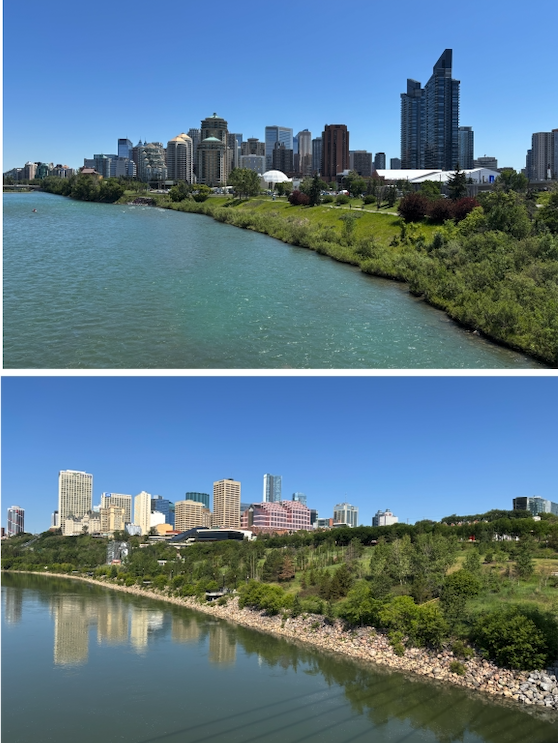
Top: Calgary’s Bow River Valley as it winds its way through downtown.
Bottom: Edmonton’s North Saskatchewan River as it winds its way through downtown.
Tourist Attractions
Edmonton’s premier river valley tourist attraction is the Muttart Conservatory, consisting of four glass pyramids devoted to displays of plants from around the world. It is a warm oasis in the middle of Edmonton’s bitter winters.
Calgary’s premier river valley attraction is the Calgary Zoo (second largest zoo in Canada) and Botanical Gardens, featuring penguin and hippo exhibits, as well as an animated dinosaur area. FYI: The much smaller Edmonton Valley Zoo is also in its river valley.
Both Edmonton and Calgary’s river valleys have historic sites – Fort Edmonton and Fort Calgary at the Confluence. In addition, Calgary has Heritage Park, one of Canada’s largest living history museums, including the opportunity to take ride on the S.S. Moyie paddle-wheeler on the Glenmore Reservoir which was created by a dam on the Elbow River). While Edmonton has nothing to match Heritage Park, it does have the Edmonton Riverboat that offers weekend brunch and sunset dinner cruises along the North Saskatchewan River.
In addition, Calgary’s science centre, Telus Spark is in the river valley adjacent to the zoo – together, they are one of Canada’s biggest family attractions.
And of course, Calgary’s Stampede Park is located next to the Elbow River. Its home not only to the world famous Calgary Exhibition and Stampede, but to western Canada’s largest convention centre, and soon the NHL’s newest hockey arena.
Music Festivals
Both cities host their annual International Folk Festival in a river valley park – Edmonton’s is in Gallagher Park in the bowl of a small ski hill, while Calgary’s is on Prince’s Island, on the Bow River. In addition, Fort Calgary at the Confluence Park hosts major concerts during Stampede and is the new home of the Calgary International Blues Festival and Cowboy Park has recently been renovated to allow it to host major music festivals.
Water Activities
Boating on the North Saskatchewan River is permitted with several access points for canoes, kayaks and motorized boats. While Calgary’s rivers are too shallow for public motorized boats, it offers a diversity of water activities, from the 1,000s who love to float along the river on summer weekends, to sailing and rowing clubs on the Glenmore Reservoir. In addition, Calgary’s Harvie Passage, a man-made whitewater area offers canoeing, kayaking, and river surfing opportunities.
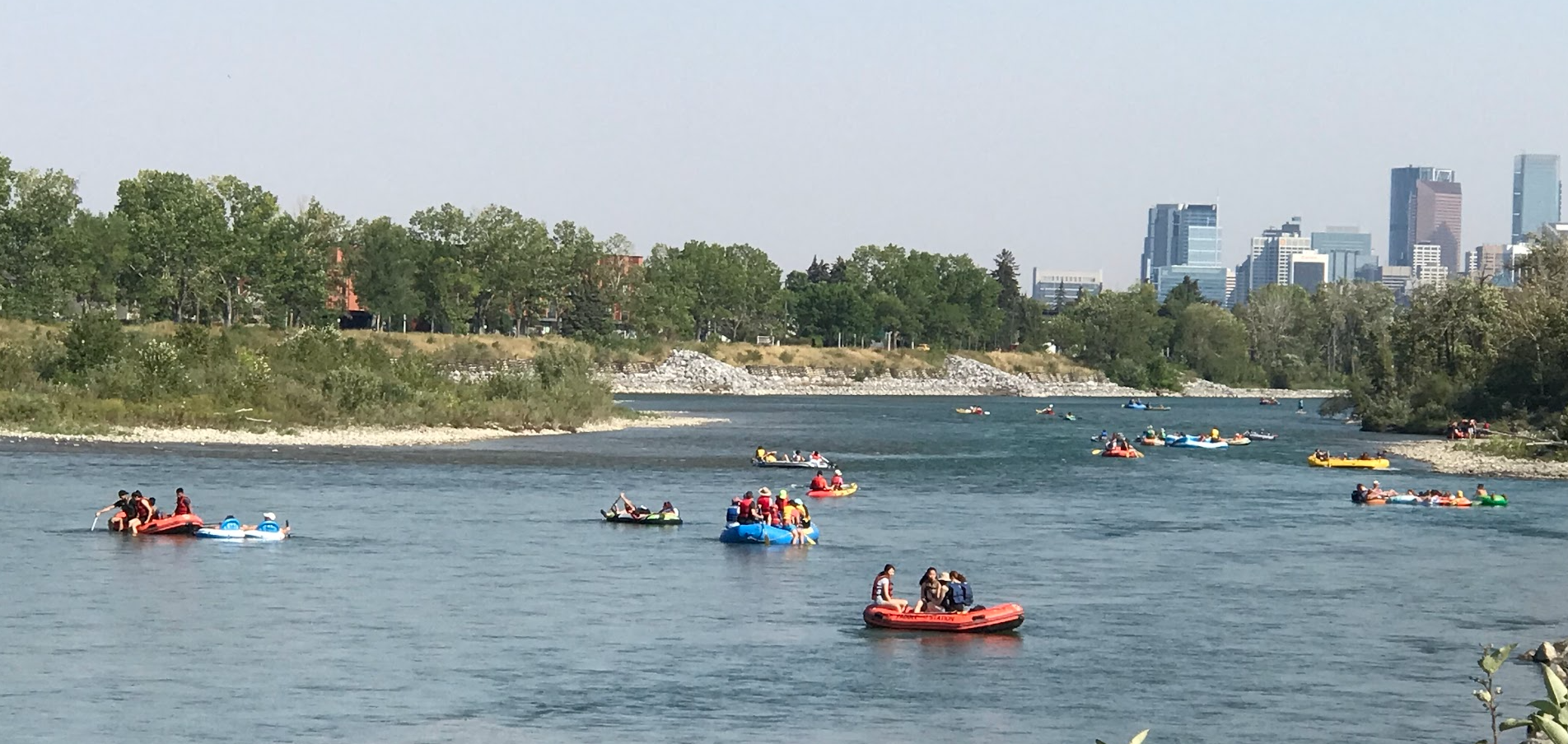
Floating down the Bow River is a very popular activity every summer.
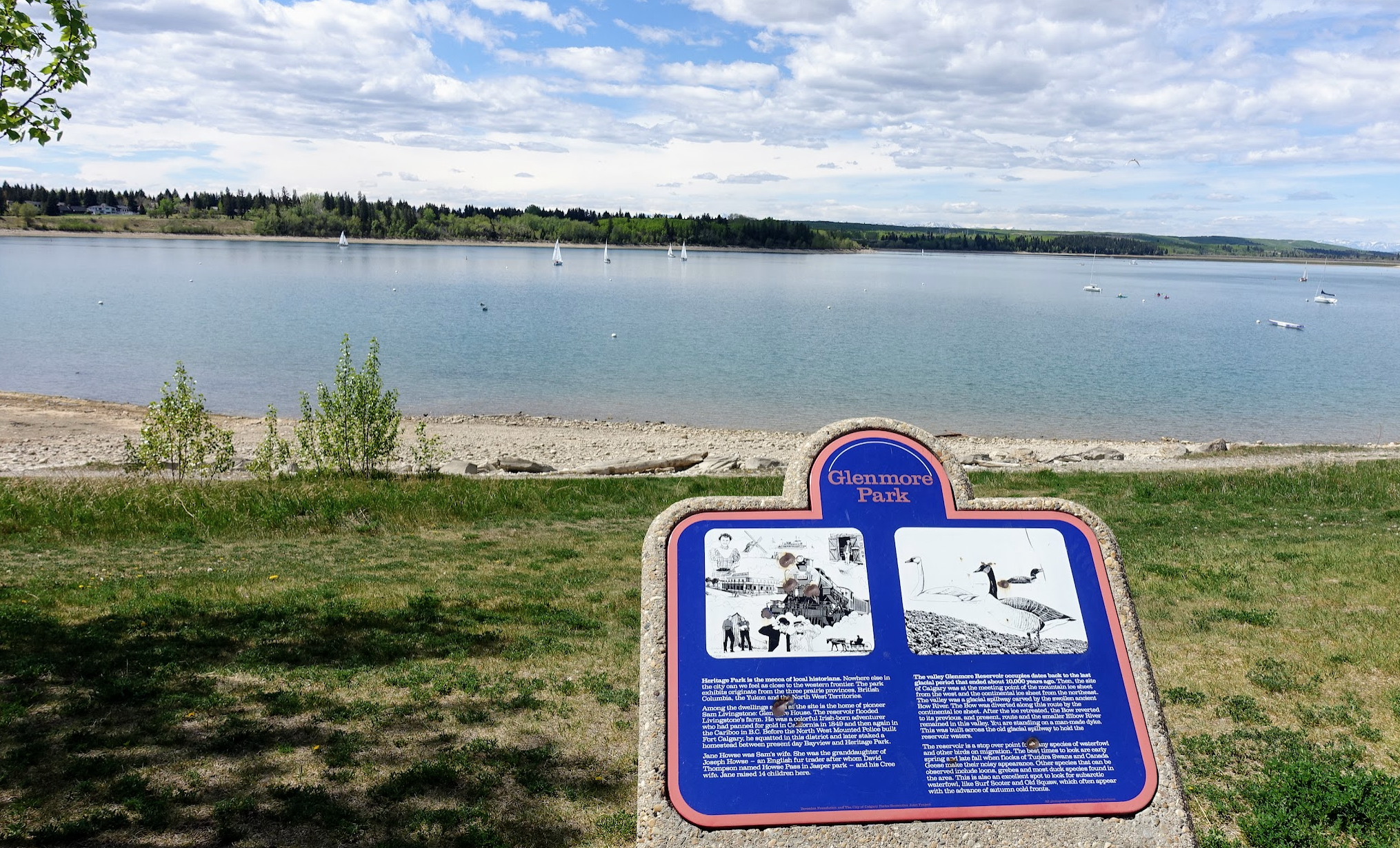
The Glenmore Reservoir was created by a dam on the Elbow River.
Beaches
Edmonton’s “Accidental Beach” was formed in 2017 by changes in the water flow caused by the Tawatina Bridge construction. Despite residents’ desire to make it a permanent feature like many European cities have done, it remains undeveloped. Swimming is not recommended due to strong currents and murky water.
On the other hand, Calgary has dozens of pebble beaches along the edge of both its rivers, many disappearing when water levels are high, and reappearing when the river flow diminishes. Calgary even has two nude beaches, but they in the Elbow River valley.
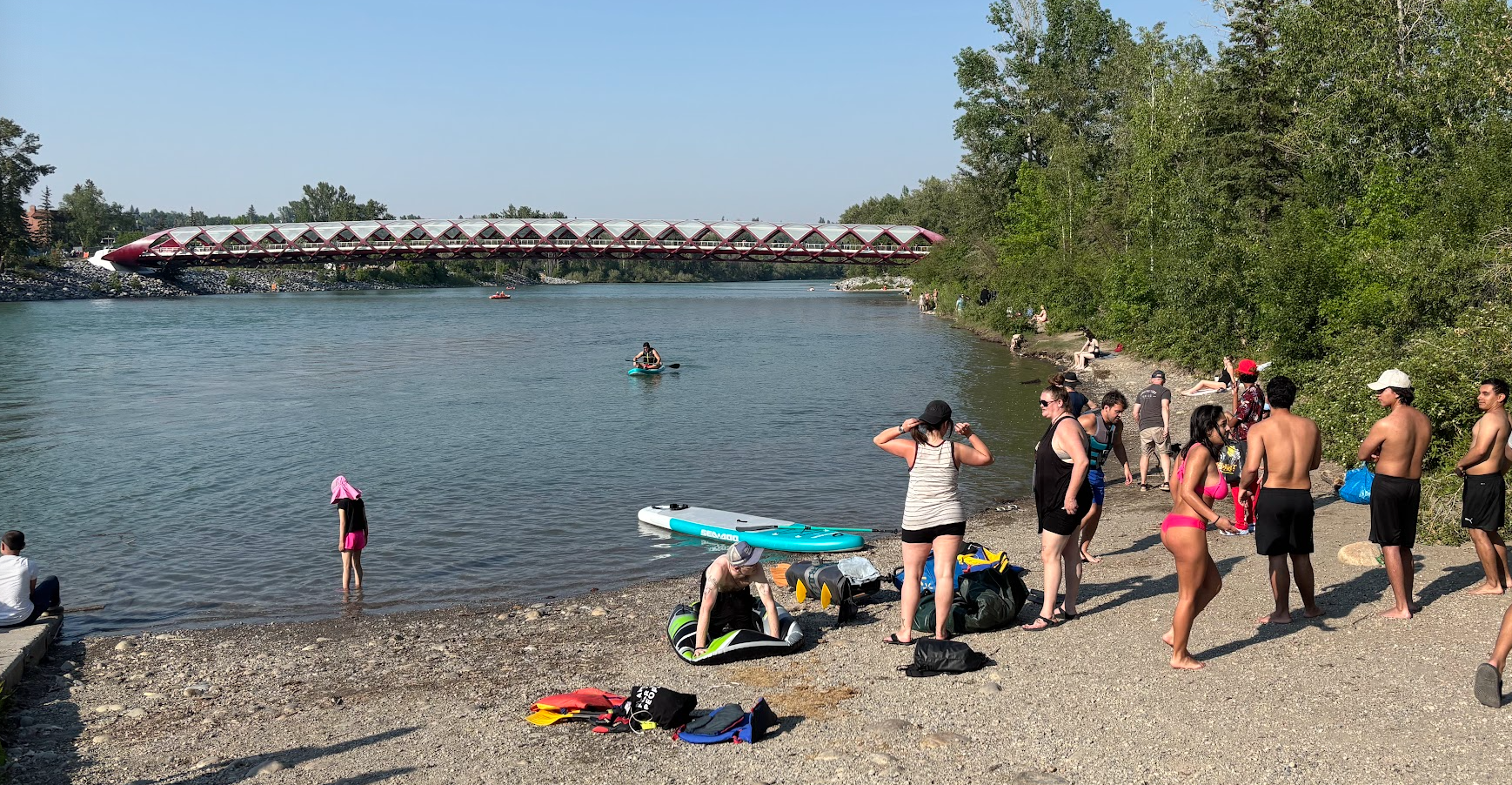
Calgary has dozens of pebble beaches along the Bow River, like this one downtown.
Fitness Activities
In Calgary, a popular activity is climbing the Crescent Height stairs – all 167 of them. However, this pales compared to Edmonton where there are at least six popular staircases to walk or run up and down, with the Grandview Heights staircase offering a 254-step challenge. Note: Edmonton also has the 100 Street Funicular (think elevator), a 48-second ride that connects the river valley promenade to the downtown, for those who can’t manage the stairs. There is also a climbing wall installed along the Saskatchewan River promenade. Edmontonians obviously love to climb.
Edmonton’s Kinsmen Sports Centre is one of the most unique sport centres in North America offering a world class destination for competitions and high-level sport training, while also providing wide range of opportunities and experiences for all ages and abilities. Calgary’s equivalent would be its MNP Community & Sports Centre along the Elbow River, which is one of busiest aquatic centers in North America.
Calgary has nothing to match REMAX Field home, located in its river valley and home to Edmonton Riverhawks baseball team. But, on the other hand, Edmonton has nothing to match Calgary’s Bow River as one of the best fly fishing rivers in the world.
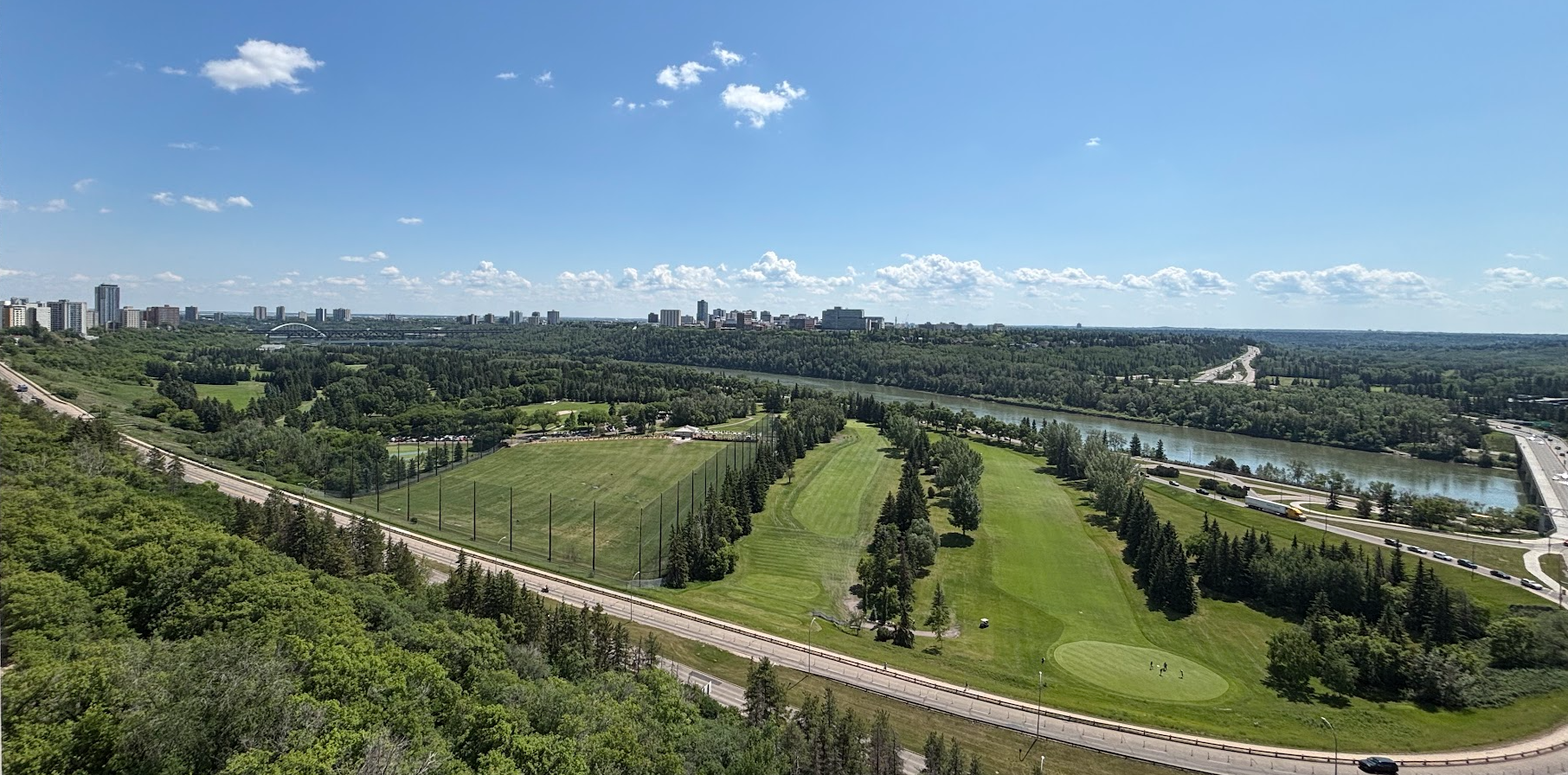
Edmonton’s river valley includes two golf courses.
Iconic Bridges
Both cities have iconic heritage and contemporary bridges over their rivers. Edmonton’s High Level bridge was built in 1913 to accommodate rail, streetcar, two-way automobile and pedestrian traffic. It is about 15 storeys above the river, creating a dramatic experience - while on the bridge or looking at it from afar. In 1980, the Great Divide waterfall was created by Peter Lewis for Alberta’s 75th Anniversary. The waterfall dropped 64 m (7m higher than Niagara Falls) off the bridge into the river. Unfortunately, it was shut in 2009 due to the negative impact of the man-made waterfall on the river’s natural habitat.
Calgary’s Centre Street bridge, completed in 1916, is less dramatic, but just as impressive. It is architecturally significant with its graceful arched spans, classical balustrades, cantilevered balconies, and kiosks all of which contribute to the beauty of the reinforced concrete bridge. The paired kiosks at each end of the bridge have large lion sculptures on top, symbolizing the British Empire, and are modeled after those in London’s Trafalgar Square. The kiosks are decorated with symbolic sculptures and shields including buffalo heads representing Western Canada; a maple leaf for Canada; the rose for England; the shamrock for Ireland; and the thistle for Scotland.
The Peace Bridge in Calgary, designed by renowned bridge designer Santiago Calatrava was completed in 2012 after much controversy (cost, over budget, delays, and debate over whether it was really needed). Today, this pedestrian and cycling bridge has become a popular meeting place for those wanting to stroll along the Bow River promenade. It is also a popular place for wedding and graduation photos, and one of the anchors of Calgary’s popular downtown Bow River promenade that includes a second major pedestrian bridge, George C. King Bridge, known locally as the “skipping stone bridge” given its arches look like a stone skipping across the river.
Not to be outdone, Edmonton’s equivalent would it Walterdale Bridge completed in 2013. This bright white, single two-arch (56m tall) bridge creates a dramatic entrance into downtown from the south for drivers, cyclists and pedestrians.
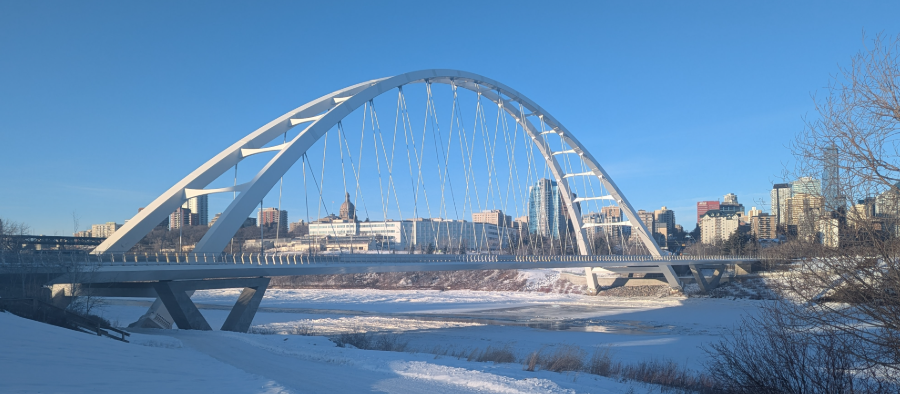
Edmonton’s Walterdale Bridge
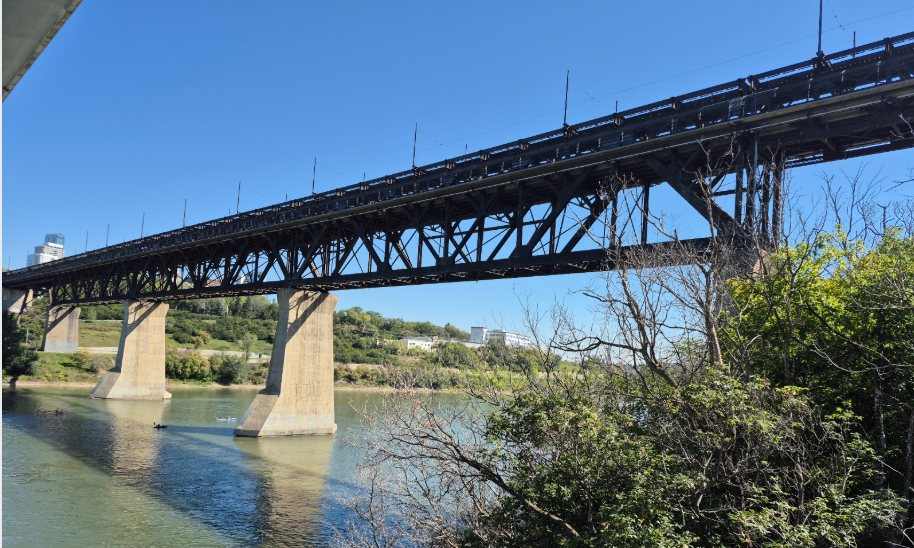
Edmonton’s High Level Bridge
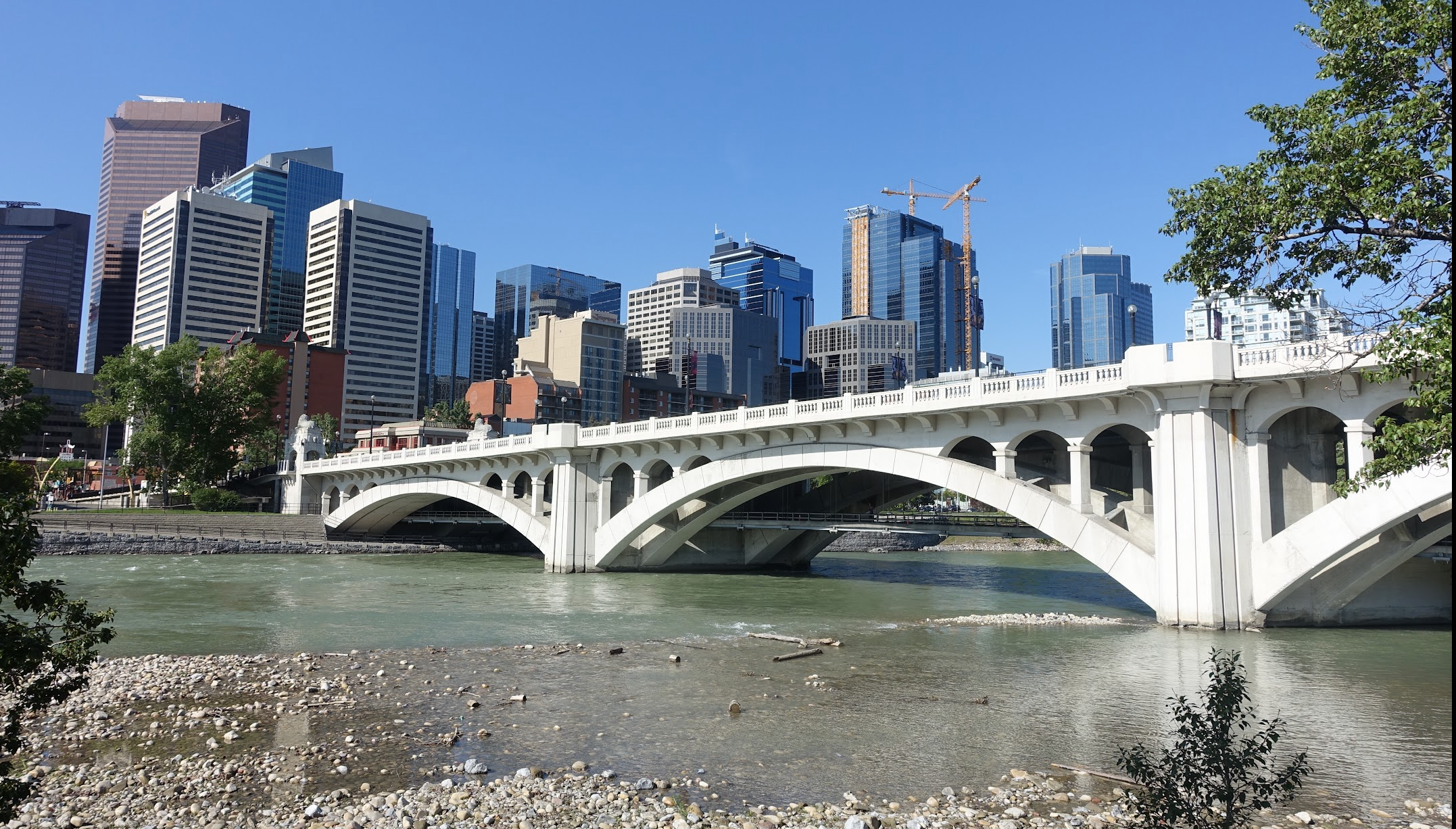
Calgary’s historic Centre Street bridge
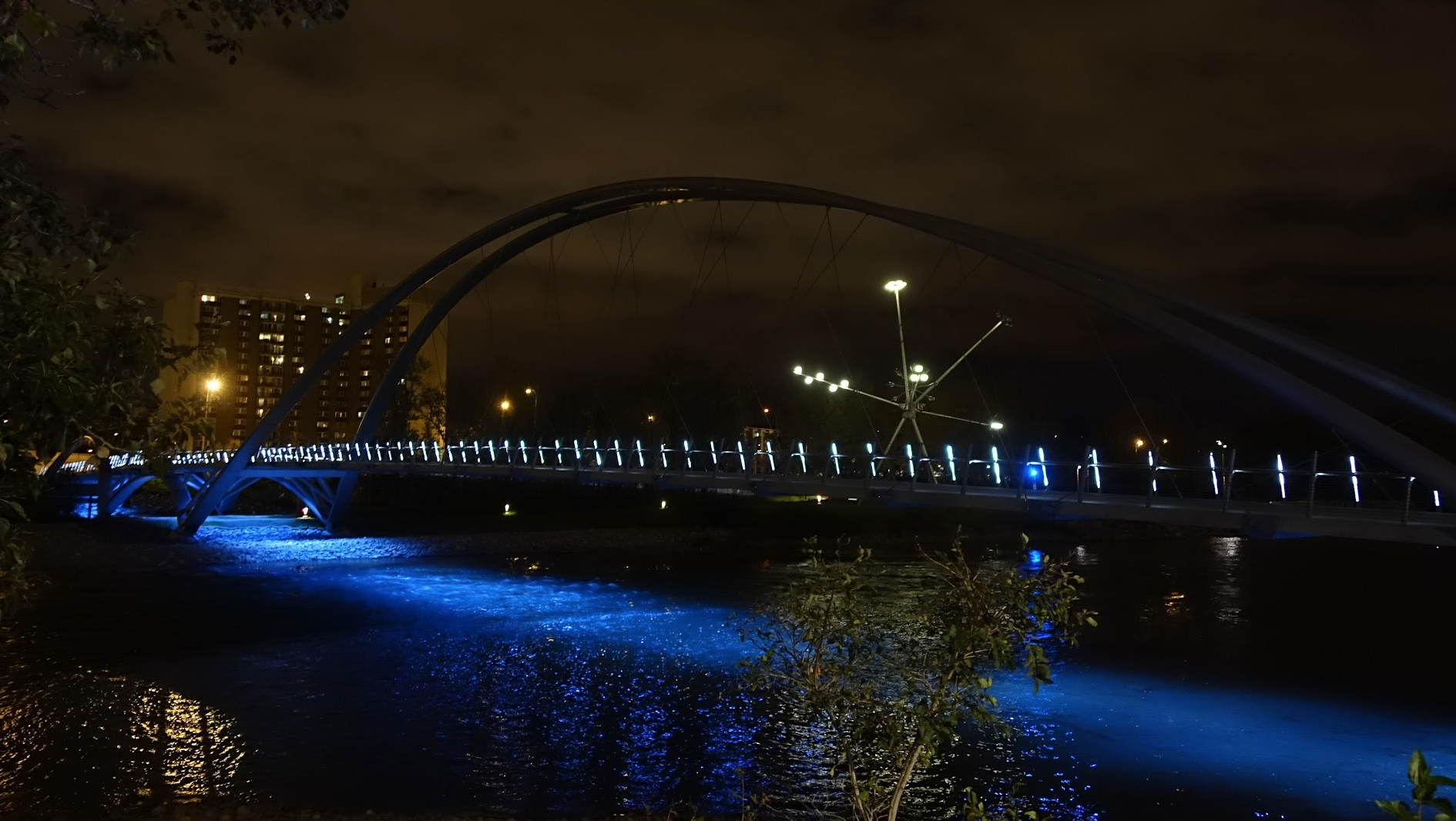
Calgary’s “Skipping Stone” bridge
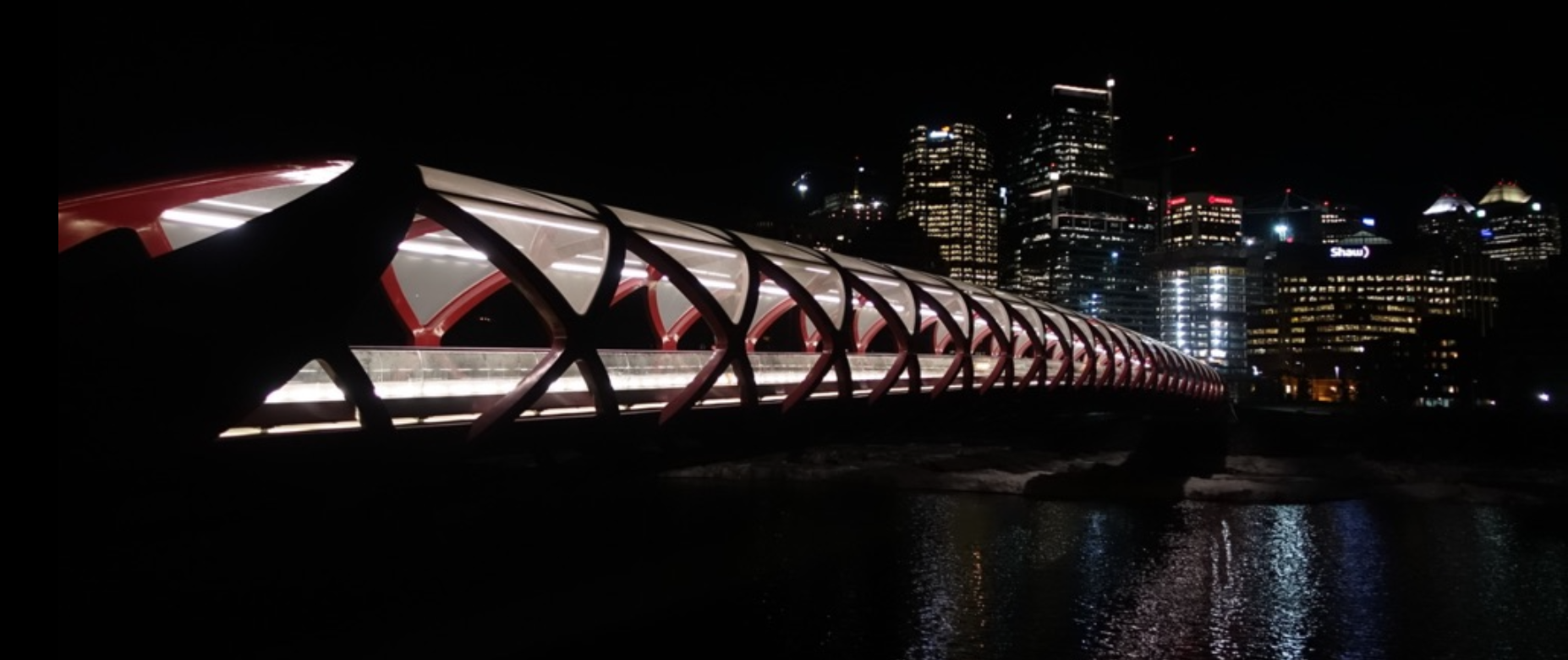
Calgary’s Peace Bridge
Last Word
Calgarians have a playful urban relationship with their rivers because they are smaller and you can walk and play along the riverbank, as well as float and paddle along the river. In addition, you can stand on numerous bridges and look down into the crystal clear water rushing by just a few feet away. Some days you can even see the fish below.
I expect Edmontonians have a more distant relationship with their river as it is harder to get close to the actual river, but a more intimate relationship with nature when exploring the heavily forested banks of their river.
So, there you have it. Who won this faceoff? You be the judge. In my opinion, each city has capitalized on the unique opportunities presented by the topography of its rivers - that is what great river cities do.
Note: An edited version of this blog was published in the Calgary Herald, November 15, 2025 title; “Calgary vs Edmonton River Valleys.”
Richard White is a Calgary freelance writer, who loves exploring cities and writing about their unique characteristics. You can read more about his urban adventures at everydaytourist.ca
