
Fun Urban Design: Wilmington’s Cargo District
I love researching on the internet new cities and towns to visit, but the best research is to ask others. Recently I was reminded of this when I found out I had an opportunity to visit Wilmington North Carolina. When I informed my niece that were going to explore the city, she contacted a friend who lived there to see if her friend had any off-the-beaten path things to see and do for an urbanist like me. Her friend asked a friend who suggested I visit the Cargo District.
As soon as I heard this, I quickly jumped on my phone and Googled it. Yep, this was a “must see” spot.
Cargo District 101
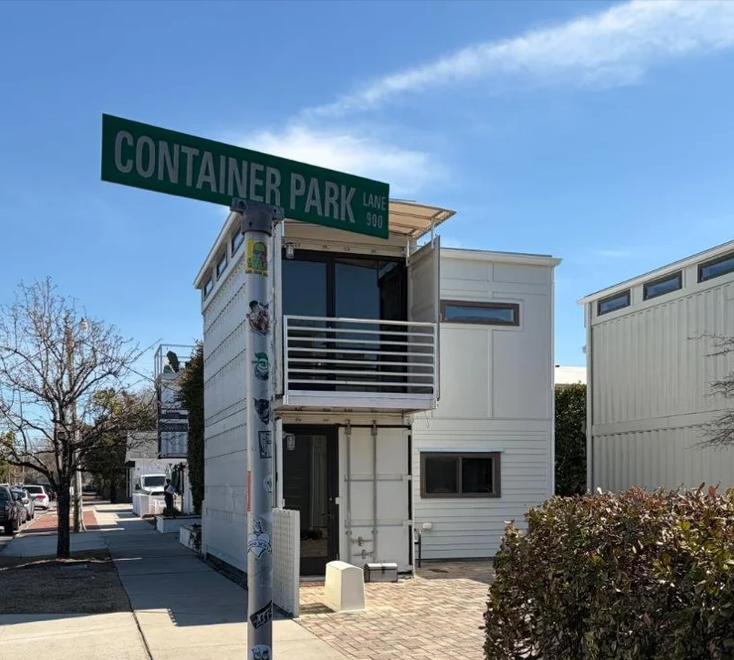
The project was spearheaded by developer Leslie Smith of LS Smith Inc. who in 2010 Smith acquired a commercial space at 1607 Queen St. in a neglected industrial area, which served as his residence and office. He then purchased the building next door which was made of shipping container, sparking the inspiration for an entire district built from upcycled materials.
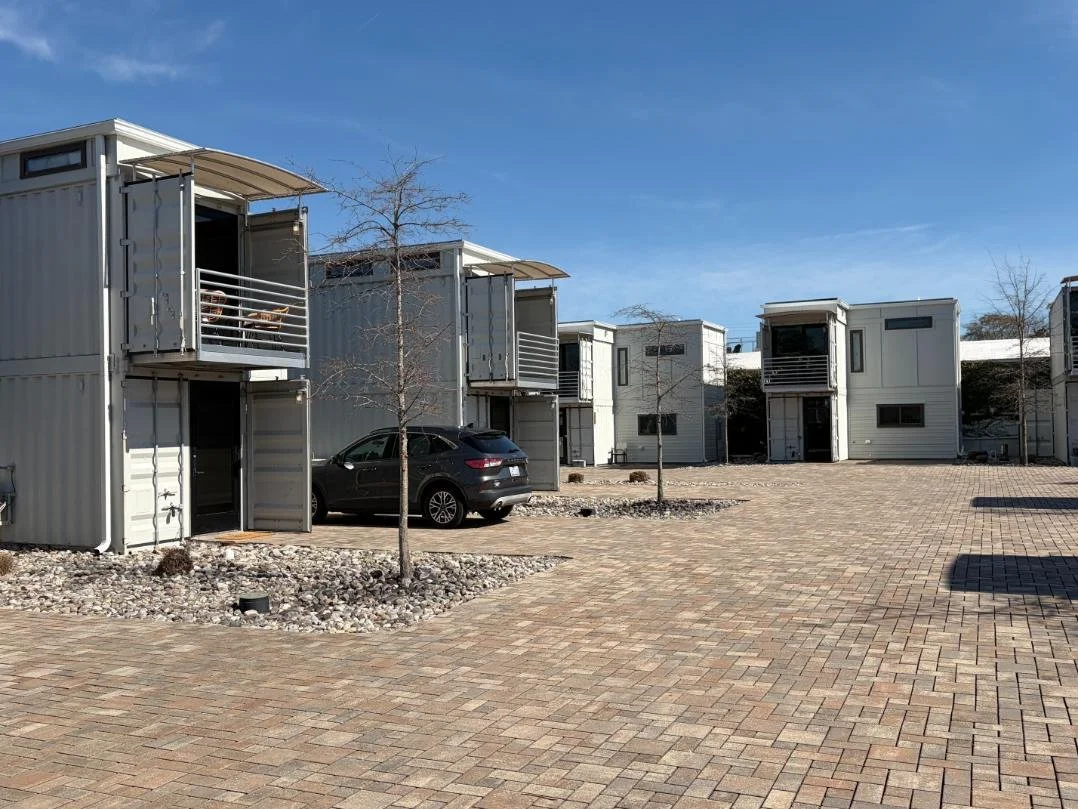
The district was officially branded in 2017 as an incubation hub for small businesses and entrepreneurs. The next year Smith created the first container-based, two-story residential buildings, using eighteen 20-foot containers source from local ports. Currently there are nine 600-square foot, one-bedroom apartments with plans to add 50 to 70 one and two-bedroom apartments in the future (using 200 repurposed shipping containers).
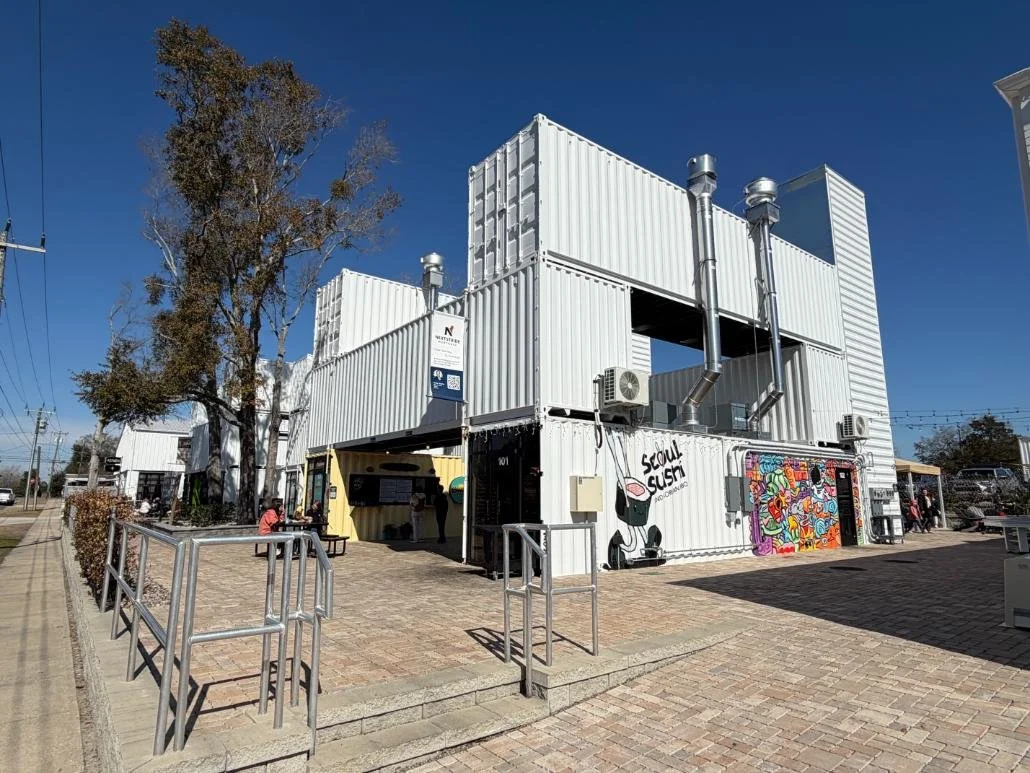
In 2025 the three-story Cargo West Food Court opened with space for 11 to 14 tenants - restaurants, roasteries and coffee houses, micro-kitchens, a brewery and distillery.
Today the Cargo District is an eclectic cluster of 85 shops on four blocks, between 15th and 17th Streets, bordered by Castle and Queen Streets. However, there are plans for it to expand to nine-blocks in the future.
My Experience
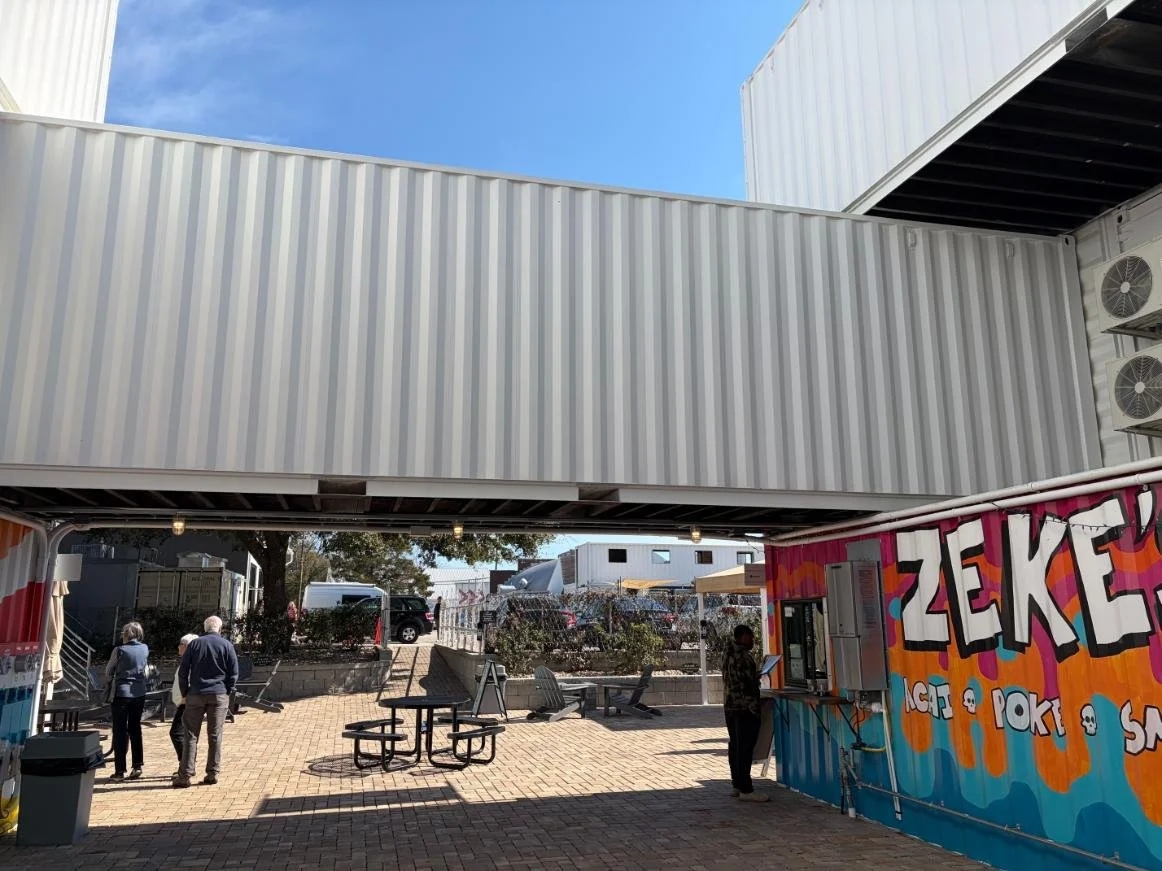
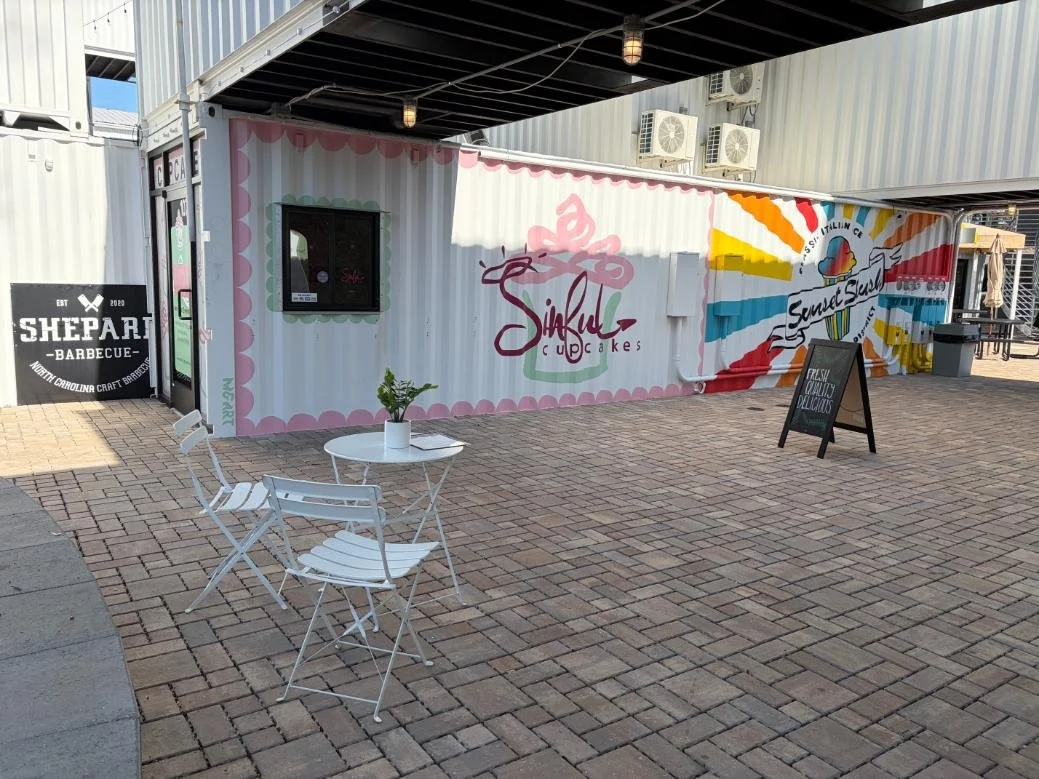
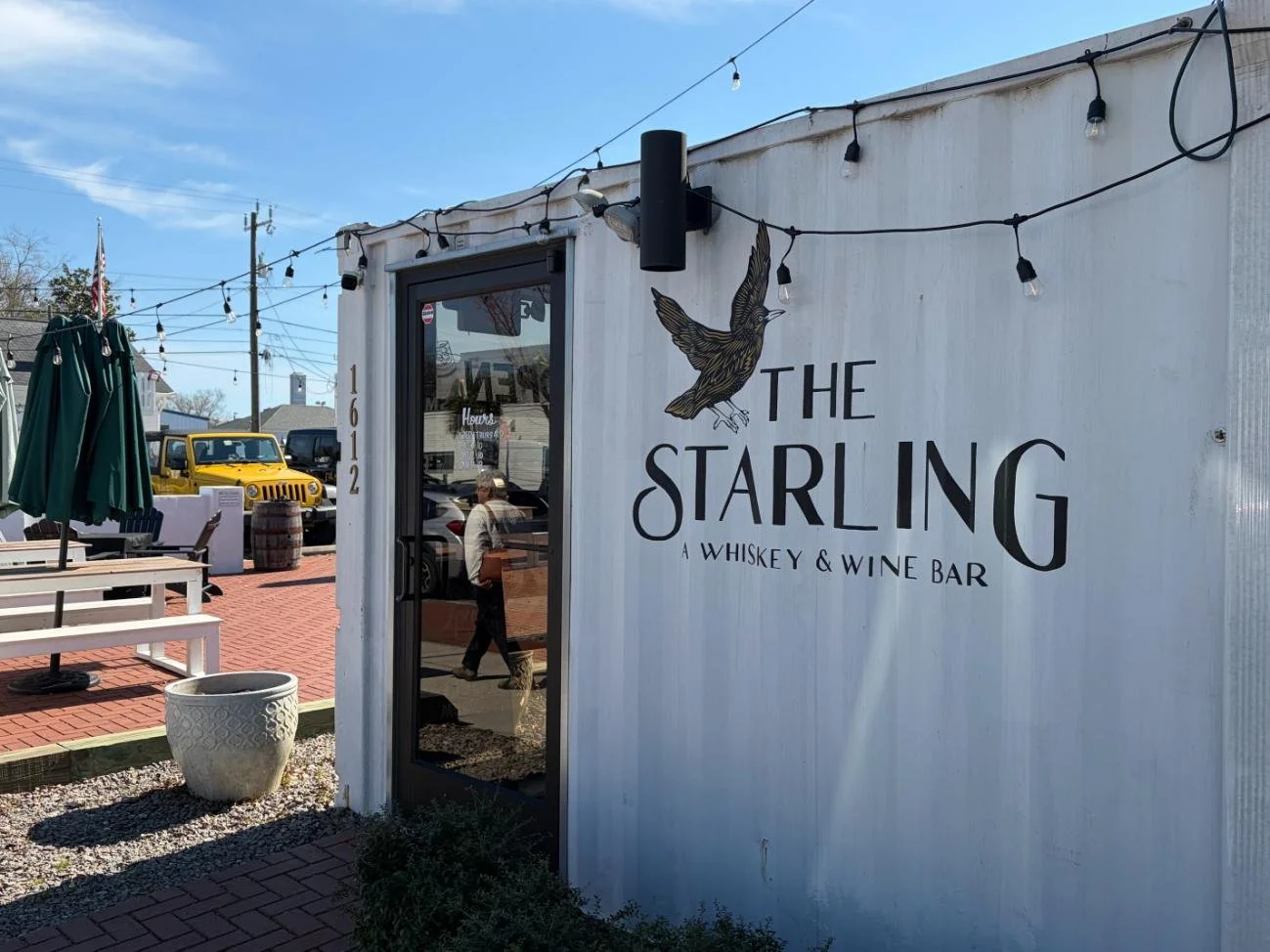
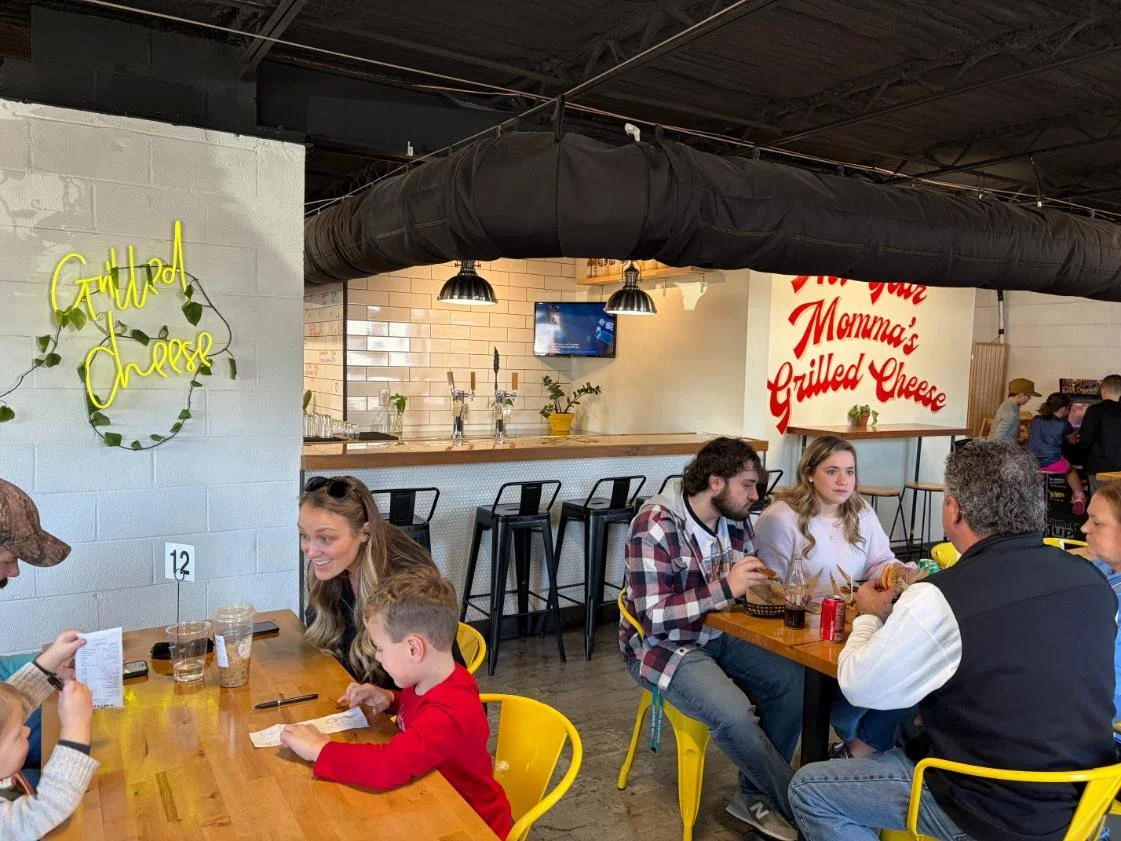
We arrived around 11 am on a Saturday, planning on exploring the district and then staying for lunch. While it was quiet when we arrive by noon the place was buzzing with young people including children. Even in February, the outdoor areas were busy, creating a pedestrian friendly atmosphere. The juxtaposition of the industrial containers with colourful murals and signage created a fun playful sense of place.
While there were a few shops to explore, it really is an outdoor food hall, to use the current urban jargon. The block of residences showed no sign of human activity and was very stark with no lawns, trees or gardens.
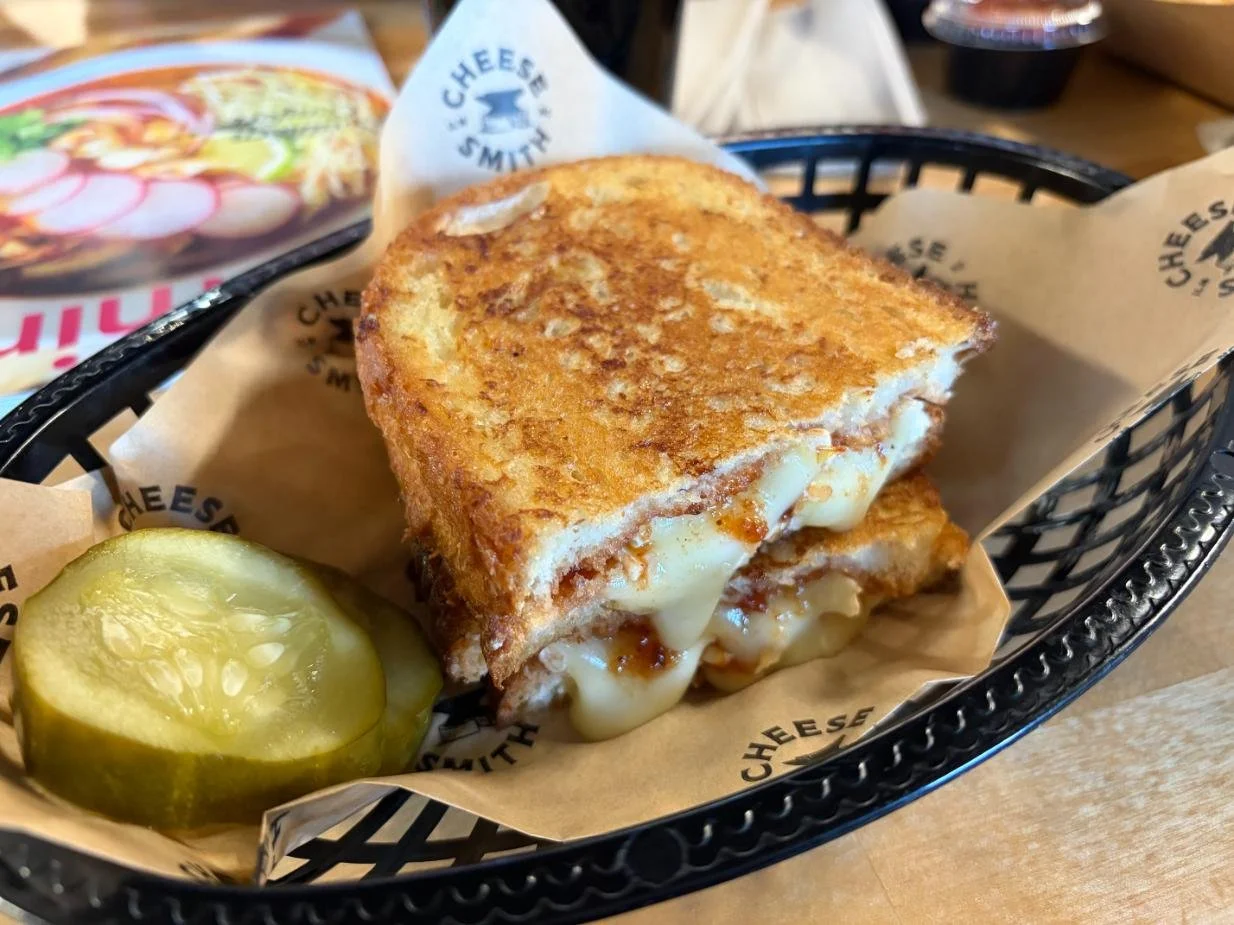
We eventually settled on lunch at CheeseSmith as I love grill cheese sandwiches. It did not disappoint. True to the Cargo District’s incubator vision, CheeseSmith started as food truck in 2018 and by 2020 the truck was retired in favour of a shipping container.
Calgary Opportunities
I am thing the Cargo District model could be put to good use in Calgary to create low cost space commercial and residential space on orphan land across the city. There is a vacant surface parking lot owned by Province at 11th Ave and 7th Street SW next Downtown West LRT Station that would be ideal for an enclave of cargo homes.
Could a Cargo Village be a temporary use of empty sites in West Village. It could be decades before anything major gets built there due to contamination. However, if you don’t have to disturb the land to much a Cargo Village might create a significant amount of much needed affordable housing and commercial space.
I am sure there are other underutilized City and privately owned site across the city that could benefit from becoming temporary Cargo Villages.
Last Word
Portland became famous in the ‘70s with its food cart/pod initiative that saw food vendors on City Centre empty parking lots, as a means of creating vibrant streets. This eventually evolved to food trucks in the late ‘90s in Los Angeles and spread across North America.
Could it be that the latest evolution of street food will be container parks, like the Cargo District in Wilmington? Let’s hope so.
