
Getting Lost in Venice: A City Built for Wandering
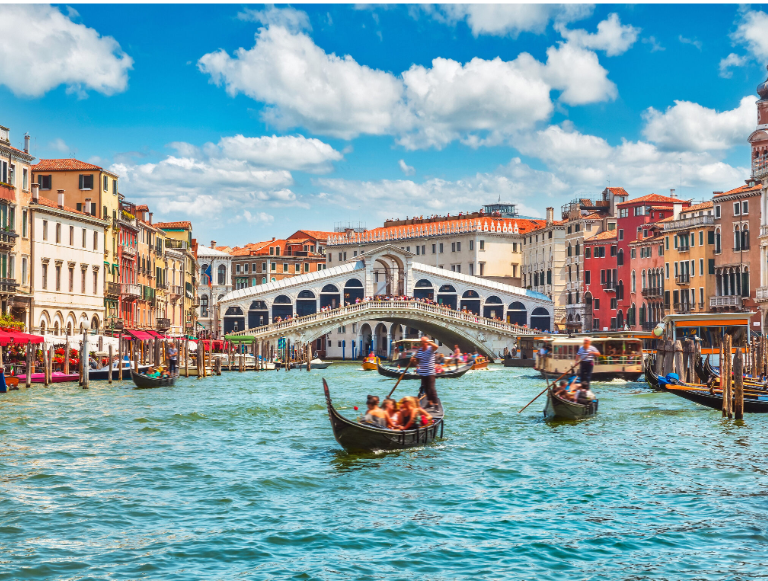
There is no other city on earth quite like Venice. Built across 118 small islands in a shallow lagoon, stitched together by more than 400 bridges and not a single car, it is a place that rewards the traveler willing to slow down, look up, and get a little bit lost. You do not so much tour Venice as drift through it, letting the narrow lanes and sudden open squares pull you from one discovery to the next. For anyone who loves walking a city on foot, this is the great prize of the Mediterranean.
What follows is less an itinerary than an invitation: a few experiences that make Venice worth the journey, and a note on where to rest your head once the day's wandering is done.
Arriving by Water
Most cities greet you with an airport road and a tangle of highways. Venice greets you with water. Whether you take the public vaporetto down the Grand Canal or splurge on a private water taxi from Marco Polo Airport, the first sight of the city rising from the lagoon is unforgettable. Palazzos in faded rose and ochre lean toward the water, laundry hangs between shuttered windows, and the whole improbable place seems to float just above the tide. Stand at the front of the boat, let the spray hit your face, and watch Venice assemble itself around you.
The Pull of St. Mark's Square
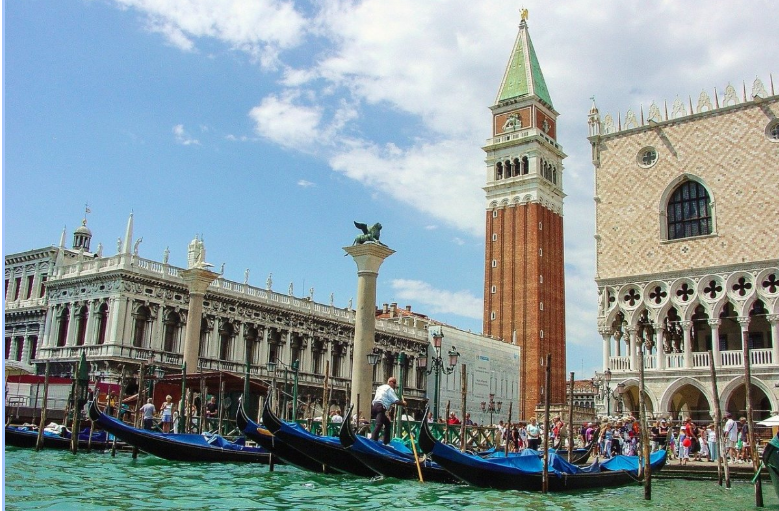
Every visit eventually finds its way to Piazza San Marco. The basilica's golden domes, the soaring campanile, and the long arcades of cafes make it one of the most theatrical public spaces in the world. Arrive early, before the cruise crowds, and you may have the square almost to yourself, pigeons and all. Climb the bell tower for a view across the red rooftops to the lagoon and the distant Dolomites. Step inside St. Mark's Basilica to see Byzantine mosaics that have glittered for nearly a thousand years. Then linger at a cafe table with an espresso and simply watch the city perform.
Losing the Map on Purpose
Here is the secret most seasoned travelers will share. The best of Venice is not on any list of must-sees. It is in the moment you put the map away and follow a quiet alley to see where it goes. You will cross humpbacked bridges over silent canals, stumble onto a tiny square where children kick a football against a centuries-old well, and find artisan workshops where craftspeople still make gilded masks and blown glass by hand.
The quieter neighborhoods reward this kind of aimless wandering. Cannaregio, north of the tourist core, has canalside walks and the historic Jewish Ghetto. Dorsoduro offers the Peggy Guggenheim Collection and the great basilica of Santa Maria della Salute. Castello, the largest district, feels like a residential village the moment you step a few streets back from the water.
Cicchetti and the Art of the Bacaro

Venetians have their own delicious version of happy hour. At a bacaro, the city's traditional wine bar, you order cicchetti, small plates of marinated seafood, creamed cod, cured meats, and pickled vegetables, washed down with a small glass of wine or the city's beloved spritz. The streets around the Rialto Market are thick with them, and a self-guided crawl from one bacaro to the next is one of the most enjoyable ways to spend an evening in Venice. Visit the market itself in the morning, when the fishmongers and produce stalls are in full swing. It has fed the city for some 700 years and remains gloriously, unselfconsciously local.
The Islands of the Lagoon
When the main island starts to feel busy, the lagoon offers an easy escape. A short vaporetto ride carries you to Murano, where glassblowers have practiced their fiery art since the thirteenth century, and to Burano, a fishing village of candy-colored houses so vivid they look painted for a film set. Farther out lies sleepy Torcello, the first part of the lagoon to be settled, where a single ancient cathedral sits in green quiet. Set aside half a day, because the boat journey across the lagoon is half the pleasure.
Where to Stay
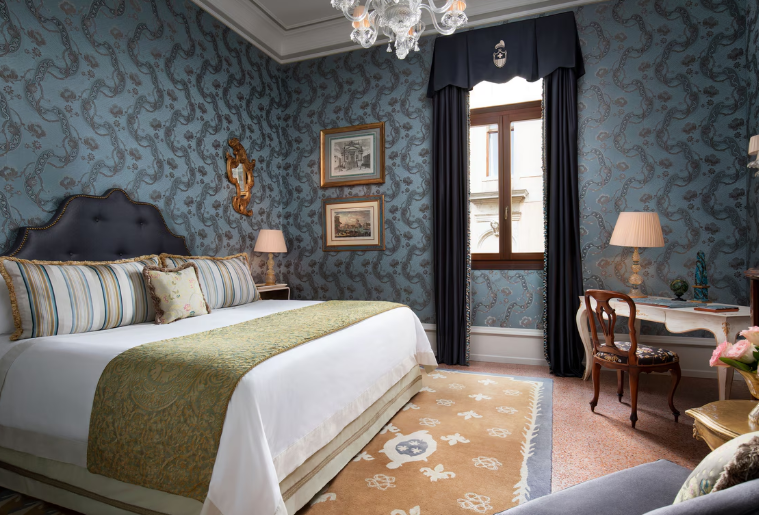
Venice is full of places to sleep, but a few grand old palazzos let you stay inside the city's history rather than merely beside it. The standout is The Gritti Palace, a noble palazzo dating to 1475 that sits directly on the Grand Canal, a six-minute walk from St. Mark's Square. Part of Marriott's Luxury Collection, it has welcomed everyone from Ernest Hemingway, who worked on a novel here, to writer Somerset Maugham, who once said that at the Gritti you are not a guest but a friend. The real magic is the terrace of its Club del Doge restaurant, where breakfast or an evening aperitivo comes with an unobstructed view across the water to the domes of Santa Maria della Salute. Rates sit firmly at the luxury end, so it makes a memorable choice for a honeymoon or a milestone trip, and travelers who collect Marriott Bonvoy points can often redeem them here.
If the Gritti is beyond your budget, Venice rewards every price point, from family-run guesthouses to mid-range hotels in residential Cannaregio. One rule worth following: stay on the islands themselves, not on the mainland. Waking up to church bells and water against stone is the whole point.
The Last Boat Home
Venice empties dramatically when the day-trippers leave. Stay the night, and you inherit a different city, lamplit and hushed, where your footsteps echo off the stone and the canals lie still and black. Walk it then, with no particular destination, and you will understand why travelers have been falling for this impossible city for a thousand years. Pack comfortable shoes, leave room in your schedule for getting lost, and let Venice do the rest.
