
History and Mythology Brought to Life in Athens Streets
Athens isn’t the kind of place you just "visit." It’s more like a city you have to negotiate with. The moment you step out of your hotel, you’re smacked in the face by this beautiful mess — ancient marble sitting right next to gritty street art, the scent of roasting lamb clashing with exhaust fumes, and the constant, rhythmic buzz of scooters cutting through traffic. It’s loud, and if you don’t have a bit of a game plan, it’s easy to feel like the city is swallowing you whole.
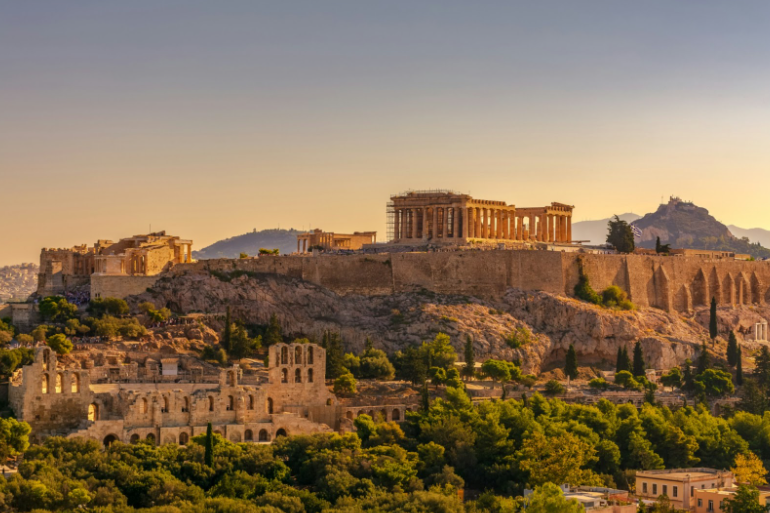
That’s where the magic is. To really get under the skin of this place, you have to move at the speed of a local. That’s why so many people end up gravitating toward walking tours in Athens as their jumping-off point. You can read a guidebook until your eyes glaze over, but nothing hits quite like standing in the literal shadow of the Parthenon while someone explains why those massive columns aren't actually straight, or stumbling upon a tiny, nameless bakery in the back alleys of Psirri that smells like heaven and honey.
Why Your Feet Are Your Best Tour Guides
The Sensory Overload. You’ll catch the heavy scent of jasmine pouring over garden walls one minute, and the sharp tang of vinegar from a basement taverna the next.
The Stuff You Can’t Map. Most of the best bits, like tiny Byzantine chapels, hidden ruins tucked into the basements of apartment buildings, and world-class street art, are in spots where cars literally can’t go.
The Freedom to Just Stop. If you hear a guy playing a bouzouki near the Roman Agora, you can just sit on a stone and listen. You aren't beholden to a driver’s schedule or a ticking clock.
The Real Pillars of the Athenian Vibe
If we’re stripping the city down to its bones, it usually comes down to three things: the heavy, ancient weight of the Acropolis, the frantic energy of the markets, and that quiet, village-like stillness you find in the older pockets of town.
Ancient Grandeur. The Acropolis is the obvious heavy hitter. But the Peripatos, the ancient path that wraps around the base of the hill, is where the mythology starts to feel less like a textbook and more like a ghost story.
The Culinary Soul. In Greece, food is basically a social contract. Whether it’s a warm koulouri (those sesame bread rings) at 8:00 AM or a greasy, perfect souvlaki at 2:00 AM, the city eats with its heart.
Neighborhood Personalities. Every "hood" has its own pulse. Exarcheia feels like a rebellious university campus; Koukaki is the place for cool bars and slow brunches; and Monastiraki is the chaotic, beating heart of the tourist trade.
How to Navigate the "Must-See" Layers Without Burning Out
"Ruin fatigue" is a real thing. If you spend three days just looking at broken rocks, they all start to look the same. The trick is to weave the history into your actual life. You don’t just "go see" the Temple of Olympian Zeus; you walk past those massive columns on your way to find the city’s best freddo espresso.
A typical day might look something like this:
Morning. Hit the Temple of Hephaestus. It’s one of the best-preserved Doric temples on the planet, and because it’s tucked away in the Ancient Agora, it feels way more personal and quiet than the Parthenon.
Mid-day. Wander toward the Varvakios Central Market. This is the city’s stomach. It’s loud, it’s a bit bloody, and it’s absolutely glorious. Watching the fishmongers do their thing is a masterclass in Athenian grit.
Late Afternoon. Get lost in Anafiotika. It’s a tiny neighborhood built by islanders from Anafi, and it looks exactly like a Greek island village. There are Whitewashed walls, blue doors, and stray cats clinging to the side of the Acropolis rock.
Mythology That Actually Feels Real
We’re taught to think of Greek myths as fairy tales, but for the people who built this place, they were the laws of physics. When you’re standing on the Areopagus (Mars Hill) at dusk, watching the sky turn purple, you’re standing where the gods supposedly held their trials.
Think about that olive tree on the Acropolis. It represents the moment Athena beat Poseidon in a "who can give the best gift" contest. He gave the city a salt-water spring (pretty useless, honestly), and she gave them the olive tree — food, oil, and shade. It’s a 3,000-year-old reminder that this city has always valued practical wisdom over raw, crashing power.
The Modern Heartbeat
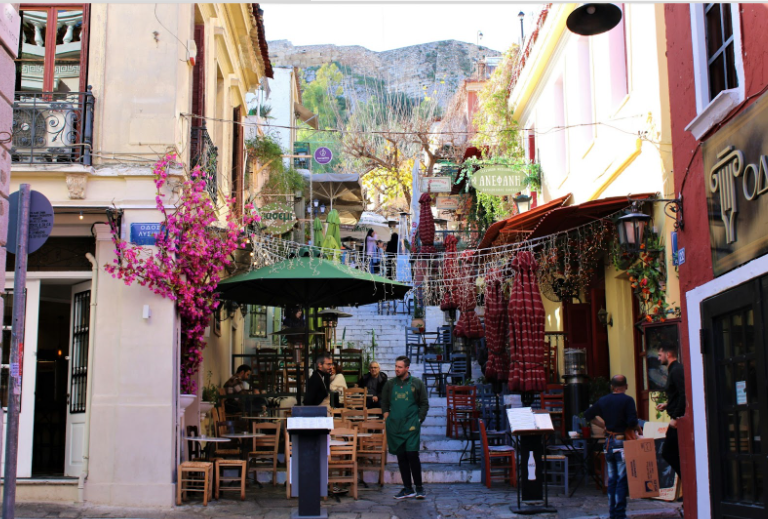
The Street Art. Athens has some of the most intense, politically charged murals in Europe. It’s like a public diary written on concrete.
Coffee Culture. Greeks have turned "sitting down" into a professional sport. You can nurse a single coffee for three hours, and no one will ever give you the check unless you ask for it.
The After-Hours Shift. When the sun drops, the city flips a switch. The rooftop bars open up, the Acropolis gets lit up like a stage set, and the whole place starts to hum with a different kind of electricity.
How to Not Act Like a Total Tourist
Close your eyes and listen. You’ll hear the rhythmic click of komboloi (worry beads), the clink of ouzo glasses, and maybe some faint Rebetiko music drifting out of a second-story window.
Eat what’s actually in season. If you’re here in the summer, eat the tomatoes until you’re sick of them. They will ruin every other tomato you ever eat for the rest of your life.
Pick a fight (about food). Ask a local where the best pita is. They will probably give you a twenty-minute passionate lecture. Listen to them. They are always right.
At the end of the day, Athens isn’t a museum you’re supposed to walk through with your hands in your pockets. It’s a giant, messy, ongoing conversation. It’s ancient, it’s stressed out, it’s beautiful, and it’s completely alive. The only way to understand it is to just keep walking until your feet hurt and your heart is full.
