
Mardi Gras: Family Fun Parades!
You can’t think about New Orleans and not think Mardi Gras. But do you really know what Mardi Gras is other than there is lots of drinking and debauchery on Bourbon Street? It has always amazed me how a city can create a world renowned festival out of throwing beads to women (and sometimes men) to see if they will flash you. But after spending a week in New Orleans, I learned Mardi Gras is more community and family oriented than I thought.
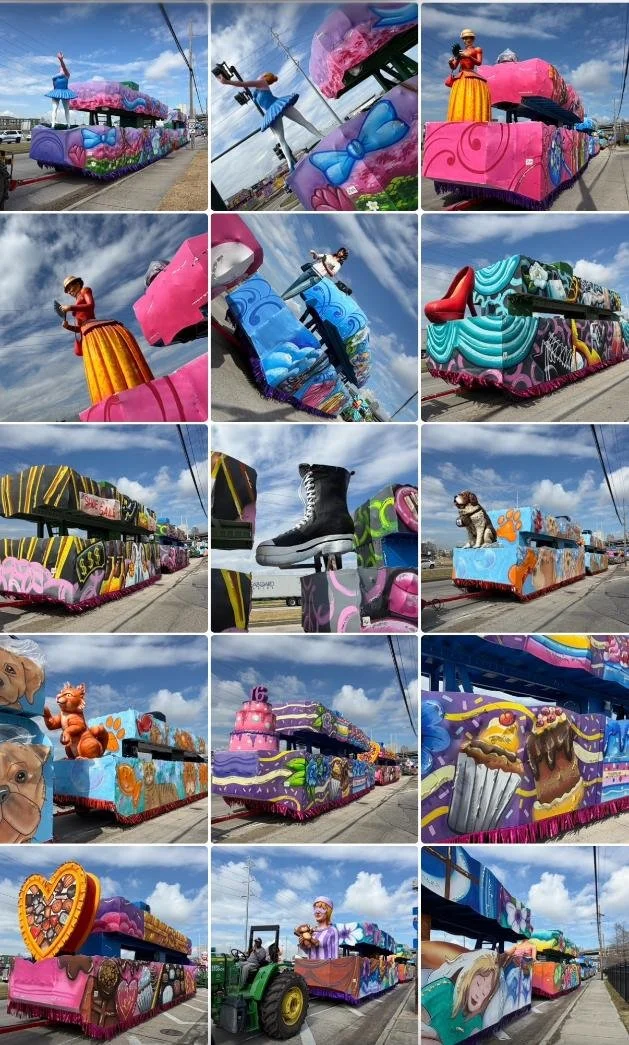
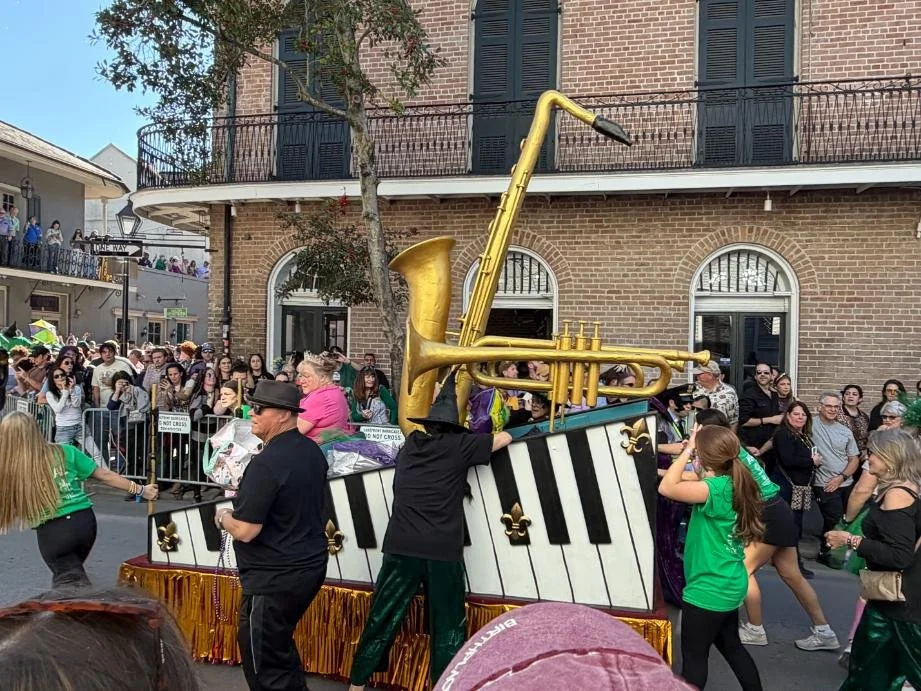
Here a some of the colourful floats used in the various Mardi Gras parades. Each float is filled with people in costume throwing out trinkets to the parade audience. As you can see the floats are geared towards children.
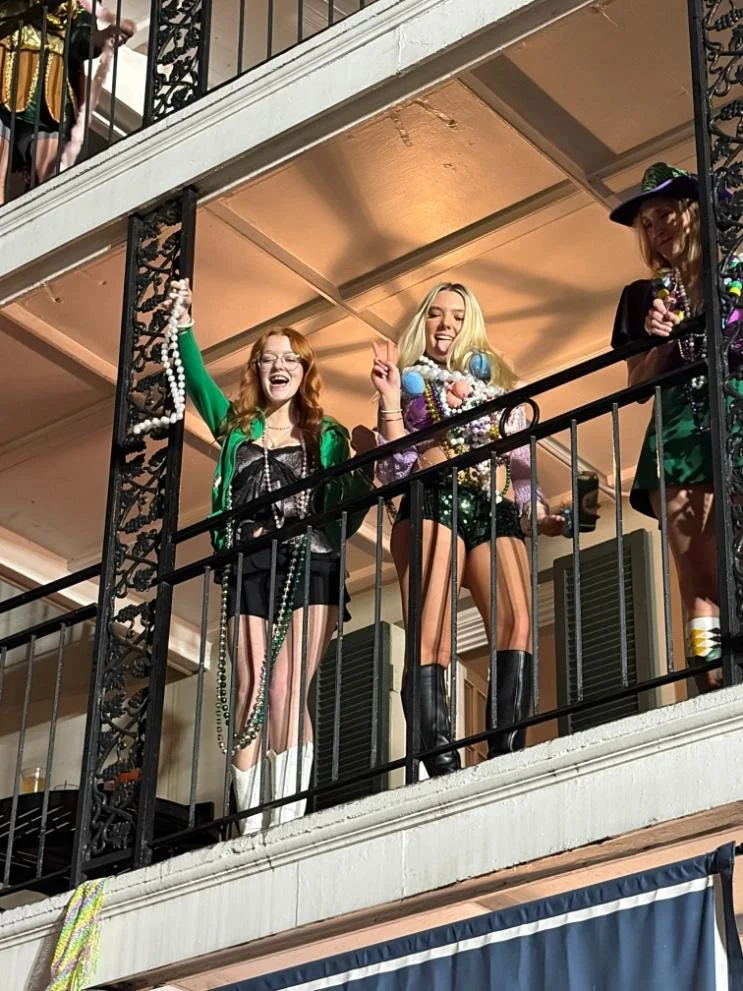
Typical balcony with people throwing beads to people on Bourbon Street.
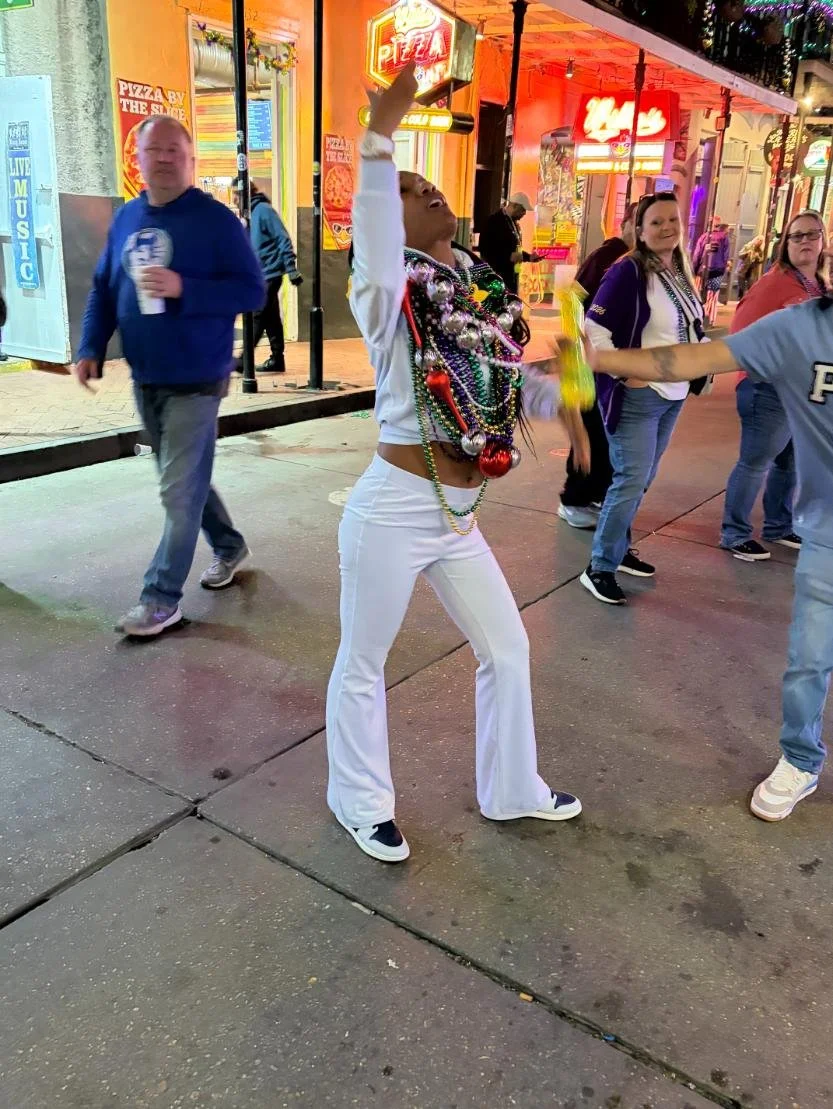
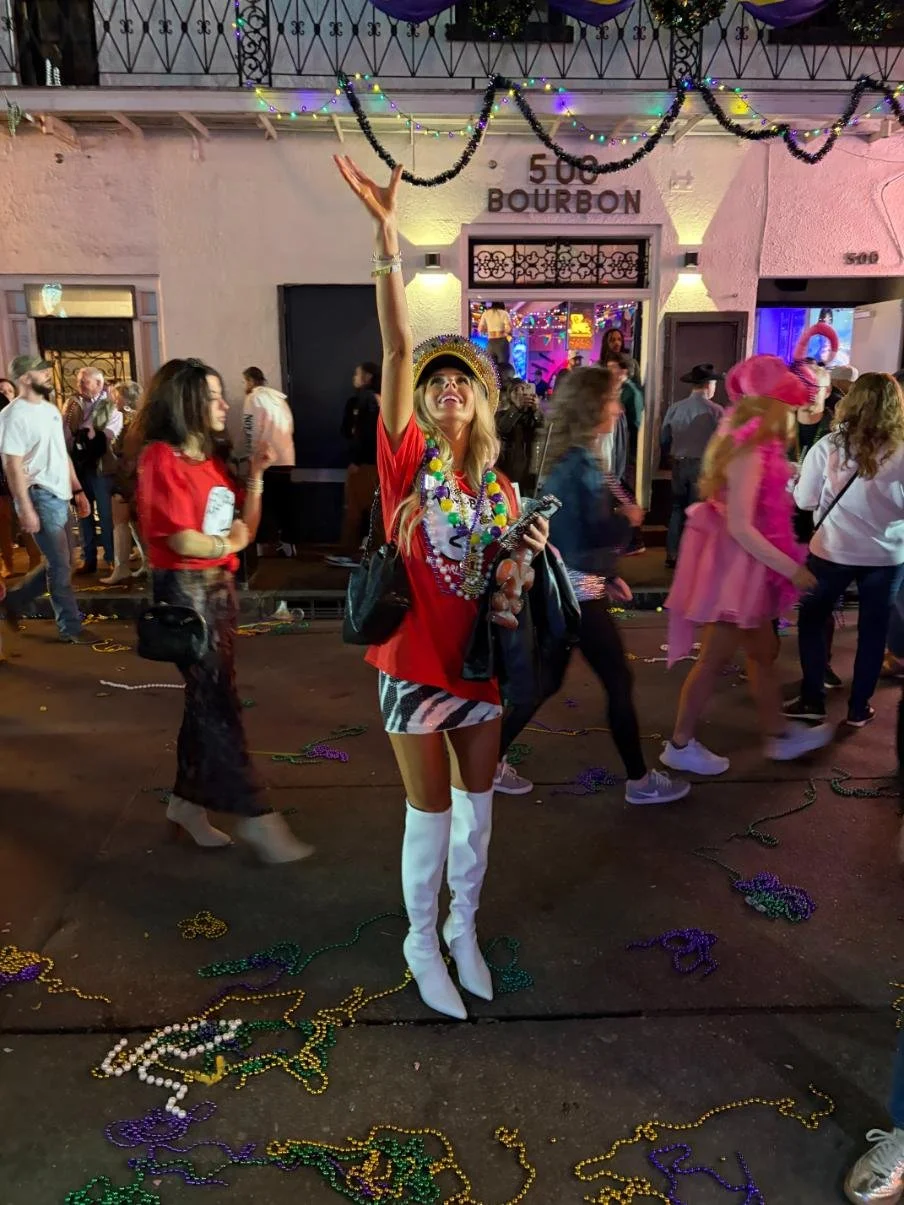
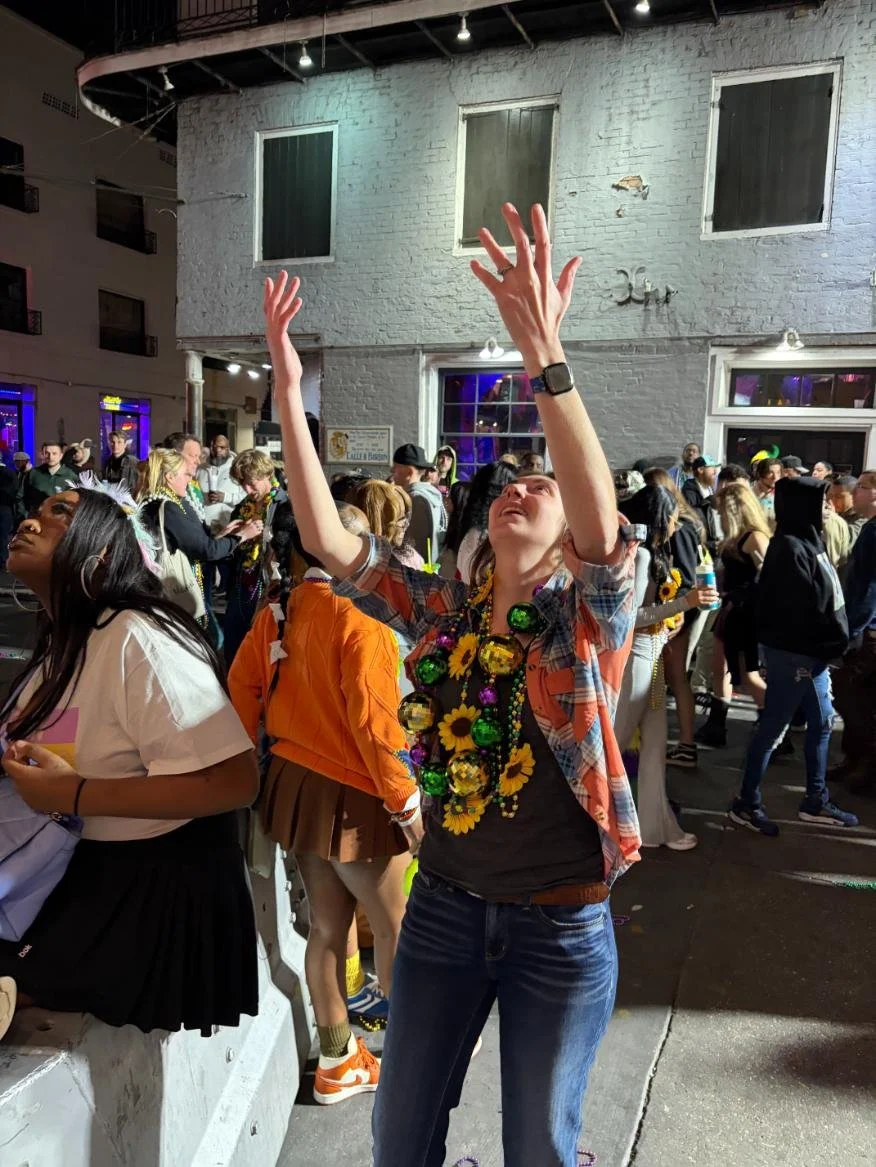
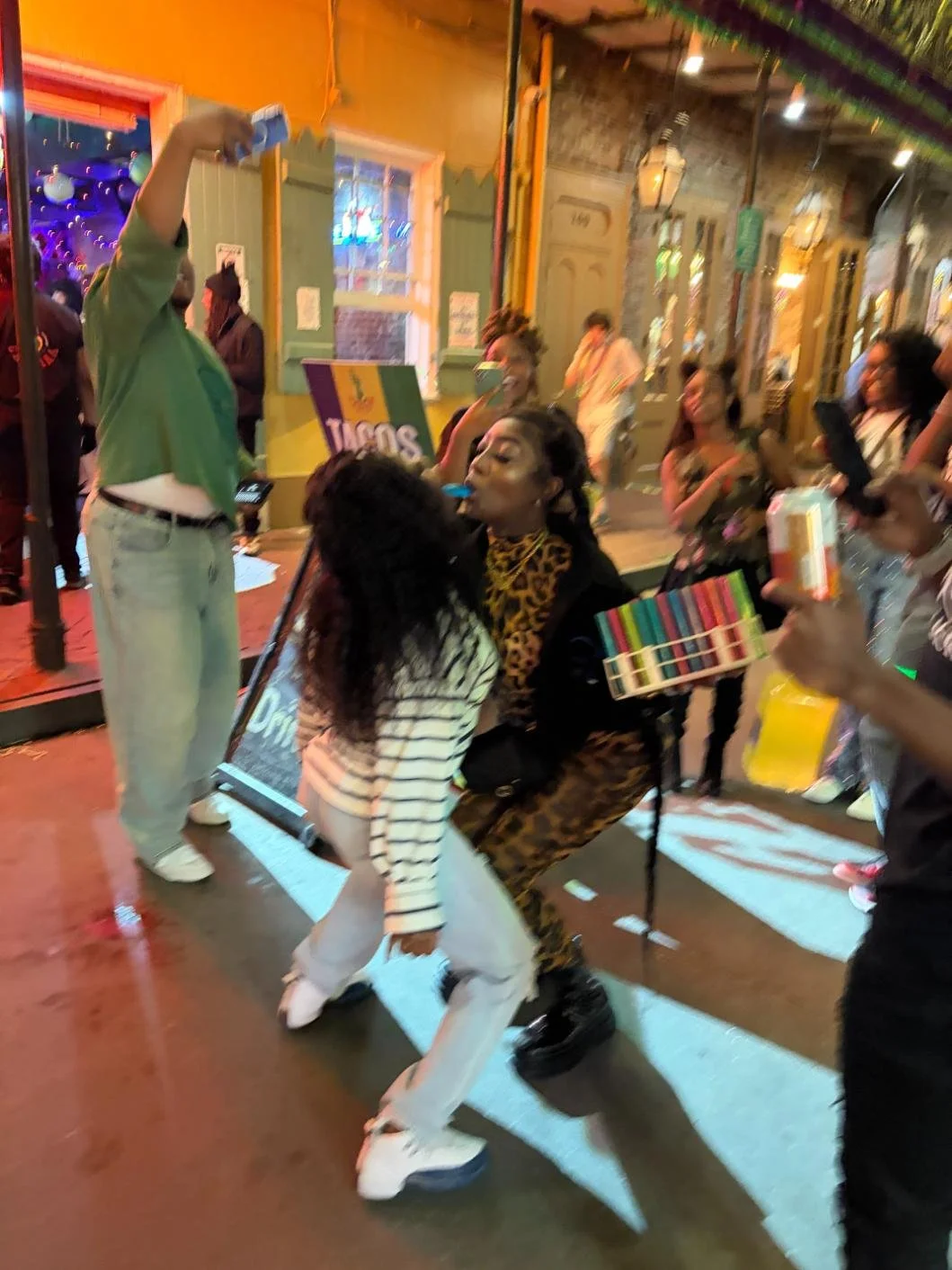
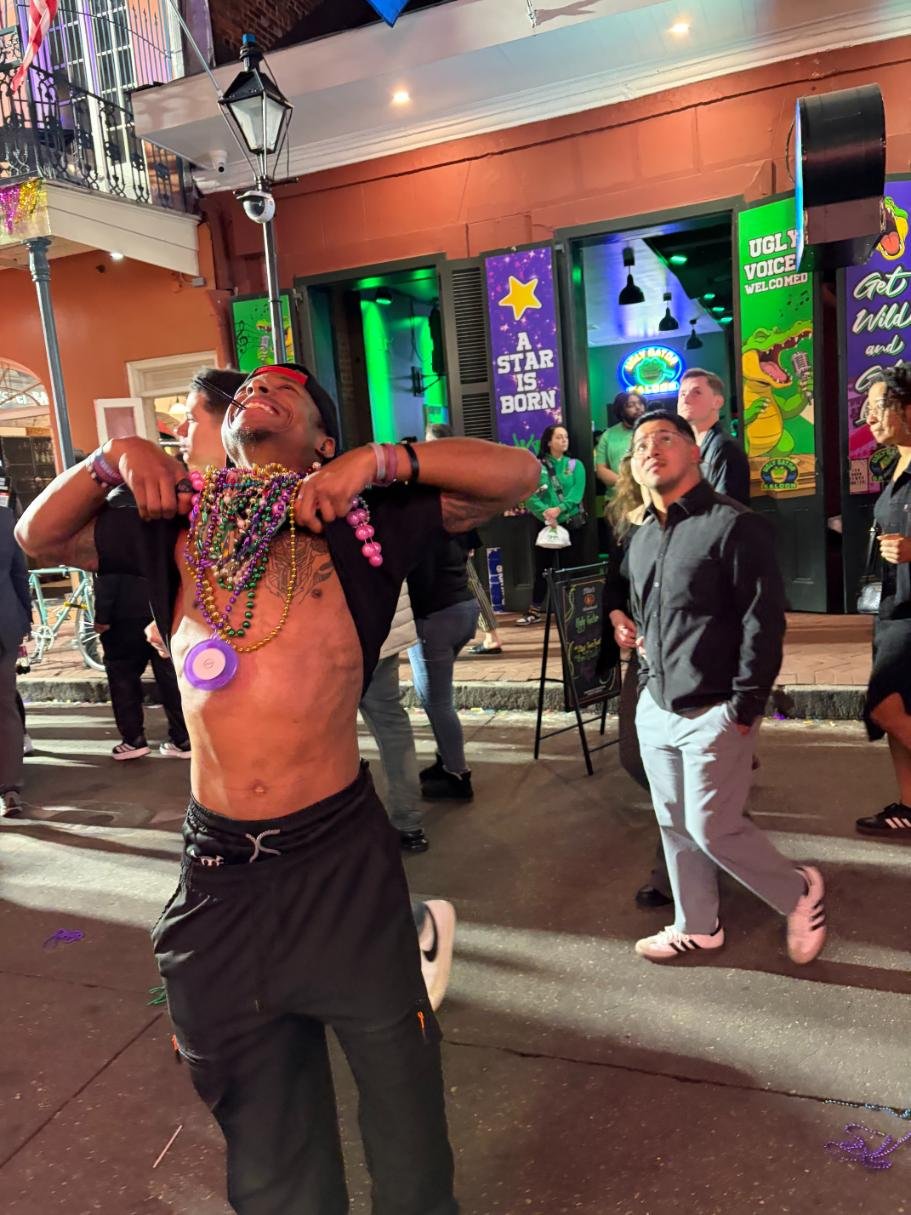
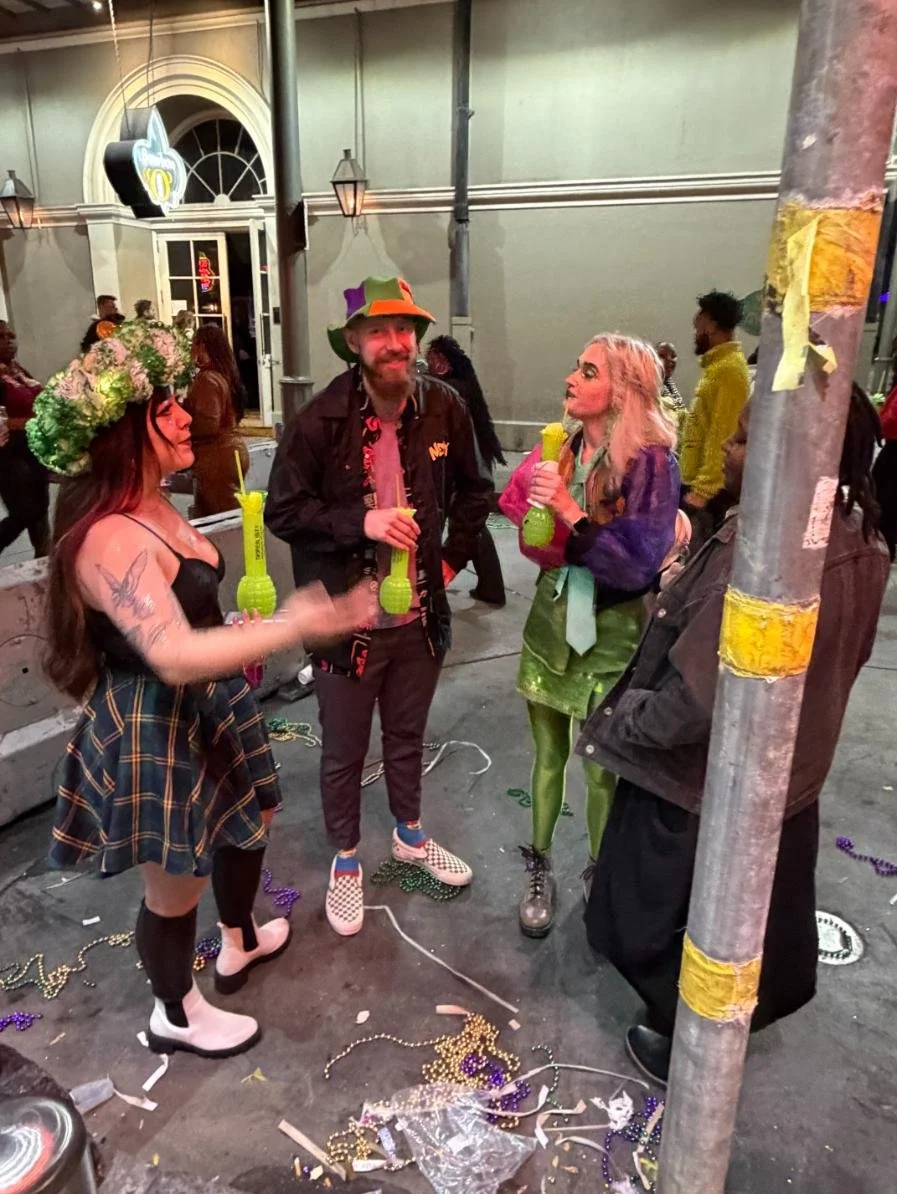
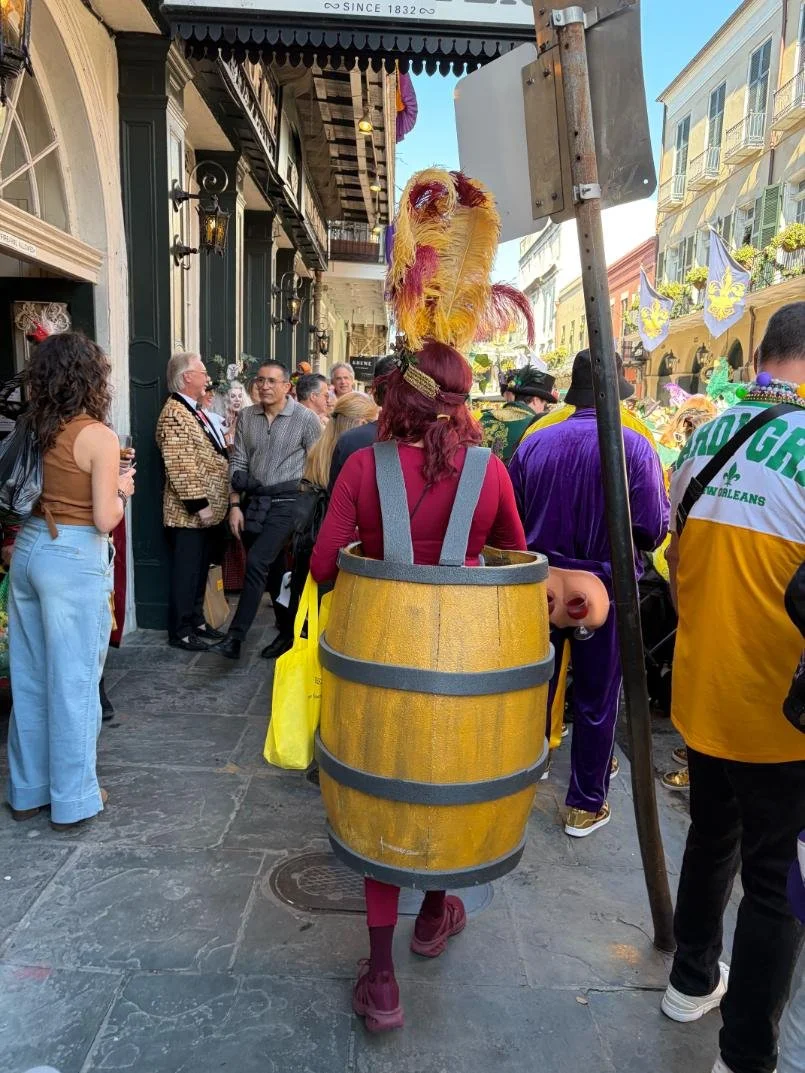
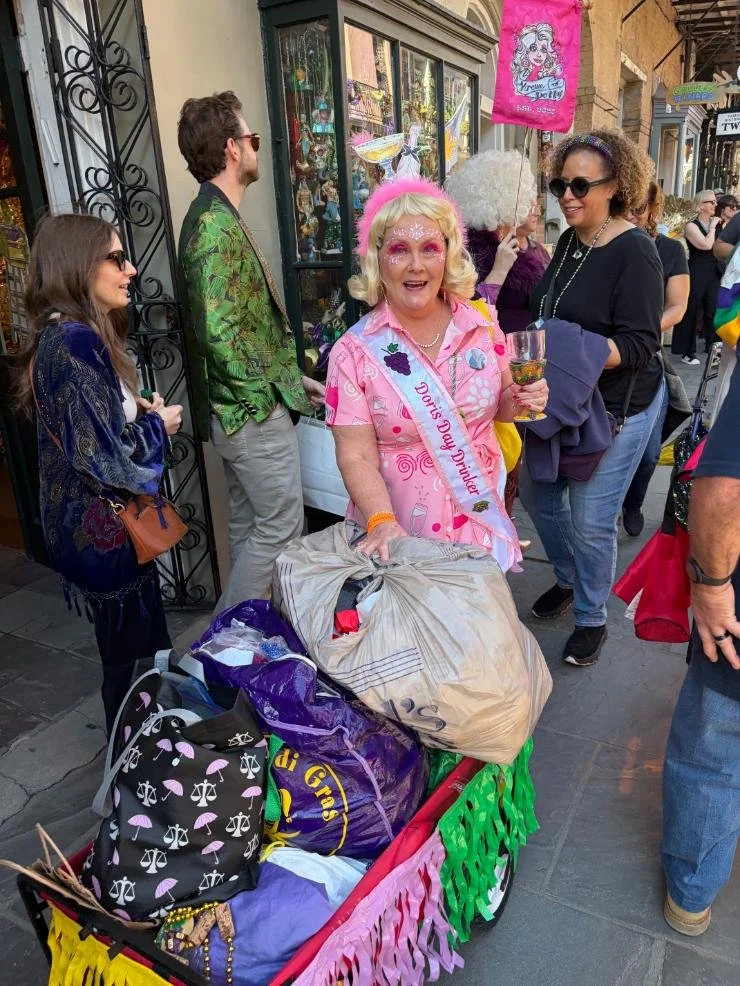
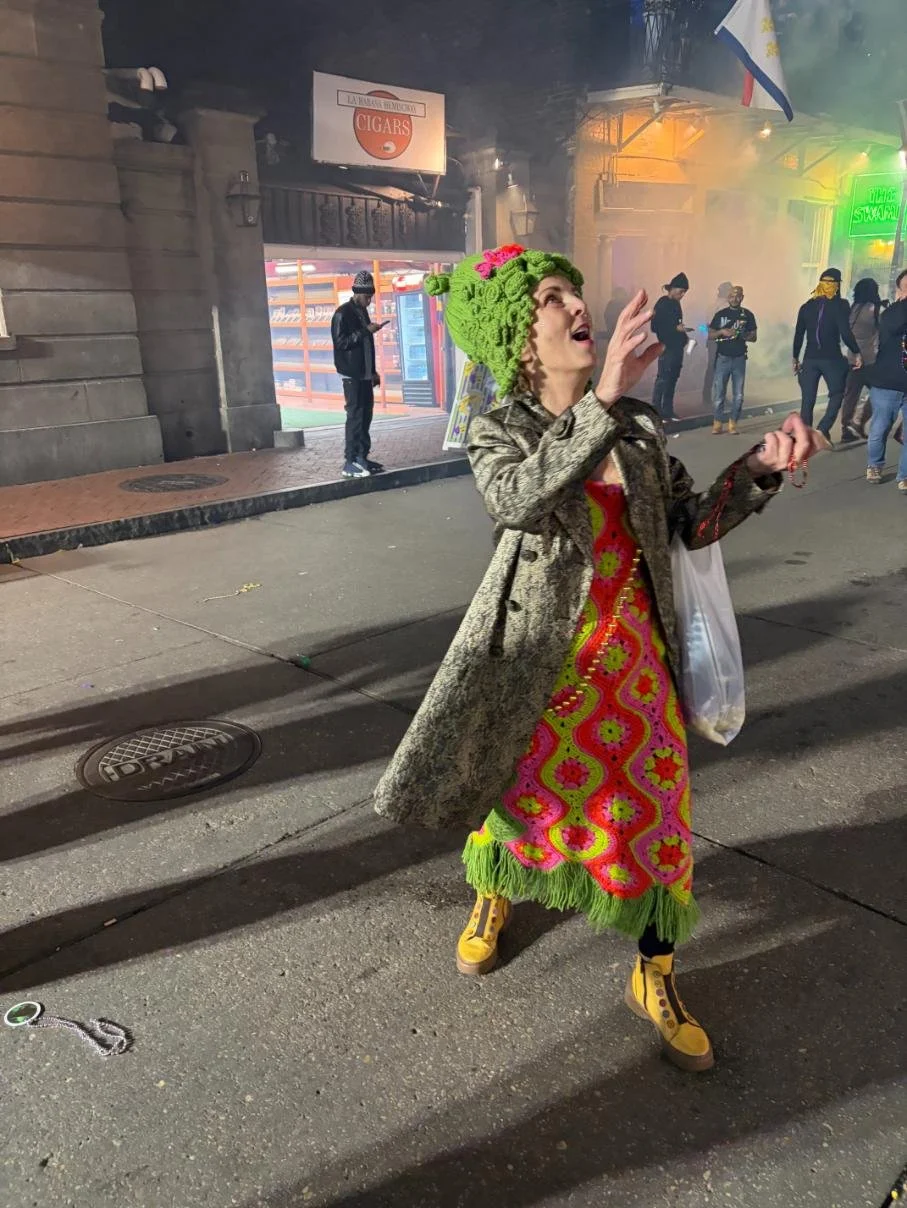
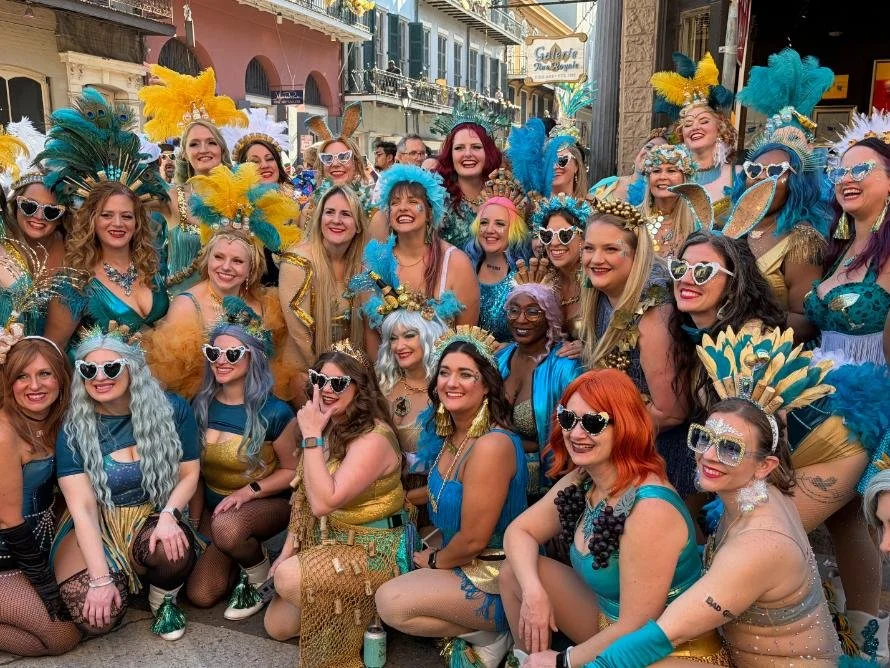
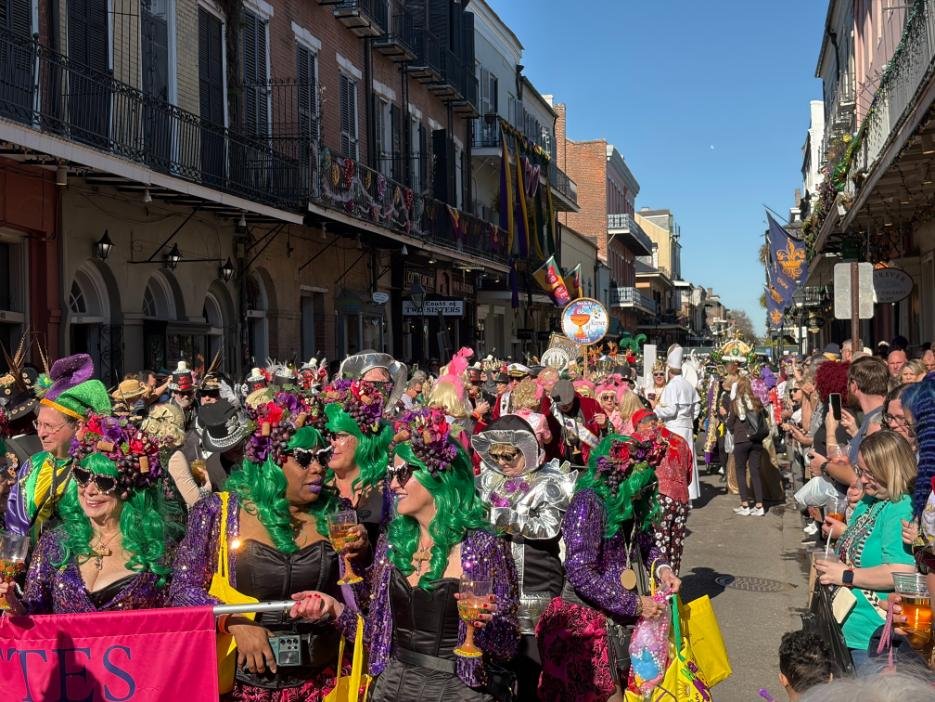
Some of the parade costumes.
The Parades
The Mardi Gras Carnival season starts quietly with a small parade by the Krewe de Jeanne d’Arc celebrates Joan of Arc’s liberation of Orléans in 1429. This year’s parade featured 10 Joans on horseback, and a special visit by French officials from Orléans itself.
Surprisingly, the parades don’t just happen in the downtown but in several communities around the city and the vast majority are family friendly. Certain krewes are specifically known for being kid-friendly due to their themes, daytime schedules, or special "throws" (the items tossed from floats).
Krewe of Orpheus: Co-founded by Harry Connick Jr., this "super-krewe" is famous for spectacular musical themes and beautiful floats.
Krewe of Barkus: A quirky dog parade in the French Quarter that is a massive hit with animal lovers.
Krewe of Rex: A traditional, majestic daytime parade on Mardi Gras Day.
Family Gras: A dedicated three-day festival in nearby Metairie (about 10 minutes from downtown) featuring parades, a "Kids' Court," and free outdoor concerts.
Specialty Children's Krewes: The Krewe of Little Rascals and Krewe of Kids are specifically designed for young children with playful themes.
Fun Fact: Many locals bring ladders with a small wooden seat on top so children can see over the crowds and catch more beads.
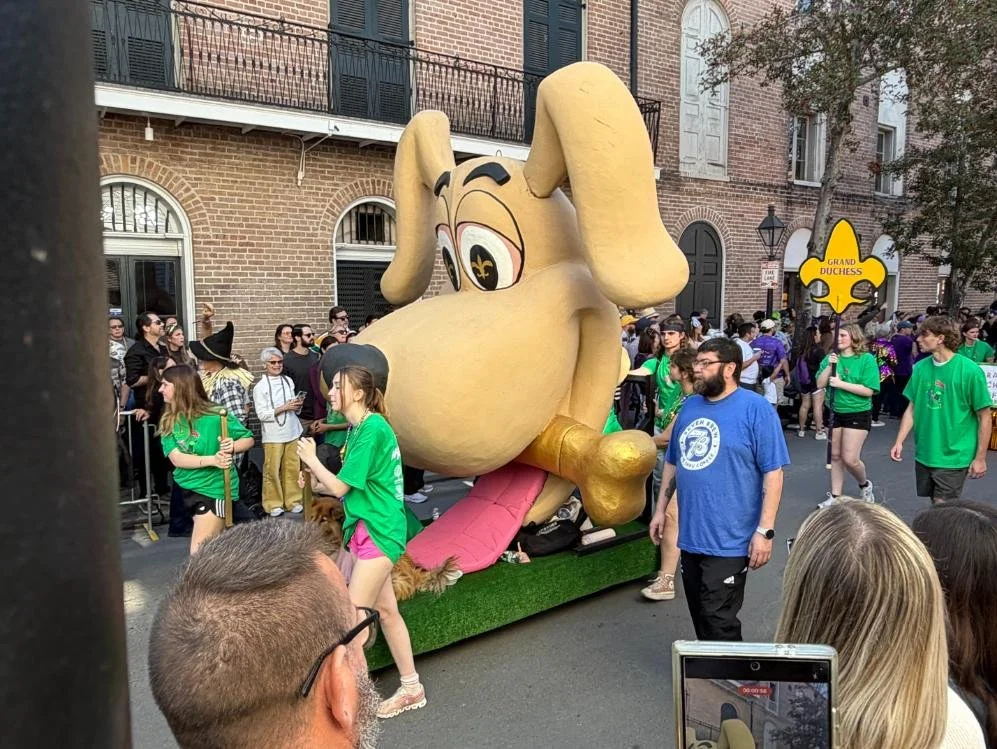
Krewe of Barkus is a fun dog themed parade.
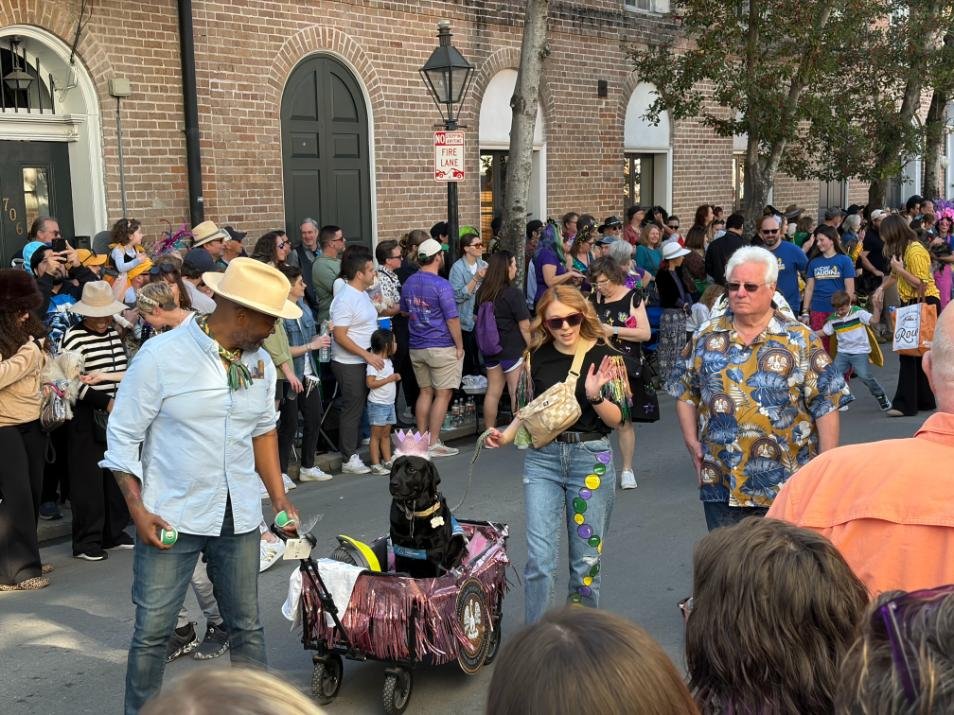
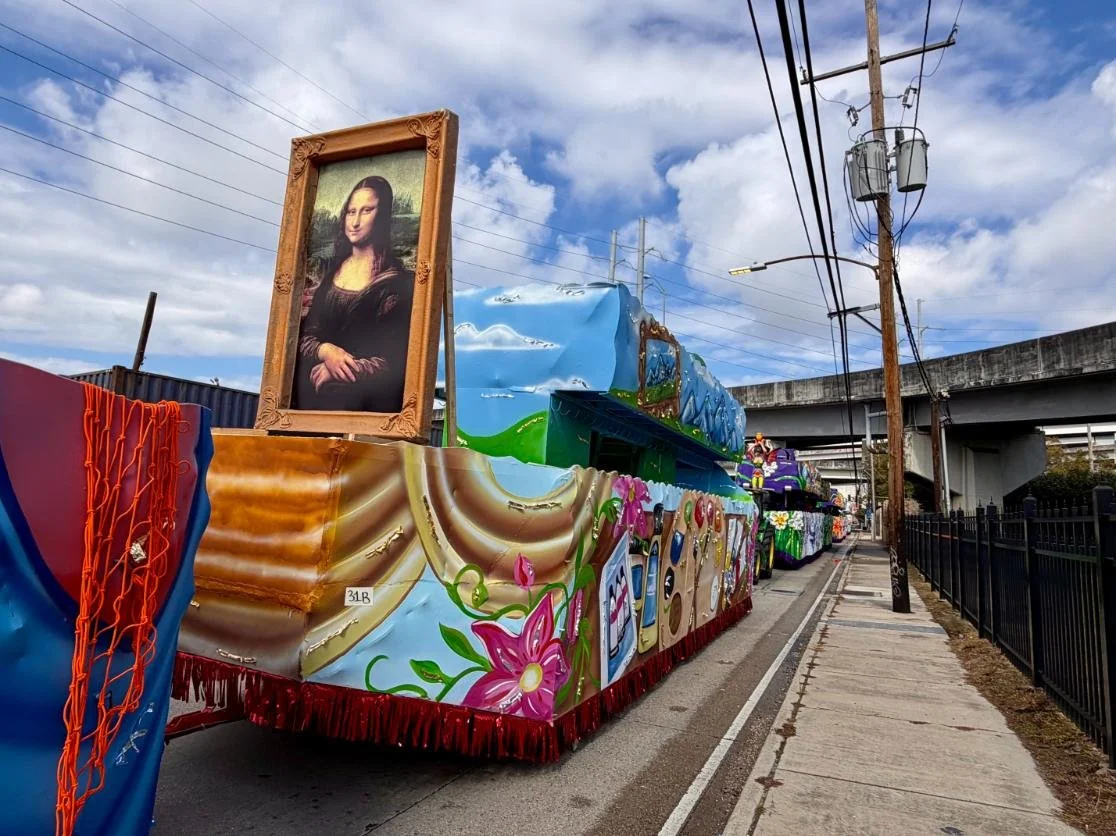
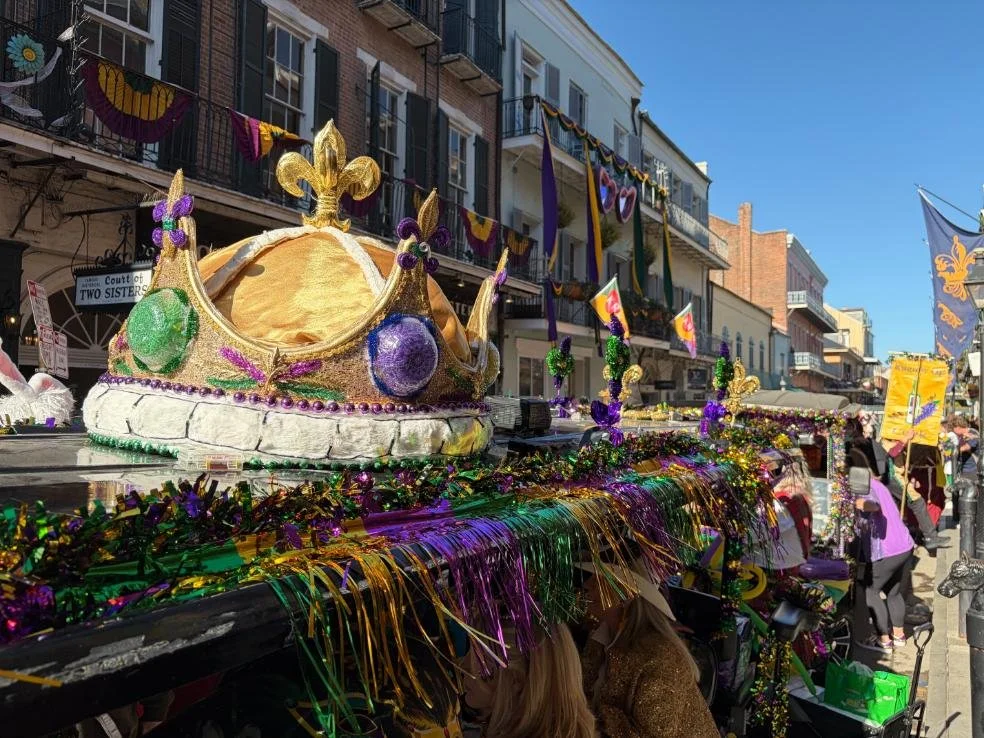
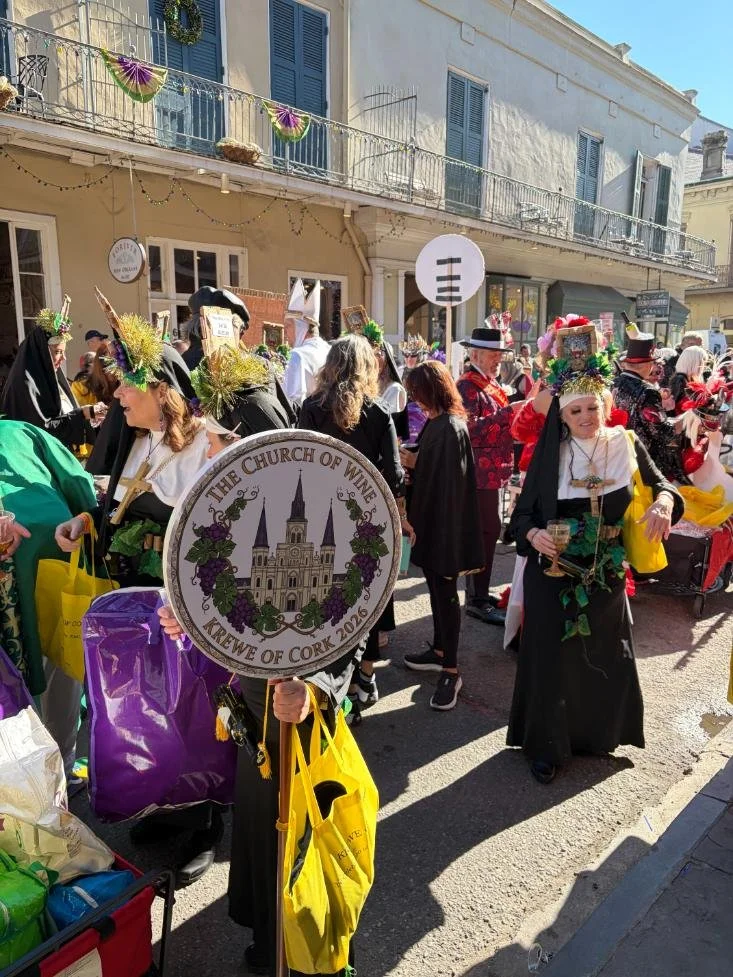
Krewe of Cork is a fun wine themed parade.
The Balls
Mardi Gras also included many exclusive balls. Often elegant and secretive, these “invitation only” parties hosted by krewes feature royal courts, debutante presentations and strict dress codes. FYI: We didn’t get any invitations.
Notable Balls:
Mom's Ball: Known for its unique, non-traditional atmosphere.
Orpheuscapade: Hosted by the Krewe of Orpheus, with huge parade floats rolling through the convention centre.
Rex & Zulu: Features the most traditional, old-line, or high-profile royalty.
Krewe of Chewbacchus: Known for its sci-fi/costume themes.
Bourbon Street
Eight blocks of Bourbon Street in the French Quarters is the epicentre for the Mardi Gras debauchery. As you get closer to Mardi Gras Day, the crowds get bigger with loud, wild and non-stop partying, drinking and dancing along the street. And the street becomes a pedestrian-only zone with live bands performing in the pubs and along the street the week before “Mardi Gras.”. And yes, the street is lined with people on the balconies throwing beads down to people on the street. Perhaps the most fun is seeing the costumes and fashions of the people both on the street and the balconies.
It has a bit of a “Halloween gone wild” atmosphere, with beads and trinkets replacing the candy and children being replaced by adults. And yes, it is mostly fun!
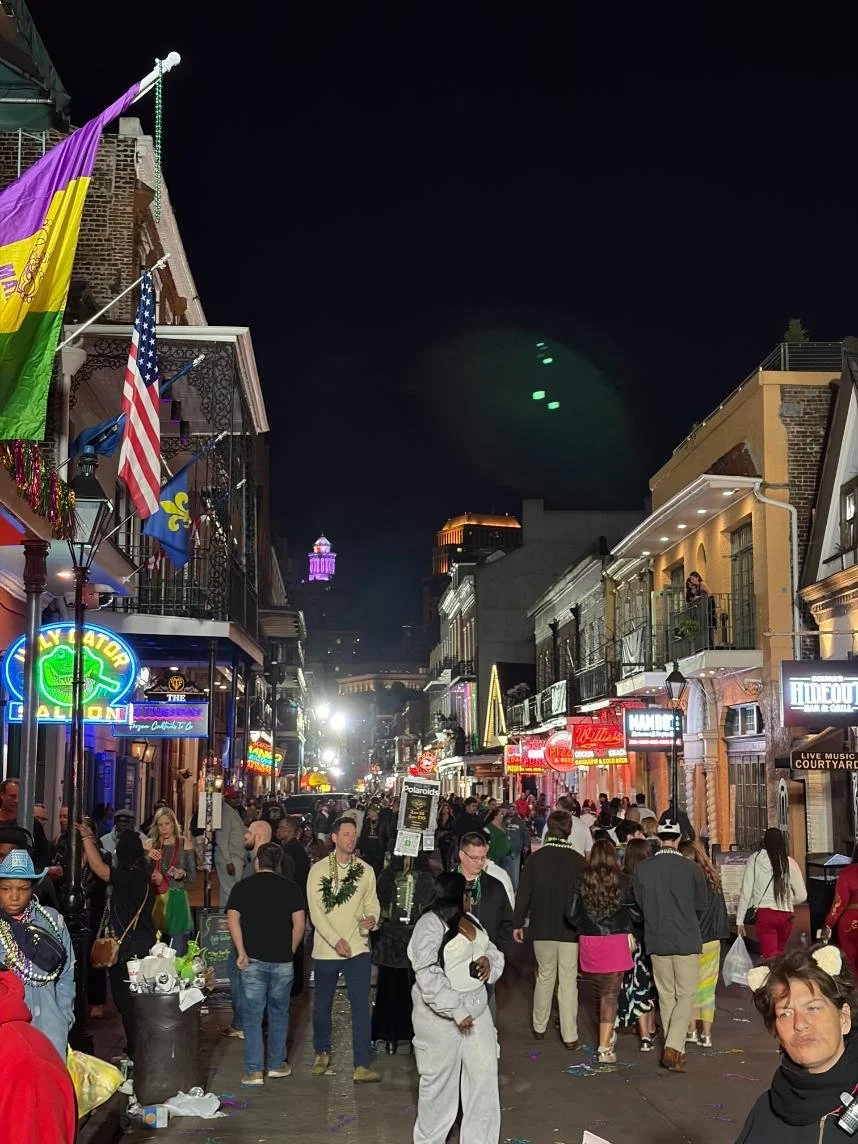
At night Bourbon Street is full of people strolling the street. As you get closer to Fat Tuesday, it gets busier and rowdier.
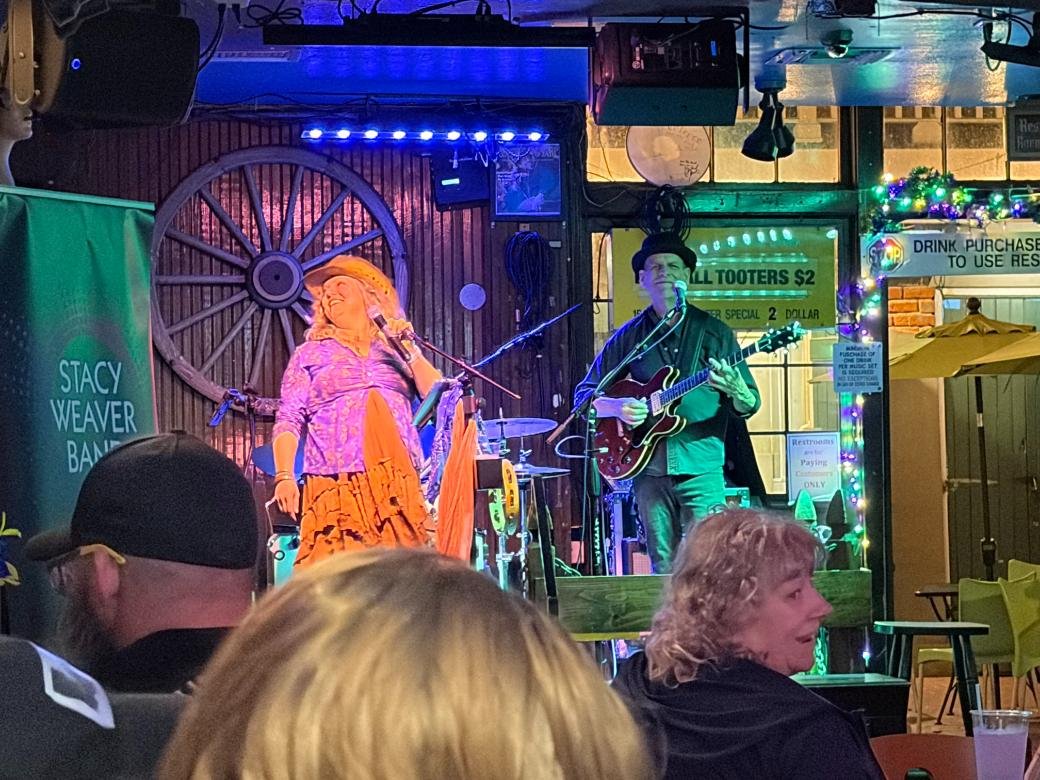
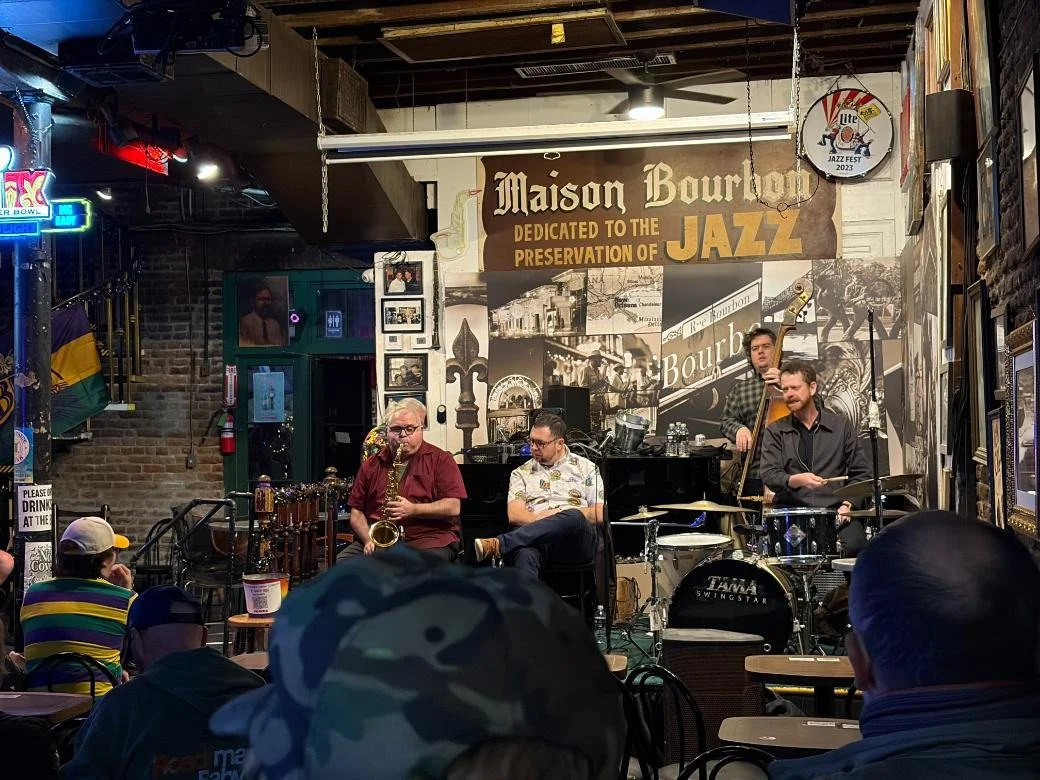
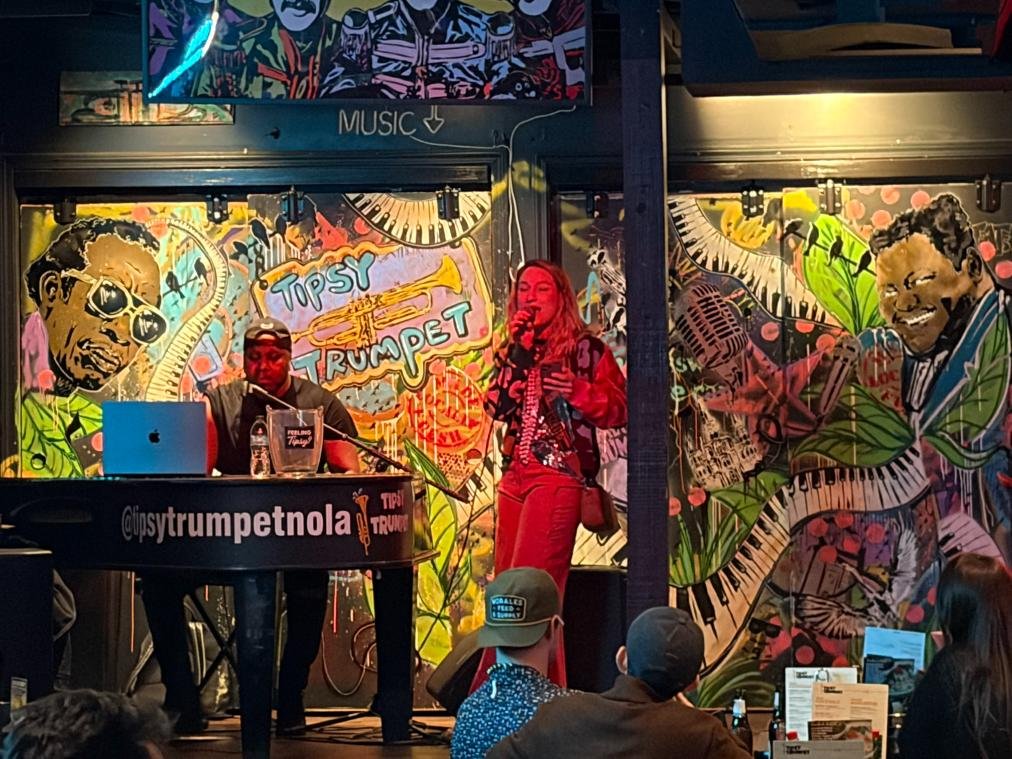
Bourbon Street is home to several live music venues.
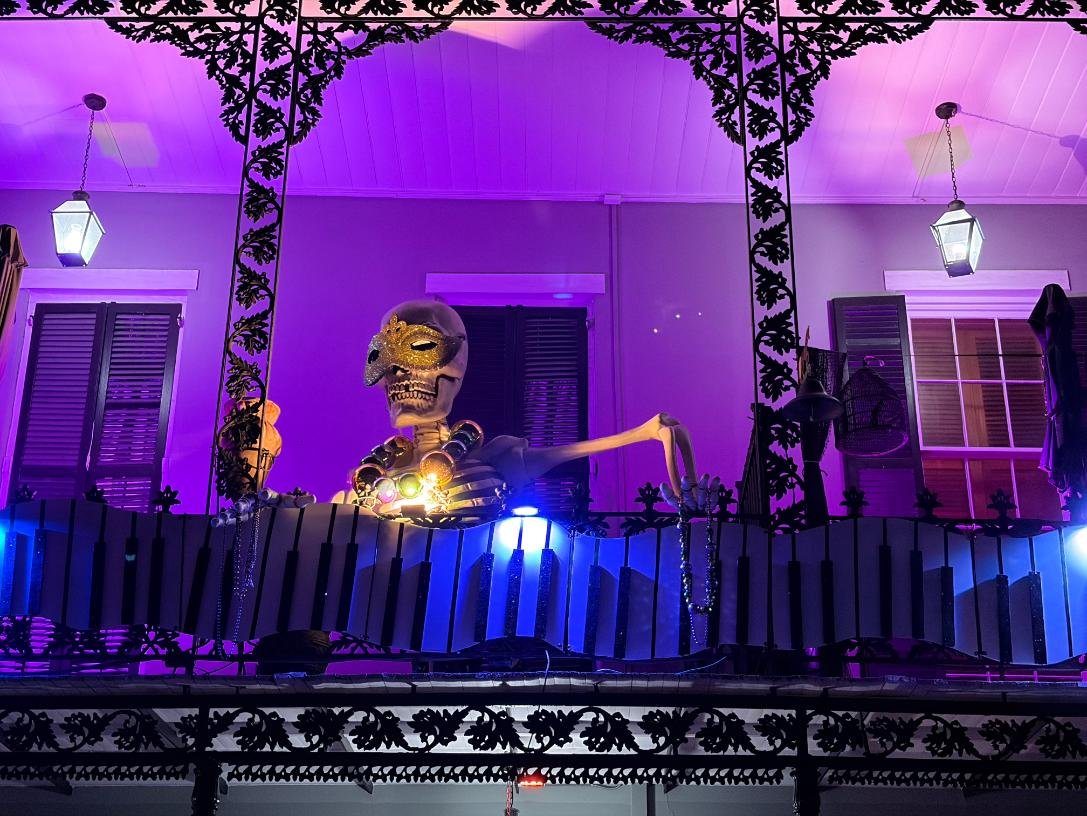
Balconies are decorated like it is Halloween.
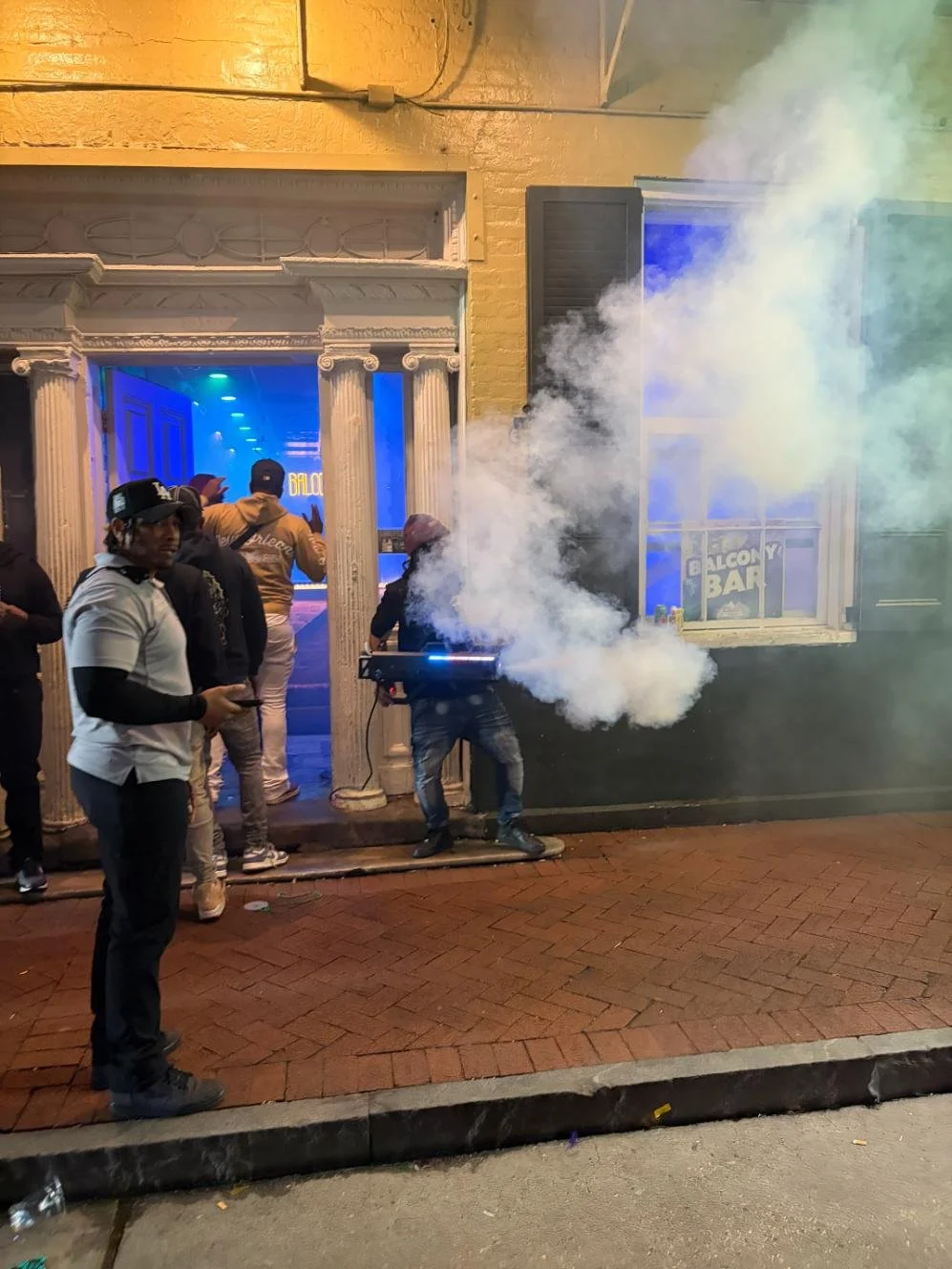
The music and antics often spill out onto the street.
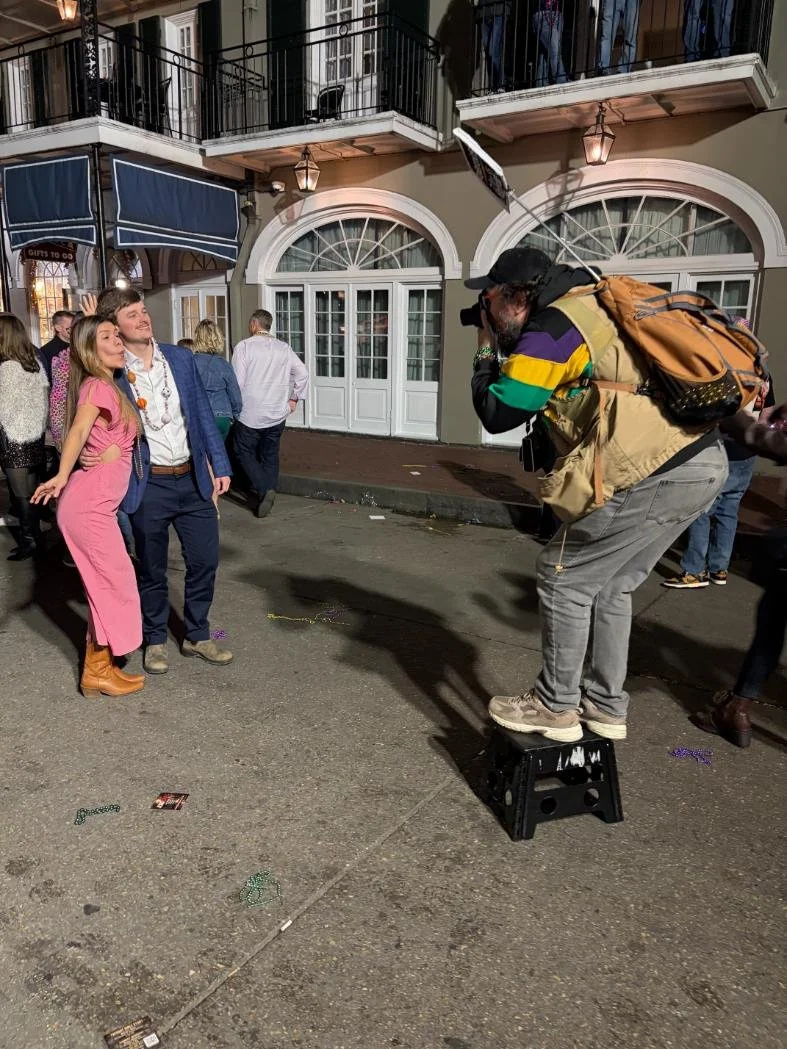
There are lots of buskers including photographers who will take your photo for a fee.
Bead Story
Originating in the late 19th/early 20th century, the throwing of beads and other inexpensive, colorful souvenirs, turn spectators into active participants. It is part of the tradition of "largesse" (generosity) by krewes (social clubs) to the crowd, symbolizing a shared joy and celebration and sense of community.
However, there is a huge downside this tradition.
Total Waste Generated: Mardi Gras generates approximately 1,000 to 1,500 tons (2–3 million pounds) of trash annually, which consists largely of plastic beads and cups.
City Cleanup Cost: The New Orleans city government spends approximately $1.5 million annually to clean up the debris after the parade season.
Landfill Impact: In 2023, about 2.5 million pounds of waste were sent to landfills over an 11-day period.
Environmental Impact: Less than 2% of the millions of pounds of beads imported are recycled. In 2018, 93,000 pounds of beads were found clogging the city's sewer system, creating a severe drainage issue.
It becomes almost dangerous to walk along Bourbon Street later in the night as the roadway is covered in beads and debris making it easy to lose your footing. (While I did see a few people fall, I am not sure if it was the drinking or the broken beads that was the cause, perhaps both.)
An estimated $50+ million dollars is spent each year on beads, toys and other trinkets to be thrown to spectators during Mardi Gras parades and off balconies on Bourbon Street.
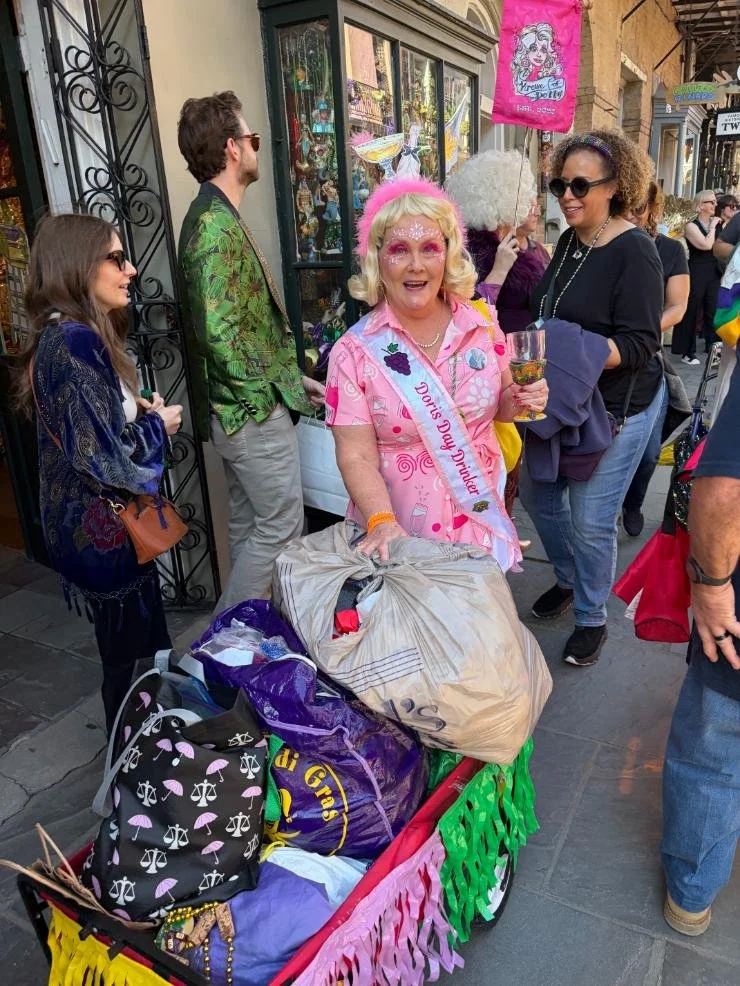
These bags are full of beads to be thrown to the parade audience. This is just one participants stash of beads.
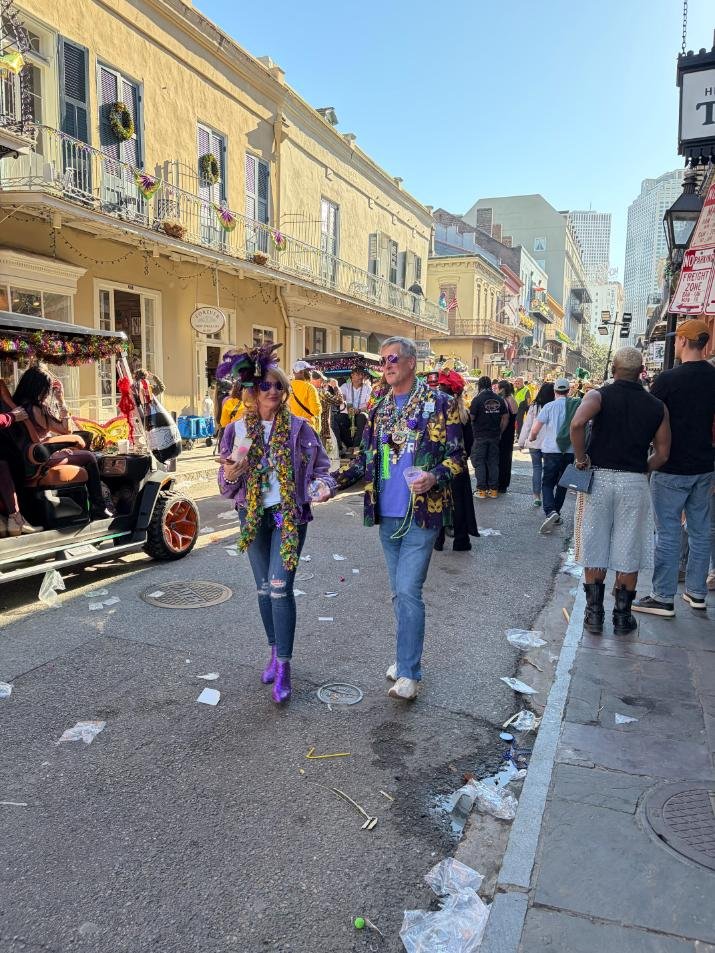
This is what the street looks like the next morning with plastic bags and broken beads everywhere.
Seville vs New Orleans Parades
Our visit to New Orleans reminded me of one of our most memorable travel experiences (40 year ago) in Seville, Spain on Good Friday. Arriving late in the afternoon on Good Friday we were shocked by the pageantry and chaos in the streets.
We had no idea what was going on (even though we were both raised Catholic, we had forgotten it was Easter Weekend, also our travel agent missed telling us this too). Exhausted after a long travel day, we laid low that evening naively thinking we could experience the City’s animation the next day. No such luck!
We awoke to streets that were deserted, everything was closed. It was like a “ghost town.” Fortunately, some of the floats were still on the side streets and alleys so we could at least appreciate what had happened. And the store windows were all decorated for Easter with the flamenco dresses and robes. Ah, to be young and dumb again!
It took us awhile to learn what had happened.
Turns Good Friday in Seville is the peak of Semana Santa, marked by the somber La Madrugá (early morning) processions, featuring centuries-old brotherhoods, massive, ornate floats (pasos) carried by costaleros, and nazarenos (penitents) in traditional robes (which look like the Klu Klux Klan to us). The city is filled with profound silence, flickering candlelight, and haunting saeta flamenco songs, creating an intense, deeply moving religious and cultural experience.
Last Word
What a missed opportunity. How naïve we were on that first trip to Europe; fortunately, not so much for our New Orleans adventure.
