
Paris: The Image of A Perfect Pedestrian City
For the lion's share of travelers, Paris is a megapolis steeped in history. But for seasoned tourists, the true value of the French capital lies in its micro-urbanism. Moving in one's own good time is not a hurdle here. Every piece—from the width of a sidewalk to the physique of a doorknob—is designed to keep pedestrians in the open air.
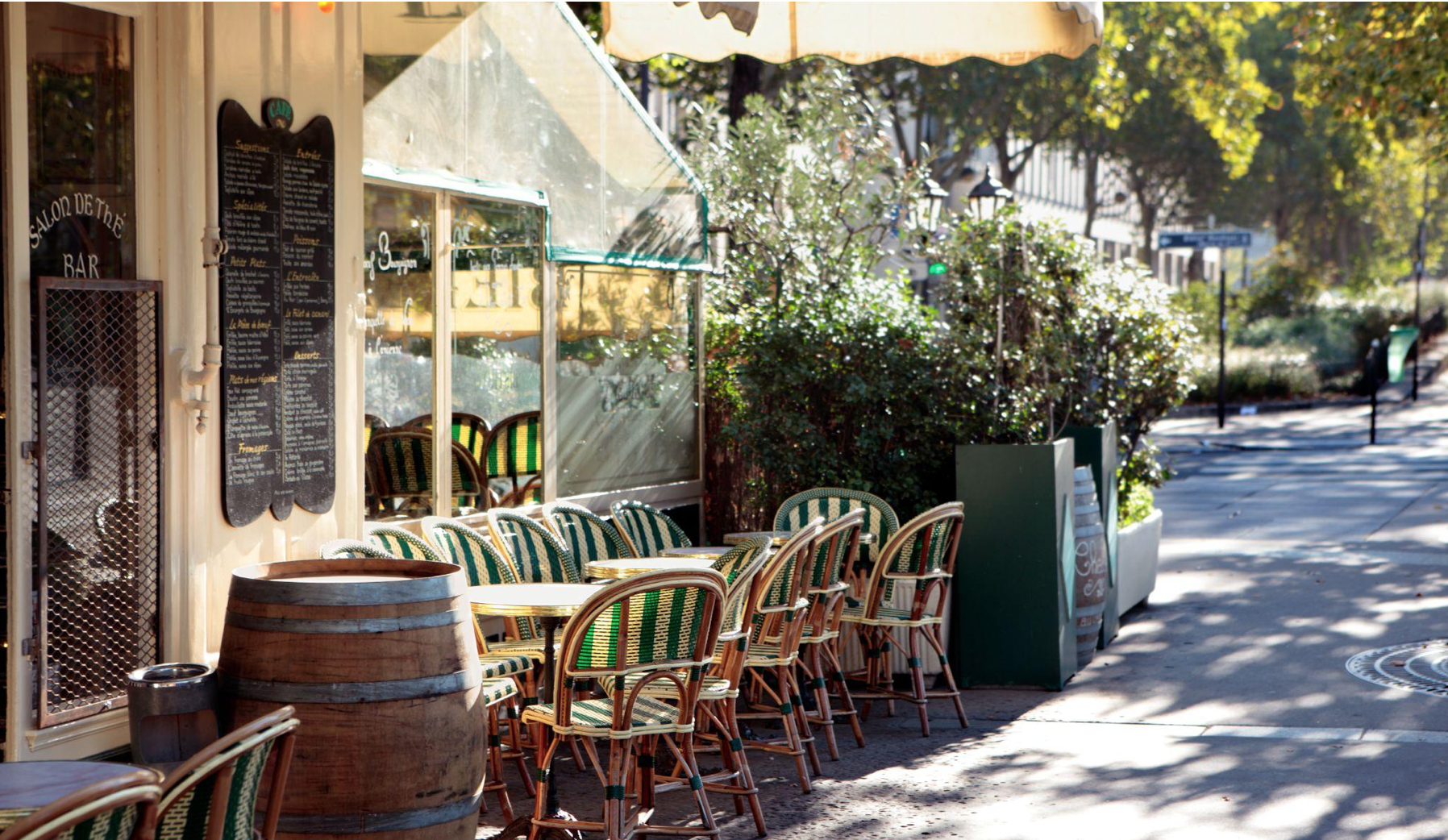
Recently, Paris has become ground zero for la ville du quart d'heure (the 15-minute city). What does it imply for an average resident? It means that basic needs—from buying bread to visiting a doctor—should be met within a 15-minute walk from home. It also takes a quarter of an hour to set up mt5 login from the beauty of French terraces.
A walking tour through the modern urban scenery
Wandering along the Right Bank, the 15-minute theory speaks through the symphony of metal and stone. Ex-interchanges are being transformed into public gardens, and parking spaces are being converted into open café terraces.
Even human interaction sounds more distinctly closer to nature. One of the most mesmerizing breakthroughs of the cityscape is Paris's covered arcades (Passages Couverts).
Constructed in the first half of the 19th century, these awe-inspiring structures became the prototype for retail therapy spots, highlighted by impeccable taste.
Touch upon the vibrancy of Passage des Panoramas or the Passage Jouffroy, the major shopping arcades. Not often, but regularly enough, they are invaded by explorers. What impresses visitors is the glass roofs bathed in tender light, which save you from raindrops when you stroll along the streets.
The urban lesson is readily apparent: tight squeezes and mixed-use are meant to build a sustainable economy. Living space above shops ensures a constant flow of customers, and the aesthetics of the space make purchasing a cultural experience, not just mere consumption.
The City's visual code
Paris is a master of uniformity in detail. What we call "street furniture" is elevated to the level of high culture here. The city uses a unified palette—dark green—that ties disparate elements together into a unique entity.
● Davioud Benches: These classic cast-iron benches with double seats are the epitome of excellence. For travelers, they are associated with comfort, durability, and recreation, all without any fuss.
● Wallace Fountains: Finding drinking water in Paris is a breeze thanks to these sculptural objects. They remind us that access to water is a basic human right, not an excuse to buy a plastic container.
● Héctor Guimard's Metro Entrances: While one may perceive Art Nouveau forms as primitive signposts, these actually transform transportation infrastructure into art, turning the ordinary outing into a feast for your eyes.
Terrace culture as the face of the city
A Parisian café is a step out of your comfort zone. The arrangement of chairs can leave you bewildered, but this is only at first blush. Unlike most beating hearts of fashion, the chairs on the terraces are arranged in rows, like in a movie theater, all facing the sidewalk.
The street literally becomes your cozy cocoon, adding to safety and friendliness. Café terraces serve as a buffer between the secluded spaces of the building and the public space of the pavement, making a gentle transition that makes walking through the city even more snug.
Stay ahead, stay authentic
If you are ready to observe residential spaces that adapt to the needs of locals, head to the Canal Saint-Martin. This place is the antithesis of the ceremonial Paris of the Tuileries.
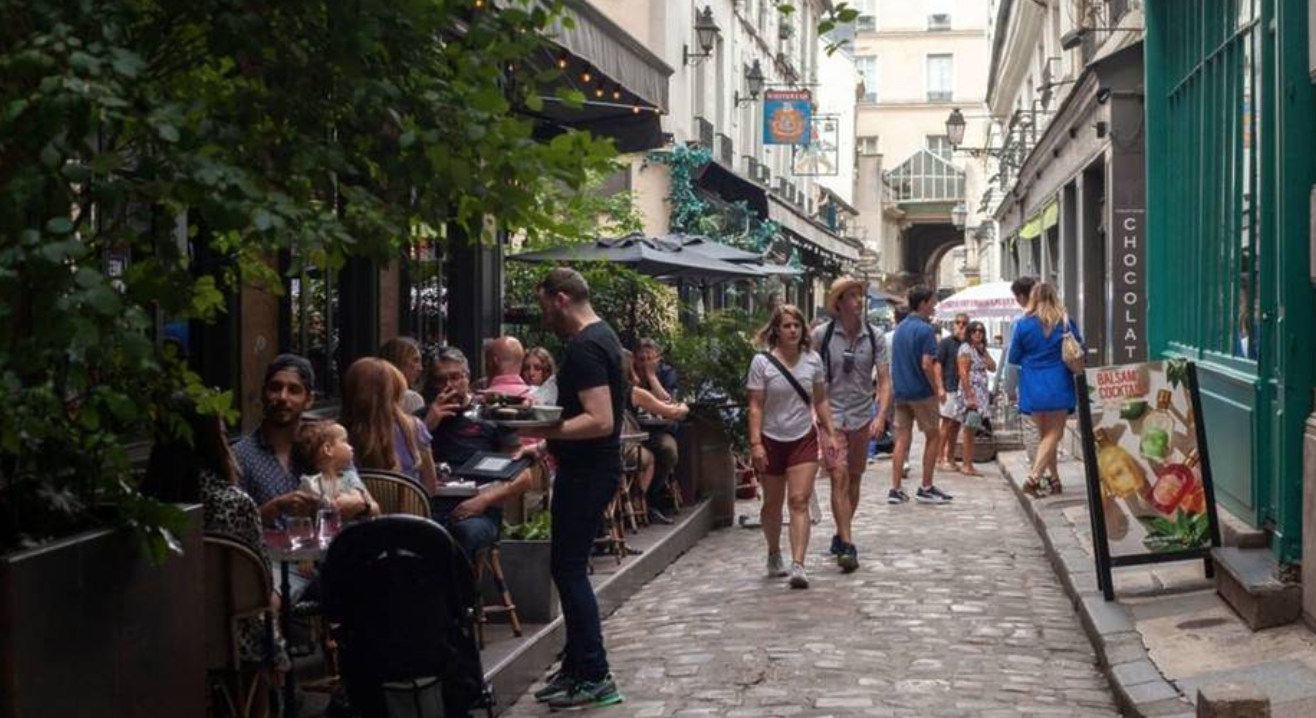
Here, the banks of the canal have evolved into a vast public living room. This is an example of how sometimes "underdesigned" spaces work best. The city needs places where the rules are relaxed and allow one to simply be part of the crowd without acquiring a ticket or an expensive lunch.
Verticality and density
Paris is one of the most densely populated cities in the world, and this is key to its vitality. Most buildings are 6-7 stories high—the so-called "Haussmannian standard." This height is perfect: it provides the high density needed to support local businesses without overwhelming pedestrians like skyscrapers.
At pedestrian eye level, Paris is always active. Shop windows give way to entrance doors, workshops to cafes. There are no "dead zones" or empty concrete walls, so common in fancy business districts. Every meter of façade works to fit the street.
Lessons from a Flâneur
What can Paris teach us as a bustling world capital? There is no such thing as a stunning building, but an impression is built through the quality of space. It is a city that offers details for the eye, rejuvenation for the body, and a spark of creativity for the mind at every turn.
For those far from design intricacies, Paris is a page-turner on design. The best way to explore it is to stick to a random direction and let the rhythm of the city be your guide. After all, there are no run-of-the-mill roads in Paris—only those you haven't yet had time to leave any stone unturned.
