
The Hidden Courtyards of Budapest: Architectural Treasures Behind Ordinary Doors
Budapest is known for its architectural delights which lie just behind the ordinary looking front door. Abandoned city centre apartment door and walk through – you may not notice a courtyard with elegant balconies, colourful tiles or beautiful iron staircases. Many of these locations are over 100 years old. Some are now vital spaces featuring cafes, shops and photo-ready little corners. The trick is to know what doors to peer behind.
Known for its Parliament, thermal baths and grand bridges, the capital of Hungary is famous. Its more muted architectural highlights tell a different tale, however. They provide insights into the lifestyle, shopping and socializing of people in a city that grew rapidly in the 19th century. Far better yet, a few are accessible to stroll.
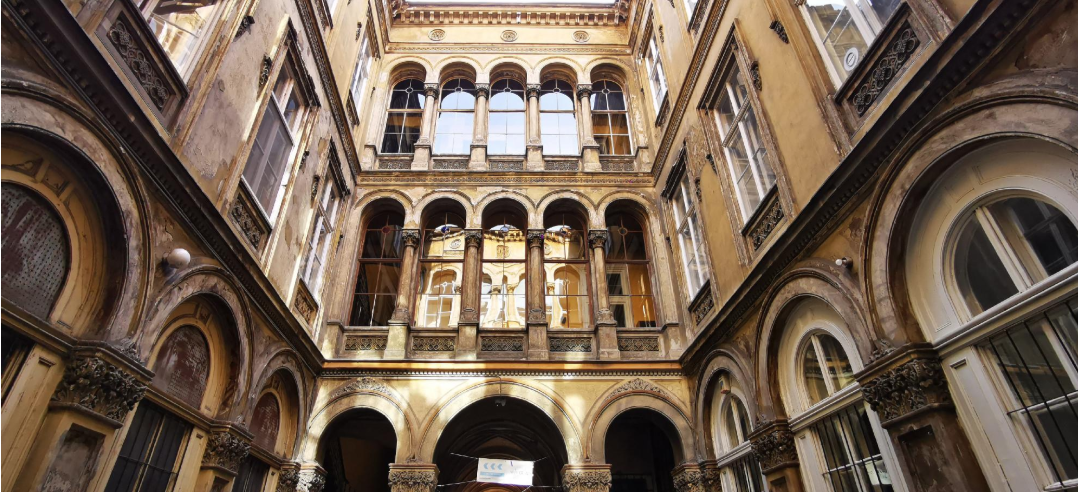
The Gozsdu Courtyard, Hidden Behind Seven Buildings
Gozsdu Udvar is one of the most interesting historic passages in Budapest, in the Jewish Quarter. The complex, built in 1902, links Király Street and Dob Street via a series of courtyards and covered areas.
It originally was for use. The ground floor was used for shops and the upper levels were reserved for apartments. The passage is now a busy meeting area for restaurants and bars, as well as small businesses.
Keep your head up and not down. The upper floors carry on the architectural elements that are not hard to overlook amidst the restaurant signage. The arches also make for great photo ops, particularly in the morning when the passage is quieter.
Gozsdu is open to the public and has different hours of operation for each business.
Párisi Udvar: A Palace Disguised as a Passage
One of Budapest's most remarkable interiors is located near Ferenciek Square. Párisi Udvar, Parisian Court, is impressive on the outside, but it's the inside that's the real show.
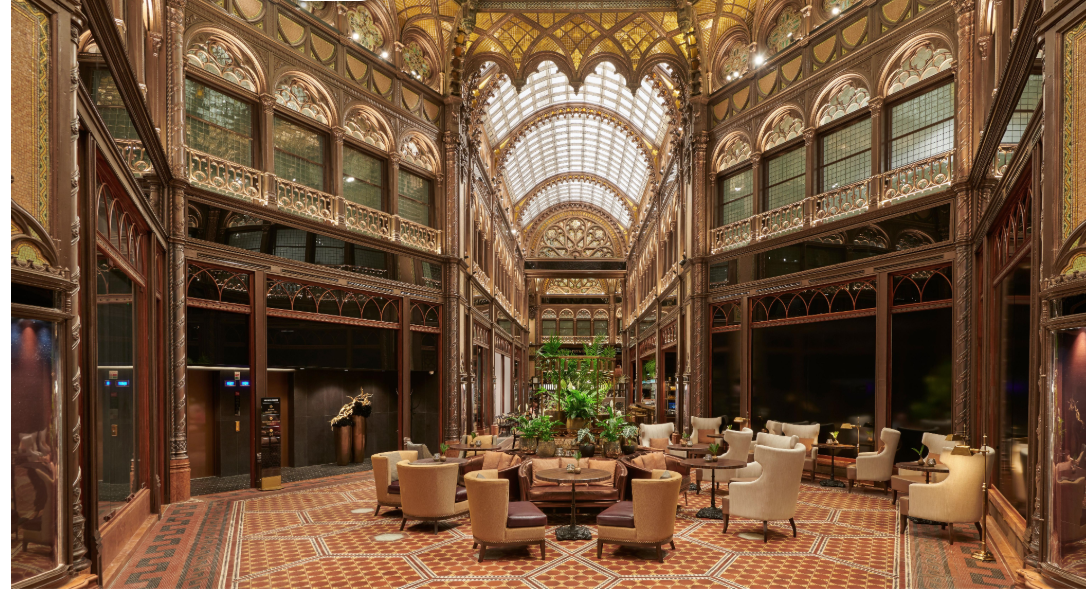
It was constructed in 1913 from a design by the architect Henrik Schmahl for the Downtown Savings Bank. Features a Gothic style framework and Art Nouveau decoration and styles with an oriental theme.
The interior features an extraordinary glass ceiling together with elaborate ceramic decoration and columns. Today the building is home to the Párisi Udvar Hotel Budapest, a part of the Unbound Collection of Hyatt.
The interior of the passage and hospitality rooms are available to appreciate, according to the conditions of the hotel. It's not just about taking photos, but doing it in a respectful way, especially when guests are around.
This is an excellent place to visit for anyone with an interest in architecture.
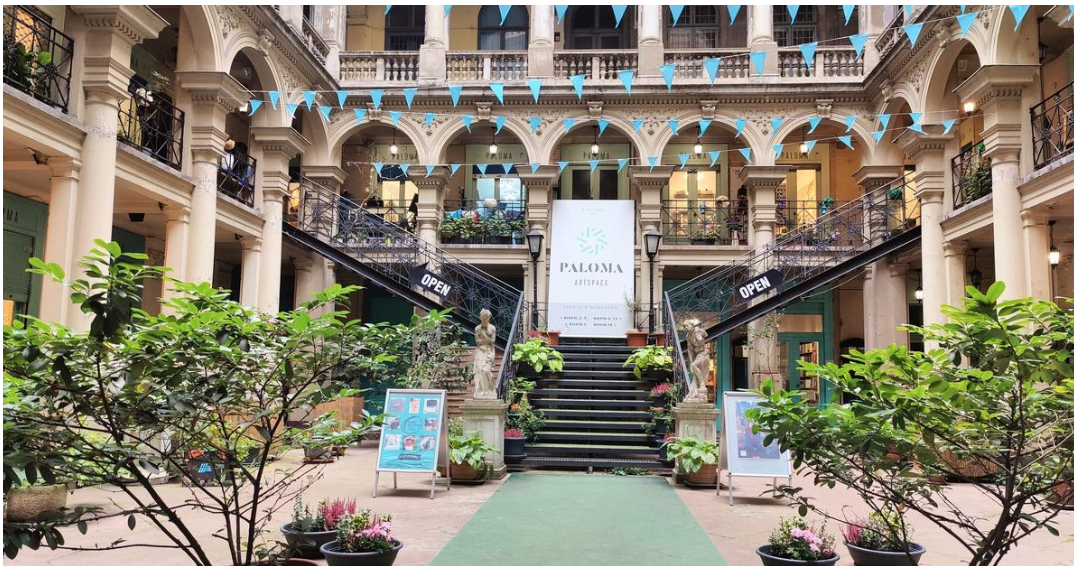
Paloma Artspace: Old Architecture meets Young Designers.
Yet, Kossuth Lajos Street 14-16 is the place to experience something different at Paloma Artspace. The courtyard behind the entrance to an historic building is filled with free-standing Hungarian designers.
Beautiful arches, a spectacular staircase and jewellery, ceramics, clothing and handmade accessories all come together. The studios can be explored, the local creators met and pieces that are rarely found in the normal souvenir shops can be discovered.
Paloma also arranges guided tours to welcome its architecture and creative community. More details about these trips and sign-up on its website.
A great place for photographers. It is an interesting composition between historic architecture and contemporary design without the need of elaborate equipment.
Here, even a cell phone can take beautiful pictures.
Walking through Budapest’s hidden passages feels like finding a second city inside the first. Around every corner there’s something you didn’t expect: a winding staircase, a tiny design shop, a café hidden behind a crumbling facade. That same sense of discovery has its online version too, and platforms like TonyBet let visitors browse and try out all sorts of games on their website. But no screen can replace the feeling of pushing open an ordinary door and stepping into a courtyard that has quietly witnessed a century of the city’s history.
The Unger House: The Passages of a Notable Logician
The Hungarian National Museum is located at a short distance from Unger house (Múzeum körút 7).
It was designed in 1852 by the Hungarian architect Miklós Ybl, and is a fusion of Romantic and Byzantine and Moorish styles. It passes through Múzeum körút and Magyar street.
As opposed to the glossy Párisi Udvar, Unger House looks more rustic. That's what makes it appealing. The walls of its old building, the decorative elements and interior balconies show a more interesting and not so glamorous face of Budapest.
This is a great chance if you are a traveler who loves to capture the architectural character instead of a postcard perfect picture of a historical building.
Röser Courtyard: Enjoy a Cup of Coffee Behind the Boulevard
The other good find is at Károly körút 22. The 1884 Röser Courtyard, designed in the Venetian Renaissance style, is also a link between the boulevard and the street of Semmelweis.
It's very inviting because of its intimate setting. Independent shops have been established in the courtyard, such as the popular ‘Szimply’ café, which has added modern café culture to a historical environment.
It's the kind of place where taking a detour to the architecture can make for a relaxed breakfast.
How to Explore Budapest's Courtyards Respectfully
The majority of these are located in the central part of Pest and a walking tour is feasible in that area. Begin at Párisi Udvar, proceed to Paloma, through Unger House and end around Gozsdu Courtyard.
But not all attractive doorways result in a public attraction. Many courtyards are still residential, and access can be subject to change. Please do not trespass, do not take photos of residents without their consent, or do not use locked gates.
Sunlit steps on an old staircase, replicated balcony railings or another arch placed above another arch are the best images.
Inquisitive walkers are rewarded in Budapest. Its hidden courtyards are proof that extraordinary architecture does not necessarily need a great entrance. Sometimes, it's just an ordinary door.
