
Vermont Scenic Drives for Fall
Foliage Road Trips
For a few weeks each autumn, Vermont becomes one of the most photogenic places on the continent. The hills along its valleys flare red, orange, and gold. The back roads through them turn into the main attraction, not just the way to it.
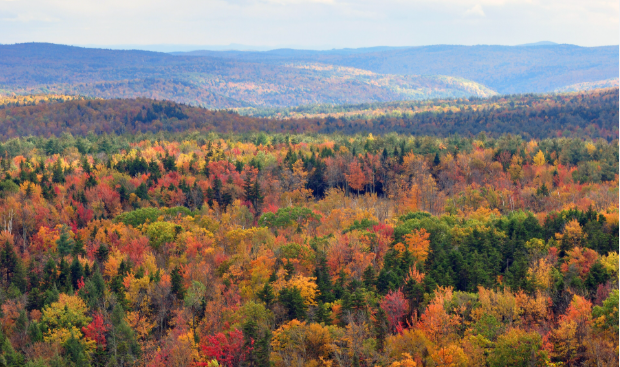
Fall foliage autumn leaf colour Vermont Hogback Mountain one hundred mile lookout (photo credit: chensiyuan)
Most leaf-peepers drive down from across the border. For anyone who spends serious time stateside each year, a quick look at the Canada U.S. Tax Treaty pays off before the trips add up. With that noted, here is how to plan the drive itself.
Which Vermont Drives Belong On a Fall Itinerary?
The classic route is Vermont Route 100. It runs north to south for about 200 miles down the spine of the Green Mountains. It passes ski towns, farm stands, and river bends. In early October the colour rarely breaks for more than a mile.
The Granville Gulf reserve marks a scenic midpoint. Old maples arch over the pavement. It is a short stretch worth savouring.
For drama, take Route 108 through Smugglers' Notch. The pass squeezes between sheer cliffs near Stowe. It closes in winter and stays tight the rest of the year. A calm autumn morning is the time to drive it slowly.
Park near the top and walk among the boulders. The view back down the valley rewards the stop.
Further south, the Mad River Valley pairs covered bridges with classic village greens. Waitsfield and Warren make easy, pretty stops. Both sit a short hop off Route 100.
Most of these routes are official scenic byways, from Route 100 to the Green Mountain Byway. Pick one as your spine. Let the smaller roads off it surprise you.
When Does Vermont's Foliage Peak?
Timing is everything, and it shifts north to south. The Northeast Kingdom usually peaks in the last week of September. The central mountains follow in early to mid October. The southern valleys turn a little later.
Elevation matters as much as latitude. Higher slopes change first. On one drive you can pass faded peaks and green valleys in an afternoon. The state's fall foliage report, updated weekly by foresters, is the best way to time peak colour.
Peak in any one spot lasts only about a week. Hitting it is part luck, part planning.
It helps to keep the route flexible. If the north has already turned, point the car south. The show there may still be a week away. Weekends near peak draw heavy traffic, so a weekday start pays off.
What Should You Stop For Along the Way?
A scenic drive is better with reasons to pull over. A few worth building in:
Stowe, a walkable village under Mount Mansfield, Vermont's highest peak at 4,393 feet.
Woodstock, a postcard town of brick storefronts, a green, and a covered bridge.
Moss Glen Falls near Stowe, a short walk off Route 100 to a tall cascade.
Covered bridges, more than 100 of them statewide, many framed by maples.
Farm stands selling cider doughnuts and pumpkins through October.
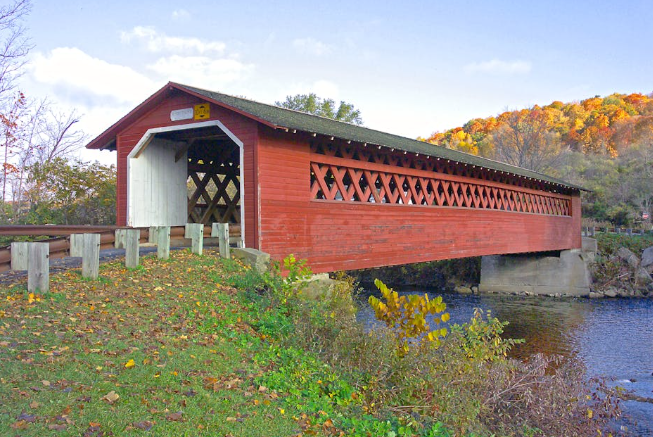
A Vermont covered bridge surrounded by autumn leaves (Photo by Phyllis Lilienthal on Pexels)
Woodstock also anchors Marsh-Billings-Rockefeller National Historical Park. It is the only US park devoted to conservation history. Its wooded carriage roads stay calm when the village green fills up. Between stops, keep the camera within reach. The best frames often appear with nowhere to pull off.
How Do You Plan a Smooth Fall Road Trip?
Book accommodation early. Foliage season is the busiest tourist window of the Vermont year. The small inns along the routes fill months ahead. Driving on weekdays helps you dodge the worst weekend crowds.
Pack for swings in weather. A bright afternoon can turn cold and damp by morning. Start early for the best light. Keep the fuel tank topped up between towns. Then give yourself more time than the distance suggests.
Download offline maps too, since cell service drops away between the hills. Carry a warm layer, water, and a few snacks. Stations and shops thin out on the rural stretches.
If Vermont leaves you wanting more, the same slow pace turns up across small-town Canada and along the quiet coastal drives of Portugal.
Why Vermont Earns the Fall Detour
Vermont in autumn is a rare trip where the journey really is the destination. The drives are short. The views are constant. The towns give you somewhere to land between them. Few road trips pack so much colour into so few miles.
Plan the timing. Keep the route loose. Leave room to stop. Do that, and a few October days in the Green Mountains will fill a camera and stay with you long after the leaves drop.
Frequently Asked Questions
When Is the Best Time to See Fall Foliage In Vermont?
It depends on the region. The Northeast Kingdom peaks in late September. The central mountains follow in early to mid October, and the south a little later. Check the weekly state foliage report before you set out.
What Is the Most Scenic Drive In Vermont?
Route 100 is the classic choice. It runs about 200 miles through the heart of the Green Mountains. For a shorter, more dramatic stretch, drive Route 108 through Smugglers' Notch. Its narrow pass calls for careful, unhurried driving.
Do You Need a Car to See Vermont's Foliage?
Effectively, yes. The best colour sits along rural roads and small towns that transit does not reach. A car, or a rental on arrival, lets you follow the foliage report. You can change direction as the colour shifts across the state.
How Long Should a Vermont Fall Road Trip Be?
Three to four days is ideal. That lets you drive a major route, stop in a few towns, and adjust for weather. You can see plenty in a long weekend. A weekday start beats the weekend crowds. The real pleasure, though, is in slowing down.
