
Cruise Ship Gambling Routes: Floating Jurisdiction Loopholes
Picture this. You board a floating hotel. The buffet is open. The ocean stretches forever. Then, the lights flick on inside the cruise ship casino.
But here’s the twist. The casino does not open in port. It opens once the ship reaches international waters. That small geographic shift changes everything.
Maritime law treats ships differently from land property. Each vessel follows the laws of its flag state. That means the country where the ship is registered controls operations onboard.
Once the ship sails beyond territorial waters, local gambling bans no longer apply. That is the core of floating jurisdiction loopholes. The sea becomes a legal gray zone.
If you’ve ever wondered how a cruise with casino works in strict countries, this is the answer. The ocean creates legal breathing room.
How International Waters Change the Rules
Territorial waters usually extend 12 nautical miles from shore. Inside that range, the country’s gambling laws apply fully. Outside that range, things shift.
Ships registered in countries with gambling-friendly laws can operate legally. That is why registration matters so much. It is not random paperwork. It is a strategy.
Many ships are flagged in places like Panama or the Bahamas. These nations allow onboard gaming under maritime law. Once offshore, the casino cruise ship becomes active.
Think of it like switching channels on TV. The port is one channel. The open sea is another channel. Different rules, different permissions.
This setup allows cruise operators to host poker tables, slots, and blackjack legally. It also attracts travelers from countries where casinos are limited or banned.
Popular Casino Cruise Routes Around the World
You may think only the Caribbean offers gaming at sea. That is far from reality. Several routes rely heavily on offshore gaming models.
Here are well-known regions where floating casinos operate:
Caribbean routes departing from Florida ports
Baltic Sea sailings leaving from Germany
Mediterranean cruises near Italy and Spain
Asian sailings departing from Singapore
Each route times casino opening hours. The staff tracks the ship’s position precisely. GPS systems confirm when the legal boundary is crossed.
Some ships even announce over loudspeakers when the cruise ship with a casino is officially open. It feels dramatic. Yet it is rooted in maritime compliance.
What You’ll Find Inside a Cruise Casino
Walking inside a cruise casino feels familiar. You see slot machines, poker tables, roulette wheels, and blackjack pits. The layout mirrors land-based properties.
However, there are limits. Space onboard is finite. The gaming floor is smaller than that of major city casinos. Still, it offers plenty for casual players.
Many ships offer:
Slot machines with progressive jackpots
Blackjack and roulette tables
Poker tournaments during longer sailings
Electronic gaming stations
Some operators even host themed poker nights. Others run daily tournaments with modest buy-ins. The vibe is social and relaxed.
The best part? You gamble while watching the ocean through nearby windows. That view changes the mood entirely.
Best Casino Cruise Ships and Their Flag States
Registration shapes the legal framework onboard. Let’s look at a simplified overview of how it works.
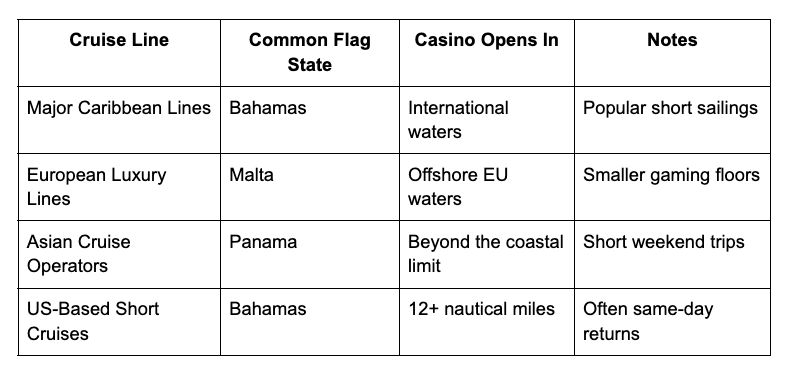
When researching the best casino cruise ships, checking the flag state tells you a lot. It explains how the casino operates. It also explains why timing matters.
Short “sail and play” trips often leave port in the evening. They cruise just beyond territorial waters. Then the casino opens for several hours before returning.
This format is common near cities with limited gambling options. It acts like a floating loophole.
Why Some Countries Tolerate Casino Cruises
Not every government welcomes offshore gaming. Still, many tolerate it. Why? Because it generates tourism income without changing domestic law.
Ports collect docking fees. Local hotels gain extra bookings. Restaurants see more traffic. The economic ripple effect is real.
At the same time, lawmakers avoid controversial casino expansion on land. It is a compromise. The ship handles the gambling. The port handles the tourism.
It is similar to duty-free shopping in airports. The transaction occurs in a legal buffer zone. Governments benefit indirectly.
That balance explains why the casino cruise model keeps growing.
Legal Gray Areas and Compliance Checks
Let’s be honest. Floating casinos operate in a legal gray area. They are not illegal. But they require careful compliance.
Operators must verify passenger age. They must follow anti-money laundering policies. Payment systems follow international banking standards.
Here are key compliance steps most operators follow:
Verify passenger identification before casino entry.
Track gaming revenue and report to flag authorities.
Limit casino operations while docked.
Monitor cross-border financial transactions.
Ships also restrict gaming to passengers only. You cannot board solely to gamble unless it is a dedicated sailing.
Despite the gray zones, most large cruise lines follow structured internal policies. They protect themselves legally.
Short “Nowhere Cruises” and the Rise of Day Trips
Some routes are designed purely for gaming. These are often called “cruises to nowhere.” They depart, sail offshore, and return without visiting another country.
This model works well in regions with strict land laws. Travelers get a few hours of casino time. Then they return home the same evening.
The cruise casino on these trips often opens quickly after departure. The captain confirms the nautical boundary. Then operations begin.
It is efficient and simple. No extended voyage required. Just a legal shift offshore.
Think of it like crossing an invisible border drawn on water. One side says no gambling. The other side says yes.
Pros and Cons of Gambling at Sea
Like any gaming setup, ship casinos have strengths and weaknesses. It helps to know both sides before booking.
Pros
Unique ocean setting
Short gaming windows for controlled spending
Access for travelers from restrictive countries
Social atmosphere onboard
Cons
Smaller gaming floors
Limited high-stakes tables
Casino closes near the port
Fewer loyalty rewards than land properties
If you prefer compact gaming spaces, a casino cruise ship might suit you. If you want massive gaming halls, land venues remain stronger.
Some players compare it to trying a bonus like Slotozen casino no deposit online. It is convenient and simple. Yet the scale differs from major resorts.
Technology and Surveillance at Sea
Modern ships use advanced systems. Surveillance cameras cover every angle. Digital tracking systems monitor wagers.
Cashless systems are growing on board. Passengers load funds to cabin cards. That reduces physical cash use.
Security teams work closely with maritime authorities. Suspicious activity triggers review procedures.
Despite the ocean setting, oversight remains strong. It may look relaxed, but operations are structured.
That level of monitoring protects both passengers and operators.
Is a Cruise Ship Casino Worth It?
That depends on your expectations. If you want massive jackpots and endless tables, a land casino might suit you better.
If you want a mix of ocean views and light gaming, a cruise ship with casino offers balance. You gamble for a few hours, then return to dining or shows.
The time limitation can help control spending. You cannot play all night if the ship docks at dawn.
Many travelers treat it as entertainment, not serious betting. The atmosphere feels social and casual.
In that sense, floating casinos fill a specific niche. They combine travel and gaming in a contained format.
Conclusion
Floating gambling routes exist because maritime law allows flexibility beyond territorial waters. Ships switch legal frameworks once offshore. That shift activates onboard casinos.
The model benefits cruise lines, ports, and travelers seeking gaming access. It also avoids changing land-based laws.
While not massive like city casinos, these ship venues provide a unique setting. The ocean becomes part of the atmosphere.
Understanding the legal mechanics helps you book smarter. Check the route, the flag state, and casino hours before sailing.
A casino cruise is not just about cards and slots. It is about geography, law, and clever maritime strategy.
