
Video Editing and City Branding: The Hidden Power Behind Urban Storytelling
Cities don't really sell themselves through slogans anymore. A catchy tagline on a billboard just doesn't do what it used to. What sells a place now is footage — a few seconds of cobblestone streets at dawn, a market stall, someone laughing over street food, cut together into something that makes a total stranger stop scrolling on their phone. That's not really a trend that'll fade, either. It's more or less become the mechanism by which a place gets discovered in the first place, and, if you think about it, the editing behind that footage matters just as much as the filming does.
Why Editing Became the Real Branding Tool
Destinations used to compete on brochures and billboards, on glossy print ads nobody really reads twice. Now they compete on watch time, and that shift happened faster than a lot of tourism boards were ready for.
A large share of travelers now watch video before deciding where to go or what to book — something like two-thirds look up travel videos while planning a trip, and just over half say video specifically shapes where they end up staying. Short-form clips have overtaken almost every other content type for return on investment in travel marketing lately, which honestly makes sense once you notice how much people scroll versus how much they read. What's a little more surprising, though, is that expensive production doesn't automatically win here — research keeps finding that content answering a real question, or just showing something a viewer genuinely wants to see, tends to beat a polished commercial regardless of budget. That's good news, really, for smaller cities and independent creators who can't compete with a Hollywood-scale campaign but can absolutely compete on being honest about a place.
What This Means for a City's Identity
A city brand used to live in a logo and a tagline, full stop. Now it lives in thousands of individual clips made by tourists, locals, and creators who've never worked for the tourism board a single day in their life. That's a strange, slightly chaotic kind of branding, but arguably more convincing than anything an ad agency could produce, since viewers tend to trust a stranger's unscripted reaction far more than a paid spot. Movavi Video Editor is right there in the heart of that transition. It's designed for precisely the type of ordinary creator who's converting a phone full of shaky footage into something worth sharing, without a production company standing behind them. Stabilization smooths out the handheld wobble, color correction fixes footage shot in mismatched lighting across a single afternoon, and built-in templates handle pacing and transitions for someone who's never touched a timeline before. The city gets promoted one honest, slightly imperfect clip at a time, and the person filming it never has to think about any of that — they just end up with something that looks like they knew what they were doing.
From Raw Footage to a Meaningful Story
A city doesn't hand you a story. You have to build one out of scattered, imperfect footage, and that's the hardest part of the whole process.
How to Edit a Travel Video That Actually Feels Like Something
Video editing for beginners often starts in the incorrect place. People focus on filters and transitions before determining what the video is about, and then wonder why it seems empty. A meaningful story needs a shape first — an opening that sets a mood, a middle that shows contrast (busy streets against a quiet courtyard), an ending that lands on something specific instead of just fading out into nothing. Get that shape sorted early, and editing stops being a technical chore. It starts feeling more like storytelling with a mouse instead of a pen, which, admittedly, sounds a little cheesy but happens to be true.
The Basic Video Editing Process, Step by Step
The process of video editing for a travel video editor project tends to follow roughly the same rhythm no matter which city or trip it's built around, and it's worth knowing before diving in:
Sort footage by feeling, not by chronology. A shot doesn't need to appear in the order it was filmed if it tells the story better somewhere else.
Trim ruthlessly before touching color or music, since a bloated timeline just makes every decision after that harder than it needs to be. This is usually where dead air quietly piles up. Doing that by ear, clip by clip, is tedious enough that it's often skipped entirely, which is exactly the gap Movavi Video Editor's automatic silence removal is built to close, trimming out the dead pauses in a pass so the footage that's left is already tighter before a single color or music decision gets made.
Skip that order and you'll usually end up polishing a scene for an hour that gets cut entirely once the pacing finally comes together — which is a lesson most people only learn the hard way, once.
Making the City Feel Alive: Technique Matters
Technique is where a decent travel vlog turns into something people actually remember, and it's mostly a handful of small, repeatable choices rather than one big secret nobody's telling you.
Color Grading Sets the Mood Before a Single Word Is Spoken
Color grading accomplishes something subtle but very powerful: it informs a viewer how to FEEL about a location. Warm, somewhat golden tones make a city seem warm and lived-in, yet colder, desaturated tones may make the same streets feel somber, even dramatic. Consistency throughout an edit is more important than any single dramatic color decision – switching between dramatically different tones from clip to clip is one of the quickest ways to make a film seem amateur rather than planned, even if each individual shot looked fantastic on its own.
Voice Overs or Captions: Choosing How the City Speaks
Voice overs or captions decide how much explanation a viewer actually gets, and honestly the right call depends a lot on where the video is going to live. A huge share of mobile viewers watch with the sound off by default — on the train, in a waiting room, wherever — and captions noticeably improve how many people stick around to the end. So for anything headed to social feeds, captions aren't really optional polish anymore; they're closer to a requirement. The manual version of this — transcribing, timing each line, styling the text — used to be its own small project, which is presumably why Movavi Video Editor builds in automatic caption generation, complete with a few style presets and word-by-word highlighting as each syllable is spoken. A voice over, on the other hand, adds personality and pacing that text alone just can't manage, which is why plenty of creators end up leaning on both at once rather than picking a side.
Walking Through a City on Camera
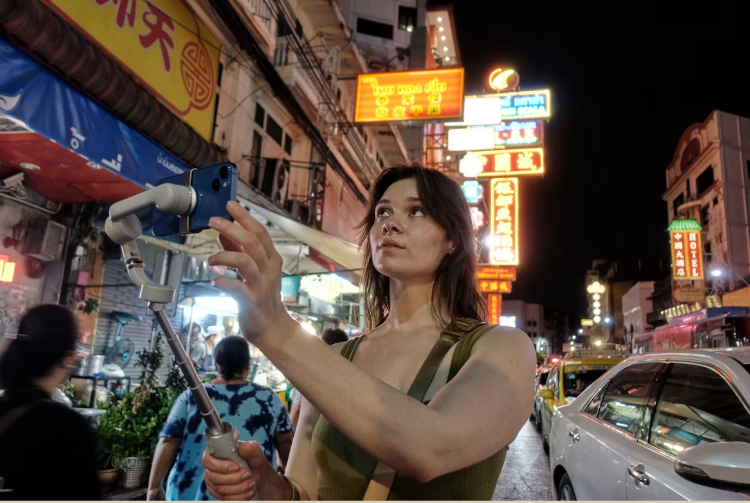
There’s that one shot practically every decent trip film has — someone wandering around a city, camera steady, letting the location develop in real time instead of cutting every couple of seconds. It seems simple but it is one of the best ways to make a spectator feel like they are really there, not watching a highlight reel from a safe distance. Editors like to let these strolling shots breathe a bit longer than instinct says they should, since cutting away too soon undercuts the very reason for incorporating them in the first place.
Finding the Story Nobody Else Is Telling
The cities getting the most attention online aren't always the obvious ones. Hidden travel destinations — a quiet neighborhood, a market that never makes it into any guidebook, a side street with better light than the main square ever gets — often perform better precisely because they don't feel manufactured for the camera. Anyone hoping to make a travel video that actually spreads is usually better off chasing that kind of specificity than trying to recreate a shot everyone's already seen a thousand times before.
Bringing the City to the Screen
Urban storytelling through video isn't really about owning the best camera or the fanciest software, when it comes down to it. It's about noticing what makes a place distinct, then having the patience to shape raw, imperfect footage into something that actually reflects it. Sort the clips with intention, grade the color to match the mood, decide deliberately between voice and captions, let a few unhurried walking shots do the quiet work of pulling a viewer in — do that consistently, and a city stops being just a backdrop in someone's footage. It becomes the whole reason anyone stopped scrolling in the first place.
