
Cranbrook: The Town That Stole Its Railway and Never Gave It Back
The small town of Cranbrook in British Columbia appeared on the map thanks to a political scheme, and today it holds the largest collection of historic passenger cars in North America. In this article, we will tell you how the town took the railway for itself, what to see in its famous museum, and what to do afterwards.
Four Hours on the Road and Very Quiet Evenings
It is about four hours from Calgary to Cranbrook via the Crowsnest Pass, and the drive itself is worth the trip. The town is small, with around twenty thousand residents, and evening life here winds down early, especially on weekdays. It is better to prepare for this in advance.
Some travelers spend such evenings in the usual way: podcasts, TV series, and e-books. Others check out selections of the best online casinos in Canada to spend a couple of hours betting right from their smartphones. The format is undemanding and does not depend on whether anything is open in the town after nine in the evening, which is quite relevant for the Kootenays.
The Kootenay-Style Heist
Now, about the scheme itself. In the 1890s, the main town in the region was Fort Steele, and the railway was logically supposed to go through it. However, local politician Colonel James Baker pulled off an elegant maneuver: as a member of the provincial parliament, he managed to have the line routed through his own ranch, which he had previously subdivided into town lots.
This is how Cranbrook was born, while Fort Steele froze in time and became an open-air museum. Baker's voters, by the way, mostly lived in Fort Steele. That is exactly why his political career ended precisely when the railway construction was completed.
The Museum That Began with a Mistake
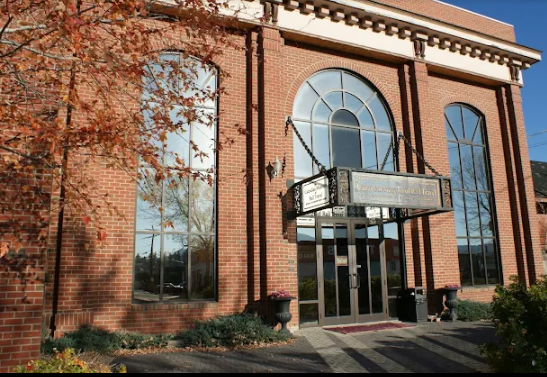
The history of the Canadian Museum of Rail Travel deserves its own anecdote. In 1976, a group of enthusiasts bought a retired car to convert it into an art gallery. After the purchase, it turned out that this was a dining car from the legendary Trans-Canada Limited, a luxury train that ran for only two seasons: it was launched in 1929, and the stock market crash quickly left first class without passengers.
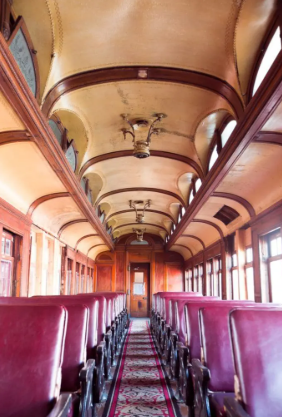
The gallery was put on hold, and the hunt for the remaining cars began. Today, the museum owns the only surviving complete set of the Trans-Canada Limited, consisting of seven art deco-style cars: black walnut, brass, and signature Canadian Pacific porcelain with a blue maple leaf. A separate gem is the service car Strathcona from 1927, in which Queen Elizabeth II, Winston Churchill, and the Kennedys spent the night. Visitors are allowed inside only with a guide, and this is a matter of principle: the collection is too fragile, and some of the cars are still in the process of restoration.
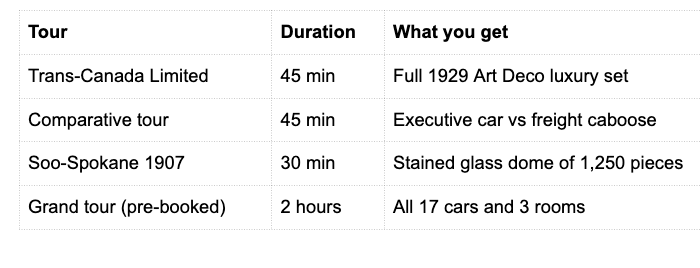
Tours run from Tuesday to Saturday, and an adult ticket for the main route costs about 20 Canadian dollars. And although the cars are the main draw, do not miss Royal Alexandra Hall, the dining hall of the CPR hotel from Winnipeg, dating back to 1906, which was dismantled before the building was demolished, stored in trucks for a quarter of a century, and reassembled here, opening in 2004.
What Else to Fit into Cranbrook
The museum will take half a day, so the itinerary is worth supplementing. Here is what we recommend including in the plan:
Fort Steele Heritage Town, a twenty-minute drive away: That very unlucky town is now a living museum of the gold rush era with blacksmiths and Clydesdales;
Dinner at Fire Hall Kitchen & Tap: A gastropub in the 1929 fire station building, where the real fire pole still stands;
Overnight stay in a restored 1920s railcar at the Prestige Rocky Mountain Resort hotel, if you want to take the railway theme to its logical conclusion.
In addition, after the Kootenays, your route takes you to bigger cities, and a fresh overview of urban travel in Canada on how to find local culture beyond the postcard spots will come in handy.
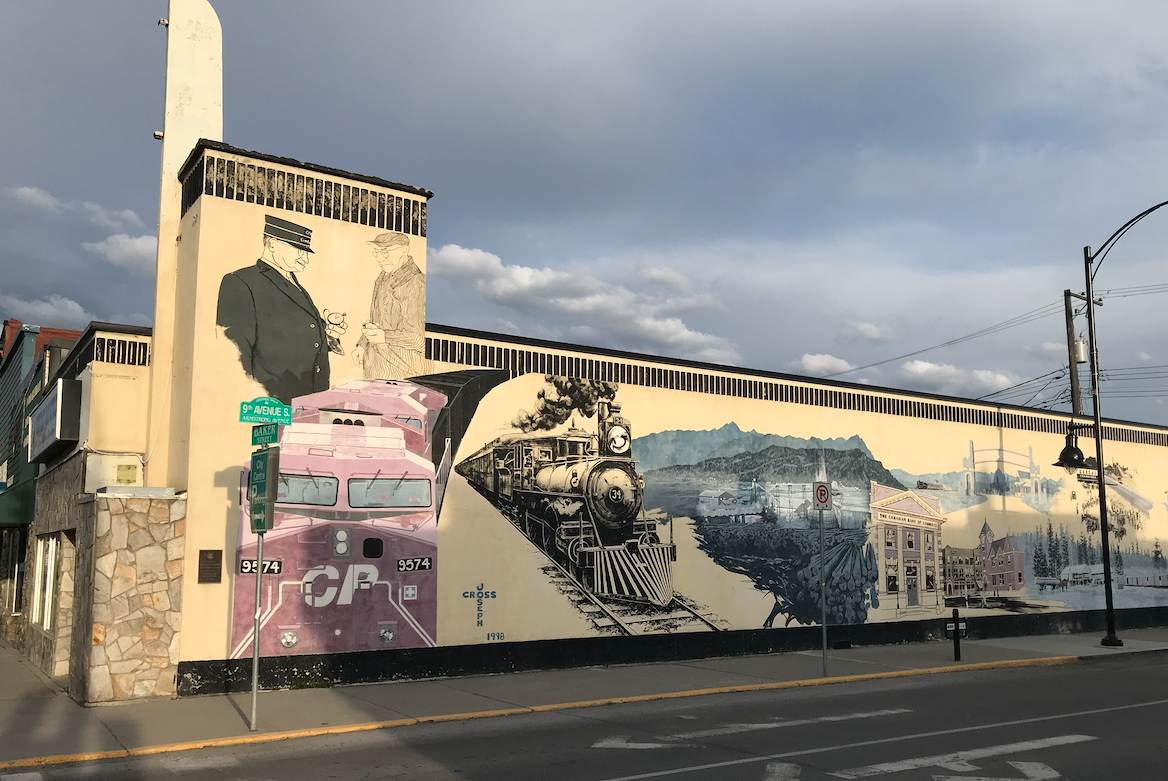
Cranbrook has a funky downtown that is worth exploring.
Final Whistle
Cranbrook proves that a small town with one big story is more interesting than a dozen ordinary stops. Here, political drama, art deco on wheels, and the car in which Churchill slept all fit into one day. Therefore, if your route passes through the southeast of British Columbia, this detour from the highway is definitely worth making.
