
Fogo Island: Newfoundland's Edge-of-the-World Escape
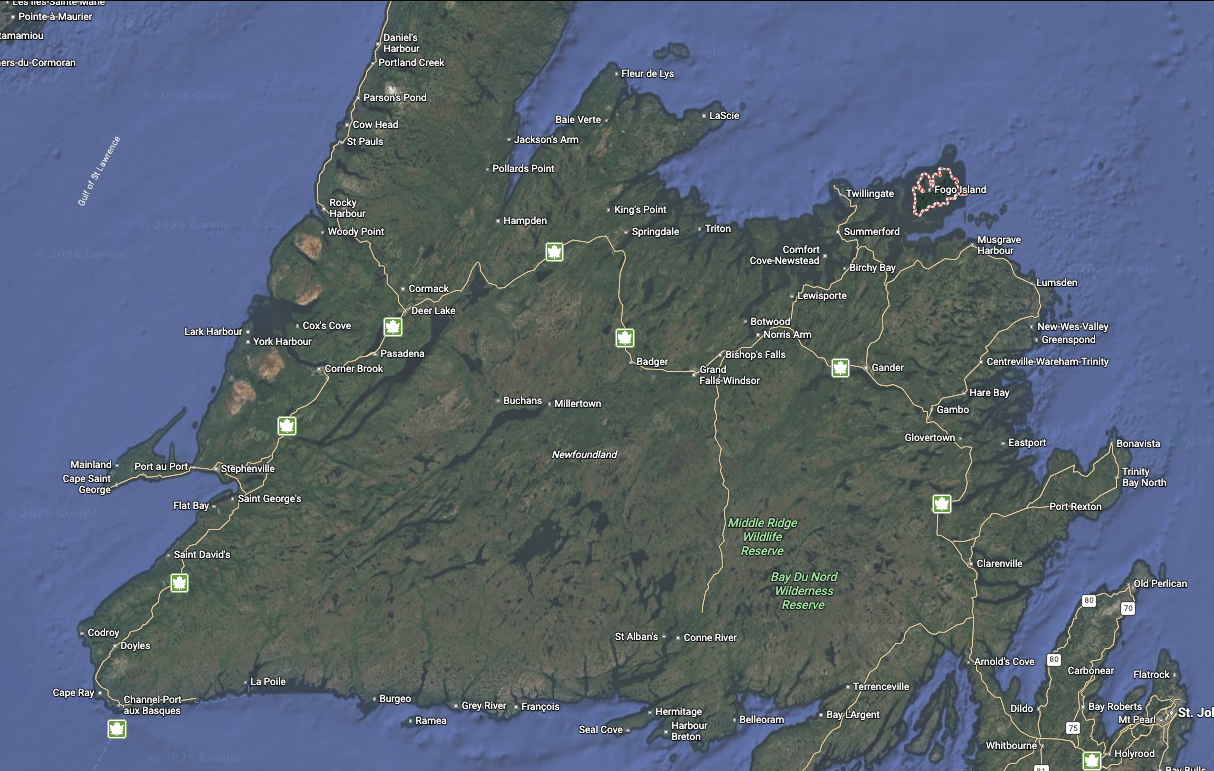
Fogo Island sits off the northeast coast of Newfoundland, in the part of the Atlantic locals call Iceberg Alley. It is Newfoundland's largest offshore island, roughly 120 kilometres north of Gander, and it has spent the last two decades quietly becoming one of Canada's most talked-about small destinations.
Where Fogo Island Is and Why It Feels So Remote?
Fogo Island lies in Notre Dame Bay, off Newfoundland's northeast coast, connected to Change Islands and the mainland community of Farewell by a government-run ferry. The island itself is not small: about 25 kilometres long and 14 kilometres wide, with nine communities spread across its coastline, so a rental car is close to essential once you arrive.
One quirk gives the island outsized fame. Brimstone Head, a rocky headland near the town of Fogo, was designated one of the "four corners of the Flat Earth" by the Flat Earth Society of Canada in the 1970s, a tongue-in-cheek claim that has stuck.
Getting to Fogo Island
There is no way around it: reaching Fogo Island takes planning. Newfoundland's central location relative to the island means most routes funnel through one of three regional airports.
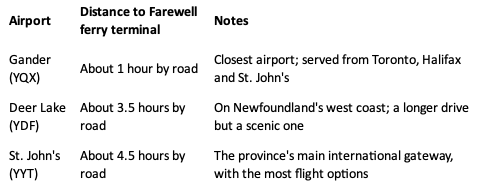
The province's main international gateway, with the most flight options
From the ferry terminal at Farewell, the crossing to Fogo Island runs about 45 minutes on the direct sailing, or roughly 1 hour and 15 minutes if the ferry also calls at Change Islands along the way. The service is operated by the Government of Newfoundland and Labrador and does not take reservations, so arriving early is the only way to guarantee a spot, particularly in July and August when sailings can fill up.
When to Visit
Fogo Island has a genuine off-season and a genuine peak season, and what you'll see changes a lot depending on when you go.
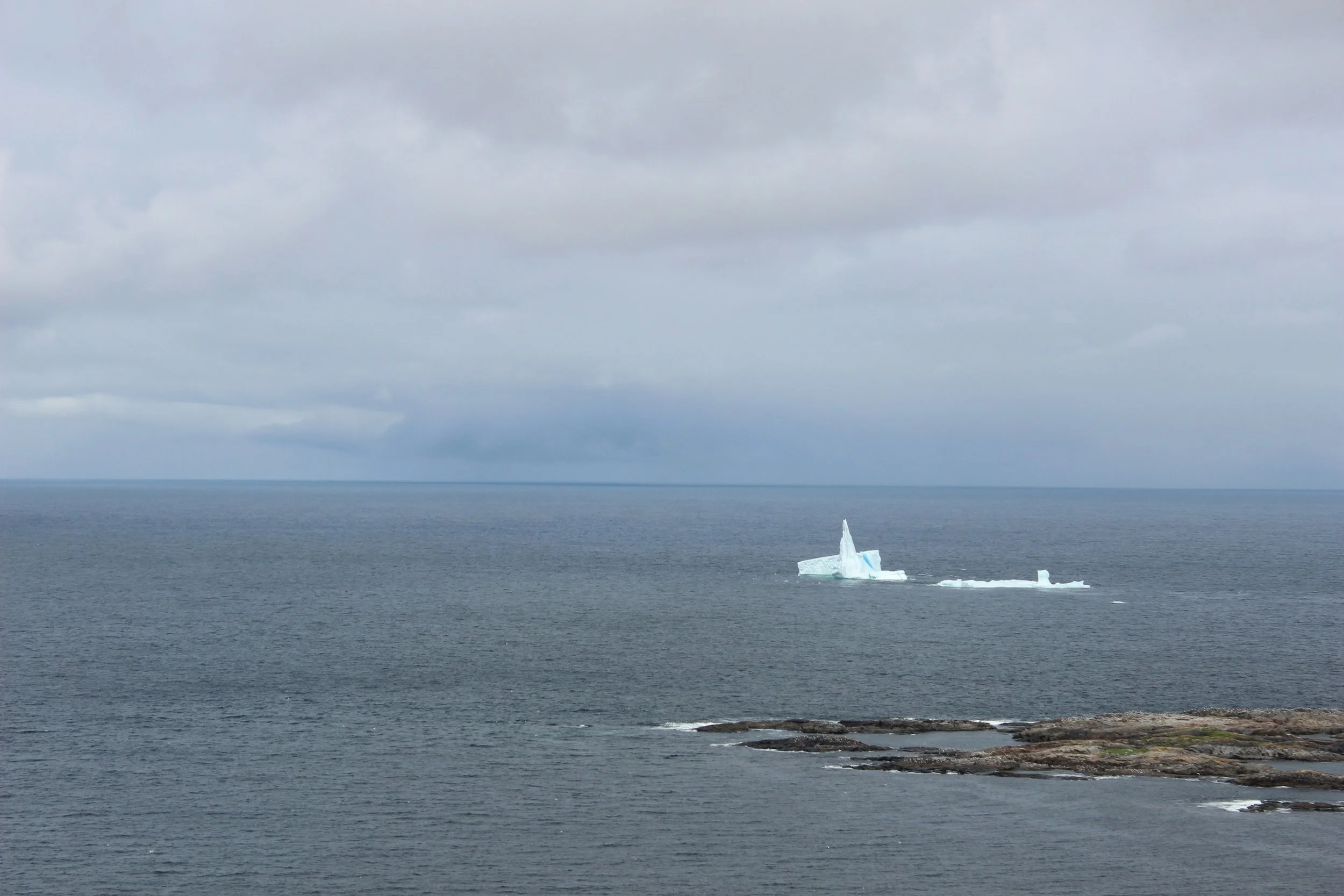
Late April through early July is iceberg season. Icebergs calve from Greenland's glaciers and drift south along the Labrador Current, with the highest concentration typically passing Newfoundland's northeast coast, Fogo Island included, in May and June.
Mid-June onward brings humpback whales into the same waters, so there's a real overlap period in June when both icebergs and whales are possible in a single visit.
Summer (July and August) is the busiest and most reliable season for warmer weather, open trails, and full ferry schedules, but also the most likely time to face a ferry wait.
Things to Do on Fogo Island
Hike Brimstone Head and Visit the Museum of the Flat Earth
The short, steep trail up Brimstone Head near the town of Fogo is one of the island's signature hikes, climbing to roughly 100 metres above sea level for open Atlantic views. Down in Shoal Bay, the Museum of the Flat Earth explores the story behind the island's "corner of the earth" reputation, tracing it back to a group of academics at St. Thomas University who revived the satirical Flat Earth Society of Canada in the 1970s.
Explore Tilting, a National Historic Site
Tilting, on the island's east coast, is one of the best-preserved Irish outport landscapes in Canada. Settled by Irish families beginning in the 1730s, the community was designated a National Historic Site of Canada by Parks Canada in 2002 for its intact fishing stages, family-cluster settlement pattern, and fenced kitchen gardens, features that have survived largely unchanged since the 18th century.
Visit the Fogo Island Artist Studios
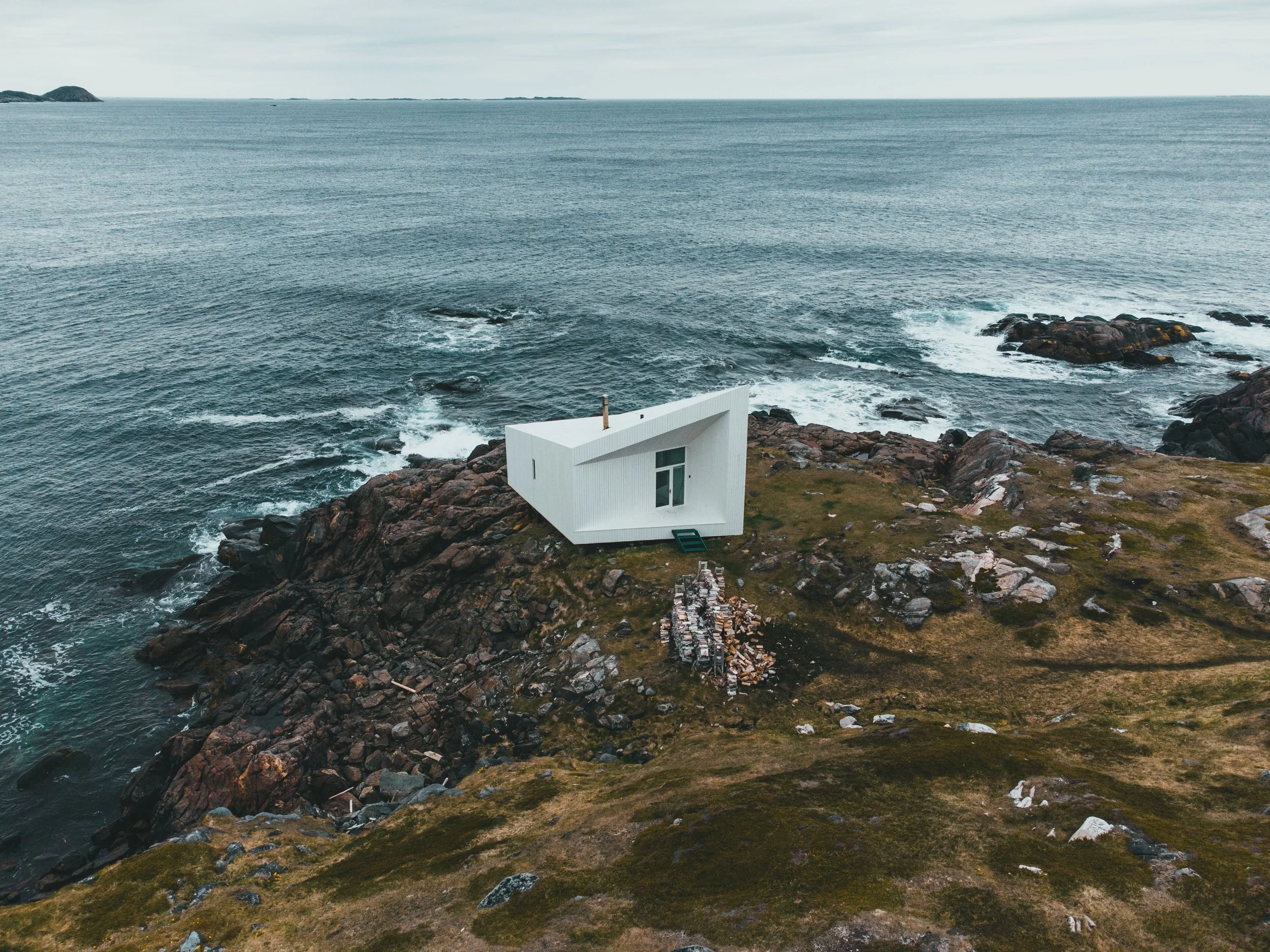
Between 2008 and 2011, Newfoundland-born architect Todd Saunders designed four freestanding artist studios scattered across different communities on the island, part of a Fogo Island Arts residency program. All four run entirely off-grid, using compost toilets, solar power, and wood stoves, and range from about 200 to 1,200 square feet.
Hike the Coastal Trails
Fogo Island has an extensive network of walking trails, often estimated at well over 100 kilometres combined, following old paths once used to move between communities. Trails range from easy boardwalk strolls to rougher coastal routes, and several pass directly by artist studios or offer iceberg and whale viewing in season.
Where to Stay
Accommodation on Fogo Island splits into two very different categories.
Fogo Island Inn is the island's best-known property and a member of Relais & Châteaux, with 29 rooms and suites that all face the Atlantic. Rates are fully inclusive of meals, most guided excursions, and use of the Inn's amenities, with a three-night minimum stay.
Independent guesthouses, B&Bs, and vacation rentals are spread across the island's communities and offer a far more budget-friendly, self-directed way to experience Fogo.
Practical Tips for Visiting Fogo Island
Rent a car. With nine communities spread along 25 kilometres of coastline, a vehicle is the only practical way to see the island unless you're staying at the Inn and using its transfer and guide services.
Check the ferry schedule before you travel. Sailings can be postponed by weather, and there's no way to reserve a spot in advance.
Expect limited connectivity. Cell service on Fogo Island is patchy outside the main communities, with no 5G coverage anywhere on the island as of recent reports.
Combine it with Twillingate or Change Islands. Both are a short detour from the Farewell ferry route and worth adding if you have extra days, particularly for additional iceberg viewing.
Have a backup plan for weather days. Fogo Island's forecast can turn quickly, and a fogged-in afternoon is common even in summer. Some travellers keep a book, downloaded shows, or one of the top rated online casinos in Canada on their phone for the rare stretch when the trails and ferry are both waiting out the weather.
