
How Quebec Is Finding New Ways to Entertain
Quebec has never had much trouble giving people something to do. Spend a weekend in the province, and you will quickly see how much leisure is tied to its culture. French influences show up in everything from long dinners to public squares that fill up when festival season begins. For many visitors, that mix can feel closer to a European city break than a typical North American trip.
Much of that entertainment culture is especially visible in Montreal and Quebec City. Both have long-established festivals, nightlife and cultural attractions, but the way people experience them continues to change. Major events are adding new activities, neighbourhoods outside the usual tourist areas are becoming destinations of their own, and entertainment no longer always requires going to a physical venue.
Major Events Are Becoming Bigger Experiences
Quebec’s events calendar does not really slow down, even when the temperature drops. Instead of hiding from the cold, the province celebrates it. What is interesting is that established events are now finding new ways for people to take part.
The Quebec Winter Carnival is a good example. The ten-day event describes itself as the world’s largest winter carnival, with traditions including Bonhomme’s Ice Palace, night parades, snow and ice sculptures and the famous canoe race. More recent additions have pushed the program in different directions, including rappelling down the Fairmont Le Château Frontenac, Cayo Carnaval at Spa des Neiges and an ice-climbing competition at Montmorency Falls. The traditions remain, but visitors now have more ways to experience a Quebec winter.
Montreal keeps a busy calendar of its own, with many of its biggest festivals centred on the Quartier des spectacles downtown. The district contains around 80 venues and hosts roughly 40 festivals each year. Francos de Montréal takes over the area with French-language music in June, followed by the Festival International de Jazz de Montréal. Guinness World Records recognizes it as the world's largest jazz festival, and the 2026 edition offered more than 350 concerts, with about two-thirds free.
With long-standing events like these already firmly established, Quebec is also experimenting with newer formats to keep pace with changing trends. The 2026 calendar included the first edition of Festival Branché, a one-night event in the Old Port dedicated to French rap. Newer festivals such as Palomosa are bringing younger music audiences to Parc Jean-Drapeau. Other events are leaning more heavily into immersive production, combining music with projection mapping, lighting and performance.
Not every major weekend revolves around music. The Canadian Grand Prix is one of Montreal’s biggest annual sporting events, but in 2026 the entertainment around it expanded further. A new CGV Experience was introduced at Jean-Doré Beach in Parc Jean-Drapeau, where visitors could watch the racing on giant screens before the space became an open-air concert venue at night. The program included Canadian artists such as Simple Plan, Bryan Adams and Alessia Cara, giving visitors another reason to stay around the circuit after the racing finished.
Quebec Is Using Technology to Create New Entertainment
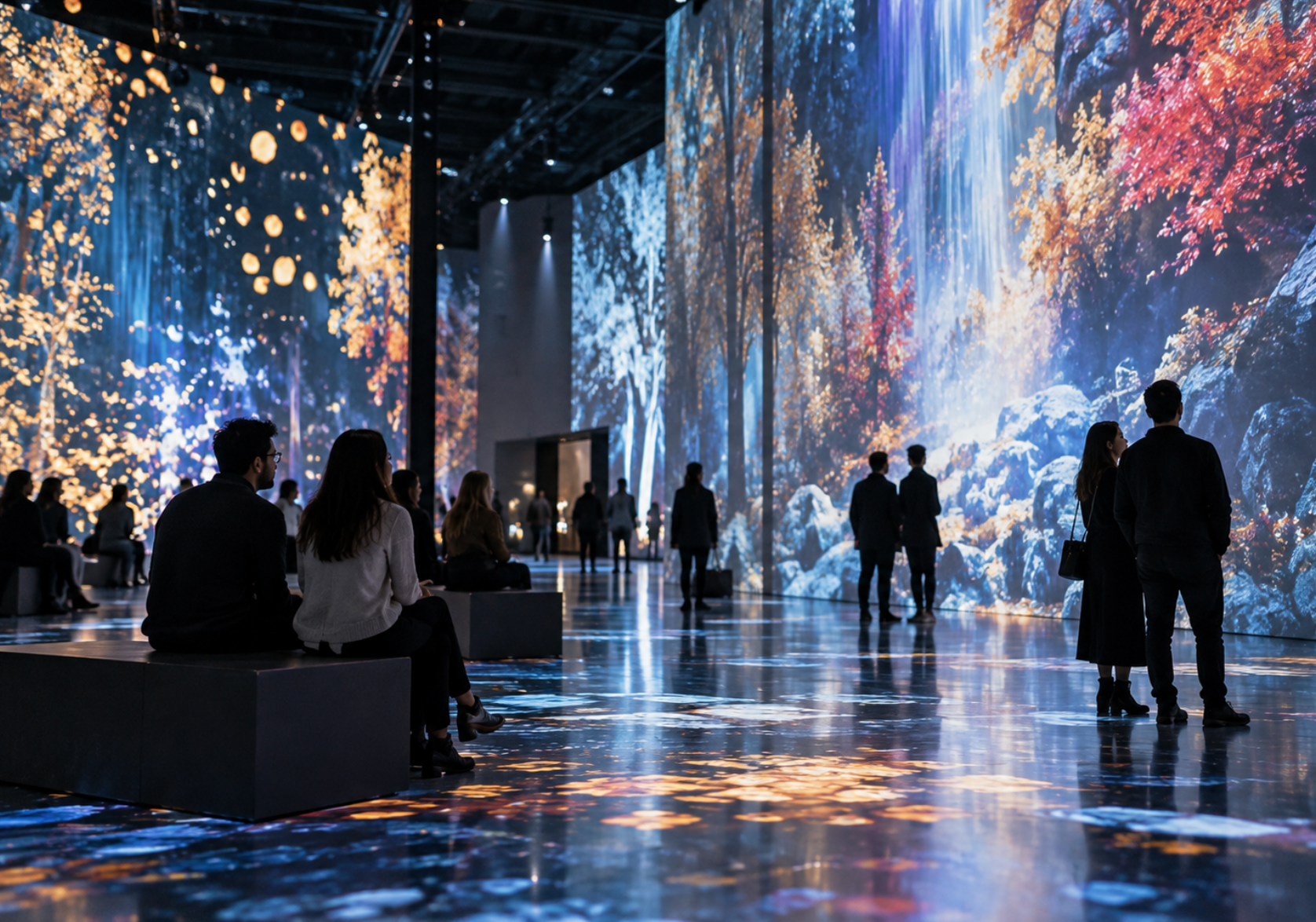
Across Quebec, technology is also changing what a day or night out can look like. Digital media and interactive technology are increasingly being built into physical venues and attractions.
Montreal offers several examples. Moment Factory's AURA transforms the interior of Notre-Dame Basilica with projections, light and orchestral music, while OASIS Immersion uses large-scale digital environments as attractions in their own right.
The same shift can be seen in gaming. FUNHUB in downtown Montreal brings together arcade games, virtual reality, escape rooms, pool tables, food and drinks, while The Rec Room at Royalmount mixes arcade-style gaming with dining and live entertainment. ARcade, also by Moment Factory, projects games onto the floor and uses motion tracking so that a person's body becomes the controller. Since 2023, it has had a permanent home on the first floor of the Casino de Montréal.
ARcade’s location says a lot about where casino entertainment is heading. The Casino de Montréal now combines its gaming floor with restaurants, bars, live shows and attractions like ARcade, where no money or prizes are involved. Loto-Québec has described it as a way for guests to enjoy something different from games of chance. That makes the casino not just a place to play, but a full night out.
Technology is also changing casino entertainment away from physical venues. As online platforms have improved, the experience has become more interactive. Players can now find many Quebec online casinos offering more detailed games, live dealer formats and interactive features that can be accessed from a phone or computer.
That gives casino entertainment two very different directions. Some players may prefer the atmosphere of a physical venue, where gaming sits alongside restaurants, bars, shows, and attractions. Others may prefer the flexibility of playing remotely through their phone or computer, wherever they are. Both show how technology is widening the ways people can be entertained, rather than simply replacing one format with another.
Entertainment Is Moving Beyond Downtown
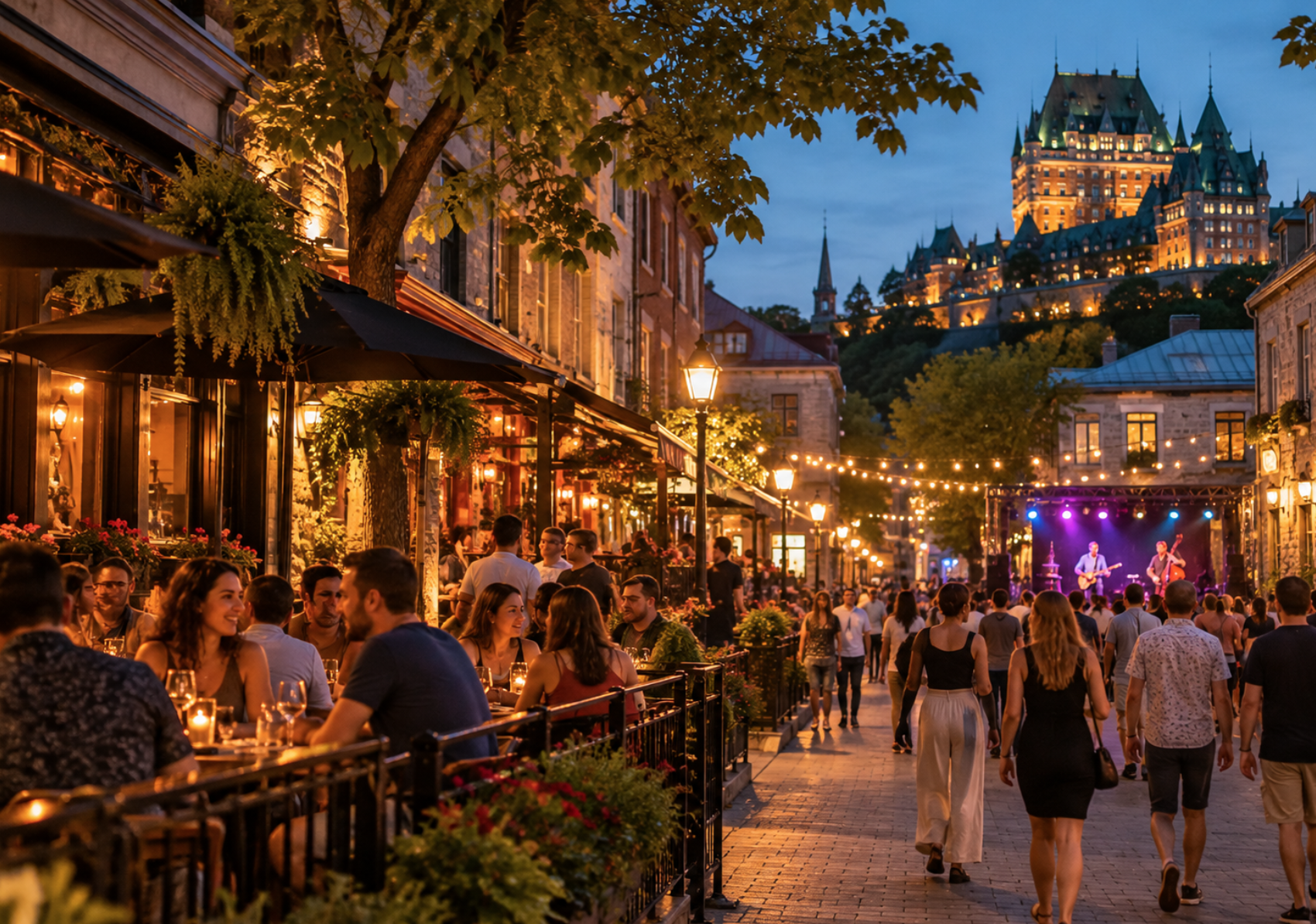
Quebec’s entertainment scene is becoming less dependent on traditional downtown attractions. In Montreal, that shift can be seen in places such as Verdun, where Wellington Street becomes pedestrian-only in summer and turns into a social space with terraces and cultural activities. Mile End shows the same idea in a different way, with cafés, bars, music venues and independent shops making the neighbourhood itself part of the evening.
Quebec City is seeing something similar in Saint-Roch, where restaurants, nightlife and creative businesses offer visitors an alternative to Old Quebec. That wider spread of local experiences also reflects how French culture in Quebec is expressed beyond the province’s best-known historic areas.
Food halls add another layer to that change. Le Central and Le Cathcart combine dining, drinks and shared social spaces under one roof, giving people more freedom to spend an evening without planning every stop.
The wider shift is towards entertainment that feels less tied to one attraction or one downtown district. Streets, neighbourhoods and shared spaces are increasingly becoming part of the experience themselves.
