
Plateau and Mile End on Foot: Courtyards, Back Lanes and Walls That Keep Changing
It pays to wander away from the main drag in Montreal. Just two blocks from Avenue du Mont-Royal, the din dies down, the asphalt becomes uneven, and a path winds its way between brick triplexes, with a bench, a garden for herbs, and somebody’s clothes fluttering in the breeze. This is what draws people back to the city – but such sights aren’t typically featured in the guidebooks.
Most of it is located within two boroughs that lie side by side but separated by a railway bridge and an altered attitude. The Plateau is outgoing, full of stairways and corner stores, while Mile End is less busy, slightly more industrialized around the edges, and increasingly expensive. Both can be taken in within an afternoon if one avoids Boulevard Saint-Laurent at the beginning of the day.
Getting ready takes less effort than expected. Montreal publishes its green alley maps and heritage inventories the way a competent regulator publishes a public register, which means the groundwork exists before anyone leaves the hotel. A traveller who has ever scrolled through alberta gaming records for a prairie trip will recognise the same satisfaction in a well-kept file, and here the payoff is a route with no dead ends and no wasted kilometres.
Where the pavement starts to feel different
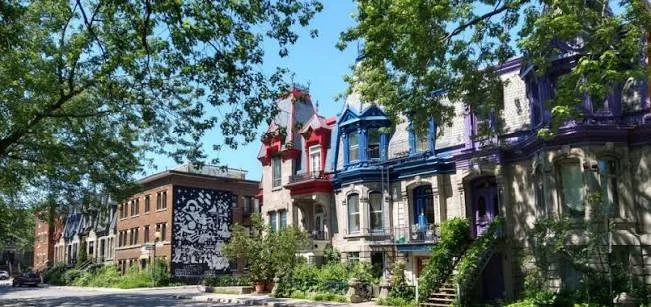
Starting from Parc La Fontaine, head north on Rue Rachel and turn west onto Rue Berri to enter the residential network. These buildings give the area its visual identity: spiral staircases at the outside of the buildings, wrought-iron banisters painted in conflicting colors, front doors opening directly out to the street.
The staircases deserve close examination. They were created due to a fire code from the nineteenth century making entranceways outside of the building, and became a work of art. Some are quite simple, some are decorated with plant holders on each step, and some were reconstructed with wood and curved in a way to make them look handcrafted. This is why photographers flock to Rue Laval and Rue Drolet.
The alleys that do the actual work
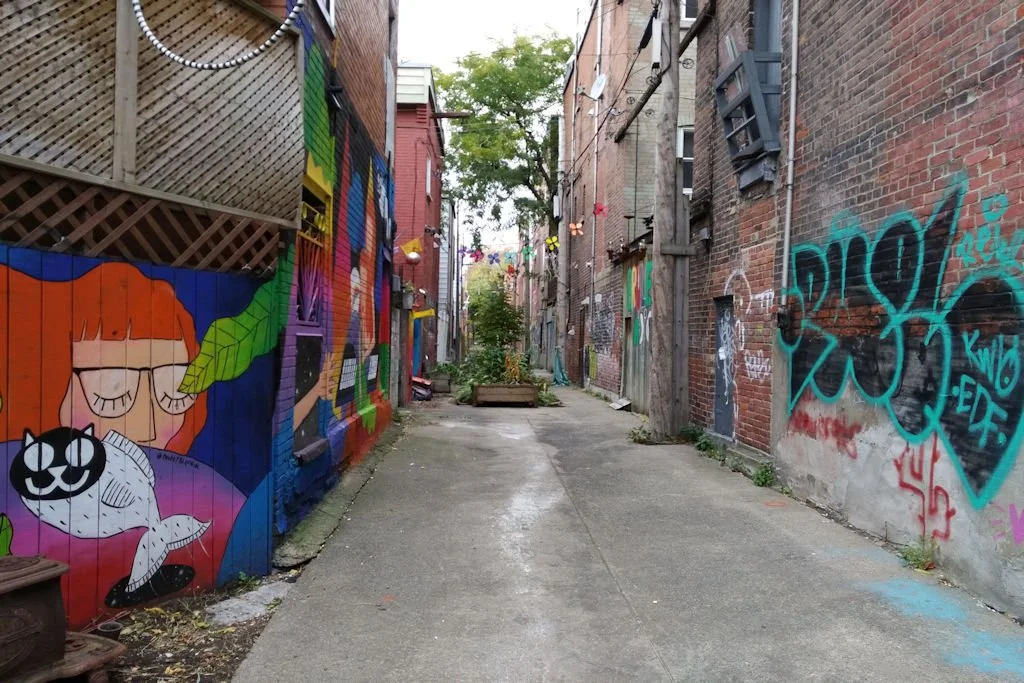
In Montreal, these alleys are called ruelles vertes, and the program that oversees their creation is a community-run initiative, which works in tandem with the eco-district of the borough. People apply, plant trees, make benches, lay gravel, and even close the alley to cars altogether. Plateau-Mont-Royal has many of these alleys, and they are the very best reason to walk aimlessly.
What is inside is varied. There is one lane where there is a community vegetable garden planted with tomatoes on a south-facing brick wall. Another has a painting on the garage door done by teenagers, a basketball hoop without a net, and a table where someone deposits books. The third one is almost silent, surrounded by old ashes and maples, and there is some music from an open window.
Etiquette is more important than any map. This is private property here, and therefore voices are soft, gates are closed, and photography does not reveal faces. A person that regards the laneway as a public square will get a chilly look, which he/she deserves.
Walls that change every June
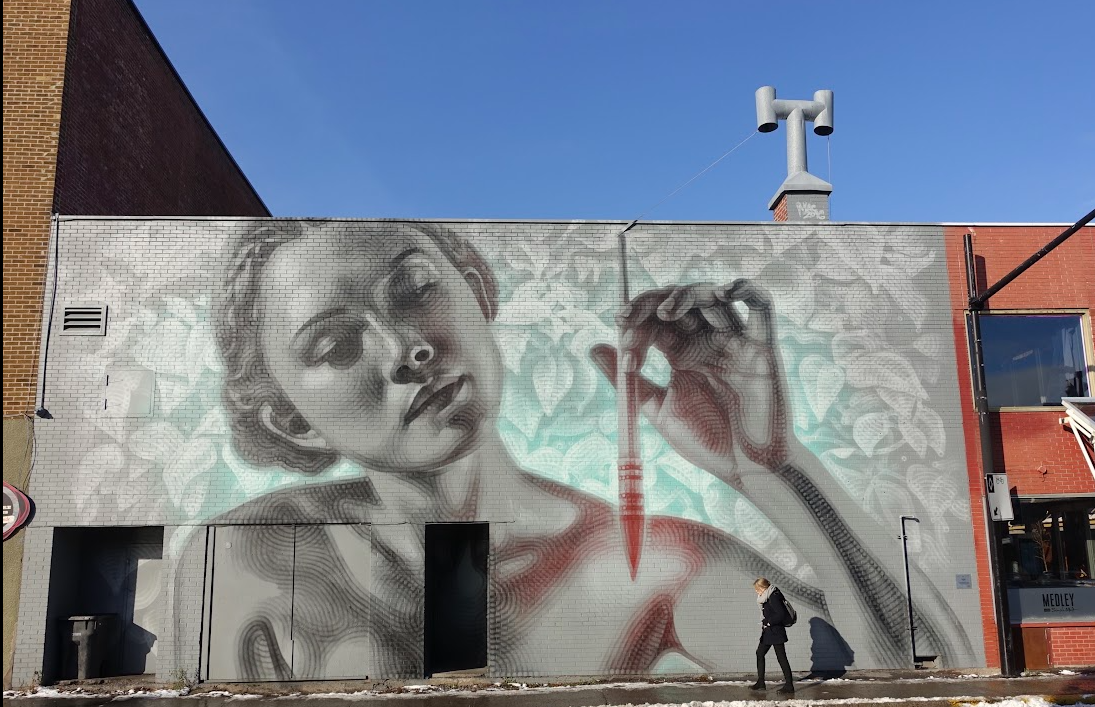
The mural works are located on Boulevard Saint-Laurent, and all this is because of the MURAL festival. This festival transforms the Boulevard into an open air gallery each year in June, for about eleven days, with local and foreign artists painting in front of everyone who watches their works appearing on the walls. MURAL 2027 will take place from 3 to 13 June.
The murals stay up even outside of festival time, making the boulevard walkable all year round. Some pieces change with each commission, so a path that you followed back two summers ago will now have fresh paint on it. The busiest area lies between Rue Sherbrooke and Avenue du Mont-Royal, where the sides of walls facing parking areas do most of the work.
The street art in Montreal is right next to business, which is one of the things that make it special. There are murals on the side of a depanneur, a portrait on a garage door, and a brick wall turned into a frame. There is no curator for the street, and that’s why it’s inconsistent.
Crossing into Mile End
Make your way west on Mont-Royal Avenue, then north on Boulevard Saint-Laurent until you see the viaduct, and once again the character changes. Mile End was the center of Montreal’s textile industry, and its architecture reflects that – brick factories, converted loading docks for studios, tall windows to accommodate a sewing floor.
Saint-Viateur and Avenue Bernard make up the social hub. Café Olimpico on Saint-Viateur has been churning out espressos since the seventies and continues to pack the terrace with a combination of old men reading newspapers and laptop-wielding students. Just a few doors down, the debate over the best bagel goes on. Fairmount Bagel, established back in 1919, claims to be the city’s first bagel bakery, but across town, St-Viateur Bagel has its own fans.
Both use wood-burning ovens, both sell hot sesame bagels at a bargain price, and both claim the title of the only true bagel shop in town from those waiting in line outside. The trip from one shop to the other takes about seven minutes and doesn’t solve any disputes.
Small stops worth the detour
Light Lunch at Fairmount by Wilensky has been serving the same grilled sandwich for the past few decades, and the place also has a hand-written order form that is quaint to regulars and mystifying to strangers. Drogheria Fine, close to Light Lunch, offers gnocchi in a paper cone with tomato sauce for less than the price of a coffee in downtown Montreal.
There are bookstores and music shops dotting Bernard and Saint-Laurent, and the influence of the Portuguese and Hassidic communities is seen in bakeries, meat stores and synagogues found on the side streets. Someone walking down the street can spot Hebrew script above a storefront, then a Portuguese bakery a hundred meters down the road.
A route that fits an afternoon
The loop takes around six kilometres on a relaxed walk, taking three or four hours with stops. Begin at Parc La Fontaine and take the western route through the Plateau streets until reaching Boulevard Saint-Laurent with its murals, head north to Mile End and return south down Rue Saint-Denis with a whole new set of storefronts. There’s an extra leg to make up the hill on Avenue Laurier for its wider sidewalks.
Light is key, but less important than time of day. The late afternoon makes the murals stand out while the alley gardens are in shadow, and a wet day will make the lanes less crowded and the bricks a redder colour. But winter works, too, as long as the planters are not buried in snow.
What the walk is actually for
None of this requires a ticket, a guide or a schedule. The appeal sits in the accumulation of small things: a spiral staircase, a wall repainted last month, a bagel still warm in paper, a lane where somebody has planted mint next to a recycling bin. Cities rarely let a visitor see how they are put together. Montreal does, and the door is usually a back lane.
