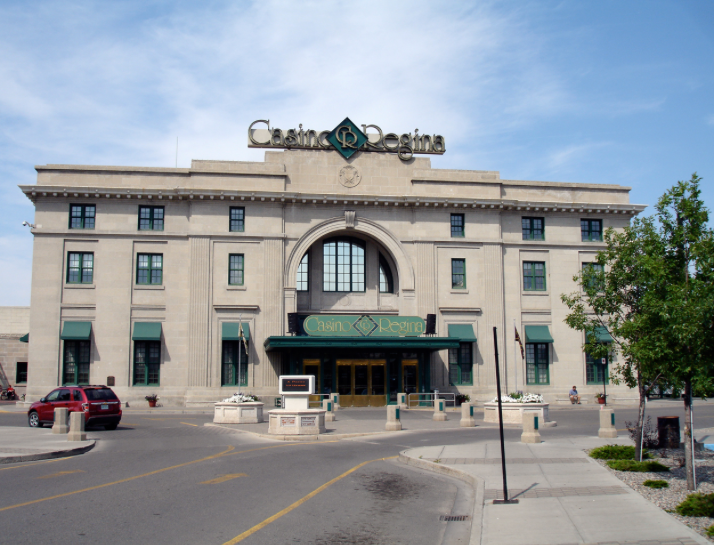
Walk into Casino Regina and look up before you look at anything else. The central hall was the main concourse of Regina's Union Station, and it still has the high ceiling, the simple chandeliers and a clock near the top of the back wall. In the hall there's also a schedule board showing the arrivals and departures from the day the station closed in 1990, as if the last train is about to be called.
The station was finished in 1912 to a Beaux-Arts design by J.F. Orroch, and a 1931 expansion gave it the cream Tyndall stone Art Deco front you see on Saskatchewan Drive today. After passenger service ended, the building sat empty until a $37 million conversion turned it into a casino, which opened in January 1996. It makes a good starting point for a day on foot, because almost everything else worth seeing in central Regina lies to the south of it.
You need to be 19 to go in, and it's worth deciding on a spending limit before you do, the same way you would budget for dinner. Visitors who also play online on the road should know that getting money out usually takes longer than putting it in, because sites check identity and banks work on business days. The National Post's withdrawal speed testscompare how long different sites take to pay out, which helps set expectations before you count on a win to cover the trip. If gambling stops feeling like entertainment, Saskatchewan runs a free, confidential 24-hour Problem Gambling Help Line.
A railway station that kept its bones
Big railway halls were built for crowds and a sense of occasion, which may be why they adapt well to entertainment, a question this site explored in what Las Vegas and Montreal can teach cities about casinos in the urban core. Regina's version is unusually faithful to the original. The 1931 terrazzo floors, marble columns and moulded plaster ceilings survived the conversion, and the building has been a designated heritage site since 1991. Below ground there are old railway police jail cells and traces of a tunnel network, most of which was lost when the Cornwall Centre mall was built next door. The building also has an 800-seat Show Lounge for evening entertainment.
South over the Albert Memorial Bridge
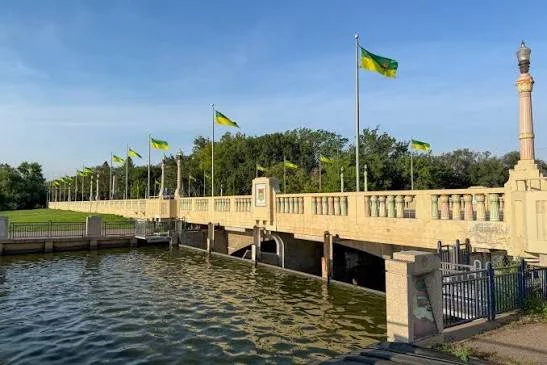
From the station, it's about half an hour on foot, west to Albert Street and then south, to Wascana Lake. The bridge that carries Albert Street across the water opened on 10 November 1930 as part of a Depression relief project, the same scheme that drained and dredged the lake and created two of its islands. Take your time crossing its 256 metres. The railings use glazed terra-cotta balusters, and the details include buffalo heads, Egyptian motifs and the Saskatchewan coat of arms above the dam.
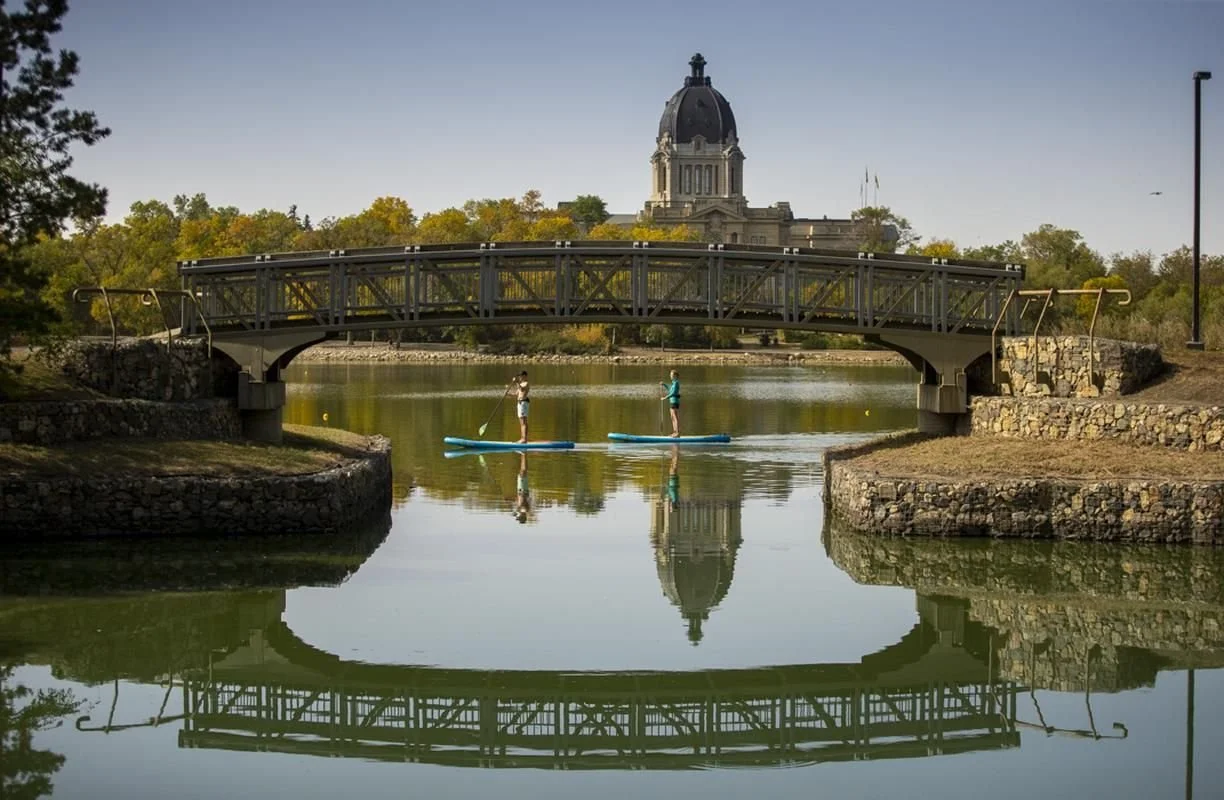
The lake sits at the heart of Wascana Centre, a park of about 930 hectares that is larger than both Central Park in New York and Stanley Park in Vancouver. Thomas Mawson drew the 1912 plan that shaped it for decades, and in 1961 the province brought in Minoru Yamasaki, with landscape architect Thomas Church, to prepare a 100-year master plan that has largely been followed. A path now runs right around the lake, and the views across the water to the Legislative Building from the north shore are among the best photo spots in the city.
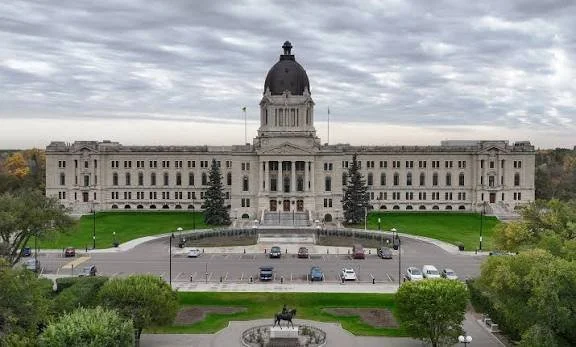
Inside the Legislative Building
The building was designed by the Montreal firm of E. and W.S. Maxwell, who won a design competition, and it went up between 1908 and 1912 at a final cost of $1.8 million. Red brick was originally proposed, but Premier Walter Scott asked for cream Tyndall stone from Manitoba instead, which ties it visually to the station you started from. The dome and its copper were restored between 2014 and 2016.
Public tours are free and last about 30 minutes, and groups of fewer than 10 don't need to book. Inside, look for the Rotunda under the dome, the Legislative Library reading room, where the first session was held in January 1911, and the chamber where the Assembly first met in the new building on 25 January 1912.
Two museums for the afternoon
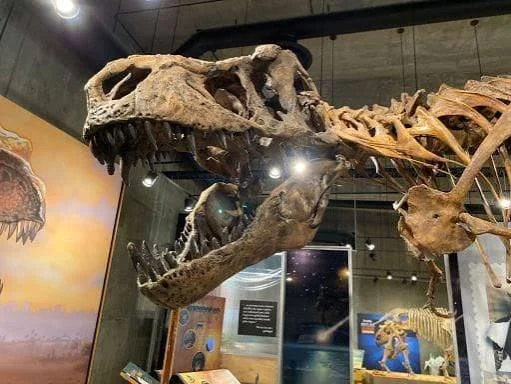
At Albert Street and College Avenue, near the park's western edge, the Royal Saskatchewan Museum is home to a life-size cast of Scotty, described as the world's largest T. rex, in a two-storey gallery that opened in 2019 and shows the injuries the dinosaur survived. Leave time for the First Nations Gallery, whose dioramas cover about 10,000 years of Indigenous culture, trade and treaties in the province.
The RCMP Heritage Centre is a short drive or cab ride north-west, on Dewdney Avenue at the edge of the RCMP Academy, Depot Division, where every Mountie trains. The building opened in May 2007, designed by Nick Milkovich Architects with Arthur Erickson as design consultant, and its galleries run from the force's early days in the West to a forensics section called Cracking the Case.
By early evening you can be back where you started, under the station clock, with the schedule board still promising trains that stopp