
The Canadian Festivals Too Small to Make the National List
Ymir, British Columbia doesn't show up on most road-trip itineraries, and that's the entire point of Tiny Lights, running May 29–31, 2026. The town has about 230 year-round residents today, a fraction of the 800 or so who lived there when it was a booming silver-mining outpost in the West Kootenays in the late 1800s, roughly a 40-minute drive south of Nelson. What's left is a handful of streets, a lot of mountain scenery, and one weekend every year when a three-day music and arts festival, now in its 15th edition, spreads across seven stages and 100-plus performances squeezed into venues no bigger than a general store. Friday night is built around a mixed-tape format: thirteen short sets across three historic Ymir buildings, with the crowd moving between rooms while the performers stay put. There's no headline act designed to sell out a stadium and no VIP section, just tent camping on-site and a shuttle running the festival crowd back and forth to Nelson all weekend. Most people who stay over book into the century-old Hotel Ymir, a restored 1896 mining-era building with its own dining room, or grab breakfast at the Ymir Store before heading to the grounds; the town's one bakery does a steady trade in wood-fired pizza once the music starts.

Hotel Ymir, the restored 1896 mining-era building at the heart of Ymir, BC. (Quinn Desilets / Wikimedia Commons, CC BY-SA 4.0)
Events like this rarely get discovered the way a national festival does, through a magazine spread or a tourism board's ad budget. They spread person to person, or through the kind of scattered online research that also has someone comparing the best Bitcoin casino online before they've settled on a hotel, low-effort digging that ends up shaping where a trip actually goes more than any guidebook does. The itinerary gets built in fragments over weeks, not booked in one sitting, and small towns tend to win out precisely because nobody's marketing them.
Eastend, Saskatchewan sits in the Frenchman River Valley, a stretch of prairie Tourism Saskatchewan describes as the "Valley of Hidden Secrets," and the nickname holds up better than most tourism taglines. The town is home to the T.rex Discovery Centre, an hour's drive from Cypress Hills Interprovincial Park, where the most complete Tyrannosaurus rex skeleton ever found, nicknamed Scotty, has been on public display since it was unearthed nearby in 1991. A few streets over, the Wallace Stegner House preserves the boyhood home of the Pulitzer-winning novelist, restored by the Eastend Arts Council in 1990 and now run as a residency for visiting writers. Every July, the Big Flat Folk Fest sets up in the same valley, an intimate two-day gathering — July 10 and 11, 2026 this year — that trades production value for a setting no bigger festival could book, with a Saturday-morning pancake breakfast at the Memorial Hall and an open-studio art walk running alongside the main stages. Overnight options are limited by design: the Riverside Motel on Redcoat Drive covers most beds in town, and the festival itself sells riverside tent and RV camping for the weekend. When the music breaks, Jack's Cafe, open on the same corner since 1910, is still the closest thing Eastend has to a town square. Nobody outside southwest Saskatchewan tends to have heard of any of it, which is exactly why it's still worth the drive.
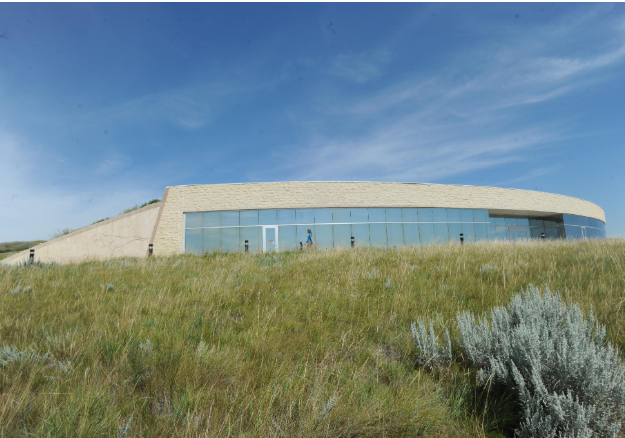
The T.rex Discovery Centre outside Eastend, SK, home to "Scotty" the Tyrannosaurus rex. (Muhsatteb / Wikimedia Commons, CC BY-SA 4.0)
Perth-Andover, New Brunswick sits on the banks of the St. John River, a couple of hours north of Fredericton and close enough to the Maine border that Fort Fairfield is a five-minute drive. Its Cultural Waterfront Walkway traces the area's Maliseet, English, Irish and Scottish history through a series of plaques along the river, the kind of local-history project that never gets national coverage but tells you more about a place than a highlight reel would. The village's Waterfront Adventure Centre rents canoes, kayaks and pedal boats for anyone who wants the river rather than the road for an afternoon. Every August, the Larlee Creek Hullabaloo takes over the same stretch of riverbank for five days — August 5 to 9, 2026 — an event locals have nicknamed the "Little Festival that Could," pulling bluegrass, folk and East Coast acts on no marketing budget beyond word of mouth. For a place to stay, the castle-styled Pathsaala Inn overlooks the village from its hilltop gardens, while the more no-frills Perth-Andover Motor Inn sits right off the Trans-Canada. Either way, the 878 Waterfront Bistro & Café, a few minutes' walk from the festival grounds, is the spot locals point visitors toward for breakfast with a river view.
What connects Ymir, Eastend and Perth-Andover isn't geography, since one's in the mountains, one's on the prairie and one's on a river three time zones east. Each town's festival exists because a small, specific group of people decided it should keep happening, not because a tourism board built a campaign around it, and none of the three need a bigger stage to prove they're worth the drive. That kind of appeal tends to outlast a headline act, which is exactly why it's still standing decades after some of the country's flashier events have come and gone, and it's a better reason to plan a trip around a town than a list of the same ten cities everyone already covers. For more of the country's under-the-radar events, Canada's 7 best winter festivals is a decent place to keep the list going.
