
Broadway North: Why Toronto Is One of the World's Great Theatre Cities
Ask a first-time visitor what they expect from Toronto and theatre rarely tops the list. Yet the city quietly holds one of the most remarkable reputations in the performing arts: it is widely regarded as the third-largest English-speaking theatre centre in the world, trailing only London's West End and New York's Broadway. For anyone planning an evening beyond dinner, Toronto's stages offer something few cities can match, a dense, historic, endlessly varied theatre culture that has earned the nickname "Broadway North." Here is a look at how the city built that reputation, and why its theatre scene is worth an evening or three.
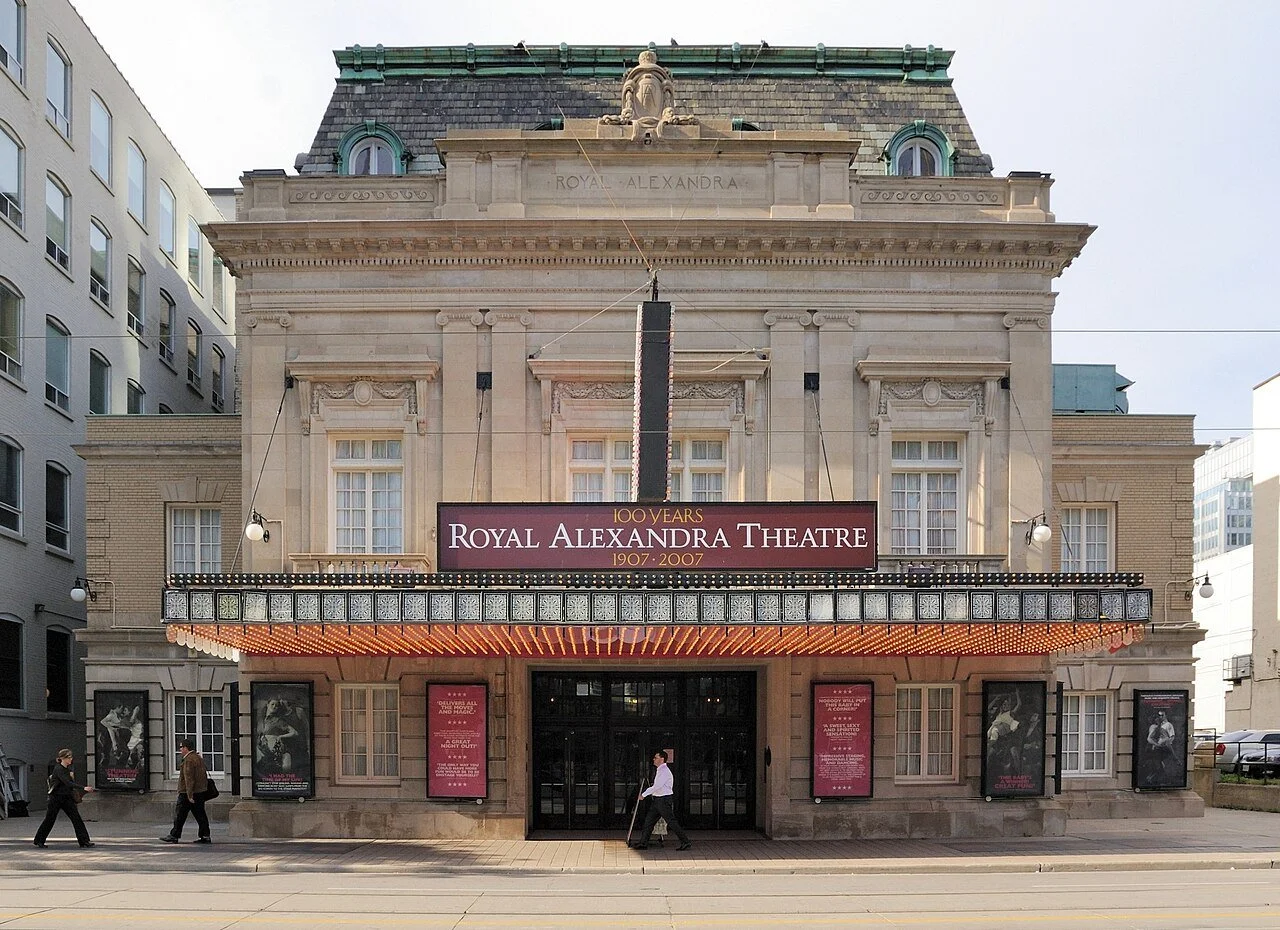
Making Theatre Part of Your Toronto Evening
What makes Toronto's theatre scene so well suited to a city break is precisely its variety and walkability. The heart of the theatre district sits within the downtown entertainment district, where stages stand steps from restaurants, bars, and other venues, so an evening can flow naturally from dinner into a show and out again into the lively streets afterward. There is no need to plan weeks ahead or commit to a single grand production, the density of options rewards spontaneity.
Visitors also have no shortage of ways to continue the evening after the curtain falls. Some head to rooftop bars or late-night restaurants, while others enjoy digital entertainment when travelling elsewhere, including live casino games offered by platforms such as Betano in regions where their services are available. Like the city's theatre offerings, the appeal lies in having a wide range of experiences available to suit different tastes.
For visitors, the ideal approach is to treat theatre not as a formal, once-a-trip event but as a natural extension of the evening. Catch a blockbuster at one of the historic Mirvish houses one night, then seek out an independent company's new work in a neighbourhood venue the next. Between them lies the full range of a city that has, in a remarkably short time, become one of the great theatre capitals of the English-speaking world. Toronto may not shout about it, but after dark, on its stages, the city tells some of its best stories, and they are well worth staying out for.
From Two Theatres to a Global Contender
The scale of Toronto's rise is genuinely striking. As recently as the early 1960s, the city had only a couple of professional live theatres to its name. What followed was one of the more dramatic cultural transformations of any North American city. Today Toronto is home to well over a hundred professional theatre companies performing across dozens of stages, a concentration of activity that supports the city's claim to be the largest theatre centre in Canada and among the largest in the English-speaking world.
The turning point came in the 1960s and 1970s, a period of surging interest in distinctly Canadian storytelling. The approach of the country's 1967 Centennial helped fuel a wave of new companies and playwrights determined to tell Canadian stories rather than simply importing British and American work. This alternative-theatre movement, scrappy, ambitious, and often staged in unconventional spaces, laid the foundation for the thriving scene that exists today. The transformation from two theatres to a global contender in a matter of decades is a reminder that Toronto's theatrical prominence, though it can feel long-established, is a relatively recent and hard-won achievement.
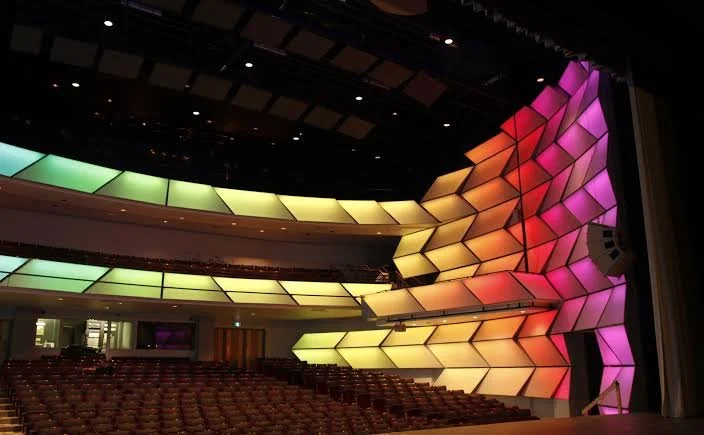
Lyric Theatre
The Grand Old Theatres
Part of what makes Toronto's theatre district so atmospheric is its collection of beautifully preserved historic venues, many dating from the turn of the 20th century. The Royal Alexandra Theatre, which opened in 1907, is one of the oldest continuously operating theatres in North America, and its survival is a story in itself. By the mid-20th century, many of these grand old houses had fallen on hard times, forced to reinvent themselves to stay afloat.
The most remarkable survival story belongs to the Elgin and Winter Garden Theatres, a rare double-decker complex with one theatre stacked directly above another. It is often cited as the last operating Edwardian stacked theatre of its kind in the world. Over the decades the venues served as movie houses and, at one low point, reportedly even hosted a martial arts dojo before being restored to their original splendour. The Ed Mirvish Theatre, once known as the Pantages and later the Canon, was designed by the celebrated theatre architect Thomas Lamb and reopened after extensive restoration in 1989. Wandering the theatre district after dark, past these illuminated facades, is an experience in itself, a walk through more than a century of the city's cultural ambition.
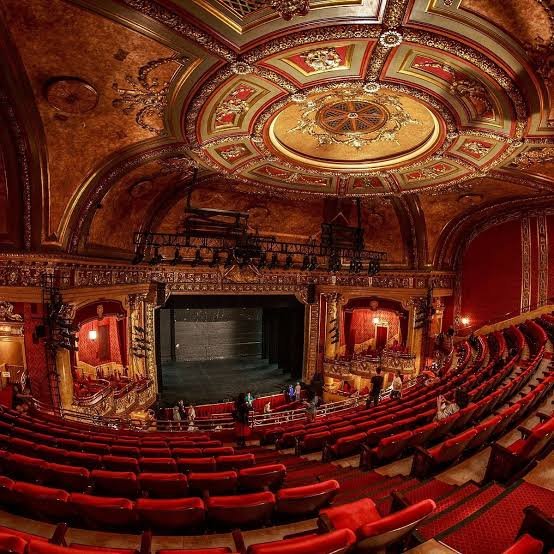
Elgin & Winter Garden Theatre
The Mirvish Effect
No account of Toronto theatre is complete without the Mirvish family, whose influence on the city's stages is hard to overstate. Ed Mirvish, a legendary Toronto businessman, bought the ailing Royal Alexandra Theatre in the early 1960s and saved it from demolition, gradually turning it into a home for major productions. His son David joined the enterprise in the 1980s, and together they helped transform Toronto into a genuine commercial-theatre capital.
The Mirvishes' boldest move came in 1993, when they built the 2,000-seat Princess of Wales Theatre specifically to house the blockbuster musical Miss Saigon, one of the largest stages in North America and a purpose-built statement of Toronto's arrival on the world stage. Through the late 1980s and 1990s, Toronto proved it could mount and even originate large-scale commercial productions on a par with the best in the English-speaking world, staging landmark runs of shows like Les Misérables. Mirvish Productions remains Canada's largest commercial theatre company, and the family's name is now woven into the very fabric of the city's entertainment district. It is no exaggeration to say the modern "Broadway North" was built in significant part by the Mirvishes.
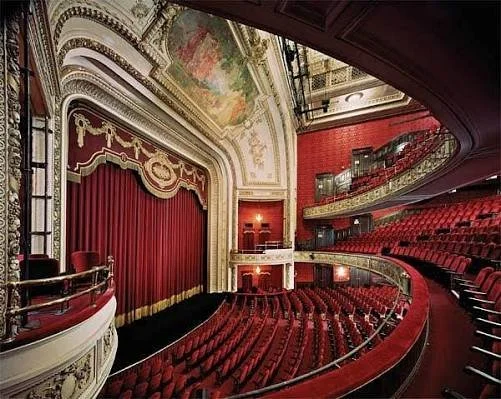
Royal Alexandra Theatre
Beyond the Big Musicals
For all its commercial glamour, Toronto's theatre culture is far richer than its blockbuster musicals, and this is where the scene becomes genuinely special. The city has an unusually vibrant not-for-profit and independent theatre community, where creative freedom often takes precedence over commercial pressure. Visitors willing to venture beyond the marquee shows on King Street West will find some of the most rewarding theatre the city has to offer.
The range is remarkable. Buddies in Bad Times, founded in 1979 and based in the city's Gay Village, is widely described as the largest and longest-running queer theatre in the world. Soulpepper, based at the Young Centre for the Performing Arts in the atmospheric Distillery District, has become one of the country's most respected companies. Tarragon Theatre has long championed new Canadian plays, while Crow's Theatre helped transform the east-end neighbourhood of Leslieville into an unlikely artistic hub. Companies like Canadian Stage, Nightwood Theatre, and Obsidian round out a scene notable for its diversity and daring. Whether your taste runs to an intimate storefront production or an acclaimed show in a purpose-built complex, Toronto rewards curiosity. The city's own Dora Mavor Moore Awards, its main theatre honours, celebrate exactly this breadth each year.
A Few Fun Facts for the Theatre-Curious
Toronto's theatre scene is full of the kind of details that make good conversation over an interval drink. The "third-largest English-speaking theatre centre" claim, for instance, is often repeated with civic pride, though even local critics acknowledge it began partly as a marketing line during the 1990s musical boom. True or not in any strictly measurable sense, it captures something real about the city's ambition and scale.
A few more worth knowing: the Elgin and Winter Garden's upper theatre was, for decades, simply sealed off and forgotten above the lower one, its original hand-painted decor and beech-branch ceiling preserved almost by accident until restoration. Hollywood frequently uses Toronto as a stand-in for other cities, so the theatre district's grand facades have doubled for New York and elsewhere on screen. And the city's theatrical density is such that on a single downtown evening, you could choose between a mega-musical, an experimental piece in a converted industrial space, and a cutting-edge new Canadian play, all within walking distance of one another. For a certain kind of traveller, that concentration of choice is reason enough to visit.
