
The Detour Is The Destination: A Slow-Travel Guide To Small Prairie Cities
Most travellers treat the prairies as the boring part — 900 kilometres of straight highway between the mountains and the Great Lakes, to be crossed with the cruise control on and the podcast queue full. That habit is worth breaking. The small cities strung along the line are where the real finds are, and they reward the same thing every good city rewards: getting out of the car and walking. The rise of remote work has quietly made this easier — a company like NuxGame, an iGaming platform provider, hires engineers who can just as easily live in a small prairie town as in Toronto, Montreal or Vancouver, and that kind of distributed employment has put money and coffee shops back into main streets that were emptying out fifteen years ago. Which is the argument here: the towns you drive past have more going on than the ones you drive to.
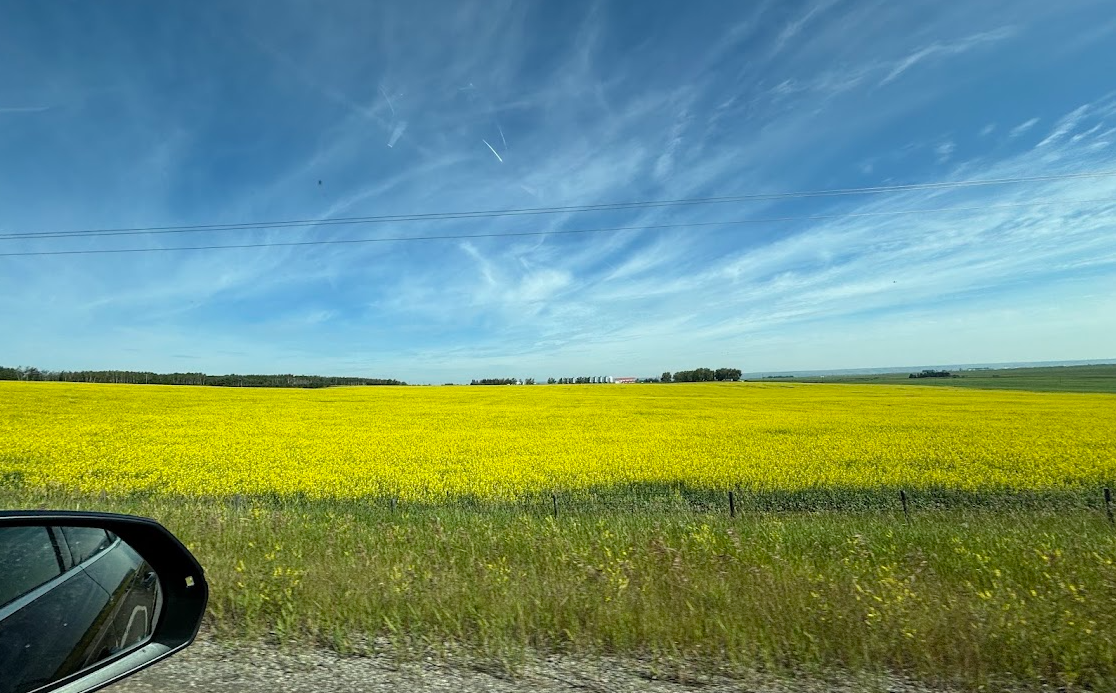
Moose Jaw: The City With A Basement
Moose Jaw is 45 minutes west of Regina and most people know it, if at all, for the Tunnels — a network of passages under Main Street, now run as a guided attraction. Go, but go early, and then spend the rest of the day above ground where the city is more interesting.
The downtown has one of the best-preserved early-1900s commercial streetscapes in the province, largely because nobody had the money to knock it down. Look up above the storefronts on Main Street North and you get the whole architectural record — cornices, brickwork, ghost signs for businesses that closed in 1940. The Murals of Moose Jaw project has painted more than 40 of them across the downtown, and unlike most mural programs, they are mostly historical rather than decorative. Finish at the Yvette Moore Gallery, which occupies the old land titles building, and eat wherever the parking lot is full.
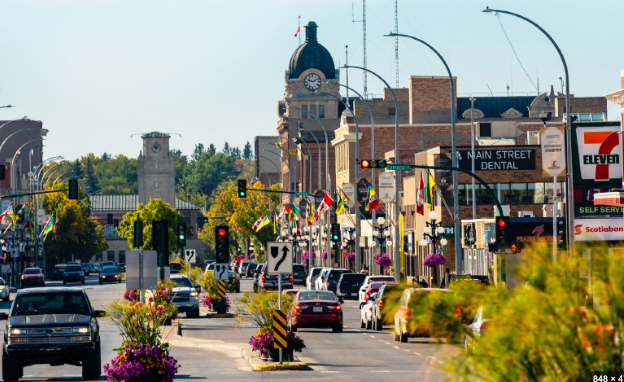
Moose Jaw has a bustling downtown.
Medicine Hat: Gas, Clay, And A Wide River Valley
Rudyard Kipling called Medicine Hat the city with all hell for a basement, which was a compliment about natural gas and has stuck for a century. The gas built the industry, the industry built the pottery, and Medalta — the old clay factory in the Historic Clay District — is now a museum and working ceramics studio inside the original kilns. You can walk into a beehive kiln. That alone justifies the exit ramp.
The city's better secret is the valley. The South Saskatchewan River cuts a wide, cottonwood-lined trench through town, and the trail network along it is genuinely good — flat, quiet, and long enough to fill an afternoon. Cross the Finlay Bridge and look back at the escarpment. This is not scenery anyone advertises, which is exactly why it works.
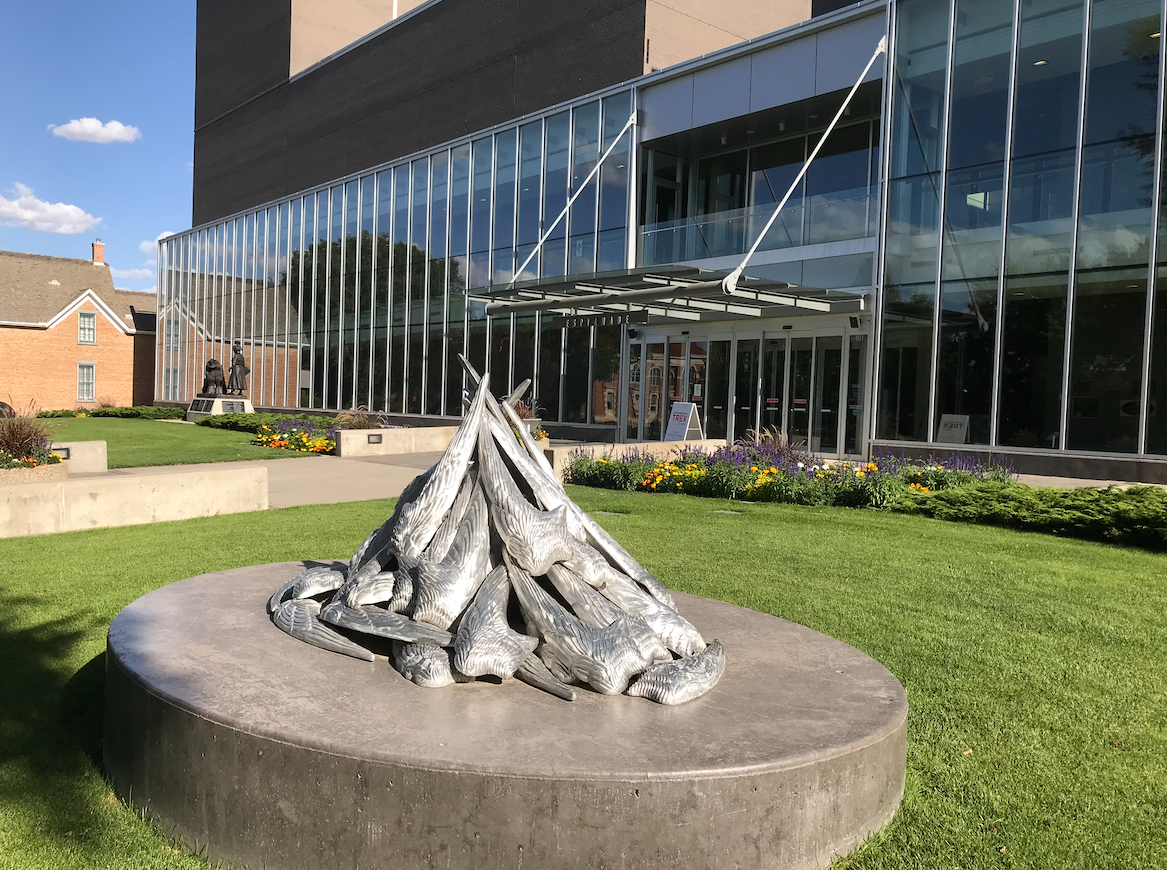
Medicine Hat also has a vibrant downtown with its cultural centre as the anchor.
Brandon: The One Nobody Recommends
Brandon, Manitoba is 200 kilometres west of Winnipeg and is not on anyone's list, which is precisely the point of a list like this. The Assiniboine River loops around the north edge of the city, and the Riverbank Discovery Centre marks the start of a trail system that runs for kilometres in both directions.
Downtown is a mix of restored brick and honest vacancy, and the Rosser Avenue stretch is slowly filling in again. The 26th Street Bridge gives you the whole valley in one look. Brandon is a city that does not perform for visitors at all, and after a week of places that do, that turns out to be restful.
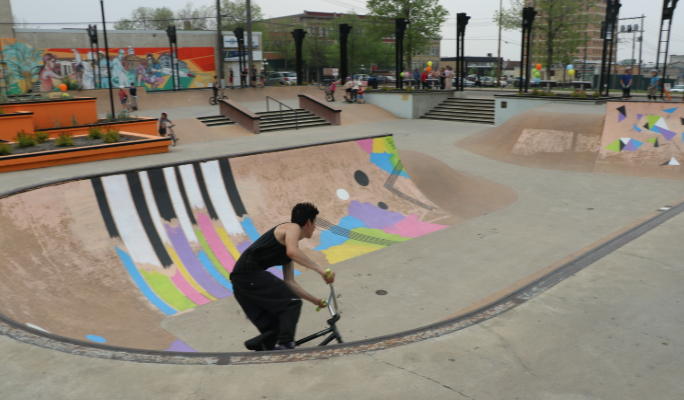
Brandon offers many recreational activities.
What These Three Have In Common
Each of these cities has the same structure: a river valley the highway ignores, a downtown built between 1900 and 1930, and one weird industrial asset — tunnels, kilns, a rail yard — that survived because demolition was never affordable. That is a formula, and once you see it you can spot the next one from the highway.
The practical version of that is a short list. When you take a prairie exit and have four hours, do this:
Park downtown, not at the visitor centre, and walk six blocks in each direction before deciding anything.
Look above the ground floor. The storefronts change every decade; the second and third storeys tell you what the town was in 1912.
Find the river. Every prairie city has one, and the trail beside it is almost always free, empty, and better maintained than you expect.
Ask one person behind a counter where they eat. Not where you should eat — where they eat.
Skip the one attraction the town advertises on the highway sign until you've seen everything it doesn't advertise.
Check whether the old industrial building is open to the public. Increasingly, it is.
Stay for the evening. These downtowns are dead at 2pm and alive at 7pm, and day-trippers only ever see the first one.
The trade-off is real and worth naming. Slow travel across the prairies costs you two extra days and gains you three cities you will actually remember. If you are driving to Banff with a deadline, this is not for you. If you have the week, the detour is the trip.
