
The Sound of St. John's: A Live-Music Weekend
The fog rolls in off the North Atlantic most mornings in St. John's, softening the edges of the jellybean row houses that climb the hills above the harbour, and by the time it lifts you can already hear something coming up the lanes off Water Street. A fiddle tuning behind a pub door. A button accordion working through a reel that somebody's grandmother played first. This is a city that has kept its songs the hard way, by singing them, one kitchen at a time, for a very long while, and a weekend spent chasing that sound is a weekend spent inside the living history of the place rather than merely beside it.
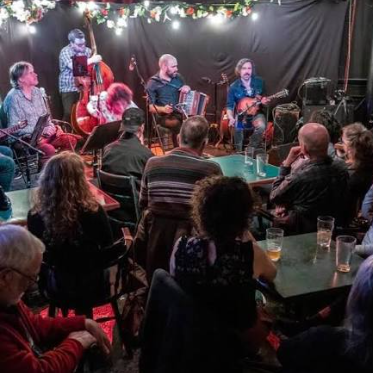
Duckworth Street & Area: Home to popular intimate stages and pubs like The Ship Pub, Erin's Pub, and The Majestic Theatre. There are 45+ live music venues in St. John’s.
To understand why St. John's plays the way it does, you have to start where the music started, which is not in a concert hall but in the front rooms and kitchens of the outport families who carried it across the water. Newfoundland traditional music grew out of Irish and West-Country English settler roots, threaded through with local sea shanties and work songs invented for the cod fishery and the long hauls, and for generations it was passed down entirely by ear. It emerged, as people here like to say, from the kitchens and sitting rooms, and the kitchen party remains the beating heart of the whole tradition. You do not perform at a kitchen party so much as take your turn in it.
The Instruments and the Old Songs
The sound itself is built from a handful of instruments, each with its own personality. The fiddle carries the melody, quick and keening, and the button accordion answers it with that unmistakable wheezing lift that seems to belong to fog and salt air. Underneath, a bodhran keeps the pulse with a wooden beater, and then, gloriously, there is the ugly stick, a homemade percussion contraption fashioned from a mop handle strung with bottle caps, nails and bits of tin, thumped and rattled and scraped by whoever has the nerve. It looks like something assembled in a shed on a rainy afternoon, because it was, and it sounds like pure Newfoundland.
The songs are old friends to everyone in the room but you, at least at first. "I'se the B'y," a bouncing account of building and sailing a boat, is practically a second anthem, and "Jack Was Every Inch a Sailor" tells its whale of a tall tale with a straight face. Learn the choruses on your first night and you will belong by your third.
From the Kitchens to the Wider World
For a long time this music stayed local, almost private, until a generation of players in the 1970s decided the rest of the country deserved to hear it. Figgy Duff, formed in St. John's in the 1970s under the late Noel Dinn, took the old kitchen tunes and gave them a fuller, rock-inflected arrangement without sanding off the strangeness, and Ryan's Fancy carried the ballads onto television screens and into living rooms far from any wharf. They proved the songs could travel without losing their accent.
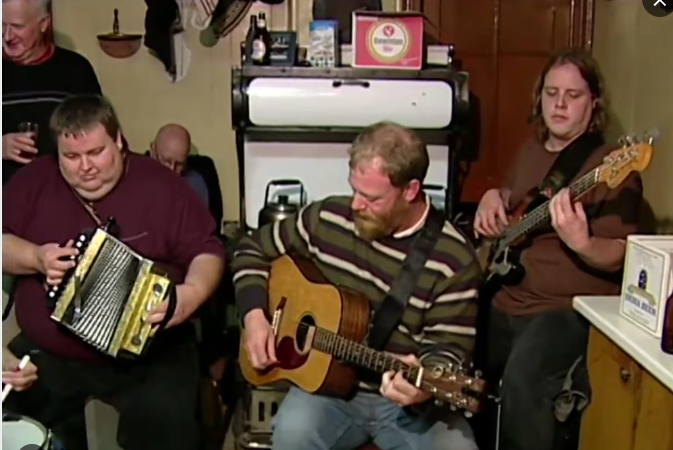
In St. John’s every kitchen will become a live music venue at some point in the year.
Then there was Ron Hynes, the songwriter this province still grieves. Known as the man of a thousand songs, Hynes wrote "Sonny's Dream" in 1976, a tune so beloved and so widely covered that many people assume it is a hundred years older than it is, which may be the highest compliment a folk song can earn. He died in 2015, and you will still catch his lines drifting out of an open door on George Street on a quiet night, sung by strangers who mean every word. If you find yourself moved by the way an East Coast city guards its songs, then St. John's holds it a shade closer to the bone.
The story did not stop with the revival. In 1993 a band called Great Big Sea formed here and carried Newfoundland folk to genuine national fame, filling arenas with music that had started in fishing-village kitchens, and their frontman Alan Doyle has gone on to a major solo career. A newer generation keeps the line unbroken. The Once trade in aching close harmony, Rum Ragged play the traditional repertoire with real fire, and Fortunate Ones write songs that sound like the wind coming over the harbour. The kitchen never actually closed. It just got bigger.
Where to Hear It All
The pleasure of St. John's is that all of this is walkable, most of it within a few foggy blocks. Start at the Ship Pub, tucked off Duckworth Street down the narrow slope of Solomon's Lane, the city's long-standing artists' bar where you will find live local music most nights and a crowd that treats the performers as neighbours, because they are. From there it is a short stumble to George Street, two impossibly short blocks packed wall to wall with bars, where O'Reilly's Irish Newfoundland Pub runs traditional Irish and Newfoundland sessions that spill energy out onto the pavement. On Water Street, Erin's Pub was for many years the downtown home of traditional music, a name worth knowing even as you check what's on before you go.
For something with a roof and a hush, LSPU Hall, home to the Resource Centre for the Arts, is the small performing-arts venue where you will catch songwriters up close and theatre that often has music woven through it. And when a big touring act comes to town, they play the downtown arena now known as Mary Brown's Centre, the room that holds the province's largest crowds. Between a session at the Ship and a show at the arena lies the whole spectrum of how this city listens.
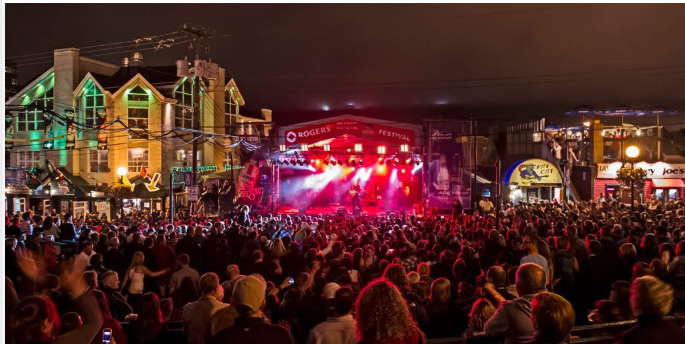
Churchill Park Music Festival: A massive summer concert series in St. John's. The July 2026 lineup featured international headliners like Kesha, The Chicks, Keith Urban, and Matchbox Twenty
Festivals, Fog, and the Long Way Home
Time your visit right and the whole thing pours outdoors. The George Street Festival, an annual summer institution that has run since the 1970s, closes those two famous blocks to traffic and turns them into one long open-air stage. Up at Bannerman Park, the Newfoundland and Labrador Folk Festival, organized by the Folk Arts Society and also going since the 1970s, gathers the traditional and the new under summer light that lingers late. Out near the toy-bright fishing sheds of Quidi Vidi, the Iceberg Alley Performance Tent brings marquee names to a stage where actual icebergs sometimes drift past offshore, which is a hard act for any headliner to follow.
Between shows, do the rest of it properly. Climb Signal Hill for the view over the Narrows, warm up with toutons and molasses, and submit cheerfully to a screech-in, that gleeful ceremony involving a shot, a few words you'll fumble, and a kiss planted on a cold codfish. You will earn your choruses either way. But the real St. John's nightcap is one more song before the fog swallows the street. A few out-of-province visitors wind down another way, with a quiet fanduel online casino Alberta session once the pubs empty, though the city would tell you the better encore is one more chorus. Sing it loud. The city taught you how.
