
What Makes a City Fun: Culture, Streets, and Modern Travel
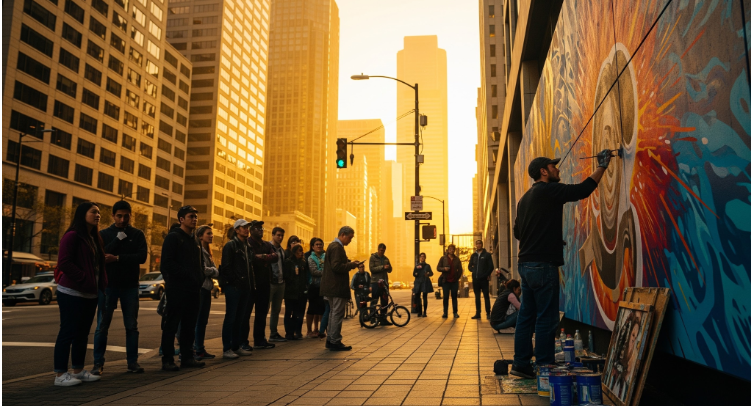
The air vibrates with possibility, a million silent invitations woven into the steel and glass. Dawn breaks not with a sound, but with a rush of gold light flooding the skyscraper canyons, turning the pavement into polished amber. Every street corner is a canvas where a street artist is finishing a piece that bursts with color, drawing a small, appreciative crowd. The energy is infectious; it pulls you forward, urging you to choose your next delight from the endless menu of choices this bright, working city offers. You don't just live here; you glow here.
Fun Starts Before the Landmark
A fun city rarely depends on one famous building. Paris welcomed more than 18 million international visitors in 2025, according to Euromonitor, but the city’s appeal extends beyond the Eiffel Tower and the reopened Notre-Dame de Paris. The better travel day happens between those markers: a bakery queue at 8 a.m., a metro ride to Belleville, a canal-side drink, then a late exhibition or match. The landmark opens the door; the street keeps people out longer.
The Best Cities Give Visitors Choices
Cape Town topped Time Out’s 2025 city ranking, with locals rating its beauty, food scene, and happiness unusually high. Bangkok, New York, Melbourne, and London also appeared near the top, and that mix says something useful about modern travel. Fun is no longer a single category; it can be a night market in Bangkok, a gallery walk in Melbourne, a comedy room in New York, or a long lunch in Cape Town. The city wins when the visitor can change plans after 4 p.m. without wasting the rest of the evening.
Travel Is Back, But It Feels Different
UNWTO estimated 1.52 billion international tourist arrivals in 2025, a 4% rise from 2024 and a full return to pre-pandemic levels. That recovery did not bring back the old checklist-style of travel in the same form. Travelers now ask harder questions about cost, safety, transport, neighborhoods, event calendars, and whether a city works for both slow mornings and late nights. A useful small detail is the 20-minute rule: if a visitor can reach food, transit, public space, and music within 20 minutes, the city feels easier than its map suggests.
Digital Planning Has Changed the Night Out
The modern city break lives on a phone long before the traveler reaches the hotel. A visitor compares museum slots, football fixtures, metro closures, restaurant bookings, weather alerts, and short-form video tips while standing outside a station. The same mobile habit explains why betting apps with free bonus appear in wider entertainment searches, as users compare offers, account controls, verification steps, and event-linked markets around major sports weekends. The important part is clarity: travel and entertainment apps both gain trust when prices, limits, terms, and timing appear before payment. A city feels less stressful when its digital layer behaves honestly.
Events Now Shape the Itinerary
The event calendar has become a major factor in choosing a city. KAYAK’s 2026 travel trends report said 97% of Gen Z and Millennial travelers planned to travel for a major event, with music, sports, cultural festivals, and unexpected performances all driving movement. Rio de Janeiro showed the scale on 2 May 2026, when Shakira performed a free concert on Copacabana Beach before an estimated 2 million people. That kind of night changes a city’s rhythm: hotels fill, vendors extend hours, transit gets tested, and visitors remember the crowd as much as the song.
Walkability Beats Slogans
Fun also depends on how much friction a city removes. Madrid, Tokyo, Rome, Milan, New York, Amsterdam, Barcelona, Singapore, and Seoul appeared among Euromonitor’s leading 2025 city destinations, and each gives visitors a different version of access. Tokyo handles density with rail precision, Amsterdam makes short trips visible by bike, and Barcelona uses neighborhood sequence better than most beach cities. One reported pattern from city travel is simple: the best day often starts without a taxi.
The APK Question Is About Convenience
Travel no longer separates maps, payments, tickets, restaurant queues, and sports entertainment into neat categories. A visitor in Dubai during a Meydan race night or in Ahmedabad before an IPL final may use the same device for navigation, hotel check-in, live scores, and event markets. In that flow, the MelBet APK download falls under the mobile convenience conversation because users want official access, fast loading, clear categories, and account information that doesn't disappear during a busy evening. The practical check is still straightforward: install from a reliable source, review permissions, confirm product availability, and keep bonus or betting terms visible before using any financial feature.
The City Has to Work After Sunset
A truly fun city gives visitors good options after the planned activity ends. That could mean late trains in London, tacos after a show in Los Angeles, ferry views in Istanbul, or a 1 a.m. dessert stop in Bangkok. The best cities do not force the traveler to choose between culture and comfort; they let a day bend without breaking. That is the travel memory that lasts: not one monument, but 12 usable hours stitched together by streets that still feel alive.
