
Canada's Queer Neighbourhoods: Where to Go and What to Do
Vancouver's Davie Village, Toronto's Church-Wellesley Village and Montreal's Le Village are Canada's three great queer streets, and each one rewards a visitor who actually stops and explores rather than just walking through instead of treating it as a photo stop between other stops on a city itinerary. The rainbow crosswalks and lamp-post flags mark the boundary, but the substance is in the bars, cafes, bookstores and restaurants that fill in the blocks behind them, most of which have been there for decades and are still run by the same community they were built for. Knowing a handful of specific addresses in each city turns a quick walk-through into an actual evening out.
The three neighbourhoods are not interchangeable versions of the same street. Davie Village is compact enough to cover on foot in an afternoon, Church-Wellesley carries the institutional weight of being the oldest of the three, and Le Village is the biggest by a wide margin, closer in scale to a district than a strip. Visiting more than one on a cross-country trip means comparing three different models of what a queer neighbourhood can look like, from a small West End pocket to a summer-long pedestrian promenade.
Some of that groundwork happens online too, long before anyone books a flight. Travellers who have already tried one random-video-chat app while planning a trip and want to compare their options will find that LuckyCrush positions itself as another option beyond OmeTV for that same kind of instant, unscheduled conversation.
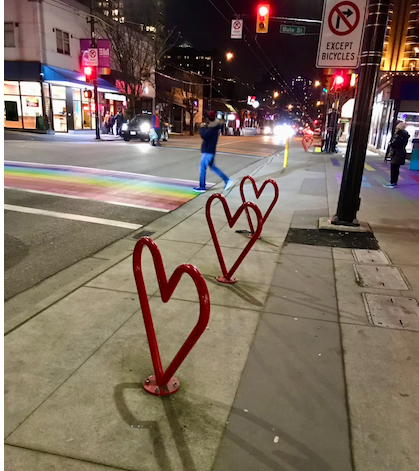
Davie Street in downtown Vancouver.
Vancouver: Davie Village
Davie Street in the West End is the most immediately recognisable queer neighbourhood in Canada, marked out with rainbow crosswalks and pride lamp-post banners running several blocks between Burrard and Jervis. It's a fifteen-minute walk from downtown, which makes it easy to fold into a day without planning around it. Nightlife centres on Celebrities Nightclub, a large dance venue with international DJs that anchors Pride weekend and holiday Saturdays, and Numbers Cabaret, which has been open on Davie since 1980 and is the longest-running gay bar in the city. The Pumpjack Pub is the quieter, neighbourhood-pub alternative for an early evening drink, with a patio that fills up fast on the first warm night of spring. For coffee, Delany's Coffee House has been a fixture for people-watching over a slow cup, and it stays open late enough to work as a low-key meeting spot before a night out. Little Sister's Book and Art Emporium, a queer bookstore that fought a decades-long legal battle over censorship at the Canadian border and remains a cornerstone of the neighbourhood, is worth the stop for the history as much as the shelves. For dinner, Gyoza Bar draws a steady crowd for ramen and small plates a short walk off the main strip, and reservations are worth making on weekends.
Toronto: Church-Wellesley Village
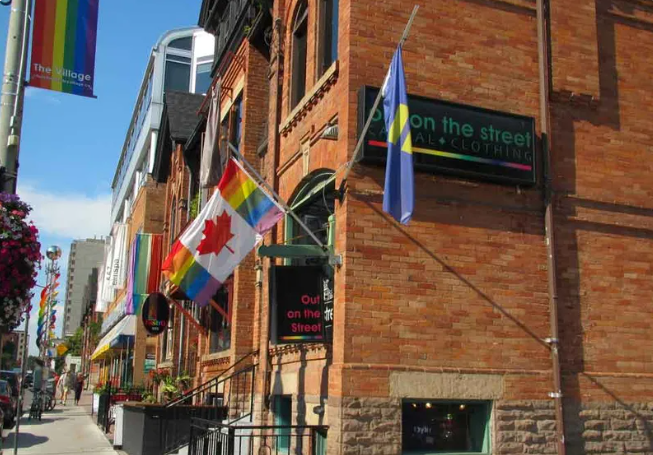
The Village runs along Church Street between Wellesley and Maitland, the oldest of Canada's three queer districts in continuous use and an easy walk from either Wellesley or College subway station. Woody's, open since 1989, is the anchor bar for a Friday or Saturday night start, and Crews and Tangos a few doors down runs nightly drag shows across two floors and has launched more than one Canada's Drag Race alum. Glad Day Bookshop and Cafe, the world's oldest LGBTQ+ bookshop, doubles as a licensed cafe and bar and hosts the city's long-running drag brunch on weekends, worth booking ahead for. For a sit-down meal, The Cherie Bistro handles both a proper dinner and a brunch service, with a Grand Marnier French toast that regulars order on repeat. Church Street closes to traffic through the summer months, turning the strip itself into an open-air patio scene that is worth timing a visit around. The neighbourhood's theatre scene runs just as deep, anchored by Buddies in Bad Times, founded in 1979 and still the largest queer theatre company in the world, with a season that regularly sells out well ahead of opening night.
Montreal: Le Village
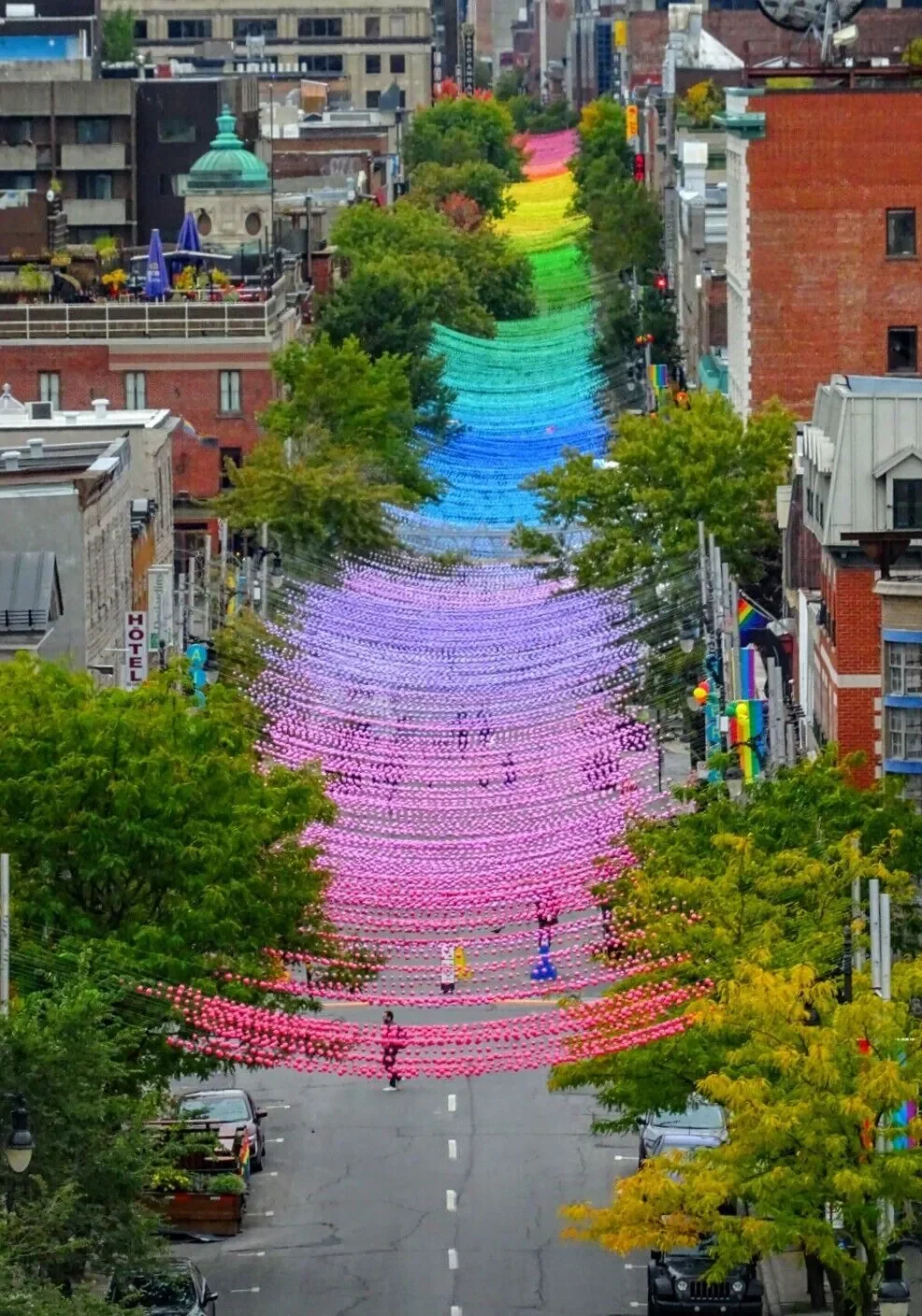
Le Village runs along Rue Sainte-Catherine Est around Beaudry metro station and is one of the largest queer neighbourhoods in North America by footprint. Every summer the street closes to cars entirely under the city's Aires Libres program, and the road itself becomes a pedestrian promenade lined with terrasses, public art and string lights, arguably the single best free thing to see in any of the three cities on this list. Complexe Sky is the neighbourhood's big dance venue across multiple floors, and Cabaret Mado, named for Montreal drag icon Mado Lamotte, has run nightly drag performances since 2002. Priape, a few blocks down Sainte-Catherine, has operated since 1974 and is one of the oldest LGBTQ+-owned retailers in North America, worth a stop even just to see a piece of the neighbourhood's history still trading. For food, the terrasses along Sainte-Catherine cover everything from casual poutine counters to full sit-down bistros, and on a warm night it is normal to see every table outside filled well past midnight. Travellers weighing where to base themselves for a first Montreal trip should note the Village sits a short metro ride from most downtown hotel options, a distance covered in a broader guide to staying in Montreal for first-timers.
Why the Details Matter
None of these three streets got their rainbow crosswalks by accident. Vancouver, Toronto and Montreal each backed the paint with policy: non-discrimination protections, formal statements of inclusion, and, in Toronto's and Montreal's case, seasonal street closures that hand the road itself over to pedestrians for months at a time. That's the difference between a neighbourhood that welcomes queer visitors and one that was actually built with them in mind, and it's why these three streets keep drawing people back long after the first visit.
Walk any of the three on a summer evening and the pattern is the same: a cluster of bars and cafes that know their regulars by name, a bookstore or shop that's been there through decades a lot of neighbourhoods weren't, and a street that was designed, not just tolerated, as a queer space. That's worth building a trip around, and worth going back to more than once.
