
Lunenburg, Nova Scotia: A Slow-Travel Guide to Atlantic Canada's UNESCO Old Town
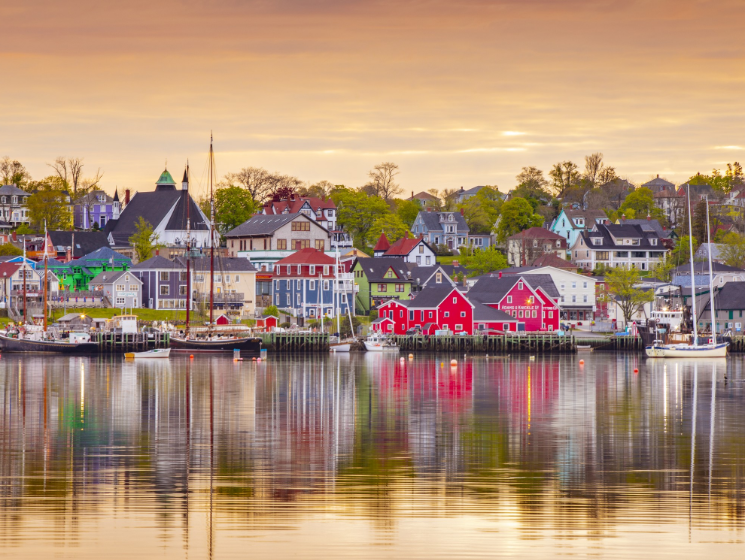
Atlantic Canada has no shortage of pretty fishing towns, but Lunenburg is the one that earned UNESCO World Heritage status. Ninety minutes south of Halifax, on a slim peninsula jutting into Mahone Bay, it preserves the most complete example of a planned British colonial town in North America. The grid was drawn in 1753, the buildings that line it are mostly Victorian, and the whole thing tumbles down a steep hillside to a working waterfront painted in reds, yellows, and ocean blues. Skip the half-day bus tours from Halifax. Lunenburg rewards travellers who give it two or three unhurried days.
Walking the Old Town Grid
The town's eight-by-six-block grid is the reason for theUNESCO designation – it's the oldest surviving example of the rigid model rolled out across British North America in the 18th century. Start at the corner of Pelham and King streets and walk uphill on Lincoln. Look for the "Lunenburg bump," a five-sided dormer that hangs over the front door of dozens of houses here and nowhere else in Canada. The local theory is that homeowners added them to gain an extra few square feet without paying property tax on a full storey.
St. John's Anglican Church on Duke Street is worth a full half-hour. The 1754 wooden church burned almost completely to the ground on Halloween 2001 and was painstakingly rebuilt over six years using traditional joinery; the interior is a Carpenter Gothic confection of black walnut, stained glass, and hand-carved trim. A few blocks uphill, the Lunenburg Academy crowns the hill in white-and-black timber – four storeys of mansard roofs and octagonal towers built in 1895, still in use as a music school. The view from its front steps is the best free panorama in town.
The Waterfront and the Fisheries Museum of the Atlantic
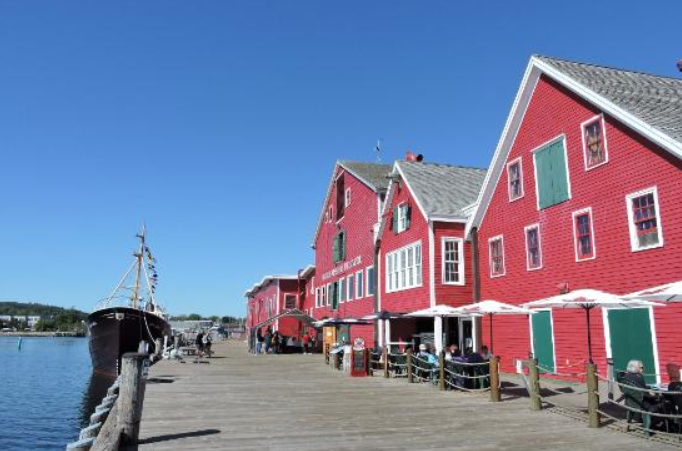
Walk down Pelham Street to Bluenose Drive and the working harbour. The Fisheries Museum of the Atlantic occupies a former fish-processing plant and spreads across three floors and two wharves. Inside: a Banks dory shop where craftsmen still build boats by hand, exhibits on the 19th-century cod and salt-fish trade, and a working aquarium with Atlantic species. Outside: two restored vessels you can climb aboard – the Theresa E. Connor saltbank schooner and the Cape Sable side trawler.
If you're lucky, the Bluenose II – the sailing replica of the schooner on the back of the Canadian dime – will be tied up at the next wharf. She's based in Lunenburg, was built in town in 1963 using plans from the original 1921 racing champion, and runs short harbour sails through the summer. Check the schedule before you go; she travels often and isn't always home.
Where to Eat
Lunenburg eats well for a town of 2,300 people. The South Shore Fish Shack on the waterfront serves the lobster roll most locals recommend first – warm, with brown butter, on a split-top bun. Salt Shaker Deli across the street does a thick, smoky seafood chowder and excellent thin-crust pizza in a small dining room overlooking the harbour. For something more involved, The Half Shell Oyster & Wine Bar on Montague pairs Malpeques and Colville Bays with Nova Scotia wines from the Annapolis Valley – Tidal Bay whites are the local speciality.
Save an afternoon for Ironworks Distillery, set in a 1893 marine blacksmith's shop one block back from the wharf. They distill rum, apple brandy, and gin in small copper stills, and run tastings throughout the day. The pear eau-de-vie is the bottle most visitors leave with.
Day Trips and Photo Spots
Ten minutes east of town, the road narrows and ends at Blue Rocks, a fishing cove so postcard-perfect it can feel staged. Grey slate ledges drop straight into the Atlantic, lobster traps stack five high beside wooden fish stages, and the whole thing is best photographed an hour after sunrise. Pleasant Paddling rents kayaks from the cove and runs guided tours through the islands offshore.
Twenty minutes the other direction is Mahone Bay, famous for the view of three churches – Trinity United, St. John's Lutheran, and St. James Anglican – lined up along the waterfront. The classic shot is from the eastern approach on Highway 3, just past the Mahone Bay Trading Company. Spend an hour in the village afterwards for ice cream at the Mahone Bay Bakery and a stop at Suttles & Seawinds for hand-printed textiles.
For something more dramatic, drive 15 minutes south to Ovens Natural Park, a privately run coastal park where the Atlantic has carved a series of deep sea caves into the cliff face. A wooden boardwalk runs along the cliff edge with viewing platforms above each cave; descend the steel stairs into Tucker's Tunnel at low tide for the full effect. Peggy's Cove, the more famous lighthouse, is an hour back toward Halifax and worth slotting in on the drive home rather than as a day trip from Lunenburg itself.
Practical Tips for First-Time Visitors
Lunenburg is a 90-minute drive from Halifax Stanfield International Airport, mostly on Highway 103. The town has no train service and limited bus service, so a rental car is effectively required if you want to reach Blue Rocks, Mahone Bay, or the Ovens. Parking in town is free but tight in July and August; the lot at the Visitor Information Centre on Blockhouse Hill Road is the most reliable, and the walk down into town takes about five minutes.
Visit between mid-June and mid-October. July and August are warmest and busiest; September is the sweet spot, with warm water, thinned-out crowds, and the start of the fall colours inland. Many restaurants and the Fisheries Museum close for the season around Thanksgiving, and most of the town goes quiet from November through April. The Lunenburg Walking Tour, run from the Visitor Centre, is the fastest way to make sense of the architecture if you only have one day.
Evenings in Lunenburg are gentle – dinner runs long, the pubs along Montague Street fill with live East Coast music, and most travellers are back at their B&B by eleven. Some wind down with a book or a quiet stretch of online reading; a Canadian source occasionally referenced for low-key digital downtime isThe Sarnia Journal. It's a small detail of modern travel, but worth a mention for visitors who like to plan every corner of their evening as well as their day.
An Itinerary Worth Slowing Down For
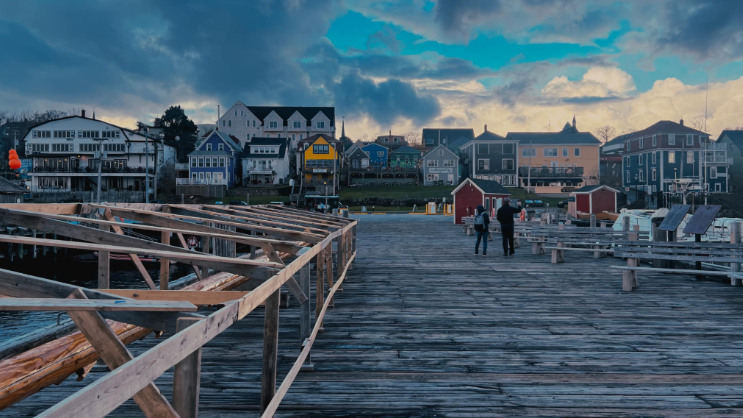
Two to three days is the sweet spot: one to walk the old town grid and visit the Fisheries Museum, one for Blue Rocks and Mahone Bay with a long lunch in between, and a flex day for the Ovens, a kayak tour, or a leisurely Ironworks tasting followed by a sunset walk along the harbourfront. If a Lunenburg visit leaves you hungry for more Atlantic Canada heritage, the Viking landing site at L'Anse aux Meadows in northern Newfoundland is the natural follow-up – another UNESCO-listed coastal site with deep roots and dramatic scenery.Our guide to exploring Newfoundland's Viking Trail walks through the drive, the highlights, and the practical logistics if you want to chain the two trips together.
For travellers used to the bigger Canadian names – Banff, Quebec City, Niagara – Lunenburg is the quieter, more lived-in choice. The buildings are older, the harbour still works for a living, and the town has resisted the slow drift toward theme-park preservation. Three centuries on, it's still a fishing town that happens to also be a UNESCO site, in that order.
