
Gander to Fogo Island is a four or five day loop through central Newfoundland that mixes aviation history, mid century design and wild North Atlantic coastline. Most visitors to Newfoundland head straight for St. John's, and after a live music weekend in St. John's it is easy to see why. But head inland to Gander, then north to the coast, and you find a string of surprises: a 1959 airport lounge that looks like a film set, streets named after pilots, and a headland the Flat Earth Society says sits at a corner of the world.
Getting here is simpler than most people think. Gander International is still a working transatlantic airport, so travellers flying from the United States or Europe on a private jet to Canada can land in Gander, clear customs on arrival and be on the Farewell ferry to Fogo Island about an hour later.
This is a loop for curious travellers who like their history quirky and their scenery wild.

Private jets companies offer a wide range of aircraft options and can fly you directly to places commercial airlines can’t.
Gander, the Town That Grew Around a Runway
Gander did not grow up around a harbour or a mill. It grew up around an airport. The first plane landed here on January 11, 1938, and during the Second World War about 20,000 aircraft stopped in Gander on their way to Europe. After the war, every transatlantic airliner needed fuel, and Gander became the "Crossroads of the World."
The town has never forgotten it. Most of its streets are named after famous aviators, including Amelia Earhart, Charles Lindbergh and Chuck Yeager. A slow walk around town reads like a who's who of early flight, which makes Gander one of the more unusual places in Canada to go flaneuring, much like the fun flaneur finds in New Brunswick.
The Most Stylish Departure Lounge in Canada
The highlight is inside the airport itself. When the new terminal opened in 1959, Queen Elizabeth II was there for the occasion. Its international departures lounge was built for the golden age of transatlantic travel, when almost every flight between North America and Europe stopped here for fuel.
It still looks the part. Kenneth Lochhead's mural Flight and Its Allegories stretches across one wall, with human figures acting out the stages of flight against Canadian plants and animals. Arthur Price's sculpture Birds of Welcome sits in the middle of the room. The chairs are by Charles and Ray Eames, Arne Jacobsen and other mid century designers, and the floor tiles look like a Mondrian painting.
For years the room sat closed and at risk. It was restored and reopened to the public in 2022, and more than 100,000 people have visited since. In 2026 the province named it a heritage structure. Even if you never fly anywhere, it is worth the stop.
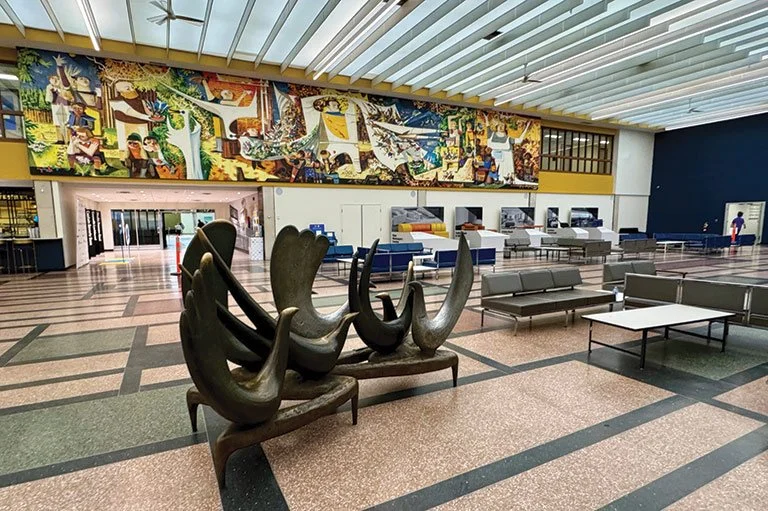
Gander’s airport lounge is just one of its tourist attractions, with it major mural by Canadian artist Kenneth Lochead.
Come From Away, the Real Story
On September 11, 2001, Gander took in 38 airliners when American airspace closed. That added 6,595 passengers and crew to a town of about 10,000 people. Residents opened their homes, schools and churches for days. The story later became the musical Come From Away.
The North Atlantic Aviation Museum on the Trans Canada Highway tells that story in its Safe Haven exhibit. It also covers the wartime Ferry Command and shows a Hudson bomber. Check the hours before you go, as it is usually open on weekdays.
For a quieter moment, drive to the Silent Witness Memorial on the shore of Gander Lake. It marks the 1985 Arrow Air crash, which killed 256 people, including 248 American soldiers returning from peacekeeping duty in the Sinai. A bronze soldier stands on a rock holding the hands of two children, each carrying an olive branch. It is a moving place, and a reminder that the town's ties to aviation run deep.
Gander Is Still an Airport Town
Gander International has a 10,200 foot runway, long enough for almost any aircraft, and it is still a diversion airport for transatlantic flights. Business jets still stop here to refuel on their way across the Atlantic, just as the airliners did in the 1950s. That is what makes Gander such an easy base for the rest of this loop.
Fogo Island, at a Corner of the Earth
From Farewell, the ferry crosses to Fogo Island in about 50 minutes, often stopping at Change Islands on the way. Weather can delay crossings, so leave room in the schedule. EVAS Air also runs flights between Gander and Fogo Island. If you enjoy windswept islands like Quebec's Magdalen Islands, Fogo will feel like home.
Fogo's most famous building is the Fogo Island Inn, designed by Newfoundland born architect Todd Saunders. It stands on stilts at the edge of the North Atlantic like an old fishing stage. It is a Relais and Châteaux property, and one of only two places in Canada with Three Michelin Keys. Its surplus is reinvested in the island's communities through the charity Shorefast.
Saunders also designed four off grid artist studios scattered along the island's hiking trails. Look for the Long Studio at Joe Batt's Arm, the Squish Studio at Tilting, the Bridge Studio at Deep Bay and the Tower Studio at Shoal Bay. Fogo Island Arts has hosted artists from around the world since 2008, so you never know who might be working inside. Hunting for the studios is a fun way to see the island on foot.
Then there is Brimstone Head, a rocky headland near the town of Fogo. The Flat Earth Society names it one of the four corners of the Earth. Climb the stairs to the top, look out over the empty Atlantic, and the claim starts to feel almost reasonable.
Tilting deserves an afternoon of its own. Irish settlers founded it in the 18th century, and it is now a National Historic Site with red fishing rooms and tall grass blowing between the houses. Keep an eye out for caribou on the hills. Over on Change Islands, a refuge looks after Newfoundland ponies.
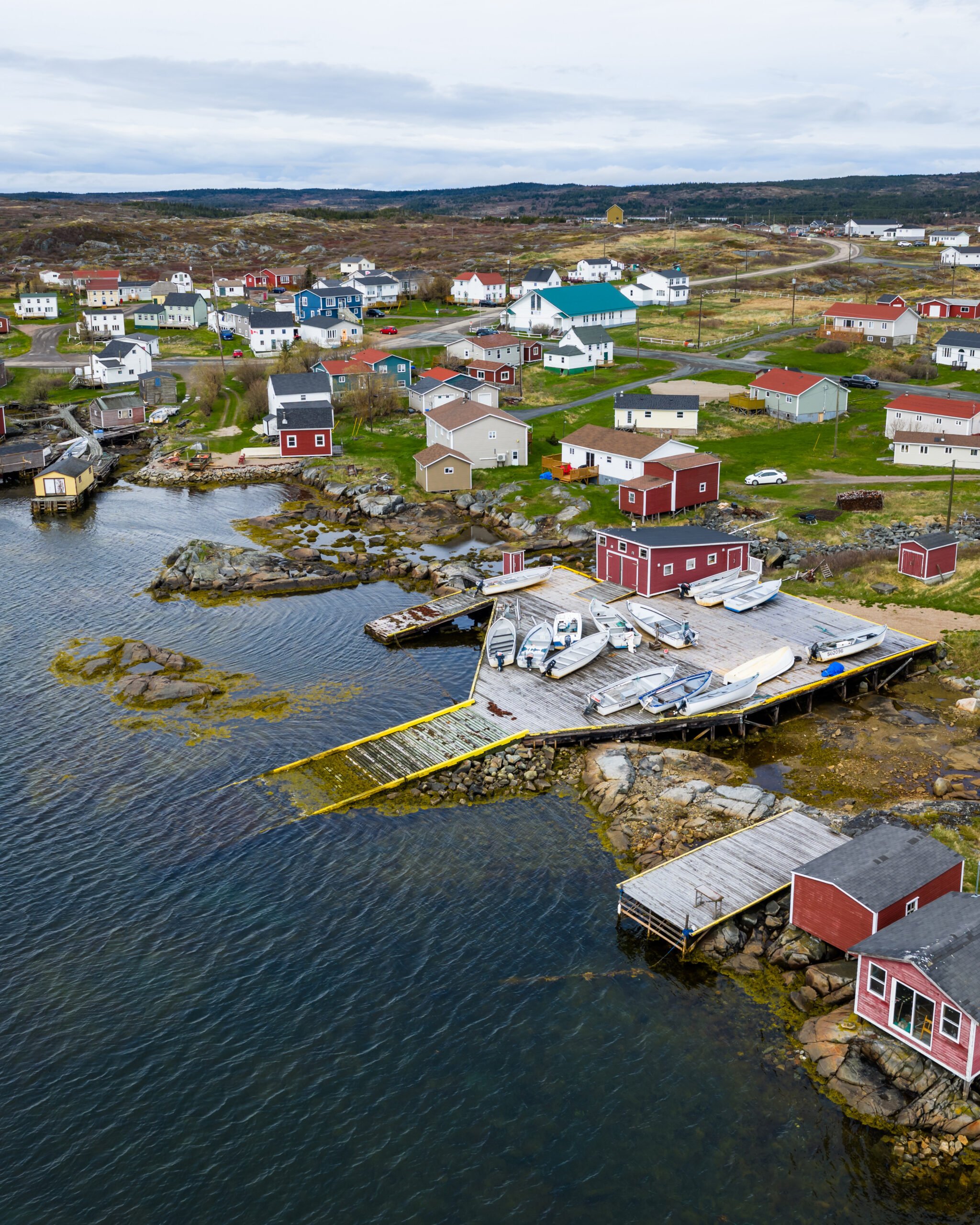
Fogo Island it a quaint village with an internationally famous inn.
Twillingate, for the Icebergs
Back on the mainland, Twillingate is about 100 kilometres north of Gander, roughly an hour and a half by car. It calls itself the Iceberg Capital of the World. Late May and early June are the best weeks to see icebergs drifting past, and humpback whales often arrive in summer.
Walk the Top of Twillingate trail to the town's highest point, then visit the Long Point Lighthouse for the view. If you are there at the end of July, the Fish, Fun and Folk Festival is the place to be.
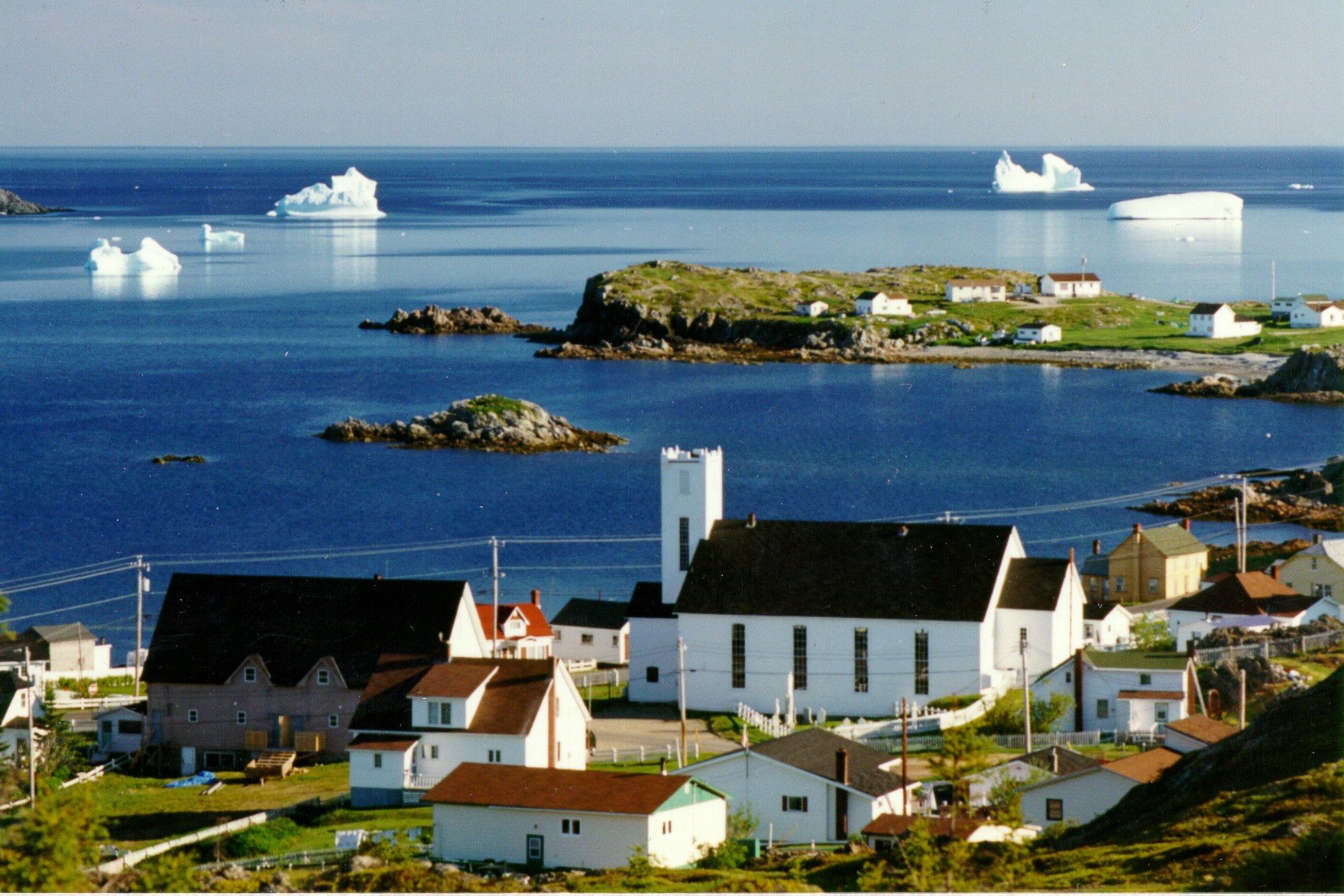
Twillingate is known as the iceberg capital of Canada.
Last Word
Gander, Fogo Island and Twillingate make an easy four or five day loop. It mixes mid century design, aviation history, modern architecture and some of the wildest coastline in Canada. Plan around the ferry and the weather, pack a warm layer even in July, and leave time to wander. If this loop leaves you wanting even more remote wilderness, look north to Torngat Mountains National Park in Labrador. The best finds here are the ones you stumble on.
About the author
Matt Hogan is the founder of Hogani Jets, a private jet charter broker. He has spent more than a decade arranging private flights across North America, Europe and the Caribbean, and he is always on the lookout for small towns with big aviation stories.
Notes for Publisher: Internal Links Pointing To This Post
Once live, please add a contextual link to this post from these existing pages (suggested anchors):
● The Sound of St. John's: A Live Music Weekend (anchor: "Gander to Fogo Island loop") https://everydaytourist.ca/wandering-canada/the-sound-of-st-johns-a-live-music-weekend
● Torngat Mountains National Park (anchor: "Fogo Island and Gander") https://everydaytourist.ca/wandering-canada/torngat-mountains-national-park-canadas-remote-northern-wilderness
● Magdalen Islands and Quebec's Windswept Secret (anchor: "Fogo Island, Newfoundland") https://everydaytourist.ca/wandering-canada/magdalen-islands-and-quebecs-windswept-secret-in-the-gulf
New Brunswick: Fun Flaneur Finds (anchor: "flaneuring in Gander") https://everydaytourist.ca/wandering-canada/new-brunswick-
